Under Milk Wood is often remembered as a beautifully quotable text: a Welsh seaside town, dreamers at night, the phrase "starless and bible-black," a handful of comic names that make Llareggub feel instantly half-mythic.[4] That reputation is deserved, but it can also flatten the work into a page object. Dylan Thomas did not call it a novel or a verse drama. The modern Penguin edition still presents it in the form Thomas wanted foregrounded, as "A Play for Voices."[4] The distinction matters. The piece was built for sound, for entrances and overlaps, for the strange authority created when one voice opens a town and then yields it to many others.
That is why the 1953 New York recording remains more than a biographical curiosity. The National Library of Wales's exhibition on Under Milk Wood treats the original New York material as a central artifact of the work's afterlife: the script used for the recording, the first performance in Manhattan, and the original recording itself, identified there as the only version with Thomas narrating.[2] Once you hear the opening spoken by Thomas, the work stops looking like a picturesque village fantasia and starts sounding like a tightly engineered oral machine. The writing is still lyrical. It is also exacting, muscular, and far more controlled than later nostalgia about "Dylan the bard" sometimes suggests.[1][2]
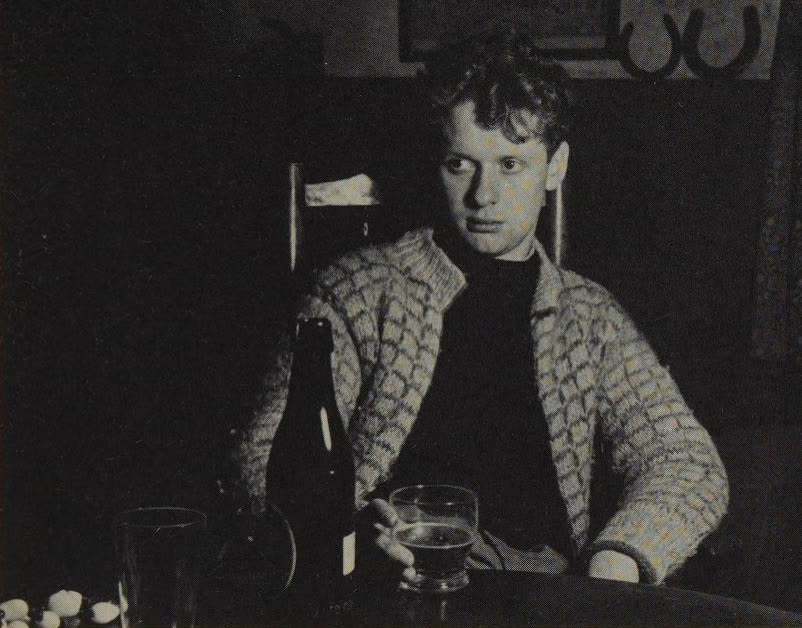
The cover image helps fix that emphasis. Nora Summers's portrait is not from the 1953 American tour, but it is still an archival photograph of the speaking face behind the piece. A literary archival spotlight needs a real body somewhere in the frame. Here the point is not celebrity likeness. It is the reminder that Under Milk Wood came into the world through performance pressure, breath pressure, and the presence of a writer who heard prose as score.
Historical context: the play reached New York before it became a tidy classic
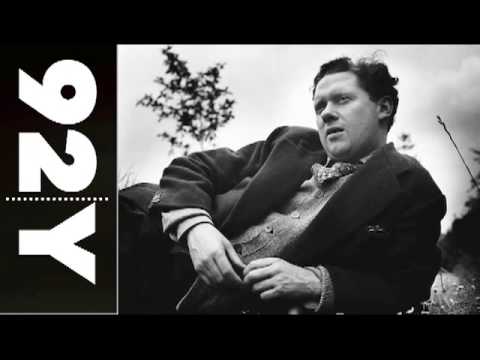
The 92Y upload is short, but the history around it is unusually rich. In its own description, 92Y explains that the clip marks the sixtieth anniversary of the May 14, 1953 premiere of Under Milk Wood in Kaufmann Concert Hall, with Thomas himself reading multiple roles, and that the posted excerpt preserves Thomas reading the opening monologue from the archive.[1] The National Library of Wales frames the same moment as the seventieth-anniversary hinge of the work's public life in New York, linking the surviving recording to the script Thomas used and to the larger Manhattan history of the play's emergence.[2]
This timing matters because the work had not yet settled into the reputation it later acquired. It was still a performance event, still close to its making, still attached to Thomas's touring body and voice. The National Library's script page is especially revealing on that point: it describes the surviving manuscript material as a composite working document with annotations in the hands of both Thomas and Daniel Jones.[3] That is exactly the sort of evidence an archival literature post should care about. It shows a work not as finished monument but as something tuned for utterance, with textual decisions still visibly tied to performance.
The official Dylan Thomas site points to the same New York node from a public-history angle. Its International Dylan Thomas Day guide notes that the 92Y recording made available online lets listeners hear the original 1953 performance space where the play first found its public voice in America.[5] Whether you approach the material through archive, publisher, or literary tourism, the conclusion is consistent: New York is not an accidental stop in the story. It is one of the places where Under Milk Wood became audible as literature.
Video provenance
The embed below is 92Y's official YouTube upload from its Poetry Center archive. It is not the whole performance. It is a six-minute archival excerpt of Thomas reading the opening monologue from the 1953 New York presentation, published by the institution that hosted the premiere.[1] That narrower scope is part of its value. Because the clip isolates the opening, it lets you hear Thomas establishing not just atmosphere but method.
Close reading: what Thomas's own voice changes
The first revelation is tempo. On the page, "To begin at the beginning" can look like a charming threshold sentence, almost childlike in its circularity.[1][4] In Thomas's voice it lands as an act of command. He does not drift into Llareggub; he conducts the listener into it. The pacing is careful without sounding delicate. Clauses gather, pause, and release with the confidence of someone arranging not scenery but attention. That is the moment when the phrase "play for voices" stops being a genre tag and becomes an instruction for reading.[4]
The second revelation is how hard the language works at the level of consonant pressure. The famous phrase "starless and bible-black" has become so anthologized that it can feel decorative before you hear it again.[1][4] Thomas makes it heavier and stranger. The line is not merely moonlit atmosphere. It is packed sound: a dark cluster of stresses that compresses theology, weather, and childhood fear into one burst. His reading keeps the phrase from floating away as a quotation. It becomes a structural downbeat for the whole town.
That matters because Llareggub is not introduced as landscape first. It is introduced as a chamber of listening. The opening monologue moves through sleeping houses, dreams, remembered routines, and impending morning, yet Thomas keeps tightening the line between narrator and inhabitants instead of presenting a detached overview. The voice sounds singular, but its real job is distributive. It prepares a chorus. Even before the town's named figures step forward, the narration behaves like a relay station carrying many interior lives.[1][4]
Hearing Thomas himself do this also corrects a common misreading of the piece as luxuriant spillage. The reputation is understandable. Thomas is one of the twentieth century's great exuberant stylists, and Under Milk Wood is rich with verbal play. But the archive shows discipline rather than gush. He weighs his stresses. He clips where a less exact reader might spread sentiment. The humor is there, and so is the lyric abundance, but neither is allowed to dissolve the line of movement. The town has to be summoned in sequence or it becomes mush.
The archival script evidence supports that auditory impression. The National Library's script page notes a working document layered with annotation, including handwriting from Daniel Jones as well as Thomas.[3] Put next to the recording, that fact becomes critically useful. It suggests that what we hear in the opening is not pure spontaneous genius but shaped collaboration and revision in service of voice. The literary achievement is therefore double: Thomas wrote language with extraordinary sonic charge, then participated in the practical labor of making that charge deliverable in performance.
Another thing the recording restores is the piece's tonal risk. Later affectionate readings often tilt Under Milk Wood toward coziness, as though Llareggub were chiefly a village of harmless eccentrics.[4] Thomas's own reading resists that softening. There is warmth in the voice, but there is also watchfulness and a faint severity. Night in this opening is intimate, yet it is never merely cute. The town is made from desire, embarrassment, habit, lust, grief, and sleep-talk. The archive lets you hear that the comedy stands on top of density, not in place of it.
Around the middle of the clip, this becomes especially clear in the way Thomas handles accumulation. Images do not simply pile up. They are phased. One detail prepares the next, and the syntax keeps advancing even when the imagery looks most lush on the page. That is the crucial literary lesson of the recording. Thomas's prose-poetry in Under Milk Wood is not a museum of beautiful fragments. It is propulsion disguised as reverie.
Legacy: why this small archive matters now
The reason to return to this six-minute document in 2026 is not that it gives us the final, authoritative Under Milk Wood. Literature does not work that way, and authorial performance does not cancel later interpretation. Its value is subtler. It reminds us what kind of object the work is. Before it became a school text, a beloved paperback, or a cluster of famous lines, it was a scored communal utterance that needed mouths, timing, and acoustic trust.[1][2][4][5]
That reminder sharpens the work's afterlife rather than narrowing it. Once you hear Thomas reading the opening, later stage productions and broadcasts stop being secondary illustrations of a printed classic. They look like continuations of the work's native medium. The archive also keeps one honest boundary in place: Under Milk Wood survives not because it is quaintly Welsh or endlessly quotable, but because its language knows how to move from solitary sentence into collective weather. Thomas's voice in the 1953 clip is the hinge. It lets you hear a town becoming chorus before it hardens into monument.[1][2][3][4]
Sources
- The 92nd Street Y, New York, "From the Poetry Center Archive-Dylan Thomas's Under Milk Wood | 92Y Readings," official YouTube upload with provenance note on the May 14, 1953 premiere and Thomas's opening monologue.
- National Library of Wales, "Milk Wood & Manhattan" - exhibition page on the 70th anniversary of the New York performance, the original recording, and Peter Evershed portrait material.
- National Library of Wales, "Script of Under Milk Wood (p.2)" - archive page describing the composite working script with annotations by Dylan Thomas and Daniel Jones.
- Penguin, Under Milk Wood by Dylan Thomas - publisher page describing the work as "A Play for Voices" and summarizing its one-day choral structure in Llareggub.
- Discover Dylan Thomas, "20 Things To Do on International Dylan Thomas Day" - official guide noting the 92Y archive recording and the New York premiere context.