The wrong way to begin Invisible Cities is to ask what each city "stands for" and then start hunting for keys. That impulse is understandable. Italo Calvino's book seems to invite decoding: Marco Polo tells Kublai Khan about city after city, the places have women's names, the sections carry labels like "Cities and Memory" and "Cities and Desire," and the whole work feels more patterned than plotted.[1][2] A reader can easily arrive with a notebook and turn the first pages into an exam.
Resist that for a while. Invisible Cities is not a puzzle box whose solution is hidden behind the descriptions. It is a book about what description can and cannot do. The best first question is not "Which real city is this?" but "What changes when one person tries to make another person imagine a city?" Once you read it that way, the frame stops feeling ornamental. Marco Polo and Kublai Khan are not just historical names borrowed for atmosphere. They are the book's two pressures: the traveler who speaks through images, and the emperor who wants a form of knowledge that might hold his vast empire still.[1][4]
Calvino published Le citta invisibili in 1972; William Weaver's English translation brought it into English-language circulation in the 1970s.[2] Britannica places the book among Calvino's later formally inventive works, alongside The Castle of Crossed Destinies and If on a Winter's Night a Traveler, where shifting structures become ways of thinking about chance, change, and viewpoint.[3] That context matters because Invisible Cities is not loose daydreaming. Its lightness is engineered.
Start With The Frame
The frame is simple enough to hold in memory: Polo reports cities to Khan. The descriptions come in short blocks. Between them, the two men talk, misunderstand, test one another, and circle back to the problem of whether an empire can be known through words.[1][4] Penguin's publisher page emphasizes the basic premise: fifty-five fictional cities, Marco Polo as teller, Kublai Khan as listener, and Venice gradually emerging as the hidden center of the descriptions.[1]
That last point should not become a shortcut too quickly. Yes, Venice matters. The University of Glasgow reading note quotes Polo's answer when Khan asks about Venice: "every time I describe a city I am saying something about Venice."[4] But that does not mean every city is simply a disguised canal, bridge, or square. Venice is more like the condition of seeing. It is the past that travels with Polo, the template he cannot fully escape, the private grammar through which other places become legible.
So read the frame as a lesson in mediation. Khan thinks he is receiving reports from an empire. Polo is giving him images shaped by memory, desire, loss, habit, and translation. The gap between them is the book's real space. The cities appear there: not on a map, but in the charged distance between telling and hearing.
Read In Clusters, Not As A March
Because the book is short, many readers try to rush it in one sitting. That can work for atmosphere, but it often blurs the experience. A better first pass is to read in clusters: three or four city descriptions, then the frame dialogue around them, then a pause. Let recurrence do its work.
The city categories are useful, but not as rigid drawers. A "memory" city does not contain only memory; a "desire" city does not contain only longing. The headings are more like lighting cues. They tell you which pressure to notice first. In one place, the city seems to preserve what has vanished. In another, it seems to manufacture wanting. Elsewhere, signs multiply until the city becomes a language problem, or the built environment exposes its dependence on death, trade, waste, repetition, or exchange.[1][2]
This is where Calvino's structure becomes reader-friendly rather than forbidding. You do not need to master all fifty-five cities on a first reading. You need to notice how a description changes temperature when it returns under a related heading. The book teaches pattern recognition by rhythm, not by footnote.
Try this practical method: after each cluster, write one phrase beside each city, not a summary. "Desire as trap." "Memory as street plan." "Trade as translation." "City as corpse." Keep the notes rough. Calvino's prose benefits from a reader who can tolerate partial understanding. The book is less interested in completed paraphrase than in the moment when an image keeps giving off implications after the paragraph ends.
Do Not Flatten The Cities Into Symbols
The great danger with Invisible Cities is over-allegory. If every city becomes one abstract noun, the book loses its pleasure. Calvino's cities are conceptual, but they are not bloodless. They have thresholds, pipes, stairways, markets, names, refuse, bodies, boats, desires, and rumors. Their power comes from the friction between mental design and sensory detail.
This is why the prose often feels closer to architecture than to fantasy illustration. A city may be impossible, but the impossibility usually has rules. Something repeats. Something is inverted. Something is remembered incorrectly. Something depends on a network of signs. Something is built so that possession turns into loss. Calvino gives you enough physical or social logic to make the unreal place behave as if it could be walked through, then lets the concept unsettle that walk.
The reader's task is to keep both levels active. If a city seems to be about memory, ask what the walls, streets, names, or habits are doing to memory. If a city seems to be about desire, ask who profits from desire, who is trapped by it, and what kind of form desire takes when it becomes urban. The craft lies in that conversion: private mental pressure becomes public space.
Let Kublai Khan Be More Than A Listener
Khan is easy to treat as a passive audience, but the book becomes richer when you read him as a threatened reader. He owns, or thinks he owns, an empire. Yet ownership does not give him knowledge. Polo's accounts both feed and disturb him because they turn imperial space into something unstable: a field of signs, moods, decays, and possible meanings.[1][4]
That is the quiet political edge of the book. It does not lecture against empire in a blunt register. It shows a ruler discovering that possession is not comprehension. Khan wants reports that might make his domain graspable. Polo offers stories that make grasping harder, not easier. The cities multiply; interpretation multiplies with them.
The result is a book about power and imagination at once. Khan's authority depends on maps, tribute, administration, and distance. Polo's authority depends on narrative tact. He can make a city appear, but he cannot make it stay fixed. He can answer Khan, but every answer opens another uncertainty. For a reader, that is a useful warning: the book rewards attention, but it distrusts control.
Translation Is Part Of The Experience
English-language readers usually meet Invisible Cities through William Weaver, whose relationship with Calvino was unusually close. In The Paris Review, Weaver remembers that with Calvino "every word had to be weighed," and that while translating Invisible Cities he read city descriptions aloud to weekend guests.[5] That anecdote is more than literary charm. It points to how the book should be heard.
The prose is brief, but it is not merely concise. It depends on balance, recurrence, and audible cadence. A city description can turn on a small syntactic hinge. A sentence may begin as inventory and end as metaphysics. A paragraph may feel transparent until its last phrase changes the meaning of everything before it.
So read some passages aloud, even quietly. This is especially useful if the book first seems too airy. Sound reveals weight. Calvino's lightness is not the absence of structure; it is structure without visible strain. Weaver's translation has to carry that paradox in English: philosophical without becoming stiff, dreamlike without dissolving into mist, exact without sounding mechanical.[5]
A First-Reading Route
Here is a sane way to enter the book.
First, read the opening frame carefully and accept that you are entering a conversation, not a conventional travelogue. Khan's need for knowledge and Polo's method of image-making will matter as much as any single city.[1][4]
Second, read the first several city descriptions without decoding them. Notice what kind of details Calvino chooses: names, spatial arrangements, repetitions, social customs, absences. Ask how little he needs to make a place feel complete.
Third, begin tracking recurring pressures. Memory, desire, signs, trade, eyes, names, the dead, the sky, waste, and hidden structures keep returning in altered forms.[1][2] Do not force them into a chart on the first pass. Let them feel familiar before you make them systematic.
Fourth, watch for Venice without shrinking the book to Venice. The crucial point is not that Polo has a single hometown behind every description. The point is that no traveler sees from nowhere. The city one carries inside oneself changes the foreign city one claims to describe.[4]
Fifth, when you reach the later sections, pay attention to fatigue. The book grows darker than its reputation for luminous fantasy suggests. Cities become harder to save from repetition, destruction, and false hope. The emperor's wish to know the empire becomes more anxious. Polo's images become more ethically charged.
Why The Book Still Feels Current
Invisible Cities remains current because it understands a problem that has become ordinary: we live among representations of places we cannot fully know. Feeds, maps, real-estate listings, travel videos, satellite views, migration stories, climate reports, and remembered hometowns all produce cities at a distance. We keep asking images to give us possession, and they keep giving us interpretation instead.
Calvino is not cynical about that. The book would be thinner if it merely said that language fails. Language does fail, but it also makes attention possible. Polo cannot hand Khan the empire. He can give him forms for thinking about desire, memory, decay, beauty, and loss. That is not nothing. It may be the only honest kind of knowledge the book trusts.
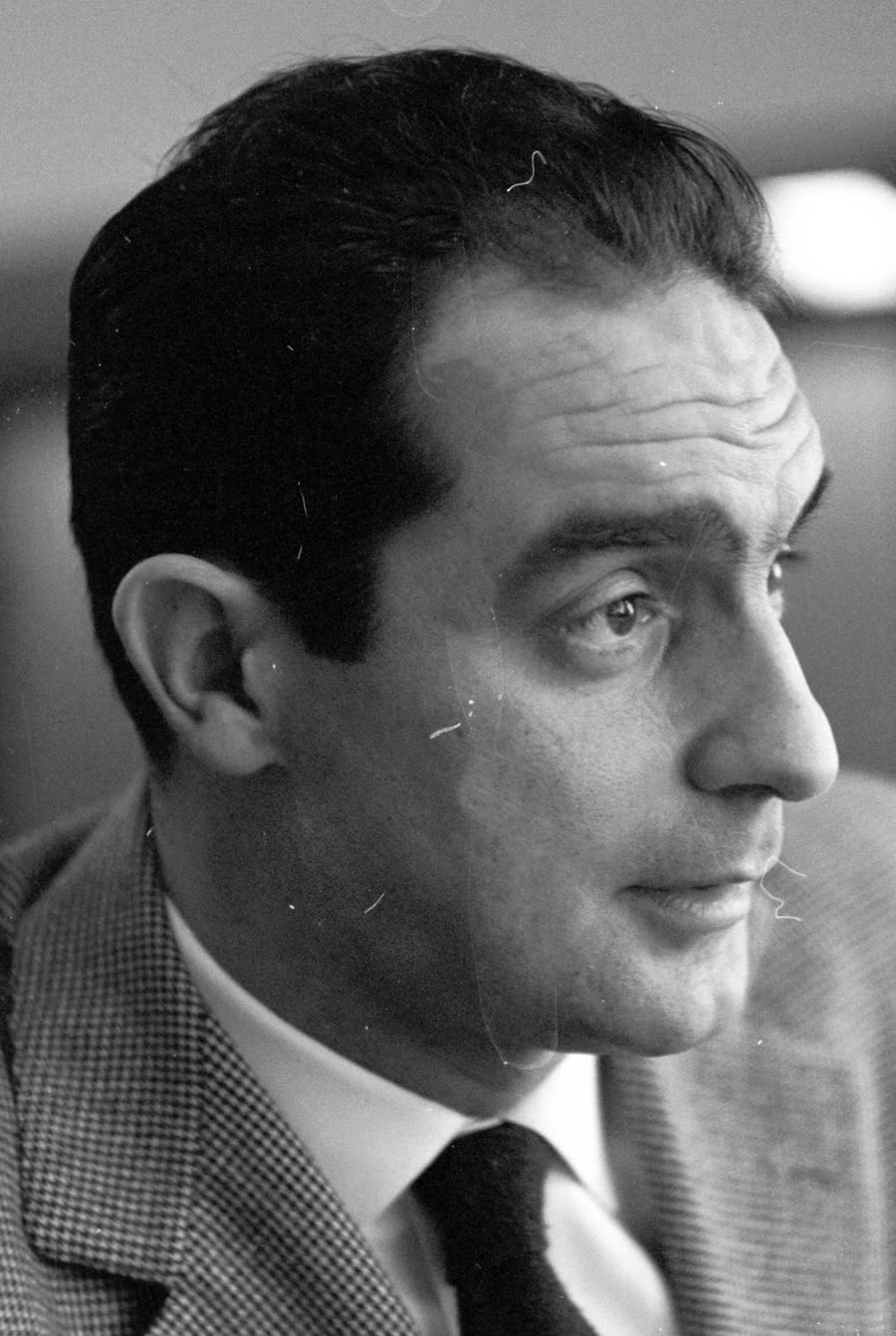
The portrait of Calvino used here catches a related tension: a real photographic surface, formal and still, attached to a writer whose most durable cities are invented.[6] That is a good reminder for a first reader. Invisible Cities is not asking you to choose between reality and imagination. It asks you to notice how much of any city is built in the traffic between them.
Sources
- Penguin Books, Invisible Cities by Italo Calvino (publisher page, synopsis, fifty-five-city frame, Marco Polo/Kublai Khan premise, and Venice note).
- Internet Archive, Invisible Cities bibliographic record for the 1972/Harvest English edition translated by William Weaver.
- Encyclopaedia Britannica, "Italo Calvino" (biography and context for Calvino's later innovative fictional structures).
- University of Glasgow, Anne E. McClure, "Calvino" reading note on Invisible Cities, memory, place, desire, travel, and Venice.
- The Paris Review, "Italo Calvino, The Art of Fiction No. 130" (William Weaver reminiscence, translation context, and Calvino career overview).
- Wikimedia Commons, "File:Italo Calvino (cropped).jpg" (1961 Oslo portrait by Johan Brun, sourced to Oslo Museum/Digitalt Museum; image source for this article).