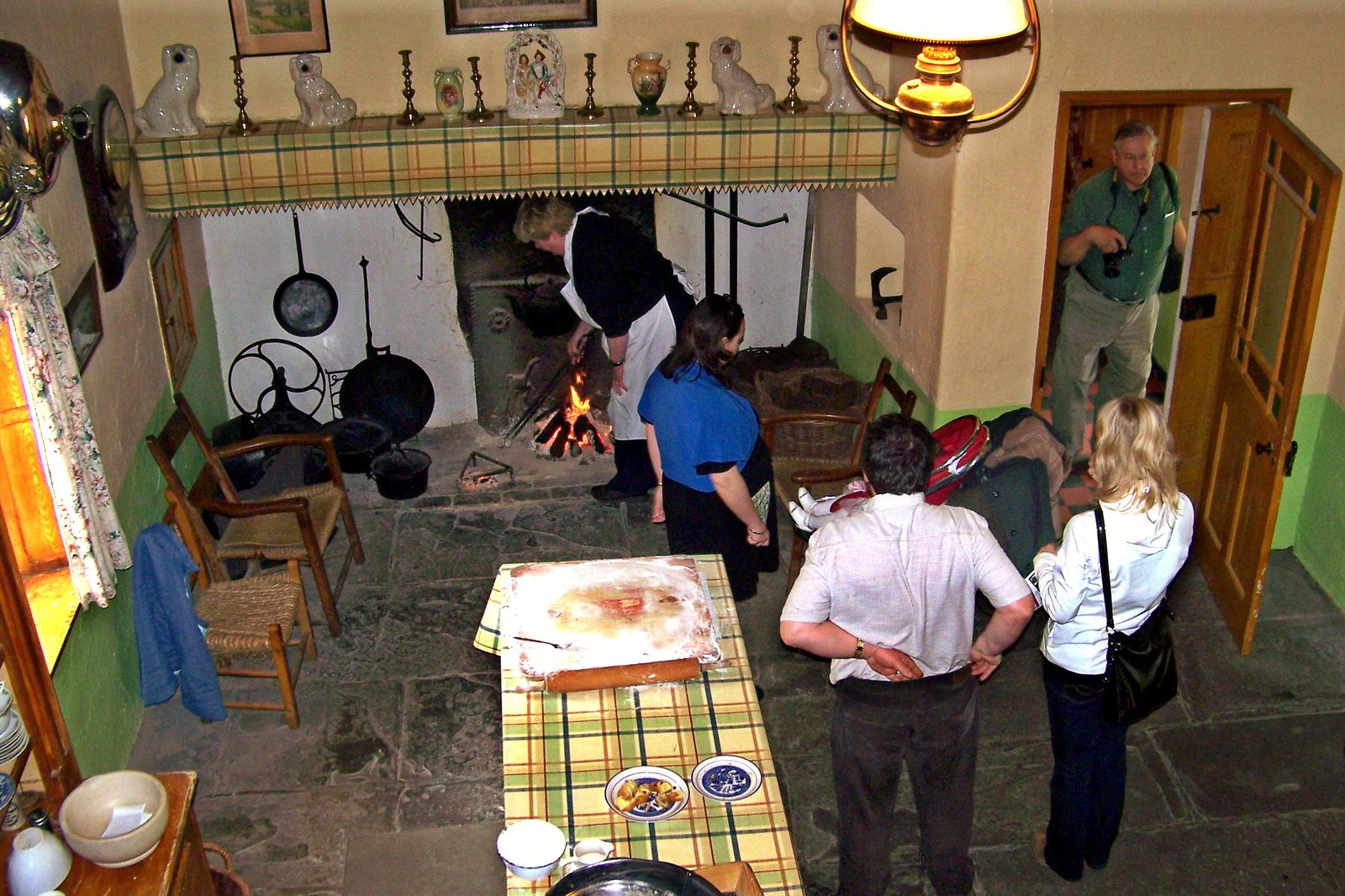
Susan Glaspell's A Jury of Her Peers is often taught as a feminist detective story, which is true as far as it goes and too tidy if it stops there. The men enter the Wright farmhouse looking for a motive in the proper places: upstairs, around the body, in whatever can be made to look like courtroom evidence. The women enter the same house through work. They notice the cold stove, the broken fruit jars, the unfinished kitchen tasks, the quilt pieces, the birdcage, the small box hidden among sewing things. The mystery is solved not because Martha Hale and Mrs. Peters are more sentimental than the men, but because they can read a language the official search has already dismissed.[1]
The story first appeared in 1917, after Glaspell had written the one-act play Trifles for the Provincetown Players in 1916.[1] Its deep background is the 1900 Hossack murder case in Iowa, which Glaspell covered as a young reporter; later legal and literary scholarship has kept returning to the connection because the story's central question is not simply "who did it?" but what a legal system fails to see when women are not among the recognized interpreters of fact.[4] The University of Iowa Press's Her America page is useful because it treats A Jury of Her Peers as part of a larger short-fiction career, not an isolated classroom classic, while Oxford University Press's biography page frames Glaspell's movement from Davenport, Iowa, toward Greenwich Village and modern American theatre.[2][3]
That larger career matters because A Jury of Her Peers is not a classroom parable pasted onto a murder plot. It is a formally exact story about interpretation. Glaspell builds the case out of motifs that seem beneath notice until they become a counter-archive: kitchen, preserves, quilt, cage, bird, pocket. Each object changes status as the women look at it. What begins as mess becomes timeline. What begins as "trifles" becomes motive. What begins as domestic sympathy becomes an alternative judgment.
The Kitchen Is The Crime Scene The Law Cannot Read
The story opens by making Martha Hale feel the pressure of her own kitchen before she leaves it. Bread is unfinished, flour is partly sifted, and her eye registers disorder because domestic work has its own standards of time and care.[1] That detail might look incidental, but it prepares her to read Minnie Wright's kitchen differently from the men. When the county attorney notices the dirty towels and poor housekeeping, he treats the room as character evidence against Minnie. Mrs. Hale sees interruption.
That distinction is the first key to the motif system. The men think the kitchen is beneath investigative seriousness because it belongs to women's work. The women understand that work leaves traces: what was being done, what was stopped, what was neglected unusually, what kind of life had to be maintained under pressure. The same room therefore produces two incompatible readings. To the men, it is a disorderly background. To the women, it is a record of disruption.
Glaspell's craft lies in making this epistemological argument without academic vocabulary. She does not pause to announce that knowledge is gendered. She lets the men walk past the evidence while joking about women's concerns, then lets the women stand inside the texture of those concerns until the room starts giving up meaning. The phrase "kitchen things" becomes damning because the story proves that the kitchen is where motive has been preserved.[1]
The Preserves Make Ruin Ordinary
The broken fruit jars are one of Glaspell's sharpest early motifs because they turn cold weather into moral atmosphere. Minnie has worried that the jars might freeze and burst while she is in jail; the men treat that worry as absurdly small next to murder.[1] They are not entirely wrong about scale. A dead husband is legally larger than ruined preserves. But the story asks a better question: what if the small worry is exactly how a woman under judgment still thinks from inside the life she had to keep running?
Preserves belong to seasonal labor. They stand for preparation, thrift, sweetness stored against winter, and the competence expected of a farm wife. When the jars break, they do not merely signal housewifely failure. They show a domestic order damaged by forces that the official investigation cannot be bothered to reconstruct. The cold has entered the house because Minnie is gone, the fire is out, and the body of ordinary care has been interrupted.
Mrs. Hale's defense of Minnie begins here, before the bird is found. She understands that the jars are not comic relief. They are part of a life in which neglect could become accusation and effort could remain invisible. The preserves motif therefore trains the reader to stop ranking evidence by public drama alone. A burst jar may not solve the case, but it teaches the women how to read the house.
The Quilt Turns Disturbance Into Pattern
The quilt pieces are where Glaspell's symbol work becomes almost tactile. Sewing is usually associated with patience, neatness, and repetition, and Minnie has mostly done it well. Then one block goes wrong. The stitches become erratic enough that the women notice the break in pattern before they know what caused it.[1]
This is the story's most elegant conversion of craft into evidence. The quilt does not speak in words. It registers a change in hand. The body has carried disturbance into the thread. Mrs. Hale's impulse to repair the bad sewing is therefore morally complicated: she is helping Minnie by restoring the pattern, but she is also altering evidence. The gesture is small, practical, almost automatic, and it marks the first step toward a verdict the women will not say aloud.
The men's joke about whether Minnie was going to "quilt it" or "knot it" is famous because it lands with dramatic irony.[1] They hear a domestic technicality. The reader hears the story of John Wright's death pressing back through the word "knot." Glaspell makes the joke expose the speaker. The men can utter the clue and still miss it because they do not respect the system of knowledge from which the word comes.
The Cage Is An Architecture Of Marriage
The broken birdcage changes the room from evidence of interruption to evidence of violence. A cage is already a charged object in a story about a woman isolated in a lonely farmhouse, but Glaspell keeps the symbol from becoming flat. The cage matters because it is material. It has a broken door. Someone has handled it with force. It is not a vague emblem of captivity; it is a damaged structure that points toward an event.[1]
That is why the cage belongs with the kitchen and quilt rather than above them as a simple allegory. It continues the story's rule: meaning arrives through handled things. If the kitchen shows a life interrupted and the quilt shows disturbance entering the body, the cage shows domestic confinement becoming physically legible. It gives shape to what Mrs. Hale remembers of Minnie Foster, the young woman who once sang in the choir before marriage narrowed her world.[1]
The regional context matters because Glaspell's fiction repeatedly worked from Midwestern settings into questions of dissent, gender, and social judgment.[2][3] The farmhouse in A Jury of Her Peers is not generic rural scenery. It is a social geography: distance between neighbors, winter roads, gendered labor, church memory, legal authority arriving from outside, and the terrible fact that isolation can look ordinary until someone knows how to read it.
The Canary Makes Motive Audible After Silence
The dead canary is the story's most devastating object because it restores sound by showing its destruction. Minnie had once sung. The bird sang. John Wright, as the women infer, killed the bird and thereby killed the last audible remnant of the woman Minnie had been.[1] Glaspell does not need to stage a flashback of the marriage. The canary condenses it.
The danger with this motif is to treat it too prettily: bird equals Minnie, cage equals marriage, dead bird equals dead spirit. Glaspell's version is harder. The bird is also evidentiary. Its neck has been wrung, and the parallel with John Wright's strangling is exact enough to become motive.[1][4] The women do not simply empathize; they solve. Their emotional understanding is not opposed to fact. It is the condition that allows fact to be interpreted.
That is the story's radical pressure on legal reading. Marina Angel's law-review article frames Trifles and A Jury of Her Peers in relation to woman abuse and legal context, which helps clarify why the story keeps unsettling readers: it does not merely accuse the male investigators of rudeness or condescension.[4] It asks whether the official law, as represented in the room, has enough categories to understand the harm that preceded the crime. The dead bird is legally useful because it supplies motive; morally, it is larger because it reveals the kind of life the law had not been measuring.
The Pocket Becomes A Courtroom
The final pocket is one of the quietest verdicts in American short fiction. Mrs. Peters cannot quite conceal the box with the canary. Mrs. Hale can. The action is quick, bodily, and almost wordless.[1] A pocket is not a grand symbol. It is private storage, an everyday space close to the body. Glaspell makes it into the place where the story's alternative jury keeps evidence from the court.
That concealment should not be softened into simple triumph. The women are obstructing the official investigation. They are also judging that the official investigation cannot deliver justice because it cannot read the life that produced the act. The title's force gathers here. Minnie will not receive a literal jury of women; in Iowa and most of the United States in 1917, women were still fighting for full civic recognition, and the national suffrage amendment was still three years away. The story's "jury" is improvised in a kitchen, through recognition rather than procedure.
The pocket therefore holds more than a bird. It holds the story's refusal to separate reading from responsibility. Once Mrs. Hale and Mrs. Peters understand the evidence, neutrality is no longer available to them. To hand over the bird would be to help a system that has already mocked the knowledge by which the bird became meaningful. To hide it is to take judgment into their own hands.
Why The Motif Map Still Works
The reason A Jury of Her Peers still feels alive is that its symbols are not decorative. They are tools of reading. Kitchen, preserves, quilt, cage, bird, and pocket form a chain: workplace, ruin, pattern, confinement, motive, verdict. Each link asks who gets to decide what counts as evidence.
That chain also explains why the story's feminism remains literary rather than merely topical. Glaspell does not make the women morally serious by giving them speeches about rights. She makes them serious readers. They notice relations among objects, habits, memories, and injuries. They infer cautiously, change their minds, test sympathy against fact, and finally act on a judgment that the public language of the room cannot contain.
The men are not stupid in a cartoon sense. They are trained by authority to look elsewhere. That is more disturbing. The story's critique is aimed at a whole system of attention, one in which domestic labor is everywhere necessary and everywhere downgraded. Glaspell turns that downgrading into the source of dramatic irony. The evidence is hidden in plain sight because the people empowered to find it have already decided it cannot matter.
Read as a motif map, A Jury of Her Peers is not only about Minnie Wright, nor only about Martha Hale and Mrs. Peters. It is about the politics of legibility. A broken jar, a bad stitch, a torn cage, and a dead bird become readable only when the reader is willing to enter the kitchen without contempt. Glaspell's verdict is severe: justice begins before the courtroom, in the quality of attention a society permits itself to honor.
Sources
- Susan Glaspell, A Jury Of Her Peers (1917), Internet Archive public-domain scan and text download page.
- University of Iowa Press, Her America: "A Jury of Her Peers" and Other Stories; publication and collection context for Glaspell's short fiction.
- Oxford University Press, Linda Ben-Zvi, Susan Glaspell: Her Life and Times; biographical context from Davenport to Greenwich Village and American theatre.
- Marina Angel, "Susan Glaspell's Trifles and A Jury of Her Peers: Woman Abuse in a Literary and Legal Context," Buffalo Law Review 45, 1997.
- Wikimedia Commons, "File:Bunratty Folk Park - Site ^9 - Golden Vale Farmhouse - Kitchen - geograph.org.uk - 3115354.jpg"; restored farmhouse kitchen photograph used as the article image.