People remember Howards End by one sentence before they remember it by plot. “Only connect” has escaped the novel and now circulates as if Forster had offered a general blessing on empathy, conversation, and civilized feeling.[1][3] The phrase survives because it deserves to survive, but it becomes too easy in memory. Inside the novel, connection is not a mood. It is a difficult binding across halves that do not naturally stay together: prose and passion, money and intimacy, houses and people, liberal sympathy and the class system that keeps turning sympathy into an aesthetic pleasure instead of an obligation.[1][2][4]
That is why the book still feels sharper than its reputation. Britannica's concise account of the novel is already enough to show that Forster built it out of collision: the imaginative Schlegels, the pragmatic Wilcoxes, Ruth Wilcox's attachment to the country house, and the inheritance struggle that follows her death.[2] The slogan survives because the structure underneath it is so hard. Howards End is not asking readers to admire connection in the abstract. It is asking what kind of world would let connection become real rather than decorative.
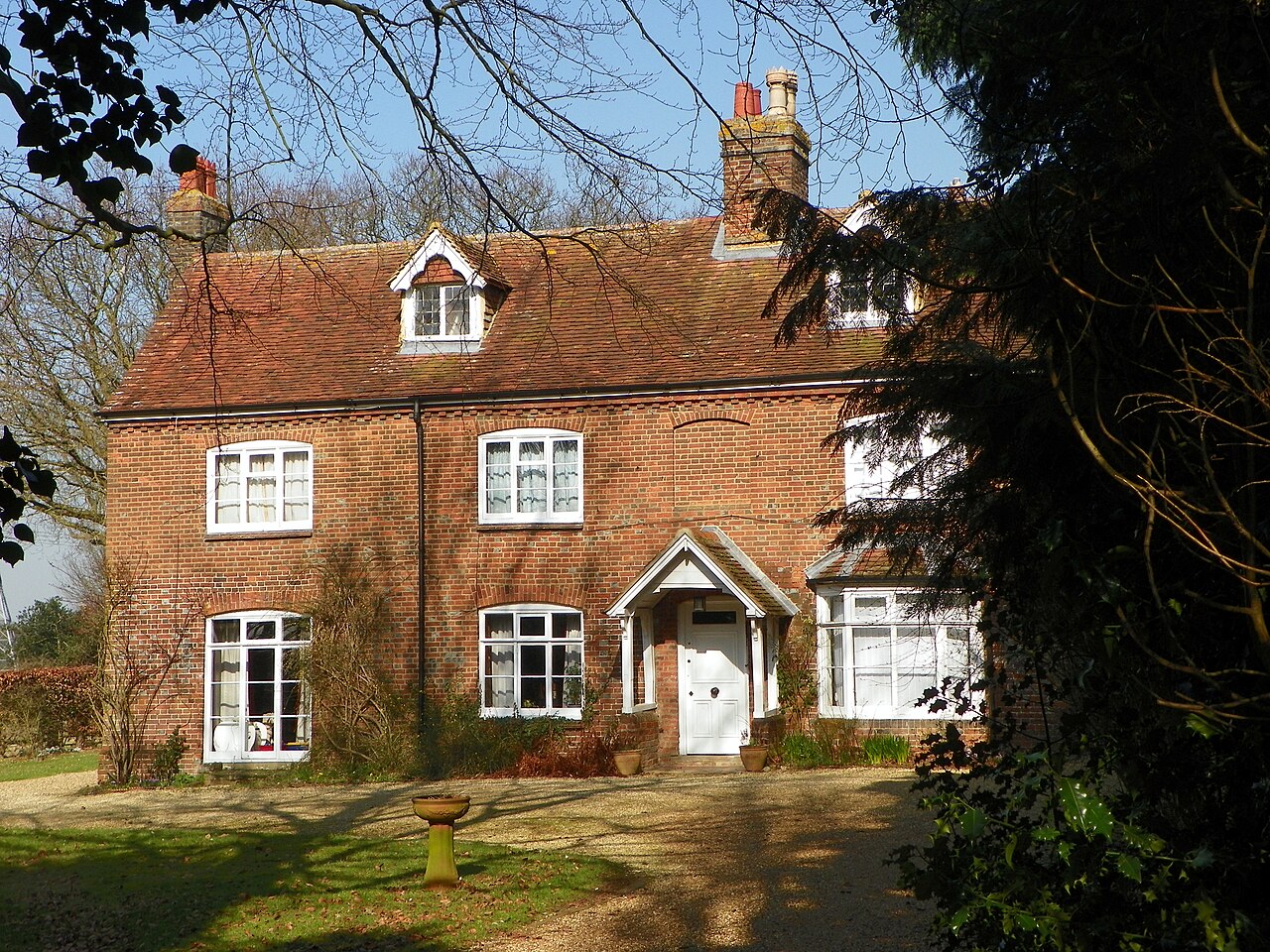
Image context: the lead image uses a real photograph of Rooks Nest House in Stevenage from Wikimedia Commons. It suits this essay because the novel's title house matters less as picturesque English shelter than as a test case: can a place still hold memory, continuity, and human claim once inheritance, class power, and legal control begin to close around it?[5]
1. “Only connect” is a demand to join incompatible registers
Forster places the famous sentence late and gives it a harder edge than its afterlife often keeps. Margaret's thought is not “be kind” or “see both sides.” It is: “Only connect the prose and the passion,” followed by the warning, “Live in fragments no longer.”[1] The force of the line lies in the nouns. “Prose” here means the managed, practical, worldly surface of life: schedules, money, business competence, social arrangements, and the dry realism that the Wilcoxes carry so confidently.[1][2] “Passion” means not mere romance but inward vividness, imagination, responsiveness, and the part of experience that cannot be reduced to utility.[1][3]
The novel's philosophy depends on the fact that each half, left alone, decays. Britannica's biography of Forster says this almost programmatically: contact with the earth alone can sink into genial brutishness, while imagination cultivated in isolation can loosen one's grip on reality.[3] That sentence is practically a gloss on Howards End. The Schlegels can become too refined, too interpretive, too pleased with their own moral subtlety. The Wilcoxes can become all machinery, appetite, and command. Forster's ideal is not the triumph of one side. It is an alliance difficult enough that the novel can barely hold it.
So the famous motto should be read as a command issued under duress. It does not describe a world already inclined toward harmony. It names the labor required in a world organized to keep life's registers apart.[1][3]
2. The novel's real enemy is the “outer life” where relation gets translated into mechanism
Forster makes this explicit early, and he does it through one of Margaret's clearest formulations. After Helen's misadventure with Paul Wilcox, Margaret observes that there is “a life in which telegrams and anger count,” a life where personal relations are not supreme and where love means settlements, death, and death duties.[1] That is one of the essential sentences in the novel because it stops Howards End from becoming merely lyrical. The problem is not that modern life is emotionally chilly in some vague sense. The problem is that institutions, property, and family procedure keep absorbing feeling into transaction.
That is why the Wilcoxes matter as more than satirical types. They are not simply bad because they are rich, brisk, or unimaginative. They represent a social order that knows how to move goods, make decisions, command servants, arrange marriages, and ignore inconvenient moral residue.[1][2] Their competence has “grit,” as Margaret admits.[1] The novel is too intelligent to deny that. Forster sees clearly that the outer world breeds character of a sort. It produces hardness, timing, stamina, and executive certainty. What it does not reliably produce is humane proportion.
The result is one of the book's strongest philosophical tensions. Margaret does not want to live in pure Schlegel air, talking culture above the street. Yet every attempt to enter Wilcox prose threatens to drain moral life out of language altogether.[1][2] Connection therefore becomes a question of translation. Can one pass into the real world without accepting its brutal grammar as final?
3. The house is not cozy symbolism. It is the novel's argument about memory, use, and rightful claim
That question is why the house matters so much. Britannica describes Howards End as the Wilcox family country house and notes Ruth's wish that it pass to Margaret.[2] But the novel gives the house a denser charge than “beloved home.” It is where Ruth Wilcox seems least dominated by the Wilcox system of movement, packing, hotels, business, and imperial circulation.[1][2] In the middle of a book full of flats, offices, clubs, streets, and social calls, Howards End retains thickness. It has weather, furniture, rootedness, and the feeling that life has been lived there instead of merely administered there.[1]
This is where Forster's larger philosophy of “the earth” becomes useful. Britannica's biography says that his novels repeatedly seek contact with the earth and imagination together.[3] In Howards End, the title house becomes the test of whether that contact can survive inside property law and inheritance. A weaker novel would simply contrast warm house to cold city. Forster does something harsher. He shows that the house can be loved and still be withheld, symbolically recognized and still bureaucratically denied. Ruth's note exists, yet the family can ignore it.[1][2] Memory has no automatic power against ownership.
Margaret's eventual relation to Howards End therefore matters because it is not sentimental reward. It is the novel's attempt, partial and precarious, to move a house from possession toward use. Near the end Margaret says, “For Mrs. Wilcox it was certainly Howards End,” then adds that it is sad to suppose places may be more important than people.[1] The line is not a contradiction. It is a recognition that places matter because they gather human time, and that people fail when they treat those places as dead assets. The house is valuable not because it is antique property, but because it keeps insisting that life needs a local, inhabited scale.[1][2][5]
4. Leonard Bast shows the moral limit of connection when class remains intact
If the novel ended only with Margaret, Ruth, and the house, “Only connect” might still read like elevated Edwardian wisdom. Leonard Bast prevents that simplification. He is the figure through whom Forster tests whether liberal responsiveness can cross class without turning into supervision, condescension, or damage.[1][4] The Schlegels genuinely feel for him, but feeling does not save him. Their attention enters his life unevenly, theatrically, and too late. The Wilcox world, meanwhile, crushes him without ever needing to hate him as an individual.[1]
That is why Howards End is a sterner social novel than its aphorisms suggest. Connection is not only difficult because inner life and outer life differ. It is difficult because England is stratified in ways that make one class's moral experiment another class's material risk.[1][2][4] Leonard cannot afford to treat prose and passion as complementary modes. He lives where bad advice, shabby employment, and a ruined evening have direct bodily consequences. The famous sentence sounds noble, but Leonard makes the reader ask who pays when the cultured classes discover their ethical ideals through other people's precarity.
Here the novel's philosophy refuses self-congratulation. The Schlegels are better readers of persons than the Wilcoxes, yet reading is not enough. Forster lets sympathy approach justice, but he does not let it become justice by declaration alone.[1][4]
5. The ending matters because it is symbolic, and not fully secure
Britannica calls the ending symbolic: Margaret marries Henry and brings him back to Howards End, reestablishing a threatened link between imagination and earth.[2][3] That is right, but the novel's intelligence lies in how provisional that restoration feels. Henry returns not as a converted liberal idealist but as a broken man.[2] The house remains exposed to the larger forces of progress, class interest, and historical change. The novel grants one local settlement, not a national cure.
That is why “Only connect” keeps living beyond the book. It is memorable because it promises wholeness, but it stays powerful because the novel refuses to make wholeness cheap. Forster's real claim is not that good people can solve modernity by feeling more deeply. His claim is that any decent life must somehow join practicality to imagination, place to affection, and social fact to moral seriousness, even though the world keeps splitting them apart.[1][2][3]
Read that way, Howards End becomes less a hymn to humane balance than a novel about how hard balance is to earn. “Only connect” is not the book's decorative wisdom. It is its impossible standard. The phrase lasts because Forster wrote a world in which fragments have power, property has teeth, class can kill, and houses can still, for a while, hold open the thought that relation might become more than sentiment.[1][2][4][5]
Sources
- E. M. Forster, Howards End (Project Gutenberg full text; cited for “Only connect,” “telegrams and anger,” the house scenes, and the ending).
- Encyclopaedia Britannica, "Howards End" (publication context, Schlegel-Wilcox conflict, inheritance plot, and the symbolic ending).
- Encyclopaedia Britannica, "E.M. Forster" (biographical context and Forster's recurring effort to connect imagination, the earth, and social reality).
- Penguin Random House, Howards End reader page (modern framing of the novel as a class-conflict drama and a durable entry point in the book's afterlife).
- Wikimedia Commons, "File:Rooks Nest House, Stevenage.JPG" (source page for the lead photograph).