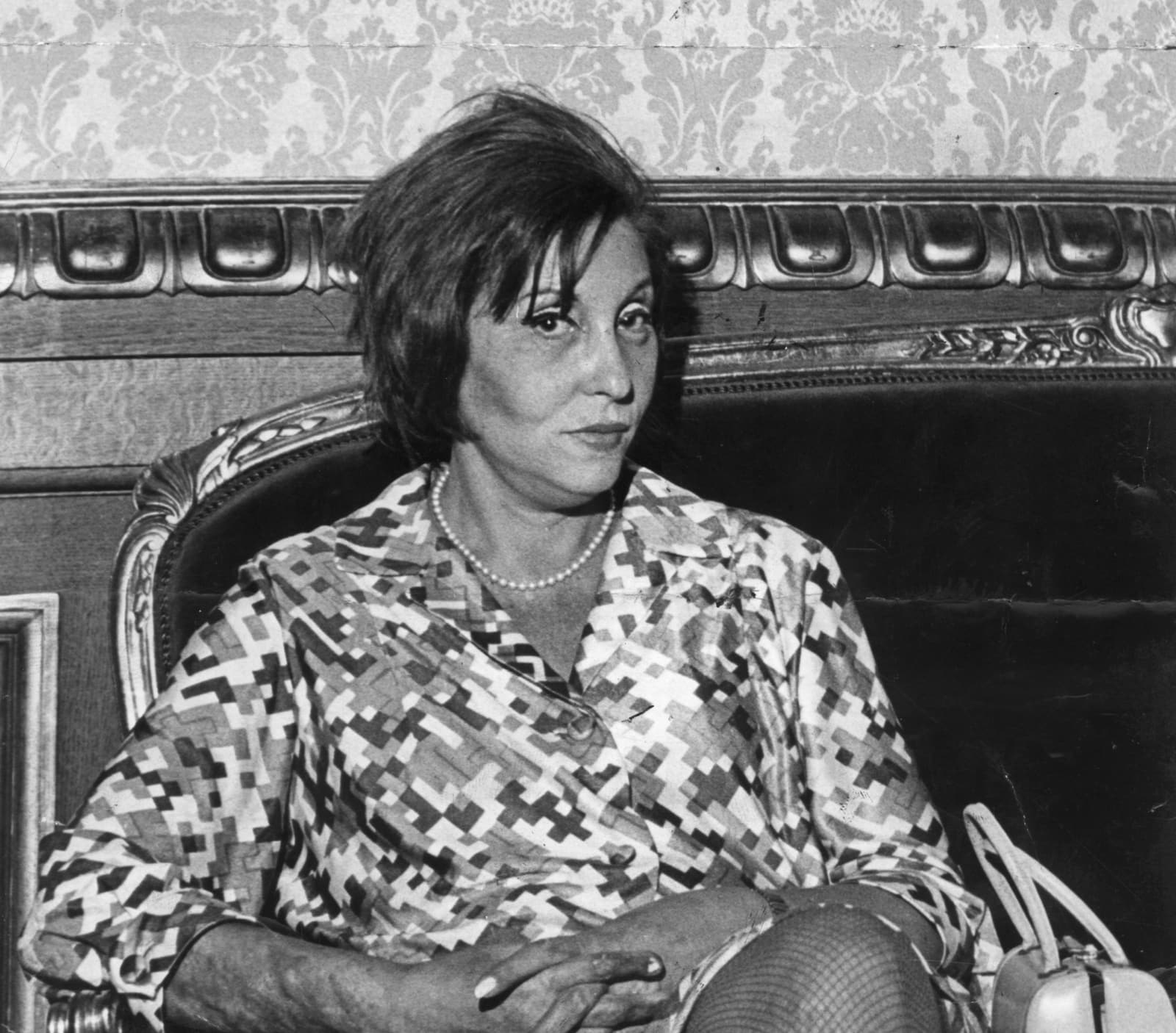
Clarice Lispector's The Hour of the Star is often introduced as the brief, devastating story of Macabea, a poor typist from Brazil's Northeast adrift in Rio. That is true, but it misses the book's real voltage. The novella is powered by a narrator who keeps exposing his own right to narrate. Rodrigo S.M. does not simply tell Macabea's story; he stages, delays, doubts, decorates, and incriminates the act of telling it.[1][2]
That is why the novel still feels so modern. Lispector makes voice into a moral event. Rodrigo wants plainness, but he keeps performing around plainness. He wants access to a life outside his class horizon, but the prose records his failure to cross that distance cleanly. The result is not an ornament laid on top of social misery. Style itself becomes the form of guilt.[2][3]
The voice arrives before the girl
Before Macabea can become a stable character, Rodrigo turns the book into an argument about beginnings, authority, and tone. The surviving notes gathered in the Clarice Lispector archive preserve how much pressure Lispector placed on the opening movement: fragments on title options, restarts, and tonal resets show a book worrying over how it is allowed to begin at all.[3] That matters because Rodrigo's opening method is not efficient scene-setting. It is self-exposure.
The famous declaration, "Everything in the world began with a yes," sounds like a metaphysical overture, but it is immediately followed by self-conscious friction. Soon comes the harder sentence: "Let no one be mistaken. I only achieve simplicity with enormous effort."[1][3] That line is the novella's stylistic key. Simplicity here is not innocence, transparency, or folk purity. It is a laborious rhetorical pose undertaken by a narrator who knows his own habits are too verbal, too educated, too intrusive.
So when readers call Lispector's prose "simple," the novel itself asks them to stop and qualify the word. Rodrigo's diction can be direct, but his syntax is full of reversals, apostrophes, and anxious self-corrections. The book sounds stripped down only because it keeps dramatizing the cost of stripping down.
Rodrigo's style is a failed approach
The Clarice archive's summary of the novella gets to the core of the problem: Macabea's story runs in counterpoint with the writer's "creative process and drama" as he tries to portray someone from outside his socioeconomic universe.[2] Rodrigo is not a transparent channel. He is the scene of obstruction.
That obstruction gives the voice its pressure. He does not speak with the confidence of documentary realism. He circles, exaggerates, pleads, and withdraws. One draft note gives him the line, "I shall attempt to extract gold from charcoal."[3] The metaphor is revealing because it is half aspiration and half embarrassment. He wants to produce literary value from a life the social order treats as disposable, but the phrase also exposes the danger: turning Macabea into material.
This is why Rodrigo's discursiveness matters. It prevents the novella from offering poverty as clean emotional consumption. Each time the narrative starts to settle into pity, the narrator interrupts with vanity, discomfort, or theoretical noise. His style keeps reminding the reader that literary attention is not automatically ethical attention.
The interruptions are the point
New Directions' description of the book rightly emphasizes the "piquantly intrusive narrator" who pushes questions of identity, storytelling, and love into the foreground.[4] The intrusion is not incidental. It is the book's governing rhythm.
Rodrigo addresses the reader, comments on his own method, announces what he cannot do, and then keeps writing anyway. The effect is neither stream of consciousness nor essayistic aside in any simple sense. It is a prose of unstable permission. The narrator grants himself entry sentence by sentence and revokes that permission sentence by sentence.
Lispector's archive notes make this even clearer. One of the draft passages ends, "This book is a silence: an interrogation."[3] That is a startling formula for a talkative narrator, but it fits. Rodrigo speaks so much because he cannot stabilize the moral meaning of speaking. His voice is noisy on the surface and interrogative underneath. The novella's ellipses are therefore ethical, not merely stylistic. They mark a voice unable to become innocent.
Macabea changes the temperature of the prose
Macabea herself is easy to summarize and hard to hold. She lives on scraps, likes Coca-Cola and movies, drifts through work and romance without the social equipment that would let her defend herself, and seems to pass through Rio with almost no protective shell.[2][4] Yet Lispector refuses to turn her into a saint of suffering or a sociological case file.
What Rodrigo cannot get over is not only Macabea's deprivation but her low-demand presence. Archive notes attached to later passages show the narrator unnerved by how little she asks and how little language seems proportionate to her life.[3] Even small details, such as her radio habits or her private Sunday solitude, arrive with a peculiar mixture of tenderness and estrangement.[3] She does not conquer the prose through eloquence. She alters it by forcing the narrator into shame, fascination, and recoil.
That is one reason the novel keeps producing divided readings. Some readers treat Rodrigo as an obstacle to the "real" story; others see him as the novel's main invention. The better answer is that Lispector binds the two together. Macabea is not hidden behind Rodrigo by accident. She is presented through the very medium that fails her. The novella's formal achievement is to make that failure visible without pretending it can be repaired by better manners.
Why the voice travels so well
Britannica's summary of Lispector points to a prose style marked by simple vocabulary and elliptical sentence structure.[5] In The Hour of the Star, that combination becomes uniquely sharp because the book is late Lispector and late Lispector writes from the edge of exhaustion, metaphysical wit, and severe compression. The novella was published in 1977, the year of her death, and it reads like a final reduction of several long-running concerns: consciousness, voice, class distance, feminine precarity, and the instability of self-knowledge.[2][5]
Its afterlife in English also makes sense for stylistic reasons. The book travels not because every sentence is easy to translate, but because its core drama is audible: a narrator trying to speak justly and discovering that speech itself carries rank, vanity, and appetite.[1][4] The reader hears the strain even before parsing every philosophical contour.
That is why Rodrigo S.M. remains unforgettable. He is not a reliable witness, and Lispector never asks us to treat him as one. He is something harsher and more interesting: a failed witness who keeps talking in full view of his failure. In The Hour of the Star, voice is not decoration and not merely signature. It is the very place where literary intelligence meets its moral limit.
Sources
- PEN America, "Clarice Lispector: The Hour of the Star" (Giovanni Pontiero translation excerpt).
- Instituto Moreira Salles, "The Hour of the Star" book page in the Clarice Lispector archive.
- Instituto Moreira Salles, "The hour of the star: notes" (draft notes and opening fragments).
- New Directions, The Hour of the Star by Clarice Lispector.
- Encyclopaedia Britannica, "Clarice Lispector."
- Wikimedia Commons, "Clarice Lispector, 1972" (photograph from the Brazilian National Archives).