Maggie Tulliver still feels dangerous because George Eliot gives her a scale problem. She has too much appetite for the rooms she inhabits: too much curiosity for her schooling, too much imaginative force for her family's practical code, too much feeling for the moral banks that try to contain her.[1][2][3] Many tragic heroines suffer because society refuses them happiness. Maggie is harder than that. She suffers because almost every vital power in her arrives in an excessive form, and Eliot refuses to flatten that excess into either innocence or sin.
That is why The Mill on the Floss remains one of Eliot's sharpest character studies. The novel does not ask whether Maggie deserves approval. It asks what happens when a young woman with a large inward life grows up inside a system organized around property, grievance memory, and behavioral restraint.[1][4] Her tragedy begins in appetite before it reaches catastrophe.
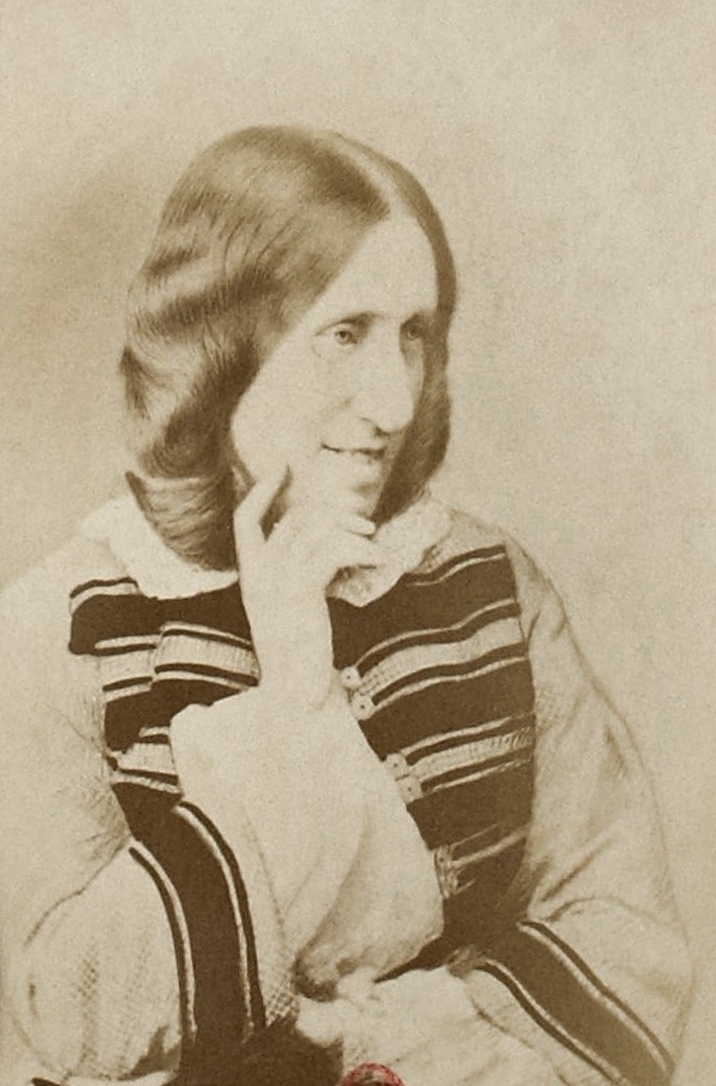
Image context: the cover image is an archival portrait of George Eliot rather than an illustration of Maggie herself. It belongs here because this essay is about one of Eliot's most exact inventions: a heroine whose emotional and intellectual overflow keeps colliding with the narrow forms that claim to civilize her.[6]
1) Maggie's first trait is not rebellion. It is overflow.
The opening chapters make that plain. Maggie is bright, affectionate, quick to shame, quick to worship, quick to resent, and almost impossible to keep in proportion. Her brother Tom can imagine discipline as a straight line between rule and result. Maggie cannot. She absorbs books, fantasies, injuries, and longings all at once, so her inner life expands faster than the code around her can read.[1][2]
That distinction matters because Eliot does not write Maggie as a simple rebel against family authority. The Dodson-Tulliver world values thrift, memory, respectability, and exact accounting; even love often comes wrapped in correction.[1][2] Maggie grows inside that world and feels its claims deeply. She wants affection from it, legitimacy from it, and forgiveness from it. Her difficulty is that she can never reduce herself to its units. The same abundance that makes her lovable also makes her unmanageable.
Eliot's biographical and philosophical afterlife helps explain why this pressure feels so deliberate. Eliot's fiction keeps testing how moral life depends on sympathy, yet also how sympathy can become painful when imagination outruns circumstance.[3][4] Maggie is one of the clearest places where that experiment turns tragic. She feels too much before she knows what to do with feeling.
2) Tom is not only her brother. He is the shape of the world that keeps judging her.
Readers often remember Tom Tulliver as the severe sibling, and he is severe. But his importance in Maggie's character study goes beyond personal cruelty. Tom stands for a moral rhythm Maggie can never fully inhabit: earn, repay, remember injuries, keep order, distrust excess.[1][2] He is not merely a bad brother blocking a good sister. He is the household logic turned into personality.
That is why Maggie's attachment to him is so painful. She does not want liberation from Tom alone. She wants recognition from the very structure that wounds her. When the family falls, when Mr. Tulliver's finances collapse, when shame and debt settle over the house, Maggie's instinct is not to flee into pure self-assertion. She leans harder into renunciation, obedience, and service.[1] The novel keeps showing her trying to become worthy in the terms offered to her, even when those terms keep shrinking her.
This is one reason Maggie never reads as a tidy proto-modern heroine. She longs for freedom, but she also longs for absolution from the old authorities. The contradiction gives the character her charge. She is divided not between good and evil but between forms of loyalty that cannot be reconciled.
3) Her disasters in love grow from the same abundance that makes her morally alive
Maggie's relations with Philip Wakem and Stephen Guest are often summarized as mistakes of feeling. That is too small. Eliot makes both attachments expose the same structural vulnerability: Maggie's nature is hospitable to intensity.[1][2] She is moved by attention, by beauty, by being understood, by the sudden relief of entering a richer emotional weather than St. Ogg's usually permits.
With Philip, that weather comes through shared inwardness. He sees her intelligence, her hunger, and the part of her that ordinary domestic management cannot touch.[1] With Stephen, the danger arrives through force of atmosphere and bodily drift. Eliot writes the river episode so that desire feels less like a decision than like a current that has already begun carrying the scene away.[1][5] The point is not that Maggie lacks principle. The point is that principle in her life is always contending with energies that exceed managerial self-command.
This is where weaker readings moralize too quickly. Maggie is neither a pure victim swept away by men nor a covert egoist hiding appetite under conscience. Eliot gives us a consciousness crowded with incompatible goods: duty, tenderness, erotic responsiveness, self-respect, and the wish not to injure others.[1][4] The grandeur of the character lies in how much she can hold at once. The damage comes from the same source.
4) Renunciation does not save Maggie, because renunciation is one of her appetites
One of Eliot's boldest decisions is to make self-denial attractive to Maggie. After the rush of feeling comes the rush of renunciation. She reads devotional discipline, tries to reduce her desires, and repeatedly imagines moral greatness as a form of inward compression.[1][4] That movement matters because it keeps the novel from becoming a simple case for liberation through authenticity.
Maggie does not merely get punished by external rules. She helps internalize them. Sometimes she even enlarges them, turning ordinary duty into a near-absolute demand. The result is not peace but oscillation: longing, self-rebuke, tenderness, withdrawal, renewed craving, renewed shame. Eliot's fiction often works by showing that moral life is local, relational, and difficult to purify.[4][5] Maggie keeps searching for a pure position and finding that her nature overflows it.
That is why she remains so moving. She keeps trying to become "good" in a world whose available definitions of goodness leave little space for amplitude. Her self-command has dignity. It also carries violence. She can cut herself down; she cannot become small.
5) The flood ending is not a decorative tragedy. It is the novel's form becoming visible.
By the time the flood arrives, Eliot has been preparing river logic for hundreds of pages. The title announced it. The town's economies, memories, and habits have all been organized by water, current, bank, overflow, and return.[1][2] Maggie's own character has followed the same pattern: pressure builds, containment tightens, then a force escapes the forms meant to hold it.
The ending therefore feels shocking and inevitable at once. When Maggie and Tom are briefly reunited in the flood, Eliot does not hand readers a clean moral sentence.[1] There is no neat reward structure, no easy declaration that passion caused ruin or that virtue redeemed all. Instead the novel converts its deepest character truth into physical event. Maggie's life could never be rendered legible by the town's ordinary measures; only at the point of inundation does the book find a scale large enough to match her.
That formal choice helps explain the novel's durability. As James Buzard argues of Eliot's method, fine local detail and wider moral intelligibility keep pressing against each other in her fiction.[5] The Mill on the Floss drives that pressure into disaster. The flood is not an external bolt from nowhere. It is the book's way of making overflow objective.
6) Why Maggie Tulliver keeps returning
Maggie survives because many readers know some version of her mismatch. A life of strong inwardness still enters institutions that reward neatness, tactical speech, and manageable desire. The old provincial names change, but the compression remains. Eliot saw that early: a person can be generous, intelligent, affectionate, and ethically serious, yet still become intolerable to a system that values self-control mainly in its narrowest and most socialized forms.[1][3][4]
That is why Maggie Tulliver should not be reduced to a warning case or a romantic emblem. She is one of Eliot's hardest recognitions. Human beings do not only suffer from having too little feeling. They also suffer from having a nature too large for the channels available to it. Maggie's path through love, shame, duty, and flood gives that truth its most memorable nineteenth-century form.[1][2]
Sources
- George Eliot, The Mill on the Floss (Project Gutenberg full text).
- Encyclopaedia Britannica, "The Mill on the Floss".
- Encyclopaedia Britannica, "George Eliot".
- Nancy Henry, "George Eliot," Stanford Encyclopedia of Philosophy.
- James Buzard, "How George Eliot Works" (MIT Open Access Articles / Raritan manuscript).
- Wikimedia Commons, "File:George Eliot BNF Gallica (cropped).jpg" (lead image source).