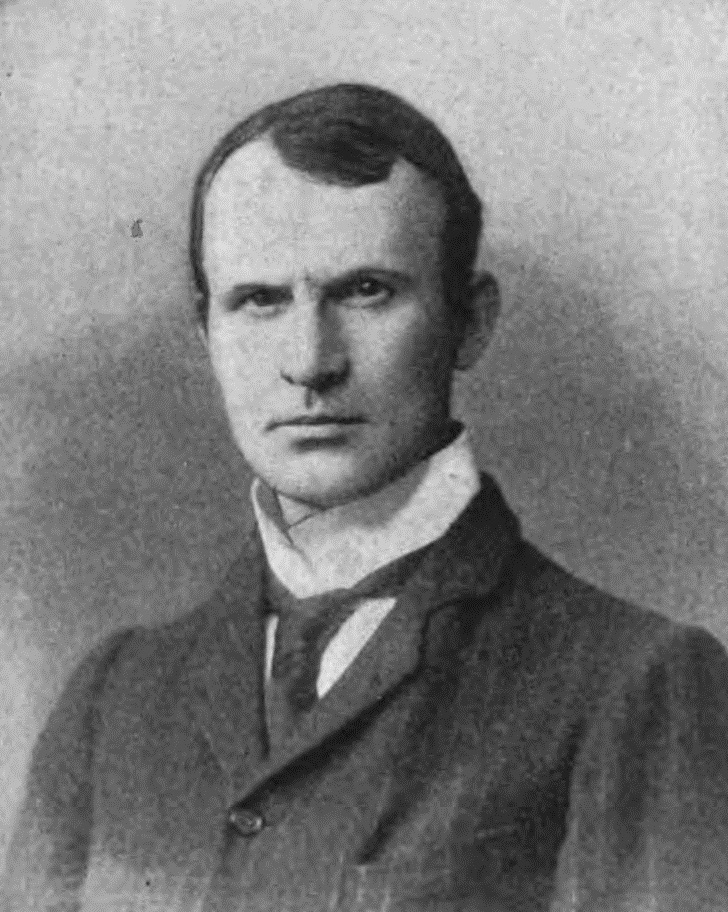
A book can become famous for telling an uncomfortable truth before readers agree on what makes it true. George Douglas Brown's The House with the Green Shutters, published in 1901, acquired just that kind of authority. Its Scottish town, Barbie, is a place where commercial rivalry feeds on wounded pride, neighbors collect one another's humiliations, and a prosperous man's home becomes the enclosure of his family's misery. It offered a sharp rebuke to reassuring pictures of village life.[1][2]
Yet Brown worried about the force of his own correction. In a letter quoted by the critic Christian Civardi, he acknowledged that hostility to sentimental writers had made him “embitter the blackness.” His excess, he admitted, was a “gross blunder.”[3]
That admission makes the novel's afterlife more interesting. A reputation for honesty can be earned by breaking a comforting convention. It still leaves a harder question: what happens when the replacement becomes a convention of its own?
The Scotland readers were meant to leave behind
The word kailyard means a cabbage patch or vegetable garden. Applied to literature, it became a label for a Scotland of small communities, domestic virtues, ministers, and schoolmasters. In his survey What Is Scottish Literature?, Alan Riach connects the appeal of such writing partly to emigrant readers who wanted a recognizable, consoling home to imagine from elsewhere.[2]
This helps explain the stakes of Brown's quarrel. A village story could carry a whole national self-portrait. If its familiar types were wise, kindly, and mutually sustaining, local intimacy seemed to guarantee moral health. An attack on that intimacy therefore challenged more than a picturesque setting.
Brown retained the small town and turned proximity into pressure. Barbie's people know one another well enough to identify every weak point. John Gourlay, the carrier whose house dominates the town, makes prosperity a spectacle of superiority. His neighbors return the insult by watching for his decline. The same closeness that could sustain a comforting community story now supplies the means of punishment.[1]
The label anti-Kailyard captures that reversal. It becomes less useful when it tempts us to treat the reversal itself as proof: kindly villagers are sentimental, therefore malicious villagers must be real.
An early reader challenged the concentration of malice
Robert Barr raised almost exactly this objection. In “The Closing of the Shutters,” published in McClure's Magazine after Brown's death in 1902, he recalled telling Brown that no village could contain so many objectionable people. According to Barr, Brown conceded the point but insisted that his principal figures had living originals. Barr remembered him supplying stories and identifying their home village.[4]
This is a recollection of conversation, not an independently verified inventory of the novel's models. Its value lies in the distinction it preserves. A character can be drawn from an actual person while the company assembled around that character remains highly selective.
Brown's reported defense answers the question of where his materials came from. Barr's objection concerns what he did with them. Neither answer cancels the other. Put every remembered bully, gossip, and fool in one town, and each may be individually recognizable; their concentration will still shape the reader's sense of what an entire society is like.
There is an additional irony in Barr's memorial. He opens by connecting the novel's ominous shuttered house to the London house in which Brown now lay dead.[4] Almost immediately, the book's imagery was being used to interpret its author's life. Reception was already turning a made scene into an apparently natural language for reality.
The neighbors do not make a trustworthy jury
Chapter V supplies the novel's own account of local malice. Its narrator moves from Scottish individualism to competition, and from competition to the belittling of rivals. A man's success becomes an invitation to rehearse the disreputable branches of his family tree. Knowledge of a neighbor becomes a stock of usable injuries.[1]
The explanation is pointed, but it also makes an enormous generalization. The narrator's confidence about national character belongs to the novel's argument; it need not become ours. We can watch the mechanism at work in Barbie without accepting that the town is a representative sample of Scotland.
More disturbing is the relationship between those watching and the man watched. Gourlay displays contempt for public opinion while arranging his life around it. In Chapter I, the departure of his carts pleases him because their procession will impress the people he despises. The narrator exposes the dependence inside the defiance: Gourlay needs an audience for his superiority.[1]
The neighbors, meanwhile, need his importance in order to enjoy bringing it down. Their opposition does not place them outside his system of value. They measure themselves through the same public rankings. His pride and their spite keep supplying one another with work.
Read this way, the novel's force comes from a relationship it makes visible. Calling everyone nasty tells us very little. Showing how domination recruits spectators, and how spectators convert accurate observation into cruelty, explains why the town is so difficult to escape.
A beautiful morning is part of the problem
The opening gives us a chance to feel the attraction before judging it. Water thrown from a doorway makes a briefly gleaming arc. Roofs and chimneys sit in clear morning light. The scene is genuinely lovely, even though the narrator has already introduced contempt through his description of the chambermaid. Gourlay takes the prospect as a “delicate flattery to his pride.”[1]
Beauty has not been removed to make room for realism. It has been appropriated. The town looks good from the position of the man who can imagine possessing it.
Chapter III repeats the division on a smaller scale. Father and son attend to the same clean courtyard, pigeon, and dripping pump. The boy responds intensely to the scene's sensory life; his father takes pleasure in ownership. Their shared view holds different satisfactions.[1] Brown can discriminate between minds even when his account of a whole country sounds sweeping.
The last chapter returns to morning light after the household's catastrophe. The house is dark beneath the “radiant arch of the dawn.”[1] That contrast resists an easy equation between a pleasant surface and a healthy world. It also resists the idea that a tragic world must look uniformly ugly. The light remains; what the onlookers can bear to see has changed.
How a quarrel becomes a classic
Later criticism kept negotiating the book's severity. Civardi's 1972 essay quotes Somerset Maugham's 1938 introduction, which finds Brown governed by “anger rather than with sympathy.” Civardi disputes that judgment, arguing that the novel's personal, social, and mythical dimensions form an elaborate artistic whole.[3] The disagreement is over what the darkness accomplishes, not whether it is present.
By 1988, Iain Crichton Smith's Scotnote offered the book to school pupils and students through its characters, structure, and language. The Association for Scottish Literary Studies' description preserves the familiar account of an antidote to Kailyard sentimentality, but also draws attention to its sly humor.[5] The polemical reputation survives alongside an invitation to read more closely.
That is the invitation worth keeping. The House with the Green Shutters gives us reasons to distrust comforting pictures of community. Its own history gives us reasons to examine the authority of uncomfortable pictures too. Brown's achievement is clearest in the moments when the label falls away: a man looking over roofs, a child watching water drip, neighbors who understand another person's weakness and choose what to do with that understanding.
Sources
- George Douglas Brown, The House with the Green Shutters, Project Gutenberg edition—primary text, especially Chapters I, III, V, and XXVII.
- Alan Riach, What Is Scottish Literature?, Association for Scottish Literary Studies, 2009, p. 13—Kailyard, emigrant readership, and Brown's place in literary history.
- Christian Civardi, “The House with the Green Shutters: A Chapter of the Moral History of Scotland,” Recherches anglaises et nord-américaines 5 (1972), pp. 194–206—p. 194 quotes Brown's letters through James Veitch's biography and Maugham's 1938 introduction.
- Robert Barr, “The Closing of the Shutters,” McClure's Magazine 20, no. 1 (1902), pp. 100–103—contemporary memorial and recollection of discussing the novel with Brown, transcribed at Wikisource.
- Association for Scottish Literary Studies, Iain Crichton Smith's Scotnote 3: The House with the Green Shutters (1988)—study-guide publication details and educational framing.
- Wikimedia Commons, “Portrait of George Douglas Brown.jpg”—archival portrait credited to Schutt, reproduced from The Critic, dated no later than 1902.