Allen Ginsberg's Howl is easy to misremember as an event before it is heard as a poem. The usual historical chain is powerful: a first public reading at San Francisco's Six Gallery in October 1955, publication by City Lights in 1956, seizure and prosecution, then the 1957 ruling that helped make the poem a free-speech landmark.[2][4][5] That story is true enough, but it can turn the poem into a courtroom exhibit or a Beat Generation origin plaque. The 1959 Big Table Chicago recording gives back the thing that made the scandal possible in the first place: a voice forcing long lines through breath, pressure, pace, and public address.[1]
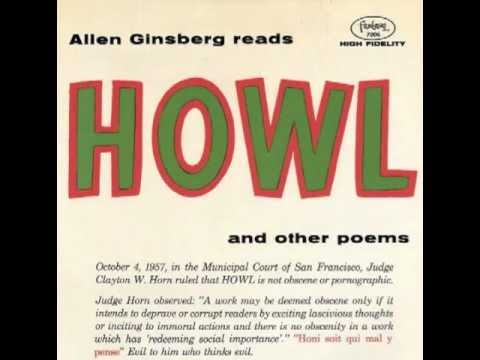
The surviving audio is not the Six Gallery reading itself. The YouTube upload used here identifies the performance as Ginsberg's 1959 Big Table Chicago reading, with Gregory Corso and Peter Orlovsky present.[1] That later date matters. By 1959, Howl and Other Poems had already moved through publication, seizure, trial, and vindication, and Ginsberg had become a name rather than just a young poet testing a room.[4][5] The recording therefore catches Howl after its legal drama but before it had fully hardened into classroom canon. It is a poem with a reputation, still being made again by the body reading it.
That is why an archival spotlight is the right frame. The recording is not included as proof that Ginsberg was charismatic, or as background ambience for a familiar text. It lets a reader hear a formal problem. Howl depends on long accumulative lines, anaphora, catalog, social rage, erotic frankness, religious reach, and comic excess.[3][4] On the page those features can look sprawling. In performance, they become a kind of engine. Breath does not decorate the poem. Breath is the unit that turns private witness into public argument.
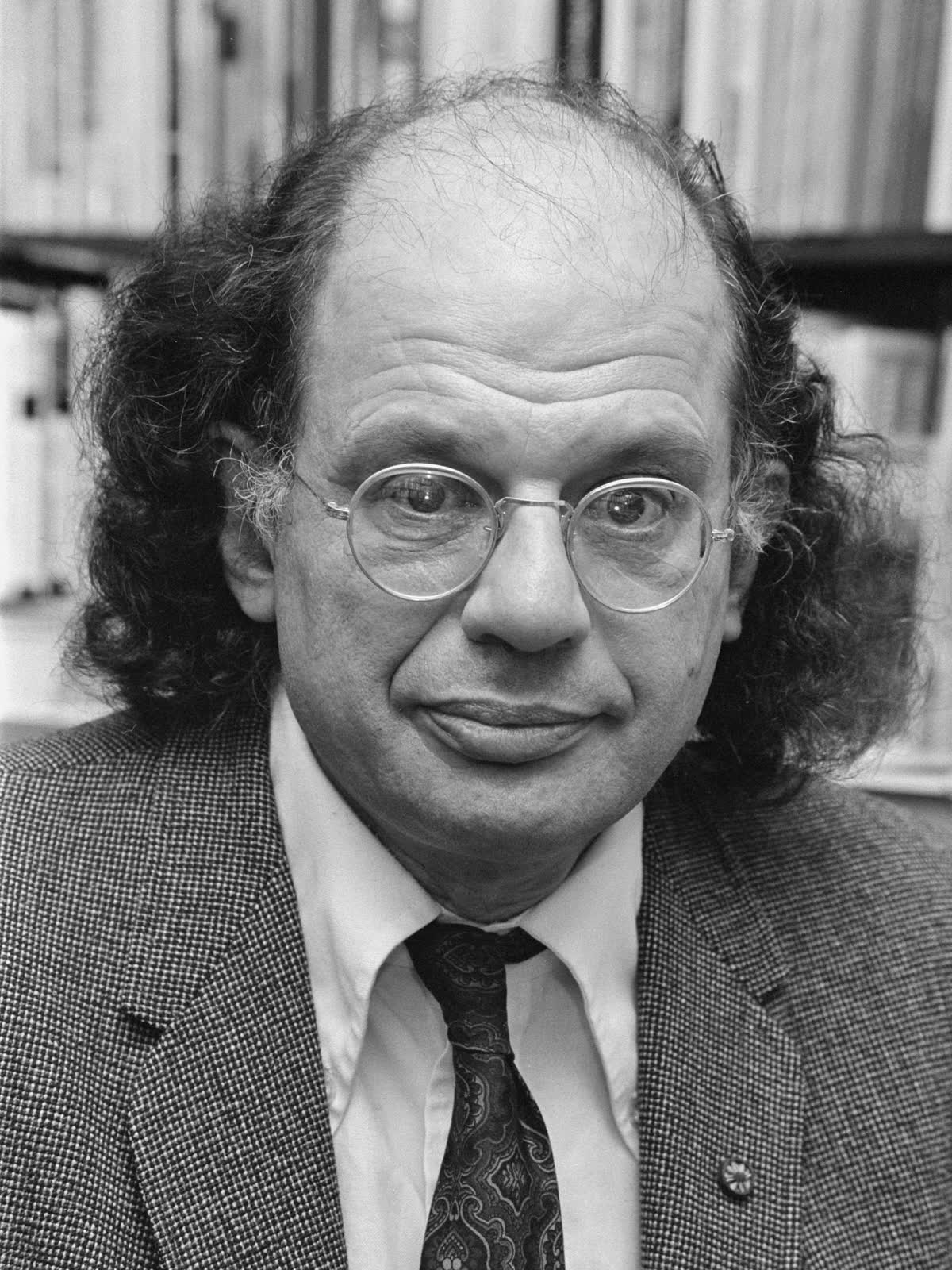
Image context: the cover photograph is later than the 1959 recording, but it is still a real archival portrait of Ginsberg. It is used here as authorial context, not as evidence of the Chicago event. The article's primary archival object is the recording; the image gives the page a recognizably photographic literary anchor rather than a book-cover reproduction or generated visual.[6]
Before the Recording: The Poem Enters a Room
The Six Gallery account matters because it explains why Howl was never only a printed artifact. The Allen Ginsberg Project's anniversary note gathers first-hand and retrospective material around the October 1955 event, including Michael McClure's recollection that Kenneth Rexroth served as master of ceremonies and that this was the first time Ginsberg read Howl publicly.[2] The event's lore can become theatrical, but the useful literary fact is simpler: the poem arrived through a room before it arrived through the book market.
That room was not neutral. The reading gathered poets associated with the San Francisco Poetry Renaissance and Beat circles: Ginsberg, Gary Snyder, Philip Whalen, Philip Lamantia, Michael McClure, and others around Rexroth's organizing presence.[2] The poem's form matched that social environment. It did not behave like a short lyric designed for solitary refinement. It came forward as a communal address, naming damage, intoxication, institutions, madness, vision, and the broken circuitry of mid-century American life in a single accelerating field.[3][4]
The City Lights publication then changed the scale. The University of Delaware's literature-and-law exhibition notes the police action and obscenity trial that followed the poem's circulation through City Lights, while a related Delaware exhibition record places the 1956 City Lights edition in the Pocket Poets Series, the modest book format through which the poem moved beyond the room.[4][5] This sequence matters for interpretation: performance made the poem legible as a public cry; print made it portable; prosecution made its publicness a civic problem.
The Archival Recording
The video below embeds the public YouTube upload of the 1959 Big Table Chicago reading. The upload is not an institutional archive page, so its provenance should be handled carefully. Its value here is access to the historical audio of Ginsberg reading after Howl had already become notorious but while its performance logic was still immediate.[1][4]
What the Voice Shows
The first thing the recording clarifies is that Howl is not formless overflow. Ginsberg's reading makes the long line feel disciplined by breath rather than trimmed by conventional meter.[1] The line keeps stretching, but the stretch has a bodily limit. Each surge has to be carried, released, and relaunched. That physical cycle gives the poem its strange mix of abandon and control. The poem sounds excessive because it takes in so much; it sounds made because each wave is paced to arrive before collapse.
This is crucial to the poem's literary afterlife. The Poetry Foundation text page presents the poem as a long-lined work dedicated to Carl Solomon, and the foundation's Ginsberg biography frames Howl as central to his public identity and to the Beat literary moment.[3] But the recording adds a dimension that text notes cannot supply. The poem's repeated syntax is not just a visual pattern. It is a performance contract: the listener learns how to wait for the next clause, the next image, the next turn from city to body to institution to apocalypse.
The second thing to hear is the poem's public grammar. Ginsberg does not read as though he is confiding a private diary. He reads as someone turning witness outward.[1] That matters because Howl is often flattened into autobiography, scandal, or generational branding. The poem certainly draws on Ginsberg's life, friendships, sexuality, spiritual appetite, and political anger.[3] But the sound of the reading pushes those materials into address. The "I" is not merely personal. It becomes a pressure point through which a damaged social field is made audible.
The third thing the recording preserves is comedy inside extremity. Ginsberg's reputation can make the poem seem solemn in advance: trial, censorship, prophetic rage, Beat myth.[4][5] Yet the reading keeps revealing changes in pitch, momentum, and tone that prevent the poem from becoming a single dark register.[1] The excess is sometimes frightening, sometimes ecstatic, sometimes absurd. That tonal instability is part of the craft. A poem this long cannot survive on outrage alone. It needs changes of temperature.
Why 1959 Is a Useful Listening Point
The Chicago recording's distance from the first reading may actually make it more useful for readers now. In 1955, Howl was new to the room.[2] In 1957, it was a legal case.[4][5] By 1959, it had become both poem and public object. Ginsberg's reading therefore carries a double awareness: he is performing a text, but also performing a text that has already been fought over. The voice knows the poem has a history.
That history changes the stakes of breath. Before the trial, long lines could sound like artistic risk. After the trial, they also sound like defended speech. The recording does not need to mention the courtroom for the listener to feel that the poem's freedom is formal as well as legal. Its syntax refuses tidiness. Its social field refuses respectability. Its catalog refuses to separate literary language from psychiatric institutions, police pressure, queer life, drug culture, ecstatic religion, and ordinary American streets.[3][4]
This is also why Howl should not be reduced to a censorship trophy. The trial matters because it preserved space for the poem to circulate, but the poem matters because it uses that space so aggressively. The University of Delaware exhibition record points to the City Lights edition as a material object in Beat and counterculture history.[5] WorldCat's summary foregrounds seizure and trial.[4] Those are essential contexts, but the recording reminds us that the object and the case orbit around a performance problem: how to make a poem large enough to hold a generation's damage without turning that damage into a flat slogan.
The Afterlife of a Public Voice
The Allen Ginsberg Project biography argues that Ginsberg's public identity came to stand for a broad segment of American counterculture, linking Howl, Beat writing, political activism, First Amendment concerns, Buddhism, music, and later institutional teaching.[3] That breadth can make him hard to read closely. The name "Ginsberg" can arrive with so much cultural furniture that the poem itself becomes secondary.
The 1959 recording cuts through that problem by returning attention to technique. Listen to how much depends on sequence. The poem does not merely list shocking material; it builds an accumulative social map. Listen to how much depends on stamina. The speaker's authority is partly the willingness to keep going, to keep naming, to keep carrying one more clause into public hearing. Listen, too, to how the poem's Whitman-like expansiveness has been darkened by mid-century institutions: hospitals, universities, police, markets, war, and the city at night.[2][3][4]
That is the recording's lasting value. It lets Howl remain a literary event instead of becoming only a historical event. The poem's legal afterlife tells us what was contested. The audio tells us why the contest had force. Ginsberg's breath turns syntax into pressure; pressure turns witness into address; address turns a poem into a public act. Heard that way, the Big Table reading is not a museum label for Beat rebellion. It is a working demonstration of how a poem can use voice to make private damage audible as a shared argument.[1][3][4]
Sources
- nopasanadaaaa, "Allen Ginsberg reads 'Howl,' (Big Table Chicago Reading, 1959)," YouTube video.
- The Allen Ginsberg Project, "October 7 - Anniversary of the Six Gallery Reading" (event context and first-reading recollections).
- The Allen Ginsberg Project, "Allen Ginsberg: Biography" (biographical and literary context for Ginsberg, Howl, and public reception).
- University of Delaware Library, Museums and Press, "Allen Ginsberg and 'Howl' - Literature vs. The Law" (publication, arrest, and obscenity-trial context).
- University of Delaware Library, Museums and Press, "Allen Ginsberg. Howl: And Other Poems, 1956" (City Lights Pocket Poets Series exhibition record).
- Wikimedia Commons, "File:Allen Ginsberg 1979 - cropped.jpg" (source page for the lead photograph).