John Keats's "Ode to a Nightingale" begins in a body that cannot decide whether beauty is comfort or injury. The speaker hears a bird and immediately feels almost poisoned by happiness. That is the poem's first surprise. The nightingale does not simply cheer him. Its song makes human consciousness feel heavy, late, and wounded by comparison.[1]
The result is not a simple nature lyric. It is a poem about what happens when art seems to offer an exit from the self, then refuses to become a permanent home. Keats moves from bodily stupor to wine fantasy, from wine to poetry, from poetry to imagined death, and from death back to the lonely sound of one word: "forlorn."[1] The ode's beauty comes from that failed escape. The song opens a door, but the speaker cannot pass through it without losing the very mind that hears and praises it.
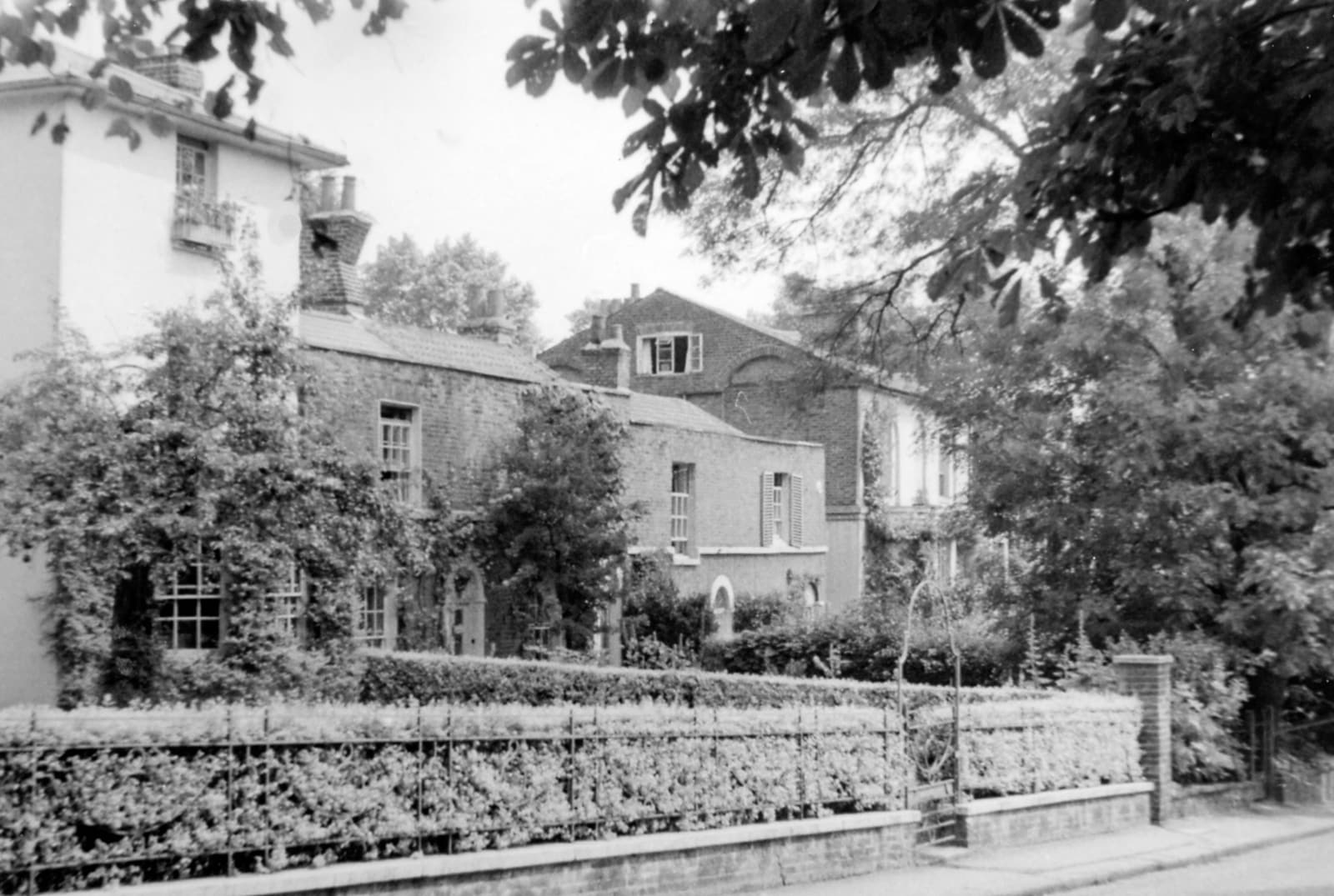
This is why the Hampstead setting matters without reducing the poem to literary tourism. Keats lived at Wentworth Place, now Keats House, from late 1818 into 1820, the period in which several of the great odes emerged; public-domain editions and museum accounts connect "Ode to a Nightingale" to that Hampstead environment and to a surviving autograph manuscript now associated with the Fitzwilliam Museum.[2][3][4] But the poem's real scene is not a picturesque garden. It is the mind under pressure, listening hard enough for song to become a crisis.
Pleasure Arrives As Almost-Pain
The opening stanza makes joy feel narcotic. Keats gives the speaker a "drowsy numbness" before he gives him an argument.[1] That matters because the poem does not begin from a cool philosophical question: Can art overcome death? It begins from sensation. The speaker's mind has been altered by hearing. The nightingale's happiness is so complete that the human listener feels displaced from ordinary self-possession.
The bird is not envied in the usual way. The speaker does not want the nightingale's plumage, nest, or animal freedom. He is "too happy" in the bird's happiness, a strange formulation because it makes sympathy itself dangerous.[1] The listener is enlarged by another creature's song, but that enlargement destabilizes him. He is no longer simply himself. He is drawn toward a happiness that does not need his human categories.
Keats sharpens the contrast by making the bird's song seem effortless. The phrase "full-throated ease" is famous because it sounds physically open: throat, breath, summer, and music appear as one continuous act.[1] The human speaker, by contrast, is full of separations. Feeling and thought do not align. Pleasure and pain cross wires. The body is tired; the imagination wants flight. That divided condition is the poem's central human fact.
Wine Is Not Enough
The second movement imagines wine as a vehicle out of the self. The speaker wants a draught that would carry with it sunlight, vegetation, dance, song, and warm southern abundance.[1] The fantasy is sensuous, but it is also impatient. He wants a substance that can gather a whole world and deliver it directly into the bloodstream.
Yet the wine passage is already a failed solution. Intoxication would be too material, too dependent on the same body that aches. The speaker wants to leave ordinary consciousness, but wine would only thicken it. So he rejects Bacchus and turns to poetry's "viewless wings."[1] The phrase is crucial because it makes the imagination both powerful and unverifiable. Poetry can fly, but not with visible machinery. It can transport, but not like a carriage, drug, or ladder.
This shift changes the poem's stakes. The question is no longer whether the speaker can drink himself into pleasure. It is whether poetic imagination can make him inhabit the bird's world without falsifying his own. The ode keeps testing that hope. It lets the speaker move into darkness, trees, scent, and hidden flowers, but it never lets him forget that the movement is made of words.
Darkness Makes Listening More Exact
Once the speaker enters the nightingale's imagined dark, the poem's vision almost disappears. He cannot see the flowers at his feet. He guesses them by scent, season, and memory.[1] That blindness is not a decorative night effect. It changes the kind of attention the poem can practice.
Without sight, the speaker must build the scene from partial evidence. The darkness becomes a test of poetic knowing. He names possible plants and textures, but his knowledge is inferential rather than commanding. This is one reason the poem feels so alive: it does not pretend that imagination gives total possession. The speaker can enter the night, but he cannot survey it like a map.
The nightingale's song, meanwhile, seems less bounded than any visible object. It is not grasped; it is followed. Keats makes sound more durable than sight because sound can cross the distance between bodies without becoming a thing one owns. The bird remains elsewhere, and that elsewhere is part of the attraction. The speaker wants union, but the poem's music depends on distance.
Death Enters As A Tempting Listening Post
The most dangerous turn comes when the speaker imagines death not as terror but as an aesthetic possibility. He has been "half in love" with "easeful Death," and the nightingale's song makes that thought newly seductive.[1] The phrasing is unsettling because death appears gentle, almost courteous. It would release the body from ache and let the song continue over the speaker's absence.
But the fantasy reveals its own flaw. To die while the bird sings would be to stop hearing. The speaker can imagine himself as a "sod" beneath continuing music, but that image exposes the price of escape.[1] If he truly joined death, he would no longer be the consciousness for whom the song matters. The nightingale might continue, but the listener's relation to it would end.
This is the poem's sharpest anti-sentimental insight. Art may outlast us, but we do not get to experience its outlasting from the other side. The nightingale's apparent immortality is not personal salvation. It is the painful knowledge that beauty can continue without the person who loved it. Keats lets that knowledge hurt without turning it into doctrine.
The Immortal Bird Is A Figure, Not A Fact
When the speaker calls the bird immortal, he is not making a biological claim. He is giving the song a mythic scale. The same voice seems to have reached emperors, clowns, biblical exile, and enchanted casements.[1] The bird becomes less an individual animal than a continuity of song across human scenes.
That sweep is gorgeous, but it is also unstable. The speaker is using literary memory to enlarge the bird, and the more he enlarges it, the more the actual bird begins to dissolve into tradition. Ruth, fairylands, perilous seas: these are not field observations. They are signs of a mind making literature out of sound.[1]
The movement is not a mistake. It is the ode's method. Keats shows how quickly intense listening becomes cultural memory. A bird sings; the human mind supplies scripture, romance, history, and theater. The nightingale's "immortality" is therefore partly made by poetry itself. Songs persist because minds keep receiving them into new forms.
The Poetry Society of America essay on the ode calls attention to the poem's struggle with death and uncertainty, which is exactly where this stanza matters most.[5] The speaker wants an immortal song, but he also knows that all such immortality is mediated through imagination. The bird may be outside him, but the immortal bird is also his own making.
"Forlorn" Breaks The Spell
The poem's return begins with a single word. "Forlorn" tolls the speaker back to himself.[1] Keats makes the word act like a bell because it is not merely descriptive. It performs the separation it names. The imagined world recedes, and the speaker hears language as a force that can both enchant and disenchant.
That is why the ending is so haunting. The speaker does not wake into certainty. He asks whether the experience was vision or dream, then leaves the question open.[1] The ambiguity is not evasive. It is faithful to what has happened. The song genuinely changed consciousness, but it did not produce a stable revelation. The bird has flown, or the mind has lost its hold, or both.
The poem's final question also protects the nightingale from being turned into a tidy symbol. If the speaker could confidently explain the experience, the ode would become smaller. Instead, Keats leaves us with the after-sound of an encounter that cannot be kept. The listener returns to himself, but not unchanged. He has learned that art can suspend mortality without abolishing it.
That is the poem's lasting force. "Ode to a Nightingale" does not promise escape from human limits. It makes the desire for escape audible, lets it rise on astonishing music, and then brings it back to the lonely grammar of being one person in time. The bird sings beyond the self. The poem remains where we are: listening, briefly transported, and called back.
Sources
- Academy of American Poets, "Ode to a Nightingale" by John Keats, public-domain poem text.
- Wikisource, "Ode to a Nightingale," links to public-domain editions including The complete poetical works and letters of John Keats.
- The Fitzwilliam Museum, "Ode to the nightingale," note on the surviving autograph manuscript and composition context.
- City of London, "Keats House," official museum page for the Hampstead house where Keats lived and wrote.
- Poetry Society of America, "On 'Ode to a Nightingale' by John Keats," critical note on death, uncertainty, and the ode's vexed structure.
- Wikimedia Commons, "File:Hampstead Keats Grove geograph-3064433-by-Ben-Brooksbank.jpg," source page for the 1955 photographic image of Keats Grove.