Many readers come to Far from the Madding Crowd expecting a durable Victorian love triangle in rustic dress: a proud heroine, three suitors, and a final choice that sorts passion from good sense.[1][2] Hardy certainly gives you that machinery. But the cleanest way into the book is not to begin with romance at all. Begin with exposure. The novel is about a farm, a market, a storm, a barn, a public road, a church, a harvest field, a sheep-fold, and a village whose inhabitants watch one another closely. Desire in this world never arrives as private feeling alone. It arrives in weather, in labor schedules, in gossip, in public gestures, and in the dangerous fact of being seen.[1][3]
That approach matters because Hardy's 1874 novel is where his Wessex voice first fully coheres.[1][3] In the prefatory note to a later edition, he stresses that this was the book in which he first gave "Wessex" its modern fictional use, not as a dead historical kingdom but as a contemporary rural region with railways, schools, machinery, and changing labor conditions.[1] So the right first impression is not timeless pastoral calm. It is a worked landscape where old forms of courtship and prestige are being lived under modern pressures of money, mobility, and public judgment.[1][3][4]
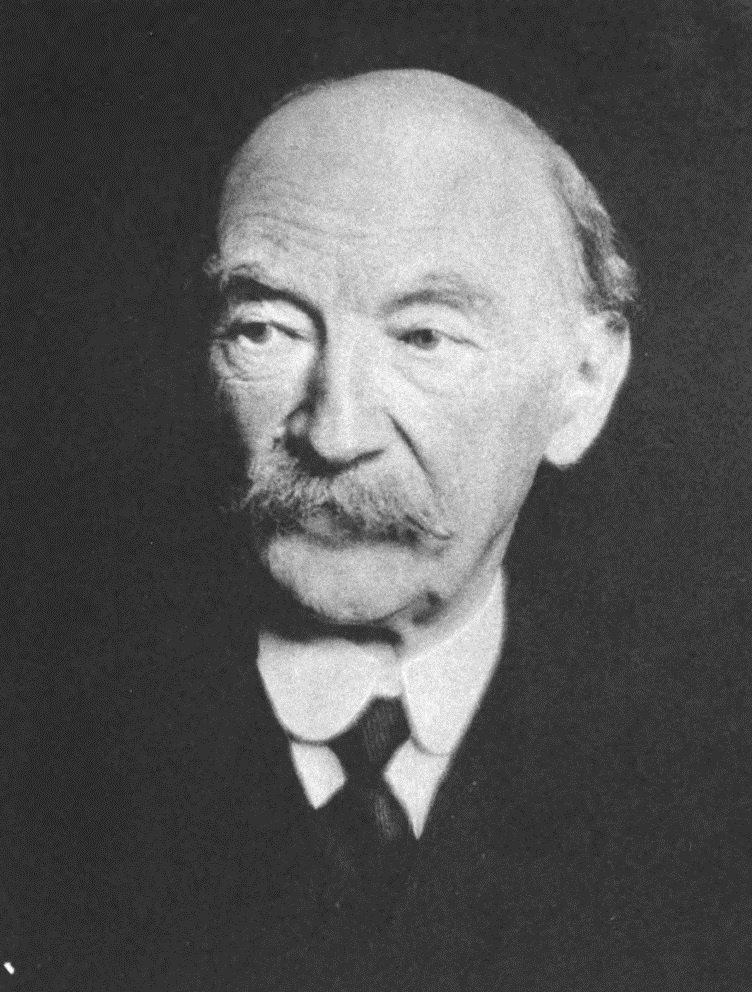
Image context: the cover uses a real Hardy photograph rather than a film still or a decorative landscape. That choice fits a reader's guide because the novel's central problem is not scenic prettiness. It is perception under pressure. Hardy keeps asking what becomes of a life when work, beauty, authority, and vulnerability all have to stand in public view at once.[5]
1) Start with labor and weather before you start sorting the suitors
If you begin by ranking Gabriel Oak, Boldwood, and Troy too quickly, the novel shrinks. Hardy tells you early that Weatherbury is not a painted backdrop but an operating environment.[1] Gabriel enters the story as a working shepherd whose competence matters because sheep can die, wages can vanish, barns can burn, and one piece of misfortune can throw a man from modest security into hired labor.[1] The book teaches the reader to notice risk as a material fact before it becomes emotional metaphor.
That is why Hardy's own Wessex note matters so much. He describes the region as modern enough to contain "railways, the penny post, mowing and reaping machines" along with older rural custom.[1] Read that as a practical instruction. Far from the Madding Crowd is not asking you to float in picturesque scenery. It is asking you to watch how weather, tools, timing, and human error shape what choices are even available. Oak's steadiness is legible because he knows how to read conditions, not because he has been blessed with abstract moral superiority.[1][3]
So the first rule for a new reader is simple: whenever a scene feels leisurely, ask what kind of work is quietly being done, delayed, threatened, or rescued inside it. That question opens the book faster than plot summary does.
2) Read Bathsheba first as an employer under observation
The novel tells you exactly how strange Bathsheba Everdene will seem to her world. When Gabriel asks after the farm's owner, he is corrected: not a master, but a mistress. His surprised reply, "A woman farmer?" is one of the most useful first-reading signals in the whole novel.[1] Bathsheba is not merely a heroine placed inside agricultural scenery. She is a proprietor, an employer, and a spectacle. The men around her assess her looks, but the novel also keeps making her answerable for wages, decisions, authority, and the discipline of a working property.[1][2]
That is why the book sharpens when you stop reducing Bathsheba to "independent woman chooses badly." Her independence is real, but Hardy makes it public and therefore unstable. She must issue orders in a field where many workers expect authority to sound male. She must protect reputation while also acting decisively enough to keep the farm moving. She must manage visibility without ever fully controlling it.[1][3] A valentine joke sent to Boldwood is not only flirtation gone wrong. It is a reminder that in Weatherbury, small gestures can become public events with economic and psychological consequence.[1]
Keep that frame in mind and Bathsheba becomes clearer. She is neither a simple pastoral beauty nor a lesson in feminine caprice. She is a woman doing managerial work while everyone around her keeps trying to convert that work back into courtship, gossip, fantasy, or ownership.
3) Treat the three men as three different clocks
A good way to keep the novel alive is to read Oak, Boldwood, and Troy not as three static "types" but as three rival systems of time. Oak belongs to seasonal time: repetition, repair, patience, harvest, loss, return. He is capable of quick action, but his intelligence is durable rather than theatrical.[1] Boldwood belongs to suspended time. Once desire fixes on Bathsheba, he cannot metabolize uncertainty; he turns waiting into obsession and possibility into claim.[1][2] Troy belongs to the glittering present. He moves by display, improvisation, appetite, and the kind of charm that spends tomorrow in advance.[1]
This is one reason the famous narrator's sentence about Bathsheba and Troy matters so much: "Bathsheba loved Troy in the way that only self-reliant women love when they abandon their self-reliance."[1] The line is harsh, but its real value for readers lies in what it reveals about tempo. Troy does not merely attract Bathsheba because he is handsome. He re-times her. He pulls her out of managerial sequence and into sensation, secrecy, and interruption. Boldwood does the opposite: he turns one impulsive gesture into a crushing long future. Oak, by contrast, keeps bringing the book back to the calendar of actual consequences.[1]
If the middle of the novel starts feeling crowded, this time-system method helps immediately. Ask of each scene: whose clock is running here, and what does it do to Bathsheba's judgment?
4) Do not read Weatherbury as innocent community
Hardy's rural world is thick with comedy, fellowship, and speech, especially in the malthouse scenes, but it is never naive.[1] The community observes, comments, rescues, misreads, repeats, and judges. It can be kind; it can also be mercilessly interpretive. That double quality is essential. A first-time reader should resist two opposite simplifications: that Weatherbury is wholesome old England, or that it is merely a trap from which individual feeling is trying to escape.
It is better read as a social medium. People survive here through shared labor, remembered precedent, and practical mutual dependence; they are also exposed here because nothing remains purely private for long.[1][3] That is why Hardy's pastoral can never stay pastoral in a soft sense. Britannica is right to call the novel a study of contrasting loves, but the loves matter because they are lived inside a community that is always already looking.[2] The farm hands, townspeople, and neighbors are not ornamental "local color." They are the pressure that keeps emotion from pretending it exists outside material life.
Once you read that way, the novel's tone becomes richer. Rustic humor does not cancel danger. Collective knowledge does not cancel loneliness. Public life can save a barn and destroy a reputation in the same movement.
5) Read the ending as chastened scale, not perfect romantic closure
By the time Bathsheba tells Oak, "my romance has come to an end," and hears the dry answer, "All romances end at marriage," Hardy has already made his point.[1] The ending is not a reward for having picked the correct suitor in a sentimental contest. It is a rescaling. The novel has burned through spectacle, fantasy, fixation, debt, death, and humiliation. What remains is not ecstasy but a more workable proportion between feeling and life.
That matters because readers often remember the ending either as comfort or as anti-climax. It is neither. It is Hardy refusing to let romance remain a self-sufficient narrative language after the novel has spent so long showing what weather, labor, and public consequence do to private desire.[1][3] Oak and Bathsheba can only become legible together after the more theatrical versions of love have exhausted themselves. What the book finally honors is not intensity by itself, but survivable attachment.
So the best way into Far from the Madding Crowd now is to read from the ground up. Start with labor. Watch the weather. Notice who is looking, and who is forced to become visible. Let the three men register as rival temporal systems rather than as a quiz with one right answer. Then the novel stops looking like a heritage romance with agricultural decoration and starts reading like what it is: Hardy's first large demonstration that feeling is always entangled with environment, social vision, and the cost of staying standing after exposure.[1][2][3][4]
Sources
- Thomas Hardy, Far from the Madding Crowd (Project Gutenberg full text, including Hardy's later Wessex note).
- Encyclopaedia Britannica, "Far from the Madding Crowd" (publication context, Bathsheba, and the three suitors).
- Lance St John Butler, "Far from the Madding Crowd," in Thomas Hardy (Cambridge University Press chapter summary and bibliographic page).
- Poetry Foundation, "Thomas Hardy" (biographical profile and literary context).
- Wikimedia Commons, "File:Photograph of Thomas Hardy.jpg" (archival photograph by Alvin Langdon Coburn used as the article image).