Notes from Underground still feels corrosive because it refuses every comforting version of freedom.[1][2][4] Dostoevsky's narrator does not ask to be liberated into healthy self-expression, civic participation, or productive individuality. He wants something harsher. He wants to prove that a human being cannot be fully explained by utility, rational planning, or benevolent social design, even if the proof takes the form of pettiness, humiliation, and self-injury.[1][2] That is why the book keeps surviving each new generation of psychological and political explanation. It is not a hymn to authenticity. It is a study of what happens when wounded pride treats irrationality itself as a last private possession.[1][4]
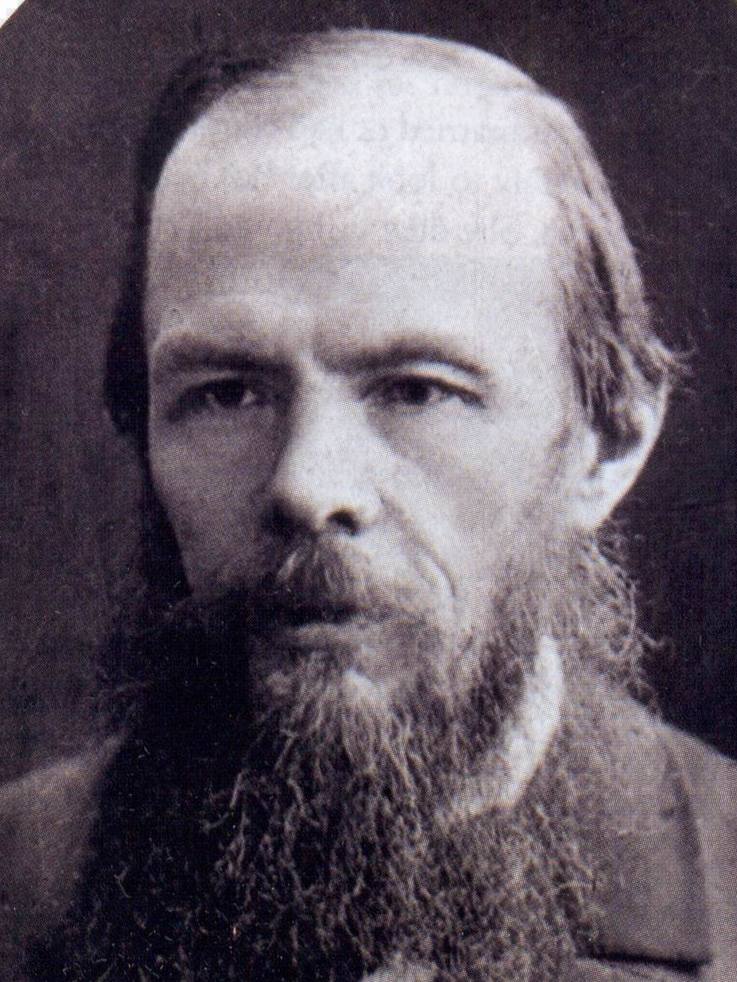
The image matters for that reason. Shapiro's 1879 portrait shows Dostoevsky late in life, long after prison, exile, debt, and religious struggle had given his fiction its compressed moral pressure.[3][5] The photograph does not explain the novella, but it suits its temperature: intensity turned inward until thought itself begins to feel like a cramped room.
The book opens by making consciousness feel diseased
The first sentence remains a perfect trap. "I am a sick man," the narrator says, then immediately adds spite, unattractiveness, superstition, and the petty refusal to see a doctor.[1] The passage reads like confession, but the deeper action is philosophical. He is presenting a self that would rather worsen than submit. Even bodily suffering becomes useful once it can be converted into a gesture of inward defiance.[1][2]
Dostoevsky makes that gesture stranger by refusing heroic language. The underground man says he could become "neither a hero nor an insect," then turns intelligence itself into a disabling excess.[1] In his account, acute consciousness does not enlarge action; it dissolves it. Every motive is inspected until motive curdles into embarrassment, every impulse becomes self-conscious theater, and every possible deed arrives already accompanied by its parody.[1][2] That is why the book feels so modern. It understands early that a person can be rich in inward commentary and poor in actual agency.
The stone wall is where rational progress stops feeling like freedom
The novella's most famous philosophical move comes when the narrator attacks the fantasy that people will become reasonable once their true interests are scientifically explained to them.[1][2] His shorthand for that fantasy is arithmetic. "Twice two makes four" stands for the whole dream of a world in which human behavior can be reconciled to calculation, improvement, and predictable benefit.[1] He hates the formula not because it is false, but because it leaves no room for willful refusal. The stone wall, his image for reality's hard limits, becomes intolerable precisely when it arrives with the authority of fact.[1]
That is where the phrase "most advantageous advantage" becomes crucial.[1] The advantage he names is not wealth, safety, health, or happiness. It is the ability to choose against those things simply to prove that choice exists.[1][2] The Encyclopedia.com overview is useful here because it frames the novella as an attack on science, determinism, and social designs that imagine human conduct becoming orderly once interest is correctly explained.[2] The Stanford Encyclopedia's existentialism entry helps extend the point. The underground man matters because he rebels against any picture of the person as a machine whose desires can be fully modeled from outside.[4]
Yet Dostoevsky does not make that rebellion noble. Caprice in this book is not creative freedom. It is freedom already poisoned by resentment. The underground man values irrational choice less for what it builds than for what it can ruin. He would rather preserve a damaged inward sovereignty than enter a well-designed order that asks him to stop dramatizing himself as an exception.[1][2][4]
Resentment becomes a philosophy when action feels too simple
This is why the underground man is so obsessed with "men of action."[1] He envies them, despises them, and cannot stop measuring himself against them. To act cleanly requires reduction: one must accept some aim, ignore infinite qualifiers, and move. He cannot do that. Consciousness multiplies objections faster than courage can answer them. So he invents a superiority based on paralysis. If action is crude, then non-action can masquerade as depth.[1][2]
The result is one of Dostoevsky's sharpest philosophical jokes. A narrator who speaks constantly about freedom keeps proving how unfree he is. He is governed by vanity, old injuries, imaginary audiences, and rehearsed humiliations. His cherished inward independence is full of compulsion.[1] He remembers insults for years, builds fantasies around chance encounters, and treats every social relation as a contest over rank.[1][2] Resentment gives him the thrill of hidden intensity without demanding the discipline of transformation.
That is why the novella never settles into abstract polemic. Its arguments are inseparable from tone. He can denounce systems brilliantly because he lives as a system of injury himself. The philosophy feels alive because it has bodily symptoms: shame, delay, sleepless replay, sudden tears, theatrical cruelty, and the craving to have the last inward word.[1]
Part II shows what caprice does to other people
The second half of the novella matters because it prevents Part I from being read as a merely dazzling monologue.[1][2] Once the narrator has explained his theory of injured freedom, Dostoevsky sends him into scenes where that theory acquires victims. The dinner with former schoolmates becomes a laboratory of humiliation. The long fixation on the officer who once moved him aside shows pride trying to convert trivial injury into destiny. Then the encounter with Liza reveals the deepest rot in his idea of freedom.[1]
With Liza, the underground man briefly approaches real moral feeling. He speaks movingly about degradation, loneliness, and the future awaiting her in the brothel.[1][2] The speech has enough truth in it that she believes him. But the moment belief becomes relation, he begins to spoil it. He cannot bear gratitude, exposure, or reciprocity. When Liza visits his room, he swings from panic to confession to cruelty because genuine human nearness would require a self he has spent the whole book refusing to build.[1]
This is the novella's hardest insight. A freedom founded only on negation cannot love another person for long. It can expose lies, mock systems, and reject consoling arithmetic. It cannot sustain mutuality. The underground man can imagine rescue as performance and domination as tenderness, but actual reciprocity strips him of the superiority that resentment had promised.[1][2]
Why the book still feels contemporary
Readers often describe Notes from Underground as prophetic because it anticipates existentialism, anti-utopian politics, psychoanalysis, and the anti-heroic novel.[2][4] All of that is true, but the book's present-tense force lies somewhere tighter. It understands that selfhood can become addicted to objection. One can begin by refusing dehumanizing systems and end by making refusal itself into an identity so total that no relation, institution, or hope can survive contact with it.[1][4]
That is why the novella remains more disturbing than liberating. Dostoevsky grants the underground man his major premise: human beings are not reducible to arithmetic.[1][2][4] Then he follows that premise into a cellar and shows what happens when freedom is defined only as the right to wound the script, the world, and oneself. The stone wall remains standing. The real collapse happens inside the person who cannot stop needing to kick it.
Sources
- Fyodor Dostoevsky, Notes from Underground (Project Gutenberg, Constance Garnett translation).
- Encyclopedia.com, "Notes From Underground (Zapiski iz Podpol'ia) by Fedor Dostoevskii, 1864" - work overview covering anti-determinist argument and two-part structure.
- Encyclopedia.com, "Fyodor Mikhailovich Dostoevsky" - biographical context for prison, exile, and the later fiction.
- Stanford Encyclopedia of Philosophy, "Existentialism" (Fall 2025 edition) - context for the underground man's afterlife in existential thought.
- Wikimedia Commons, "File:Dostoevsky (cropped).jpg" - source page for the 1879 portrait photograph used as this article's image.