Fanny Price has always been one of Jane Austen's dividing lines. Readers who love Elizabeth Bennet's wit or Emma Woodhouse's dangerous confidence often meet Fanny with impatience. She blushes, retreats, hesitates, cries, and spends long stretches of Mansfield Park in observation rather than command. Britannica's summary of the novel still identifies her first by reserve, and later criticism has kept returning to the same problem: why would Austen build a heroine who seems so much less dazzling than the people around her?[2][4]
The cleanest answer is that Fanny is not supposed to dazzle. She is supposed to register pressure. Mansfield Park is a novel about rank, dependence, flirtation, theatrical self-display, and the moral damage done when charm outruns principle.[1][2][3] Austen needs one character who cannot move freely through that world, one character whose weakness of position turns her into a witness before it turns her into an actor. Fanny's quietness is therefore not a defect the novel accidentally failed to solve. It is the instrument by which the book measures everyone else.
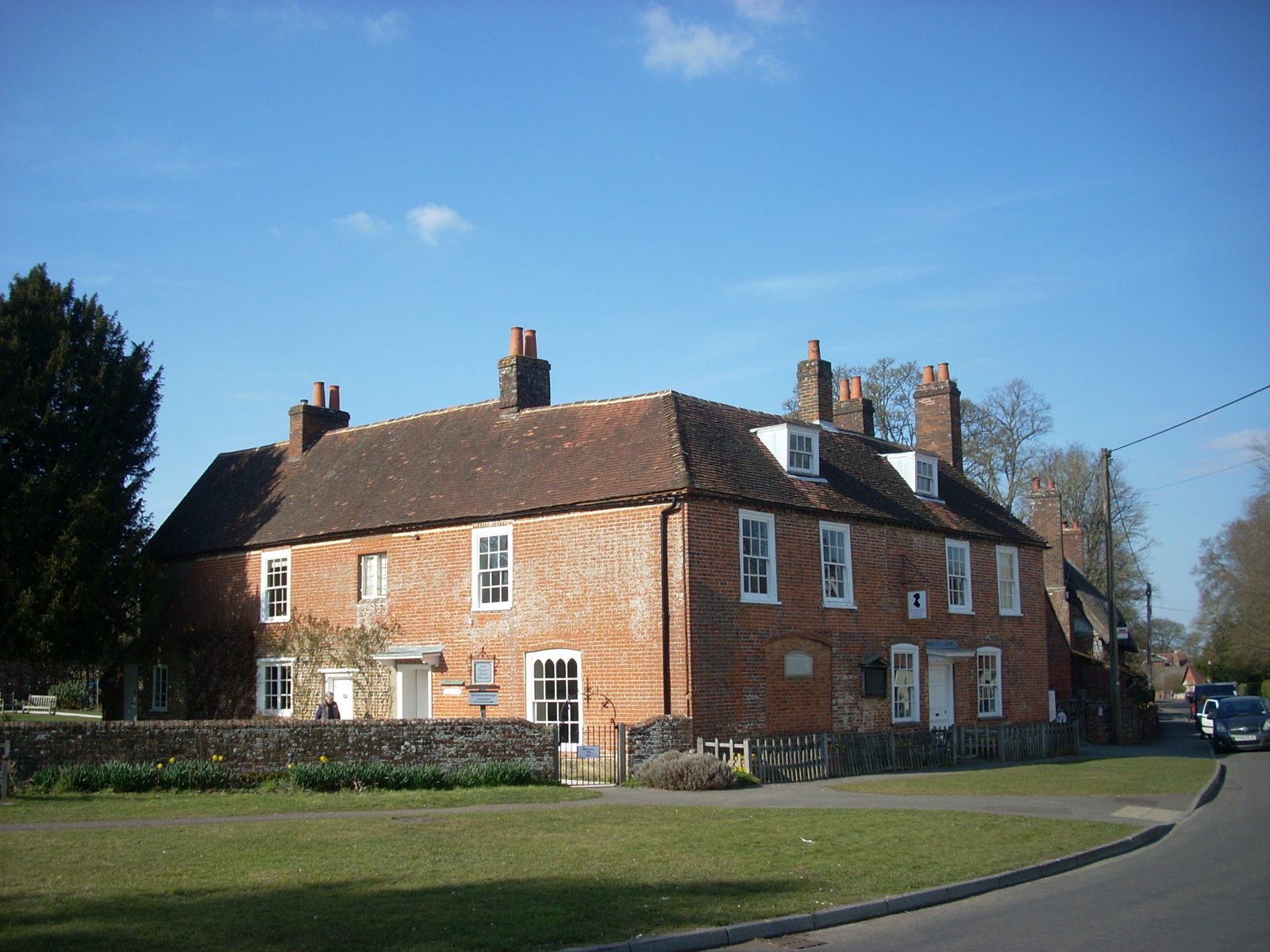
Image context: the cover uses a real photograph of Jane Austen's house at Chawton from Wikimedia Commons. It is not a direct "Mansfield Park site," but it fits because this essay turns on interior life and room logic. Fanny becomes legible through where she is placed, what spaces are temporarily hers, and how a private corner of a house becomes the place where judgment can harden into refusal.[5][6]
1. Dependence is the beginning of her character
Fanny does not arrive at Mansfield Park as an equal cousin who merely lacks polish. She arrives as a poor relation whose place must be negotiated room by room.[1][5] Edmundson's essay on Fanny's rooms is useful because it makes explicit what many readers feel without naming: Austen writes domestic space as social rank. Mrs. Norris first pushes the child into "the little white attic," a placement that keeps her physically near the family but not fully of it.[1][5] She is a niece, but also an errand-runner; a family member, but also someone whose comfort can be bargained downward.
That social arrangement matters because it explains both Fanny's timidity and her unusual acuity. A powerful heroine can announce her judgments and test them publicly. Fanny cannot. She learns instead to watch tones, glances, omissions, and improprieties from a low seat. By the time the East Room becomes her semi-private refuge, the novel has already trained us to understand privacy as something she earns rather than assumes.[1][5] Edmundson argues that the room tracks her emotional growth, and that feels right: it is not a throne room for influence, but a workshop for inwardness.[5]
This is also why Fanny's attachment to Edmund has such a peculiar texture. Austen says his worth seems to her something "no one but herself" can properly value.[1] The line catches both her gratitude and her isolation. Fanny's affections grow in secret compartments. She is accustomed to loving, fearing, and judging before she can safely speak.
2. Her silence is not blankness. It is stored judgment.
Many weak readings of Fanny mistake silence for emptiness. Austen keeps showing the opposite. Fanny often sees the moral shape of a scene earlier than the brighter people do; what she lacks is not discernment but social force.[1][4] Benditt is helpful here because he refuses the easy sanctification of Fanny while still taking her judgment seriously. She has limits, he argues, but the novel does not make her mind negligible.[4]
The clearest trial run comes with the Lovers' Vows episode. Around her, Mansfield Park turns into a rehearsal chamber for vanity, flirtation, and self-excusing cleverness.[1][3] Maria and Julia enjoy the emotional liberties of acting; Henry Crawford enjoys the game of intensifying attachments; Mary Crawford treats the whole affair with the fluency that makes her so attractive and so dangerous.[1] Fanny alone feels that the situation is morally unstable. Her objection is not merely to amateur theatricals in the abstract. It is to a household discovering how easily performance can become permission.[1][3]
Sarah Emsley's reading sharpens the point by describing the Henry Crawford plot as the novel's central tragic action.[3] That sounds grand until one sees what Austen is staging. The crisis is not whether Fanny will learn to relax and become more sparkling. It is whether a dependent young woman can refuse a socially brilliant man when every practical argument points toward compliance. The tragedy Austen courts is moral, not catastrophic. The danger is that Fanny may be coerced into consenting against her own clearer knowledge.
3. The refusal matters because it turns private thought into public action
That is why Henry Crawford's proposal is the hinge of the whole character study. Fanny's famous answer, "I--I cannot like him, sir, well enough to marry him," sounds modest, almost evasive, yet its mild grammar hides a major act of resistance.[1] She is speaking to Sir Thomas, inside a structure of dependence that has shaped her since childhood. A louder heroine might produce a grand declaration. Austen gives Fanny something harder: a frightened refusal that still holds.
What matters even more is that Fanny later clarifies the basis of her refusal. She tells Edmund, "I cannot think well of a man" who trifles with women's feelings, and she roots that judgment in Henry's conduct during the theatricals and afterward.[1] This is the crucial correction to the idea that Fanny rejects Henry out of mere taste, shyness, or cousinly fixation on Edmund. She rejects him because she has observed a pattern of behavior that the novel's more socially powerful characters keep downgrading or romanticizing.[1][3][4]
Here Fanny's silence pays off. Because she has spent so much of the novel watching rather than improvising, she is unusually hard to seduce by charm. She remembers what others prefer to dissolve into mood. She does not separate Henry's wit from the injuries it leaves behind. In a book full of people who can redescribe their conduct until it sounds harmless, Fanny's special power is memory under pressure.[1][3]
4. Austen does not idealize her, and that is why she works
None of this requires pretending Fanny is flawless. Austen explicitly tells us that her confidence in her own judgment lags behind the reality of that judgment.[1] She often knows more than she can assert. She can be overly yielding, physically nervous, and emotionally dependent on Edmund's approval. Benditt is right that these limitations are part of the design, not noise around it.[4] Fanny's moral life would be much less interesting if she were simply a tiny marble saint dropped into a corrupt house.
Her trip back to Portsmouth confirms that Austen is not worshipping passivity. At home, Fanny feels relief when usefulness becomes concrete: helping Susan, ordering small domestic tasks, making herself genuinely necessary.[1] The contrast reveals something important. Mansfield teaches her judgment, but it also keeps her in ornamental dependence. Portsmouth is poorer and rougher, yet it gives her acts to perform rather than only humiliations to absorb. The novel therefore distinguishes quietness from emptiness. Fanny's best self is not pure submission. It is steadiness once her conscience finds work to do.[1][5]
That distinction is the reason she still feels modern. Many readers remain tempted by Mary Crawford because Mary talks like intelligence in motion.[4] Austen knows that; the novel gives Mary some of its liveliest surface energy. But Mansfield Park is built to ask a different question: what happens when a culture becomes so fluent in excuse, style, and improvisation that only an inconvenient conscience can interrupt it? Fanny is that interruption.
She is not Austen's most companionable heroine. She may not even be Austen's most lovable one. But she is among the boldest. Austen makes a shy, dependent, often silent young woman carry the novel's severest judgment, then asks whether readers can bear to trust the person in the room who speaks least and sees most. That is why Fanny Price's refusal is not a side note. It is the point.
Sources
- Jane Austen, Mansfield Park (Project Gutenberg full text).
- Encyclopaedia Britannica, "Mansfield Park" - publication context, plot outline, and the novel's enduring debate around Fanny Price.
- Sarah Emsley, "The Tragic Action of Mansfield Park," Persuasions On-Line 28.1 - Henry Crawford, refusal, and the novel's moral crisis.
- Theodore M. Benditt, "Fanny's Moral Limits," Persuasions On-Line 29.1 - the long critical dispute over Fanny's virtue, judgment, and weakness.
- Melissa Edmundson, "A Space for Fanny: The Significance of Her Rooms in Mansfield Park," Persuasions On-Line 23.1 - the attic, the East Room, and Fanny's status inside the Bertram household.
- Wikimedia Commons, "File: Jane Austen's House Museum, Chawton.jpg" - source page for the archival photograph used as the article image.