Many first-time readers are told that My Ántonia is simple: a warm prairie classic, a nostalgic immigrant novel, a book of landscape and character more than of plot. None of that is wrong, but it is incomplete. The cleanest way in is to notice that Cather begins by making the act of remembrance visible. Jim Burden does not present himself as a transparent recorder. He says outright that Ántonia reaches him "through" himself, and then he writes the possessive title that governs the whole book: My Ántonia.[1] Once you see that choice, the novel stops looking loose or naive. It becomes a carefully shaped story about love, memory, ownership, and the problem of turning one vivid life into another person's narrative.
That is why the best entry route is not plot-first but relation-first. Read the book through three linked pressures: Jim's possessive memory, the prairie scale that makes ordinary events feel elemental, and the later return in which childhood becomes what he calls "the precious, the incommunicable past."[1][2][3] Do that, and the novel opens up as something sharper than regional comfort reading.
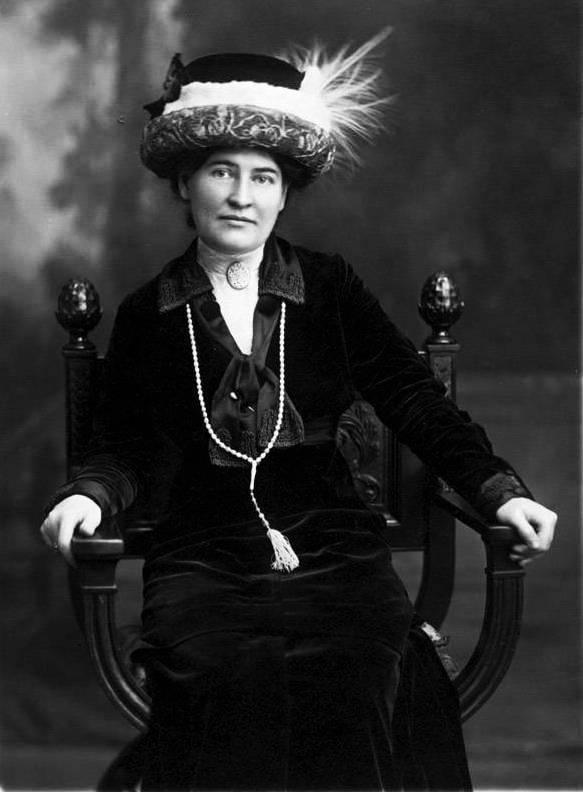
Image context: the lead image uses a real circa-1912 photograph of Willa Cather from Wikimedia Commons. It belongs here because this guide keeps insisting on craft. Cather's prairie feels spontaneous when you read it well, but the book's real achievement lies in arrangement: who gets remembered, who does the naming, and how a life becomes legible through recollection.[5]
1) Start by distrusting the title a little
The introduction gives you the novel's method in plain sight. Jim says, "It's through myself that I knew and felt her," and when he labels his manuscript he changes Ántonia into My Ántonia.[1] That extra word is the book's first real lesson. Ántonia Shimerda may be its vital center, but the narrative belongs to Jim's memory, Jim's syntax, and Jim's need to discover what she has continued to mean to him across time.[1][3]
This matters because readers sometimes approach the novel as though it were a neutral portrait of frontier womanhood. It is not neutral at all. Britannica's summary is useful precisely because it states the structure clearly: the history of Ántonia comes to us through her lifelong friend Jim Burden.[3] The NEA guide makes the same point from another angle when it notes that the book is finally about memory as much as immigrant settlement or prairie life.[2] Jim loves Ántonia, but his love is interpretive. He keeps turning her into emblem, measure, and return point.
So the first rule of entry is simple: whenever Ántonia seems to stand for the whole prairie, ask what Jim gains by making her carry that weight. The title is affectionate, but it is also a claim.
2) Let the land reset the scale before you ask for plot
Readers who stall early often want the book to announce a conventional engine too quickly. Cather is doing something else. When Jim first encounters Nebraska, he sees "nothing but land: not a country at all, but the material out of which countries are made."[1] That sentence does more than describe scenery. It resets proportion. The prairie is so open that social categories and private dramas arrive before any settled frame can contain them.[1][2]
This is one reason the novel can feel both spacious and intimate. The NEA guide is right to say there is "no plot in the usual sense of the word" and that the five books work through thematic contrasts rather than tight causal sequence.[2] That is not a weakness to forgive. It is the correct form for a novel in which weather, migration, labor, desire, and recollection all keep altering the scale of importance. A winter can matter as much as an argument; a train ride can matter as much as a proposal.
So as you read Book I, lower your expectation of immediate narrative compression and raise your attention to scale shifts instead. Watch what happens when a dugout, a field, a road, or a season changes the emotional size of an event. Cather keeps making the external world carry moral pressure.[1][2][4]
3) Use the "hired girls" as your middle-book guide rail
Once the novel leaves the first prairie childhood movement, many readers lose their footing in Black Hawk. The best fix is to follow the category of the "hired girls."[1][2] That phrase is social shorthand, and Cather uses it to show how a town flattens immigrant young women into one class while also depending on their energy, skill, beauty, and labor.[1]
Ántonia changes meaning in this middle zone. On the prairie she is part of elemental survival. In town she becomes legible inside gossip, respectability, dress, flirtation, wage work, and social ranking. The NEA guide's note about Anna Pavelka as a model matters here because it reminds you that Cather's radical move was not only to admire immigrant women from afar, but to place one such woman at the center of a serious American novel.[2] Read the Black Hawk chapters with that shift in mind. The book is no longer only about settlement. It is about what kinds of female vitality a town can use, admire, patronize, and misread all at once.[1][2]
If you want one practical annotation system, keep only three marks:
- mark places where Jim idealizes Ántonia;
- mark places where the town categorizes women collectively;
- mark places where labor changes social visibility.
That is enough to make the middle movement feel designed instead of diffuse.
4) Keep one image beside you: the plough against the sun
Late in the book Jim describes his early Nebraska figures as returning to him "like the image of the plough against the sun."[1] Treat that line as a key rather than as ornament. It explains how memory works in this novel. The past is not preserved in documentary fullness. It comes back strengthened, simplified, silhouetted.[1]
That is why the prose can feel so clear and so haunted at once. Cather does not try to recreate everything. She lets memory strip detail down until certain people and scenes stand out with almost mythic edges.[1][2] When readers call the novel nostalgic, they often mean this tonal clarity. But nostalgia is only part of the effect. The stronger point is formal. Jim remembers by composition. He turns lived sequence into shape.
Read with that in mind and the book's famous beauty stops being vague prettiness. It becomes a record of selection. The lyric passages are not breaks from the novel's intelligence. They are its way of showing what survives compression.[1][3]
5) The ending works if you read it as shared possession, not solved destiny
By the close, Jim does not "solve" Ántonia. He returns to a relation he has been narratively preparing all along. When he says, "Whatever we had missed, we possessed together the precious, the incommunicable past," the line sounds final, but it is not a neat closure.[1] It is a recognition that what joins them most securely is no longer future promise or present intimacy, but a shared origin that language can approach without exhausting.[1][2]
That ending lands better if you resist the temptation to read the whole book as a frontier success ledger. Cather's deeper subject is not whether every life comes out well. It is how memory binds uneven lives back into one field of feeling. Britannica's note about the disappearing frontier is useful here, and so is Britannica's account of Cather's larger career, which stresses her lifelong attention to settlers and plains life.[3][4] My Ántonia endures because it turns that historical material into something more inward and more difficult: a study of how place survives inside attachment.
6) A practical way to read My Ántonia now
If you are opening the book for the first time, keep these three questions in play:
- What is Jim making Ántonia mean in this scene?
- How does landscape change the size or force of what just happened?
- Is memory clarifying the past here, or simplifying it into a usable image?
Those questions keep the novel alive. They let you enjoy the prairie light, the winter hardship, the hired-girl energy, and the late return without reducing the book to heritage atmosphere. Cather gives you a novel that looks open and natural on the surface but is tightly controlled underneath. The best way in is to read it with both kinds of attention at once: affection for what Jim sees, and alertness to how he makes it his.
Sources
- Willa Cather, My Ántonia (Project Gutenberg ebook and full text).
- National Endowment for the Arts, My Ántonia Reader Resources (NEA Big Read PDF).
- Encyclopaedia Britannica, "My Ántonia".
- Encyclopaedia Britannica, "Willa Cather".
- Wikimedia Commons, "File:Willa Cather ca. 1912 wearing necklace from Sarah Orne Jewett.jpg" (lead image source).