Before Enoch Soames loses his soul, he loses his first name. At the Café Royal, the painter William Rothenstein greets him as “Edwin.” Soames corrects him. Rothenstein accepts the correction with the air of someone who has already been generous by remembering the surname.[1]
It is a small social injury, exquisitely administered. It also establishes the terms of Max Beerbohm’s story: other people will decide how much of Soames deserves to survive. The narrator watches the exchange, feels sorry for its victim, and makes the humiliation delightful to read.
“Enoch Soames,” collected in Seven Men in 1919, gives its narrator the author’s name and a recognizable literary career.[1][3] This essay follows the story through its ending. Its pleasure lies partly in watching that fictional Beerbohm’s voice change under pressure. He begins as a poised guide to the literary 1890s. He ends as a witness who cannot make his testimony escape the suspicion of being another clever performance.
The kindness of a successful man
The opening promises a memoir. A literary historian has omitted Soames, and Beerbohm remembers what everybody else has forgotten. Yet he immediately qualifies his apparent generosity: “Not my compassion, however, impels me to write of him.” To tell the story will expose Soames to ridicule. The narrator says he has no choice, while withholding the reason.[1]
That delay is an elegant trap. We accept his invitation to enjoy the portrait before learning what the portrait will cost its subject.
The early prose keeps correcting itself. Soames has a beard—or, more exactly, some weakly clustering hairs. His cape aspires to romance, but its waterproof material defeats the effect. The narrator’s revisions sharpen the picture while reducing the man. Even pity arrives as a search for the right descriptive word: first “dim,” then “hungry.” Soames becomes an occasion for stylistic precision.[1]
Beerbohm allows the younger version of himself to look foolish too. He displays Soames’s first book to visitors because he knows its author, despite being unable to explain its contents. This confession helps establish intimacy with the reader. The mature narrator can afford to laugh at his former vanity; the confession itself is beautifully managed.
Later, literary success changes the balance between the two men. Beerbohm can tolerate Soames’s rudeness because his own essay has been accepted for The Yellow Book. His charity rests partly on being secure enough to offer it. When Soames’s failure becomes unbearable to witness, he avoids him. “And he shamed my gloss” is the startlingly compact admission.[1] The failed writer threatens the successful writer’s polished surface.
My reading is that these admissions make the narrator credible without making him innocent. He recognizes the vanity in his sympathy. Recognition does not reliably alter his conduct.
The sentence that comes back
The Devil enters during lunch in a cramped Soho restaurant. But before the supernatural bargain, Beerbohm stages a more ordinary failure of language.
Years earlier, the narrator consoled Soames with the familiar assurance that original artists must wait for recognition. Now, confronted with unmistakable misery, he tries the consolation again. His sentence breaks into hesitation. He cannot finish a compliment he does not believe.[1]
Soames finishes it for him.
The earlier remark, forgettable to its speaker, has become central to its listener’s life. Soames remembers both the promise of eventual recognition and his own pose of not caring. Beerbohm has treated the exchange as social lubrication; Soames has preserved it as evidence.
The dialogue briefly reverses their usual positions. The narrator, whose retrospective sentences control the story, loses command of what he is saying. The supposedly negligible poet supplies the missing words and explains their consequences. The humiliation is now Beerbohm’s.
Soames then asks for something wonderfully specific: an afternoon in the future Reading Room of the British Museum, where he can consult the catalogue and discover his reputation. He imagines editions, biographies, and commentaries multiplying under his name. The Devil offers the journey in exchange for his soul.[1]
The bargain makes the early naming scene enormous. A man who could barely get an acquaintance to remember his first name wants a whole institution to repeat it.
An observer discovers he is an author
Soames returns with a passage copied from a future literary history. It identifies him as an imaginary character in a story by Max Beerbohm.
The narrator’s predicament is viciously precise. He can affirm that Soames exists, but the more artfully he records the encounter, the more readily it can be received as fiction. His name, which initially lent the reminiscence authority, now helps to incriminate him.
Listen to his defense: “I’m an essayist, an observer, a recorder.”[1] The three nouns retreat from invention toward apparently neutral documentation. He wants to be the person who notices what happened. The future critic has made him responsible for creating it.
Around this declaration, the polished voice fragments into unfinished explanations, qualifications, and implausible coincidences. Perhaps the future historian has made a mistake; perhaps somebody else has the same name. The narrator even stumbles over the tense of an error that has already been reported but has not yet been committed.[1] The time-travel device is audible in the grammar.
Soames’s answer is calmer. He says Beerbohm will make a true event sound invented. When the Devil finally takes him away, his last request has contracted from literary glory to the bare fact of having lived: “TRY to make them know that I did exist!”[1]
This is why the narrator announced that he had no choice about writing. The memoir fulfills a plea. It also produces exactly the story the future critic will classify as fiction. Its dutifulness and its failure occupy the same sentences.
The smile that survives the catastrophe
The story’s tenderness comes to the foreground in John Updike’s 2000 review. He singles out the narrator’s intimacy and urbanity, and finds Soames’s discovery of his literary nonexistence deeply moving.[3] The NYRB Classics edition, published that year with Updike’s introduction, presents the collection as both comic portraiture and an affectionate return to a vanished artistic world.[2]
Those readings help explain why the story hurts. Yet its last exchange makes the tenderness difficult to settle into.
Beerbohm later encounters the Devil in Paris. Thinking of Soames and the other souls in the Devil’s power, he prepares to express his indignation. Habit intervenes: he nods and smiles at an acquaintance. The Devil looks straight at him and declines to acknowledge the greeting.[1]
The narrator is furious. His final complaint concerns being socially snubbed.
This does not erase his grief. Earlier he has tried to protect Soames, even crossing two dinner knives to repel the Devil. He knows the bargain was cruel. But the closing shift reveals how quickly wounded social pride can reclaim the center of his attention. His manners operate faster than his moral intention.
The last scene also returns us to the Café Royal. There, Soames stood before a man reluctant to recognize him. Here, Beerbohm suffers the indignity of recognition withheld. The narrator who made the first encounter so amusing finally occupies its exposed position.
Beerbohm gives us enough distance to see this pattern, while his fictional self remains caught inside it. That double perspective is the story’s finest courtesy to Soames. We can hear the limitations of the man speaking for him. And we can feel how much a forgotten person risks when his survival depends on someone else’s excellent prose.
Sources
- Max Beerbohm, “Enoch Soames,” in Seven Men (William Heinemann, 1919), Project Gutenberg — primary text; especially the opening recollection, Café Royal introduction, restaurant conversations, future-history extract, and final Paris encounter.
- New York Review Books, Seven Men — publisher’s account of the collection and publication details for the October 31, 2000 NYRB Classics edition, with an introduction by John Updike.
- John Updike, “Dancing to His Own Tune,” The New York Review of Books, October 19, 2000 — critical reception, the narrator’s tone, and the collection’s original publication.
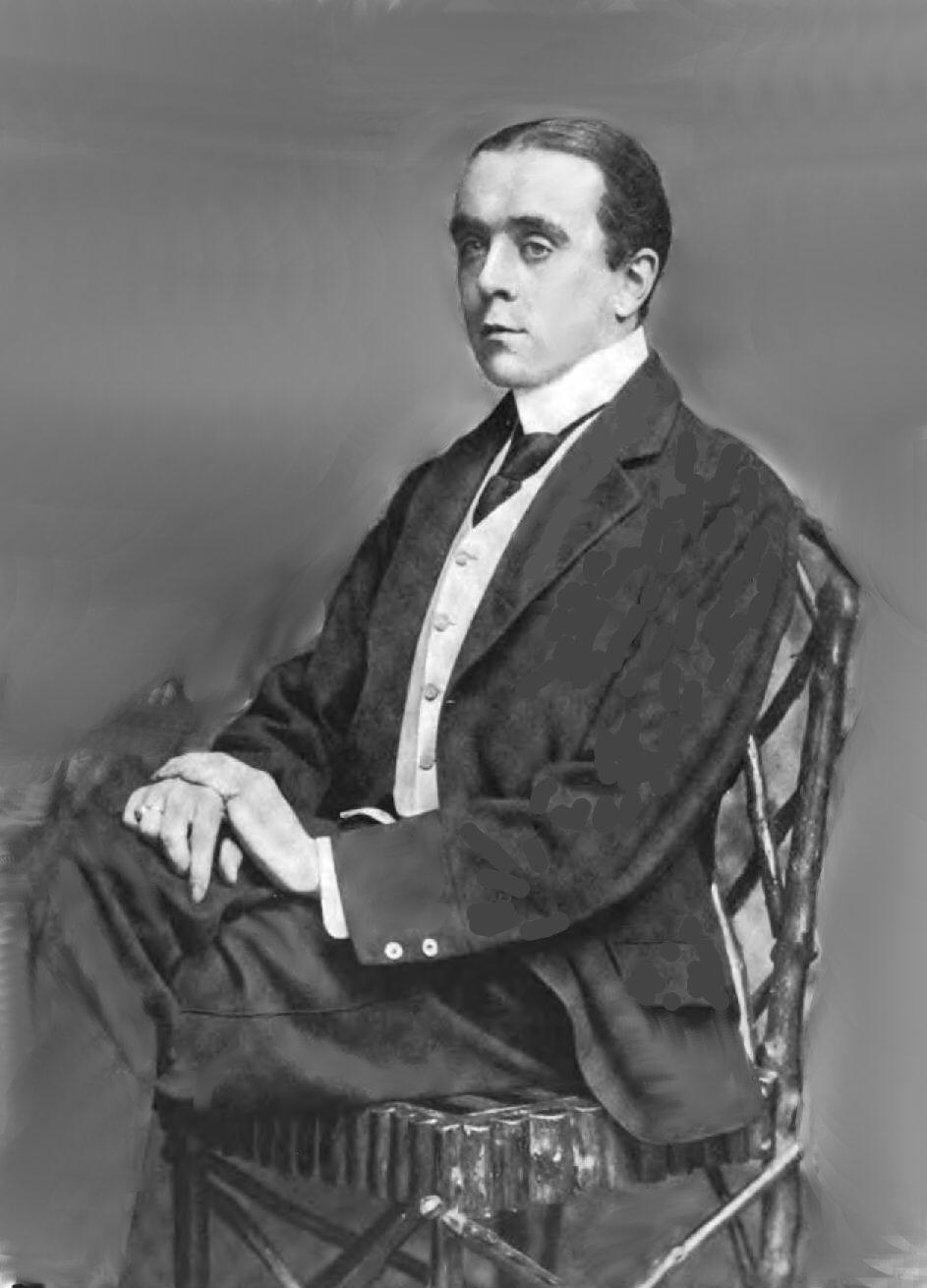
- Wikimedia Commons, “Max Beerbohm 1901 retouched.jpg” — photograph by Russell & Sons, reproduced in The Critic, volume XXXIX, November 1901; provenance and downloadable archival image.