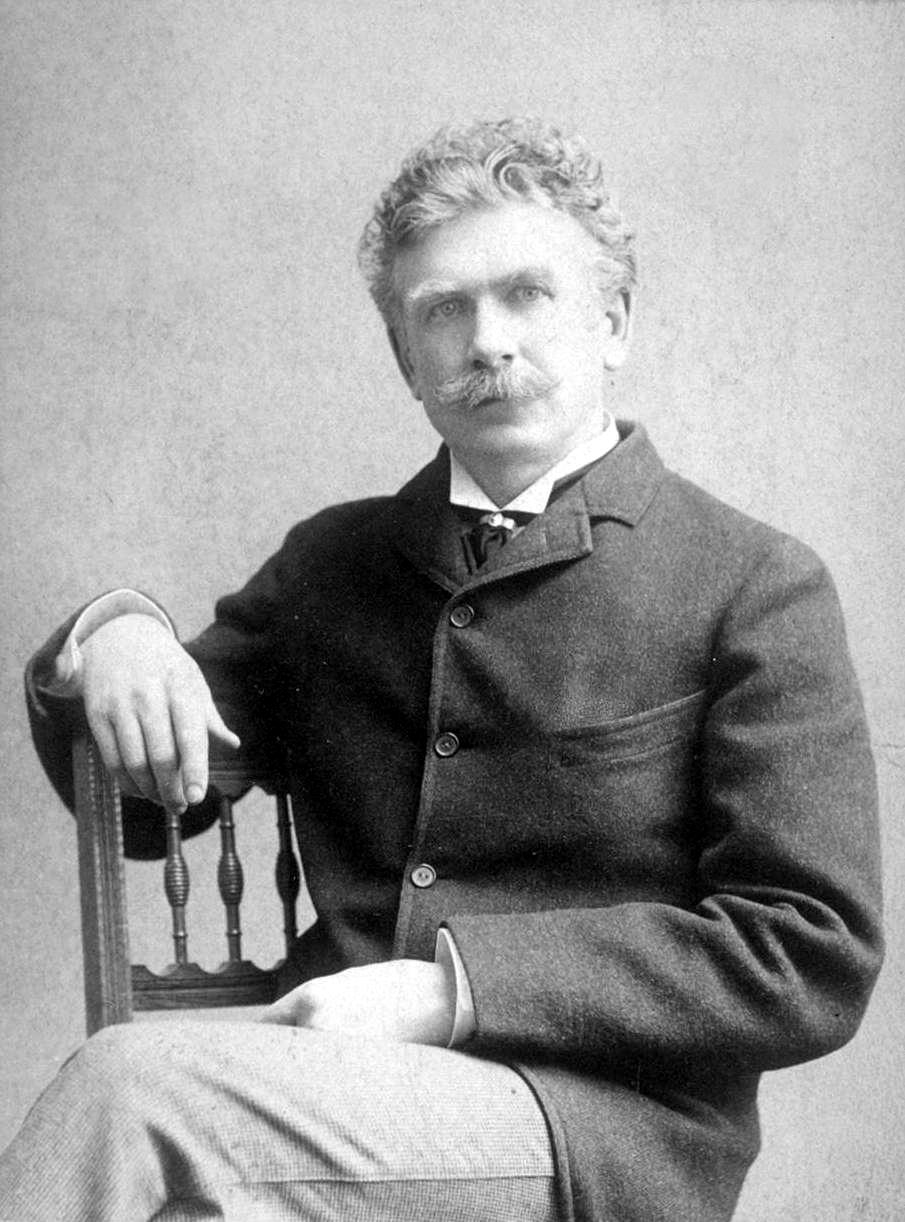
The three members of a family can occupy the same road without inhabiting the same event. In Ambrose Bierce’s “The Moonlit Road,” one sees an inexplicable collapse, another a terrifying accusation, and the third a chance to come home. The reader gets all three accounts. The family never gets to compare them.[1]
That difference is the story’s cruelest piece of construction. Its separate statements promise the satisfaction of assembling evidence; the arrangement also prevents that evidence from becoming a conversation. We can turn the page from one speaker to another. They cannot.
First published in the January 1907 Cosmopolitan, the story later entered the 1910 edition of Bierce’s Collected Works.[1][2] The reading that follows discusses its ending. Its central question is how a narrative can give us increasing understanding while making reconciliation increasingly impossible.
The son supplies the question
The first statement belongs to Joel Hetman, Jr. His mother, Julia, has been strangled; his father subsequently disappears after an encounter on a moonlit road. The son cannot explain either loss.[1] (part I)
Bierce begins with the surviving family member who has the least access to the decisive events. This makes the order emotional as well as informational. Before we receive anything resembling a confession, we experience what unexplained violence leaves behind: an ordinary life that cannot resume because its owner cannot finish telling himself what happened.
Joel’s account includes his father’s testimony at the inquest. Already, a voice is nested inside another voice. What looks like the opening record of a crime contains a secondhand explanation from someone whose conduct will later require reexamination. The format asks us to notice who knows a thing directly and who has inherited a version of it.
The road scene makes that problem audible. His father reacts to something ahead; Joel answers, “I hear nothing.” When urged to look, he insists, “Nothing is there.”[1] (part I) The movement from hearing to seeing produces no agreement. They share a location, but the son’s senses cannot confirm the father’s experience.
For the reader, the scene establishes a debt. Something happened here, and another account may explain it. For Joel, it remains a permanent blank. By placing his statement first and never returning to it, Bierce lets our understanding advance beyond his without giving him any benefit from the advance.
The second statement changes the meaning of the first
The next speaker calls himself Caspar Grattan. His chosen name and broken memories interrupt the apparent continuity of the family record. Yet his recollection of killing a wife, followed by a terrifying encounter on a moonlit road, strongly invites us to identify him with Joel’s father.[1] (part II)
The inference matters more than a neat identification label. We have to perform the connection ourselves. Bierce supplies correspondences without introducing an investigator who certifies their meaning.
The second statement also makes rereading unavoidable. An apparently innocent explanation in the first account can now look like concealment. The sequence alters the authority of words already read; it does not merely add another episode. A page that seemed to establish the circumstances of a death becomes evidence of how those circumstances might have been disguised.
Grattan recognizes the apparition as “my murdered wife.”[1] (part II) That possessive pulls tenderness and ownership into the same small phrase. More troublingly, recognition remains organized around his own crime. The woman’s appearance becomes something happening to him: another stage of punishment.
At this point a reader could feel the familiar pleasure of solving a ghost story. The haunting appears to follow the murder; terror seems to answer guilt. Bierce places the apparent solution in the middle so that the final voice can expose what this explanation leaves out.
The ghost supplies a different intention
Julia’s statement comes through the medium Bayrolles. Even the final testimony has a channel, and the story gives us no independent account of how that channel operates. Death does not turn its speaker into an all-knowing narrator.[1] (part III)
This is essential to the form. If Julia could explain everything, her statement would function as a judge’s ruling. Instead, she can tell us what she experienced and wanted. She does not know who killed her. Her account makes the murder more painful to understand without converting her into its detective.
Her wish on the road is to restore contact with her husband and son. The father’s terror and the ghost’s hope belong to the same encounter. Each preceding account has prepared us to misunderstand her entrance; the last one makes us revise the emotional meaning of the scene.[1] (part III)
The hinge is Julia’s conviction: “He sees, he sees: he will understand!”[1] (part III) The repeated verb gives recognition the rhythm of a breakthrough. The colon then makes understanding appear to follow naturally from visibility.
But seeing cannot supply the knowledge each person lacks. Her husband sees a woman he has killed. She sees someone she still wants to comfort. Her advance and his retreat become two incompatible responses to a single moment of apparent contact.
The tragedy lies in that failed inference after the colon. Julia mistakes being perceived for being understood. The reader can perceive both intentions, but that privilege has no power inside the scene.
An answer that reaches the wrong people
The story’s later critical life helps clarify this distinction. In a 2021 comparison with Akutagawa’s “In a Grove,” Tsutomu Takahashi distinguishes Bierce’s progressive disclosure from the conflicting testimony of the later story.[3] Multiple narrators do not automatically mean that every account cancels every other account.
There is a real cumulative movement here. We can connect details and revise explanations. Yet the Library of America’s introduction also points to lingering questions about Grattan’s identity, the unexplained number attached to his past, and Bayrolles.[2] An interpretation that resolves the central pattern need not pretend every piece of the frame has become transparent.
My reading is that Bierce uses this uneven distribution of knowledge to separate comprehension from consolation. The son remains outside the explanation. The man who recalls the killing cannot receive the apparition as affection. The dead woman gains a voice on the page without gaining the understanding she sought from her family.
The statements resemble pieces laid beside one another on a desk. Their physical adjacency offers a kind of reunion to the reader: three voices, finally gathered. But none answers the others. The story ends having brought us closer to all of them while leaving them terribly far apart.
Sources
- Ambrose Bierce, “The Moonlit Road,” parts I–III; Library of America text, pp. 302–311, with original publication and collected-edition note.
- Library of America, “The Moonlit Road,” Story of the Week, June 18, 2010 — publication context, reception, and unresolved narrative questions.
- Tsutomu Takahashi, “The Irony of Sin: Akutagawa’s ‘Yabu no Naka’ and Ambrose Bierce’s ‘The Moonlit Road’,” 2021, pp. 21–41, especially pp. 26–28 — comparison of the stories’ narrative structures.
- Wikimedia Commons, “Ambrose Bierce 1892-10-07.jpg” — archival photograph, reproduction history, and link to the Bancroft Library source record.