E. M. Forster is still too often reduced to one portable slogan. "Only connect" survives because it deserves to survive, but it can make him sound softer than he is.[2][4] The durable thing in Forster is not a generalized plea for sympathy. It is a method of staging relation. In A Room with a View, Howards End, and A Passage to India, people do not simply decide to understand one another and then succeed or fail. They meet through rooms, houses, roads, caves, and landscapes that either widen relation or expose its limits.[1][2][3]
That is why his fiction still feels so exact. Britannica's account of Forster's career is useful here because it emphasizes two pressures at once: his attachment to the uniqueness of the individual and his recurring effort to hold imagination together with the earth.[4] Those are not separate concerns. Forster keeps asking what sort of physical and social arrangement allows one person to arrive truthfully before another. When the arrangement is false, speech curdles into performance. When the ground is unequal, intimacy becomes wishful thinking. When the room opens properly, clarity can briefly appear.
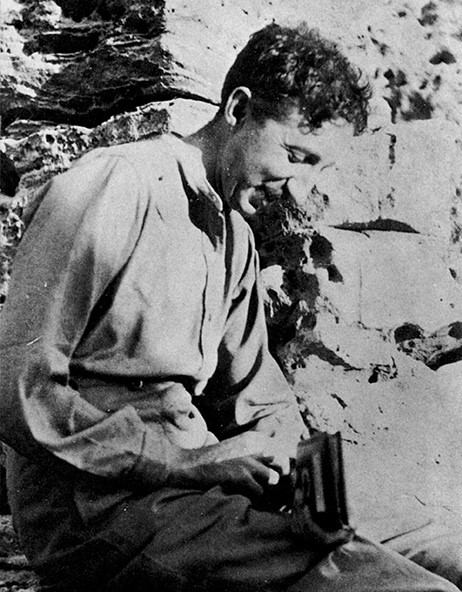
Image context: the cover uses a real 1917 archival photograph of Forster in Alexandria rather than a book jacket or symbolic window.[6] That choice suits a work-centered profile because Forster's novels rarely treat relation as a private inward state alone. Travel, setting, companionship, and local atmosphere all shape what a conversation or attachment can bear.
1) In A Room with a View, relation begins as a spatial correction
Forster announces his method almost comically early. Lucy Honeychurch and Charlotte Bartlett arrive in Florence expecting "south rooms with a view" and receive north rooms overlooking a courtyard instead.[1] The mistake is trivial on the surface and decisive in form. Before Lucy has chosen between Cecil Vyse and George Emerson, before she knows what kind of life she wants, the novel has already made perspective a housing problem.
That matters because Forster does not treat clarity as a purely inward achievement. The British Library's essay on the novel is right to frame it as a struggle between convention and genuine perception.[5] Lucy has feeling before she has language for it, and she has music before she has doctrine. When Forster says that "the kingdom of music is not the kingdom of this world," he is not escaping the social world; he is marking how much of Lucy's truth cannot yet speak inside the polished English scripts around her.[1]
So the novel keeps moving her between spaces that either ventilate or constrict her. The pension rooms, the open Florentine view, the hillside kiss, the drawing rooms back in Surrey, the final reclaimed room: none of these are decorative settings.[1][5] They are instruments that register whether relation is becoming more honest or more arranged. Forster's gift is that he makes architecture and travel do moral work without ever turning them into blunt allegory. Lucy does not grow because Italy is picturesque. She grows because another sequence of rooms and air briefly interrupts the social routine that had been speaking for her.
2) In Howards End, connection has to pass through property, class, and use
By Howards End, Forster's design becomes harder and less forgiving. The famous sentence arrives inside a world where "telegrams and anger count," where love is entangled with settlements, inheritance, and procedure.[2] That line is one of the keys to his whole career. Relation cannot remain noble if it refuses to pass through the outer world. Feeling has to meet paperwork, class structure, and the managed habits by which one household keeps power over another.[2][4]
That is why the house itself matters so much. Howards End is not only a symbol of rootedness. It is a test site where Ruth Wilcox's attachment, Margaret Schlegel's imagination, Henry Wilcox's practicality, and Leonard Bast's precarity all come under one roof without ever becoming equal.[2] When Margaret thinks, "Only connect the prose and the passion," the line sounds memorable because Forster has already shown how difficult the connection will be.[2] Houses can gather memory, but they can also harden into possession. Liberal responsiveness can sound beautiful, but it can still arrive too late for people whose lives are materially exposed.
This is where Forster stops being a merely humane novelist and becomes a severe one. He does not ask readers to admire connection from a distance. He asks what sort of world would let connection become durable instead of ornamental. The answer is never purely verbal. It turns on who owns the house, who moves through it easily, who must borrow hospitality, and who pays when cultured sympathy mistakes itself for justice.[2][4]
3) In A Passage to India, the ground itself refuses premature harmony
If A Room with a View lets relation appear through an opening and Howards End presses it through property, A Passage to India asks what happens when the ground is politically unequal from the start. The novel's architecture is already telling the story: mosque, caves, temple.[3] Each section changes the conditions under which speech can count. Courtesy and curiosity can still work in the opening movement, but the Marabar caves flatten distinction into the deadening "boum" that returns every sound in the same dull register.[3]
Forster is unsparing here. "A mystery is a muddle," one character says, and the line matters because the novel keeps refusing the consolations of elegant misunderstanding.[3] The problem is not simply that the British and the Indians fail to explain themselves clearly. The imperial arrangement has already poisoned the ground on which explanation might have taken place. Friendship can be real between Aziz and Fielding, yet the book keeps showing that private regard cannot float free of public structure.[3][4]
That is why the ending remains so strong. The desire for reconciliation exists, but the landscape answers, "No, not yet."[3] Few twentieth-century novelists understood so well that relation needs more than good feeling. It needs the right timing, the right terms, and a world not actively organized against it. Forster's liberal hope survives the novel, but only after losing its innocence.
4) Across the career, Forster makes arrangement itself the moral question
Seen together, these books show why Forster lasts. He does not build novels out of themes first and settings second. He builds environments in which relation is tested. Rooms, pensions, country houses, caves, roads, and weather are never just atmosphere. They are the grammar by which nearness becomes possible, strained, or false.[1][2][3]
That is also why he remains modern. Plenty of writers can say that class, convention, and empire damage intimacy. Forster's sharper move is to make readers feel the damage through arrangement. Lucy gets the wrong room before she gets the wrong fiance.[1] Margaret learns that ideals have to pass through property and class before they can call themselves serious.[2] Aziz and Fielding discover that political asymmetry can split even the friendship that genuinely exists between them.[3] None of this is abstract. The novels keep returning to thresholds, routes, and occupied ground.
Britannica's account of the later Forster notes that A Passage to India presents the old hope of joining earth and imagination in a darker, almost impossible form.[4] That observation helps unify the career. Forster did not abandon relation. He kept tightening its conditions. The later work is stronger because it knows that atmosphere, houses, and roads are not just scenic carriers of human feeling. They are part of the feeling's reality.
5) Why Forster still reads in the present tense
Forster's reputation will probably always attract readers who want moral reassurance. What they find, at his best, is something more demanding. He keeps asking whether people are willing to revise the arrangement in which they meet, not just the language with which they excuse themselves.[1][2][3] That is why he still feels contemporary in a culture crowded with easy talk about connection. He knew that connection becomes false very quickly when the room is wrong, the house is owned on unequal terms, or the road itself throws two riders apart.
His great subject, then, is not human warmth in the abstract. It is relation under conditions. In A Room with a View, openness has to become legible against convention.[1][5] In Howards End, attachment has to survive property and class without pretending those pressures are minor.[2] In A Passage to India, friendship has to confront a political world that answers "not yet" even when two people wish otherwise.[3][4] Forster made all of that answerable to rooms, routes, and unequal ground, and that is why his fiction still feels less like Edwardian wisdom than like a living test.
Sources
- E. M. Forster, A Room with a View (Project Gutenberg ebook 2641).
- E. M. Forster, Howards End (Project Gutenberg ebook 2946).
- E. M. Forster, A Passage to India (Project Gutenberg ebook 61221).
- Encyclopaedia Britannica, "E.M. Forster."
- Stephanie Forward, "A Room with a View: class, conventions and the quest for clarity." The British Library.
- Wikimedia Commons, "File:EMForster1917.jpg" (source page for the lead photograph).