The Colosseum scene in Daisy Miller is often remembered as the moment when everything becomes obvious.[1][3] Winterbourne finds Daisy at night with Giovanelli, the Roman fever warning turns literal, and the novella appears to settle the question it has been staging from the beginning: is Daisy innocent, foolish, flirtatious, compromised, or all of those at once? Henry James makes the scene feel like an answer, but the force of the passage lies elsewhere. It exposes how badly Winterbourne wants an answer that can stop interpretation.[1]
That pressure matters because Daisy Miller was James's breakthrough international story, first published in 1878, and it remains one of the clearest early tests of his favorite question: what happens when Americans and Europeans, freedom and decorum, improvisation and social surveillance all try to describe the same behavior?[2][3][4] The Colosseum scene compresses those tensions into a few pages. It gives us moonlit ruins, a disease-laden atmosphere, a public place emptied into near privacy, and a spectator who thinks he has finally learned how to classify the woman in front of him.[1]
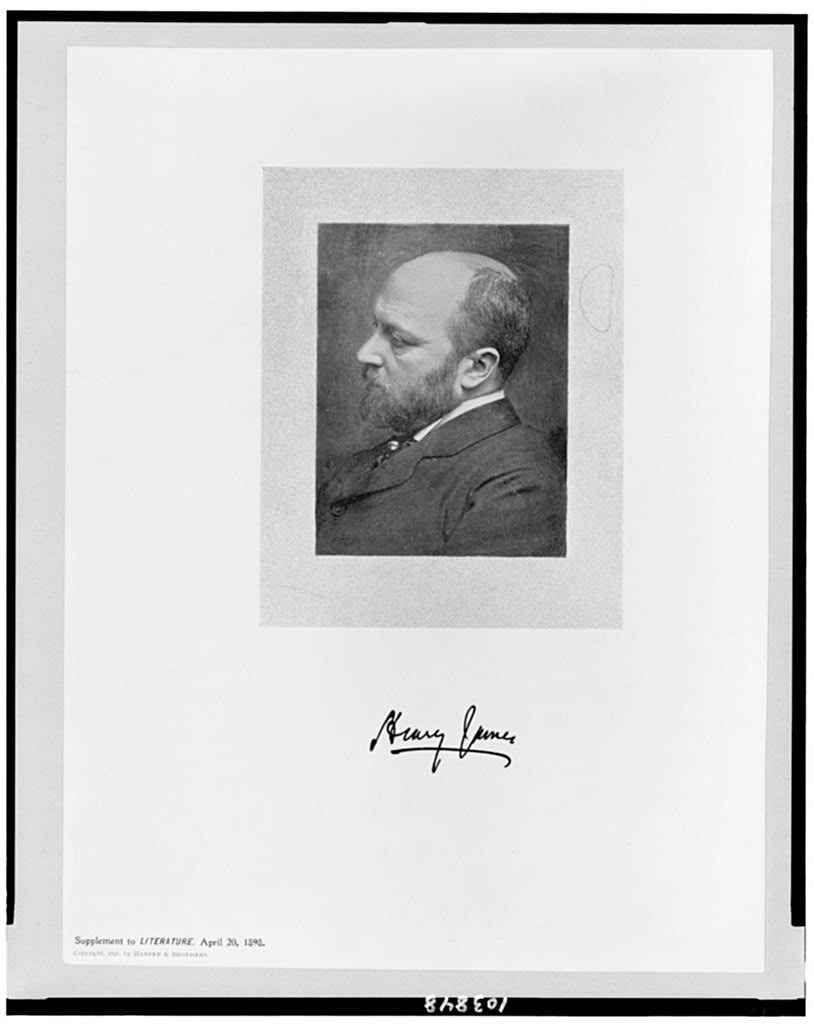
Image context: the cover uses the Library of Congress's 1898 Henry James portrait rather than a generic Roman ruin. That choice keeps the emphasis on point of view. This article is about how James designs a scene of looking, mislooking, and deciding too fast, so an archival author photograph serves better than atmospheric travel imagery.[5]
The passage begins by making judgment feel aesthetic
James sets the scene with an almost dangerous amount of beauty. Winterbourne approaches the "dusky circle of the Colosseum" under a waning moon and detours inward because the arena in pale moonlight seems "well worth a glance."[1] That phrase is important. He does not enter as a moral guardian or as a jealous lover. He enters first as a spectator, "a lover of the picturesque."[1] The habit of looking aesthetically comes before the habit of judging ethically, and James wants the two habits to blur.
This is why the famous warning about the place lands so sharply. Winterbourne remembers that moonlit meditations in the Colosseum may be poetic, but the doctors would call the air a "villainous miasma."[1] The scene is therefore built from incompatible ways of seeing. Ruins invite romance; medicine supplies danger; social life will soon supply scandal. James does not ask the reader to choose one register and discard the others. He keeps all three active at once, and that layered atmosphere is what makes Daisy's appearance feel so overcharged.
When Daisy speaks from the shadows before Winterbourne fully sees her, the effect is almost theatrical.[1] A voice arrives first, then recognition, then moral reaction. The passage stages revelation as an event of overhearing. Winterbourne thinks he has stumbled upon truth, but what he has actually found is a scene already shaped by lighting, distance, and expectation. James makes exposure feel inseparable from mise-en-scene.
Winterbourne's "illumination" is the scene's central error
The hardest sentence in the passage is not one Daisy says. It is the narrator's account of Winterbourne's inner turn: the sight of Daisy with Giovanelli feels like "a sudden illumination" that makes "the ambiguity of Daisy's behavior" easy to read.[1] That moment is the trap. Winterbourne believes he has escaped uncertainty; James shows him surrendering to a coarser uncertainty disguised as clarity.
Everything in the wording matters. The revelation is sudden. It is emotional before it is reflective. It turns Daisy from a difficult person into a solved type, "a young lady whom a gentleman need no longer be at pains to respect."[1] That line is devastating not because it tells us the truth about Daisy, but because it tells us the speed with which social reading can harden into moral disposal. Winterbourne does not learn more about Daisy here. He learns how ready he has been to stop granting her complexity.
This is the deeper cruelty of the scene. The Colosseum is full of historical death, Christian martyr echoes, and disease talk, but the most immediate violence is interpretive. Winterbourne's relief matters as much as his horror.[1] He is horrified by what he thinks Daisy is doing, yet relieved that the puzzle no longer requires tact, sympathy, or suspended judgment. He can downgrade her and feel licensed by the setting.
James has been preparing that failure all along. Winterbourne's intelligence is real, but it is an intelligence trained by categories, by old-world codes, by the wish to convert behavior into stable meaning. Daisy frustrates him because she keeps acting in ways that are visibly social but hard to codify. In the Colosseum, he mistakes exhaustion with ambiguity for knowledge.
Daisy keeps talking in a register that the social script cannot absorb
One reason the scene stays alive is that Daisy does not suddenly begin performing guilt. She keeps sounding like herself. Her first line about Winterbourne looking at them like "one of the old lions or tigers" is comic, bright, and a little outrageous.[1] Her "He saw me, and he cuts me!" is half mock-complaint, half genuine surprise.[1] Even her insistence that she "was bound to see the Colosseum by moonlight" carries the same stubborn spontaneity that has marked her from Vevey onward.[1]
That continuity matters. If Daisy spoke in a new voice here, the scene would collapse into melodramatic confirmation. Instead James lets her remain tonally consistent while the setting grows darker around her. The result is that Winterbourne's certainty looks less trustworthy. He has changed more than she has. He is the one whose language abruptly narrows into verdict.
The Roman fever exchange sharpens the point. Winterbourne warns her that this is how people catch it; Daisy answers, "I never was sick, and I don't mean to be!"[1] The sentence is reckless, childish, funny, and painful all at once. It shows how little authority she grants medical and social fear when those fears arrive in the voice of regulation. But James also makes it chilling, because readers know the line will become tragically false. Daisy's vitality does not protect her from consequence.
What the passage refuses, however, is the easy claim that consequence therefore proves moral guilt. Daisy may be imprudent; the novella never turns that into full evidence that Winterbourne's social diagnosis was correct.[1][3] The scene is not a courtroom. It is a place where health risk, flirtation, spectacle, and class-coded respectability cross each other without resolving into one clean moral category.
The night air matters because it turns social misreading into bodily fate
James is too exact a writer to use Roman fever as mere punishment machinery. The danger of the air does not simply ratify the expatriate code. It does something stranger: it gives material force to a scene already saturated with interpretive force.[1] Daisy is socially exposed and literally exposed at the same time. The night air becomes the medium through which a bad reading acquires fatal aftereffects.
That is why the Colosseum setting is so carefully chosen. The place is public, ruined, historical, tourist-facing, and medically ominous all at once.[1][3] It is not a secret bedroom or a private garden. It is a monument where visibility itself is unstable. One can be seen there and still not be known. Winterbourne experiences the scene as final disclosure; James constructs it as a demonstration of how disclosure fails.
The historical afterlife of Daisy Miller helps explain why the passage keeps attracting readers. Contemporary and later criticism repeatedly returned to Daisy as a figure through whom James tested innocence, freedom, national type, and the social penalties attached to female visibility.[3][4] My inference from the passage and its afterlife is that the Colosseum scene persists because it dramatizes an old problem in a brutally economical form: once a woman becomes legible to public judgment, who gets to say what that legibility means?[1][3]
Why this scene lasts
The Colosseum episode endures because it offers no stable resting place. Daisy is careless. Winterbourne is ungenerous. Giovanelli is charming and evasive. The air is dangerous. The social code is punitive. None of those statements cancels the others.[1][3] James keeps them all in play, which is why the passage still feels modern. It understands that scandals rarely become powerful because they reveal everything. They become powerful because they tempt spectators into believing that one charged image has revealed enough.
So the scene's real exposure is not Daisy's character. It is Winterbourne's method. He enters as a lover of the picturesque, finds what feels like certainty, and walks away with a thinner imagination than the one he brought in.[1] James lets moonlight, ruins, and disease do their atmospheric work, but the lasting wound is interpretive. Winterbourne mistakes judgment for knowledge, and the novella never quite forgives him for the ease of that mistake.
Sources
- Henry James, Daisy Miller: A Study (Project Gutenberg ebook text).
- Library of America, "Henry James" (career overview and major works list including "Daisy Miller").
- Encyclopedia.com, "Daisy Miller" (publication history, themes, and critical overview).
- Cambridge University Press, Daisy Miller and Other Tales, 1874-1879 (scholarly edition summary describing the work as James's breakthrough and tracing composition, reception, and afterlives).
- Library of Congress, "Henry James" (1898 portrait source page for the article image).