People often talk about Middlemarch as if its greatness were a settled moral weather system: serious readers enter, receive wisdom, and leave impressed.[2][4] That description is not wrong, but it is too thin for the novel George Eliot actually wrote. What lasts in Middlemarch is not generalized uplift. It is the way a book first published in eight parts across 1871-72 turns one fictional Midlands town into a machine for tracking how motives leak into institutions, marriages, reputations, debts, and delayed consequences.[1][2][5]
That is why the subtitle matters. Middlemarch: A Study of Provincial Life sounds modest, but the study is immense.[2] Eliot does not isolate one heroine and one lesson. She builds a social field crowded enough to hold Dorothea Brooke's idealism, Tertius Lydgate's professional ambition, Casaubon's scholarly sterility, Rosamond Vincy's ornamental self-regard, Bulstrode's moral evasions, and the gathering pressure of reform-era change in the years just before the 1832 Reform Act.[1][2] The novel's reputation survives because this provincial scale is only apparently small. Eliot makes "ordinary human life" so acoustically dense that it begins to sound like history itself.[1]
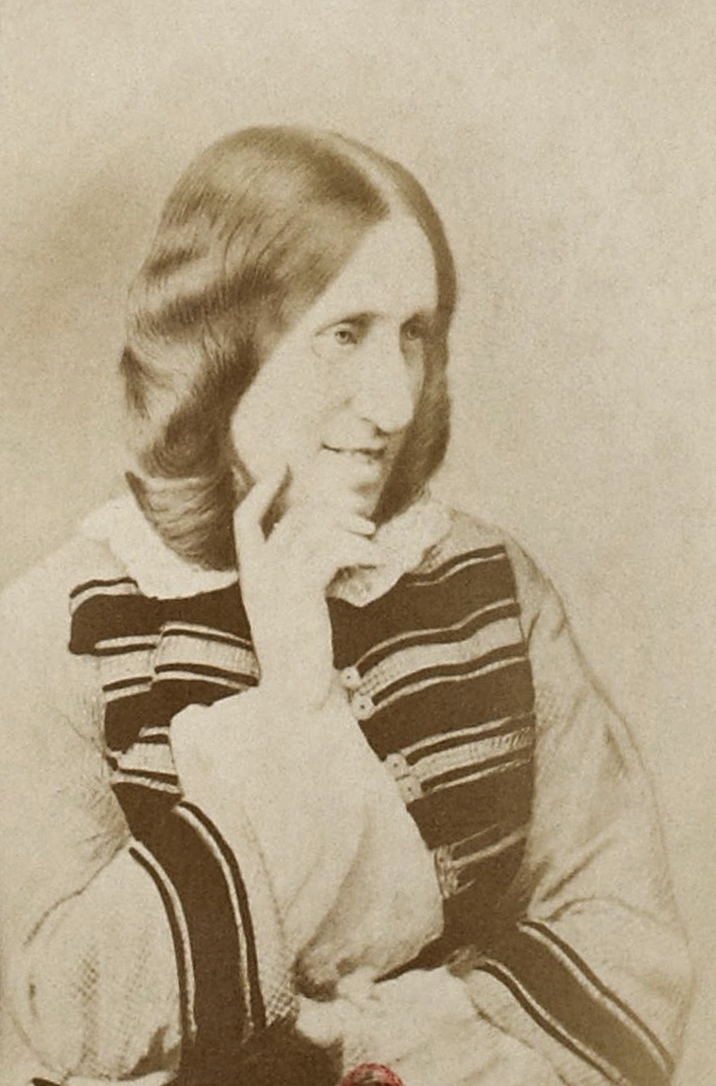
Image context: the cover uses a circa 1865 photographic portrait of George Eliot from the Bibliotheque nationale de France via Wikimedia Commons rather than a generic country-house scene. That choice keeps the emphasis on authorial pressure and public afterlife. A reception dossier about Middlemarch needs an archival face attached to the novel's long reputation, and this albumen photograph carries exactly that historical grain.[6]
The publication moment was larger than a single plot
By the time Eliot published Middlemarch, she was already a major Victorian novelist whose work had helped define the psychological depth later associated with modern fiction.[3] That biographical fact matters because Middlemarch reads like the culmination of a method rather than a lucky peak. Eliot had already shown that rural and provincial settings could bear philosophical and moral weight, but here she widened the aperture. Britannica's summary is useful on this point: the novel studies "every class" of the town, from clergy and gentry to professionals, manufacturers, farmers, and laborers.[2] The scale is social before it is ornamental.
The serial form helped make that scale legible.[5] Because the novel first reached readers in installments, its architecture had to carry momentum without collapsing into one main line and several decorative side corridors. Dorothea and Lydgate emerge as the book's two brightest aspirants, but Eliot refuses to let either become a solitary center.[1][2] Each is repeatedly rerouted through other people: inheritances, gossip, courtship markets, credit, medical authority, and religious self-deception. The effect is that plot feels less like a rail line than a web under tension. That is one reason the book keeps feeling modern. Later readers trained on ensemble television, social novels, or network narratives recognize the structure instantly, even when the diction remains Victorian.
The novel's relation to reform belongs here too. Project Gutenberg's overview accurately places the action between 1829 and 1832, with marriage, women's status, idealism, and political reform pressing on the same fictional town.[1] Eliot does not write parliamentary history directly. She writes the atmosphere in which reform arrives as expectation, argument, and partial displacement. Lydgate imagines professional transformation; Dorothea imagines moral usefulness; both discover that institutions are slower, denser, and more compromising than aspiration first suggests. The dossier point is important: Middlemarch became canonical not because it celebrates noble intention, but because it keeps intention answerable to systems.
The novel's reputation rests on distributed sympathy
One source of the book's afterlife is the famous final claim that "the growing good of the world is partly dependent on unhistoric acts."[1][2] That line is quoted so often that it can start to float above the novel like detached wisdom. Inside the novel, though, it is earned through disappointment, compromised marriages, failed vocations, and social entanglement. Eliot does not grant Dorothea a triumph proportional to her longing. She gives her influence instead of monument.[1] Readers return to the ending because it narrows glory and enlarges consequence at the same time.
The same is true of the other oft-cited sentence near the end: "If we had a keen vision and feeling of all ordinary human life," Eliot writes, "it would be like hearing the grass grow and the squirrel's heart beat."[1] This is not simply a humane slogan. It is a theory of narration. Eliot's realism depends on the claim that ordinary life is nearly unbearable in its density, and that fiction can make some of that density audible without pretending to total mastery. Put differently, the novel's greatness lies not in solemn pronouncement, but in calibrated over-attention. That is exactly what later critics and novelists keep finding in it.
This helps explain why Middlemarch survives periods when moral seriousness itself goes in and out of fashion. The book does not offer clean moral elevation. Casaubon is ridiculous and painful. Rosamond is shallow and exquisitely perceptive about status. Bulstrode's hypocrisy does not cancel his real anxiety. Even Dorothea, the nearest thing the novel has to a radiating conscience, can be naive in ways that do material damage.[1][2] Eliot's distributed sympathy is therefore not softness. It is a discipline of seeing several partial truths at once. Readers who want villains alone, heroines alone, or ideology alone do not quite get what they came for, and that resistance is part of the novel's prestige.
Reception kept renewing the book rather than freezing it
The novel's public standing after Eliot's death was not perfectly continuous. Oxford's George Eliot anniversary essay notes that her reputation temporarily declined after a run of dry biographies, and that Virginia Woolf later helped restore it by calling Middlemarch "one of the few English books written for grown-up people."[4] The line gets repeated because it captures something precise about the reading experience. "Grown-up" here does not mean dutiful or respectable. It means that Eliot assumes adult readers can hold contradiction without demanding immediate rescue from it.
That phrase also explains why the book keeps being reintroduced rather than merely preserved. The British Library's 150th-anniversary edition page compresses the long arc neatly: first published in eight installments, the novel was an instant commercial and critical success, and it still "continues to captivate readers 150 years later."[5] The important word there is not "captivate" by itself, but "continues." Middlemarch has not survived by becoming inertly canonical. It survives by being repeatedly legible to new anxieties: women's agency, professional frustration, social mobility, provincial snobbery, political reform, and the mismatch between inner vocation and outer arrangement.[1][2][5]
My inference from these sources and from the novel's own method is that Middlemarch lasts because its scale keeps re-expanding under rereading. First-time readers may enter through Dorothea's marriage mistake, Lydgate's thwarted science, or the book's quotable endings. Later they begin to notice how much of Eliot's intelligence sits in transitions, reroutings, minor embarrassments, and money-pressure. The "provincial" world stops looking local and starts looking like a general model of social life under constraint.[1][2]
Why the afterlife still feels active
What makes Middlemarch different from a merely revered classic is that its afterlife remains argumentative. Readers do not only admire it; they test themselves against it. Some come for Dorothea and stay for Rosamond. Some arrive expecting a marriage novel and end up caught by municipal reform, medicine, religion, inheritance, or the humiliations of credit.[1][2] Others discover that Eliot's signature gift is not largeness in the abstract, but control over adjacency: the way one person's vanity becomes another person's debt, another person's rumor, another person's narrowed future.
So the strongest description of Middlemarch is not that it is wise. Many books are called wise after they stop troubling people. Eliot's novel still troubles because it keeps distributing responsibility across a town while refusing to flatten anyone into a simple emblem. Its context explains the first force of that achievement: a mature Eliot, a reform-era setting, and an ambitious serial form.[3][5] Its reception explains the rest: readers and critics keep finding that the book's real subject is not provincial narrowness alone, but the hard, adult work of perceiving how lives touch and alter one another.[2][4] That is why the novel's web never quite goes still.
Sources
- George Eliot, Middlemarch (Project Gutenberg ebook page and text links).
- Encyclopaedia Britannica, "Middlemarch" (publication, summary, analysis, and critical standing).
- Encyclopaedia Britannica, "George Eliot" (biographical overview and literary importance).
- Charis Edworthy, "Eight things you didn't know about George Eliot," OUPblog (George Eliot's reputation and Woolf's rehabilitation line).
- British Library Shop, Middlemarch: The 150th Anniversary Edition introduced by Zadie Smith (serial publication note and long afterlife summary).
- Wikimedia Commons, "George Eliot BNF Gallica (cropped)" direct image file used for the article portrait.