A man has crossed peoples and seas to reach his brother. The journey ends; the conversation cannot begin. In Catullus’s poem 101, the speaker arrives with offerings and words for someone who can receive neither in the ordinary way. Yet the poem keeps saying brother. Its ten lines make farewell an act of address, sustained in full knowledge that no answer will come.[1]
That tension can become sharper or softer in translation. Is the traveler being carried, or pushing onward? Does he speak to a substance, ashes, or to a person whose silence has become permanent? Does the ending greet the brother before releasing him? These choices change the gestures through which grief becomes audible.
The 1894 Carmina offers a revealing pair: Richard Francis Burton’s verse beside Leonard C. Smithers’s prose. Burton’s version appeared after his death; Smithers’s introduction records that he had intended further revision. Reading the two together gives us different experiments in carrying Latin into English, rather than a contest with one necessary winner.[1]
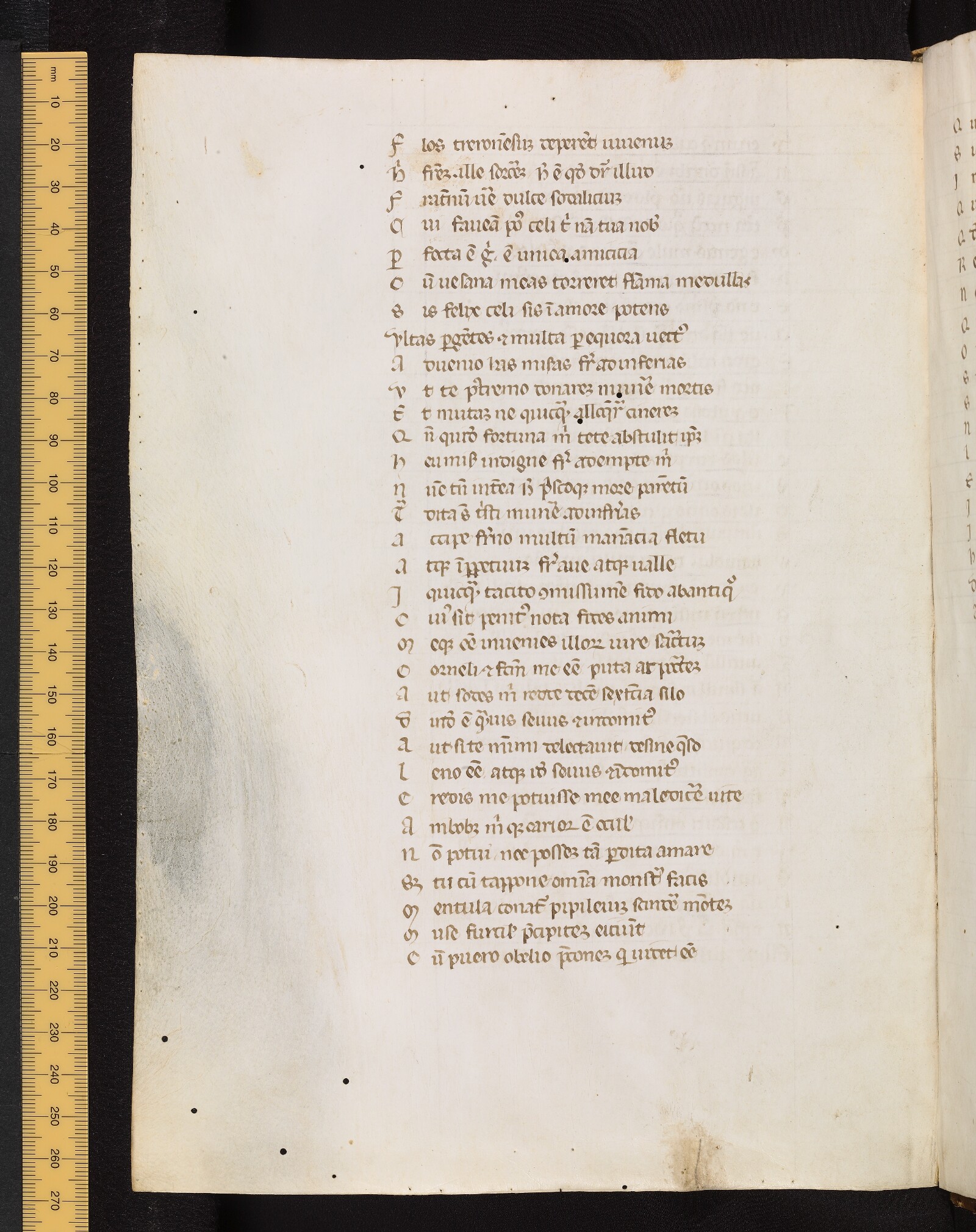
Carried, or plowing
The first line ends with vectus, a participle meaning carried or conveyed. Only in the next line does advenio, “I arrive,” bring the movement to its destination. The sentence makes the reader pass through the journey before reaching the present act of arrival.[1]
Smithers preserves that carried quality with “waters borne.” Burton makes the traveler more visibly active, “plowing many a sea-plain.” His compound gives the sea a broad surface and gives passage across it something of the pressure of a furrow. Smithers’s speaker has been transported; Burton’s seems to cut a way forward.[1]
Neither choice can abolish the distance. The repeated Latin forms multas and multa accumulate peoples and expanses of water before the singular brother enters the sentence. The world is populous; the destination is defined by one person’s absence. For me, the power of the opening lies in that narrowing. An enormous journey has brought the speaker to someone he still cannot reach.
The difference matters because an English translation can make travel feel like achievement. A forceful verb rewards the traveler with agency. The Latin’s carried participle leaves more room for dependence: arrival is something accomplished through conveyance, and arrival itself proves insufficient. That is a pressure in the wording, not evidence that we can reconstruct the historical journey or the traveler’s mood from one verb.
An address without an answer
Line 4 places mutam, mute, before cinerem, ash. Between them come the admission of futility and the verb of speaking to someone. The phrase encloses the attempted address inside the material fact that defeats it.[1]
Smithers gives us “mute ashes.” Burton unfolds the adjective into “ashes that answer have none.” His version takes longer to reach its refusal. It also introduces the idea of an answer explicitly: the voice has already imagined the other half of a conversation.[1]
The loss changes scale in that small expansion. Ashes can be an object before the eye, but an answer is something expected from another person. Burton’s line lets the expectation survive long enough to be disappointed. Smithers’s shorter phrase puts the impossibility directly beside the remains.
Anne Carson makes another choice in her translation in Nox: “talk (why?) with mute ash.” The question interrupts the act. Her “with” suggests the companionship of conversation, while the parenthesis challenges the speaker’s reason for attempting it. This is a conspicuous intervention: the Latin states that the address is in vain; Carson makes its futility sound like a question breaking into speech.[3]
These versions help distinguish knowing from stopping. Catullus’s speaker understands the condition of the listener. The poem supplies no reply and no scene of supernatural recognition. Nevertheless, he continues to speak directly to his brother. A translation that makes the voice merely describe grief would lose this continuing relationship between speaker and addressee.
What the farewell leaves open
Near the end, accipe asks the brother to receive the offerings. The imperative is startling after the acknowledgment of mute ash. The speaker has not discovered that the dead can obey; the inherited ritual still gives him something to do and someone to address. The gifts arrive wet with the giver’s tears.[1]
Then comes ave atque vale. Burton keeps a greeting and a leave-taking together. Smithers also preserves their difference, ending with “hail! for ever, adieu!” The exclamation briefly makes a ceremony out of greeting someone at the moment of parting.[1]
Carson instead ends with “farewell and farewell.” Repetition replaces the turn between salutation and departure. Read beside Burton and Smithers, it sounds to me like a goodbye that must be attempted twice. That is a possible effect of her English, not a claim that the Latin contains two identical farewells.[3]
Nox extends the labor beyond a single finished version. In his review, J. Kates describes Carson’s memorial to her brother as a folded book that works through Catullus’s words with dictionary entries and personal fragments. Translation becomes part of the book’s way of remembering.[3] In the published summary of “The Philology of Grief,” Erik Fredericksen identifies a related tension: a poem can become a substitute for the absent brother, yet its learned attention can also sustain a relationship across that absence.[4]
That tension helps explain why the smallest translation choices matter here. The poem offers an ending we can say, while preserving the person to whom we say it. Carried or plowing, speaking to or talking with, greeting before goodbye or saying goodbye again: each version gives the mourner a different movement to complete.
None produces the missing answer. The words reach the end of the poem still addressed to a brother.
Sources
- Catullus, The Carmina of Caius Valerius Catullus, translated by Richard Francis Burton and Leonard C. Smithers (1894) — introduction and poem CI, Latin text, Burton’s verse, and Smithers’s prose; Project Gutenberg transcription.
- Bodleian Libraries, MS. Canon. Class. Lat. 30, fol. 36v — official digitized manuscript, dated 1351–1375, and source of the archival image.
- J. Kates, “Catullus by Night: Anne Carson’s Nox,” Harvard Review, 23 July 2011 — Carson’s translation reproduced in note 1 and discussion of the memorial’s form.
- Erik Fredericksen, “The Philology of Grief: Catullus 101 and Anne Carson’s Nox,” in Unspoken Rome (Cambridge University Press, 2021), pp. 289–306 — publicly available chapter summary on substitution, mourning, and continuing connection.