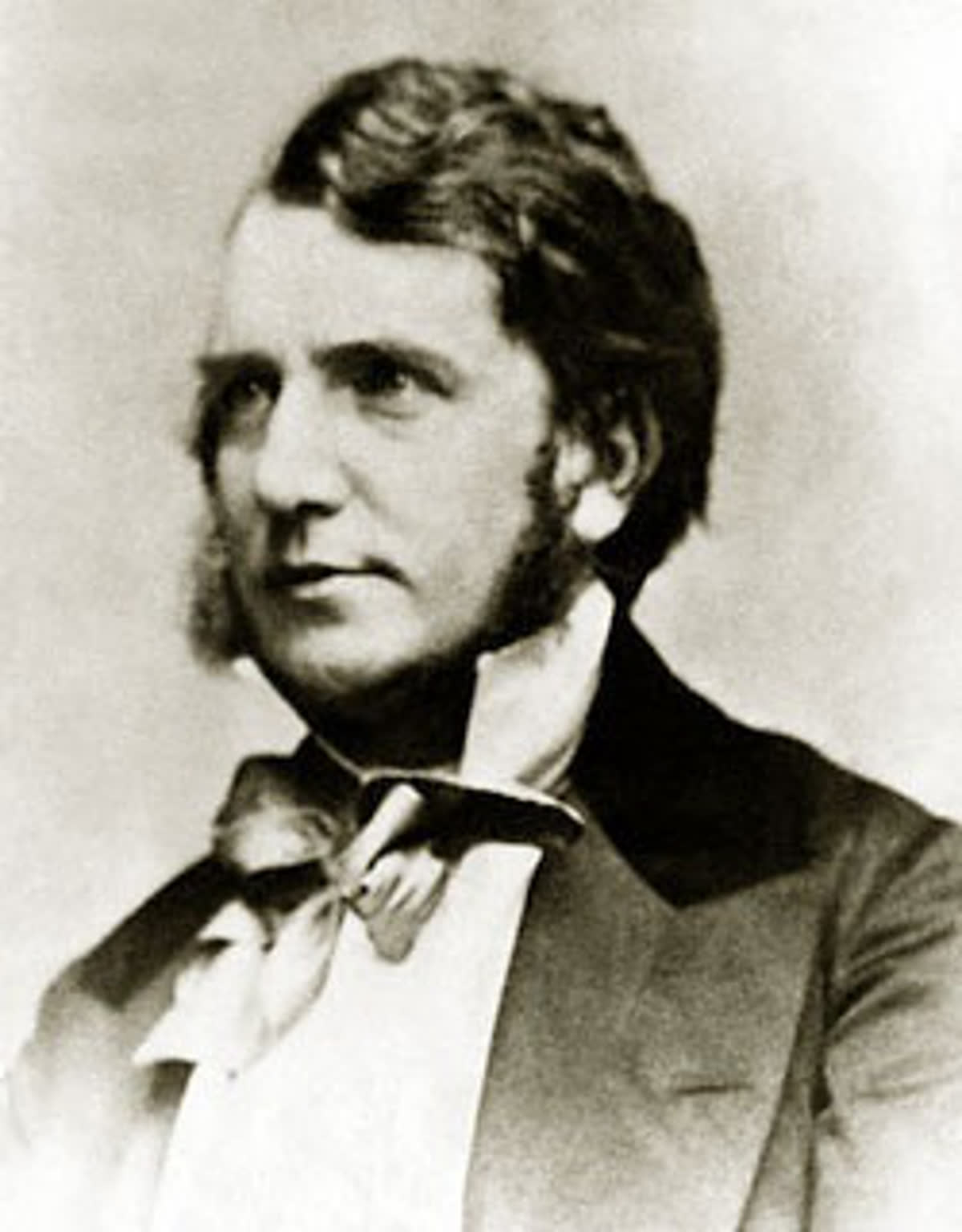
Carmilla keeps returning because Sheridan Le Fanu did not write a vampire who could be reduced to a rule. First serialized in The Dark Blue from December 1871 to March 1872 and later collected in In a Glass Darkly, the novella gives Laura a visitor, a fever, a dream logic, and an intimacy that Victorian explanation keeps trying to classify after the fact.[1][2] The plot can be summarized quickly: a young woman in Styria is drawn toward Carmilla, weakens under nocturnal attacks, and survives only after male experts identify and destroy the vampire. The afterlife begins because that summary leaves out the real disturbance. Carmilla is not only the invading monster. She is the emotional temperature of the book.
That is why adaptations keep changing her. A purely faithful version would still have to decide what kind of faithfulness matters: Gothic threat, lesbian desire, predatory seduction, medical case history, doomed romance, camp spectacle, feminist reclamation, or new-media fan intimacy. Syracuse University Press's critical-edition page is useful here because it frames Carmilla as both an older sister to Dracula and a text whose critical life crosses politics, gender, Gothicism, feminism, aesthetics, and film studies.[3] The novella survives because each of those routes finds something genuinely present in the original.
The first pressure is the frame. Le Fanu attaches Laura's account to Doctor Hesselius, a collector of strange cases, and lets her story arrive as evidence already prepared for interpretation.[1][2] That makes Carmilla feel less like free confession than a file. Laura speaks, but her speech is surrounded by doctors, fathers, generals, barons, documents, and postmortem procedure. The plot ends with institutional certainty: the vampire has a name, a tomb, a method, and a killable body.[1]
Yet the prose never lets that certainty become emotionally final. Laura's attraction and fear keep occupying the same sentence field. Carmilla tells her, "I live in your warm life," and the line is both love speech and feeding logic.[1] Later, the phrase "Love will have its sacrifices" makes tenderness sound like ritual violence.[1] Those two small moments explain a century and a half of afterlife better than any checklist of vampire lore. Le Fanu's vampire is terrifying because she makes intimacy itself difficult to sort. If Laura is only a victim, why does the narration keep remembering touch, attention, and fascination so intensely? If Carmilla is only beloved, why does the body keep recording depletion?
The early screen afterlife leaned hard into that instability by making subtext visible. BFI's history of lesbian vampires on screen identifies Hammer's The Vampire Lovers as a direct telling of the Le Fanu novella and places it inside a 1970s moment when lesbian vampire films moved toward explicit sexuality and commercial spectacle.[4] That translation matters because cinema changes the problem. On the page, Laura can report contradiction as memory. On screen, desire has to become bodies, glances, costume, rooms, and pacing. The result can sharpen the story, but it can also flatten it into exploitation if the camera treats Carmilla's queerness as a spectacle staged for someone else's appetite.
Still, even exploitative afterlives testify to the novella's unusual strength. Carmilla had already joined horror to a forbidden intimacy before later genres had stable formulas for doing so. The vampire's appeal does not sit outside her threat; it is the method by which threat becomes legible. That double bind made the story especially portable into film cultures ready to display what Victorian narration encoded more obliquely.[4] The danger is that the adaptation may mistake exposure for complexity. More visible desire is not automatically a more generous reading.
Contemporary adaptations have often tried to reverse the direction of authority. Drumlin Crape's article on KindaTV's 2014-2016 Carmilla webseries argues that the adaptation responds to the original's medical, legal, academic, and narrative authority by giving queer feeling, multiple perspectives, and fan culture a different kind of legitimacy.[5] That is not a minor update of setting. It changes the story's power map. The old pattern asks men with titles to explain what happened between Laura and Carmilla. The new-media pattern asks what the story becomes when young women, queer viewers, and online communities are allowed to participate in its meaning.
That shift clarifies what has always been at stake. Le Fanu's ending destroys Carmilla, but it does not remove her from Laura's imagination. The official solution explains the vampire and leaves the emotional residue unresolved.[1] Adaptation lives inside that residue. Hammer could turn it into erotic Gothic spectacle. Later queer readings could identify the injury in a tradition that made lesbian desire monstrous, while still refusing to surrender Carmilla as only a homophobic warning sign.[4][5] The strongest afterlives do both jobs at once: they acknowledge the violence of the old code and preserve the fact that Carmilla was, for many readers and viewers, also a figure of recognition.
This is why calling Carmilla merely "before Dracula" undersells it. Chronology matters; Le Fanu's tale predates Stoker's novel by a generation and helped establish durable vampire motifs.[1][3] But the more interesting afterlife is not a race for priority. Dracula became the grand bureaucratic vampire machine: diaries, letters, trains, blood transfusions, property, foreign invasion, and expert teamwork. Carmilla is smaller and stranger. It makes the vampire story intimate before it becomes logistical. Its deepest room is not a castle corridor but the uncertain space between two women when attraction, illness, fear, and authority all arrive with different names.
The article's claim is therefore bounded. Le Fanu did not write a modern affirmative lesbian romance, and it would be evasive to pretend he did.[5] The novella's plot still organizes queer-coded desire through predation and execution. But that is not the whole literary fact. The text also gave later artists a figure too vivid to stay buried under the explanation that kills her. Carmilla returns because she is both the wound and the pressure against the bandage. Each afterlife has to decide whether to repeat the old containment, expose it, eroticize it, mourn it, or build a new grammar around it.
That is a rare kind of durability. Many monsters survive by accumulating powers. Carmilla survives by accumulating interpretations. She can be Gothic villain, lesbian vampire icon, exploitation image, webseries heroine, and critical problem without becoming identical to any one of them. Le Fanu's frame tries to make her legible as a case. The afterlife keeps proving that the case was never closed.
Sources
- Joseph Sheridan Le Fanu, Carmilla, Project Gutenberg HTML text of the public-domain novella.
- University College Cork CELT, "Carmilla" document details and source description, including serialization and edition history.
- Syracuse University Press, Carmilla: A Critical Edition, edited by Kathleen Costello-Sullivan, publication and critical-edition description.
- Emma Smart, "A short history of lesbian vampires on screen," British Film Institute, March 16, 2018.
- Drumlin N. M. Crape, "'This Girl Changed the Story of the World': Queer Complications of Authority in KindaTV's Carmilla," Humanities 12, no. 3, 2023, PDF mirror via Semantic Scholar.
- Wikimedia Commons, "File:Sheridan Le Fanu 002.png," source page for the archival 1873 portrait photograph used as the article image.