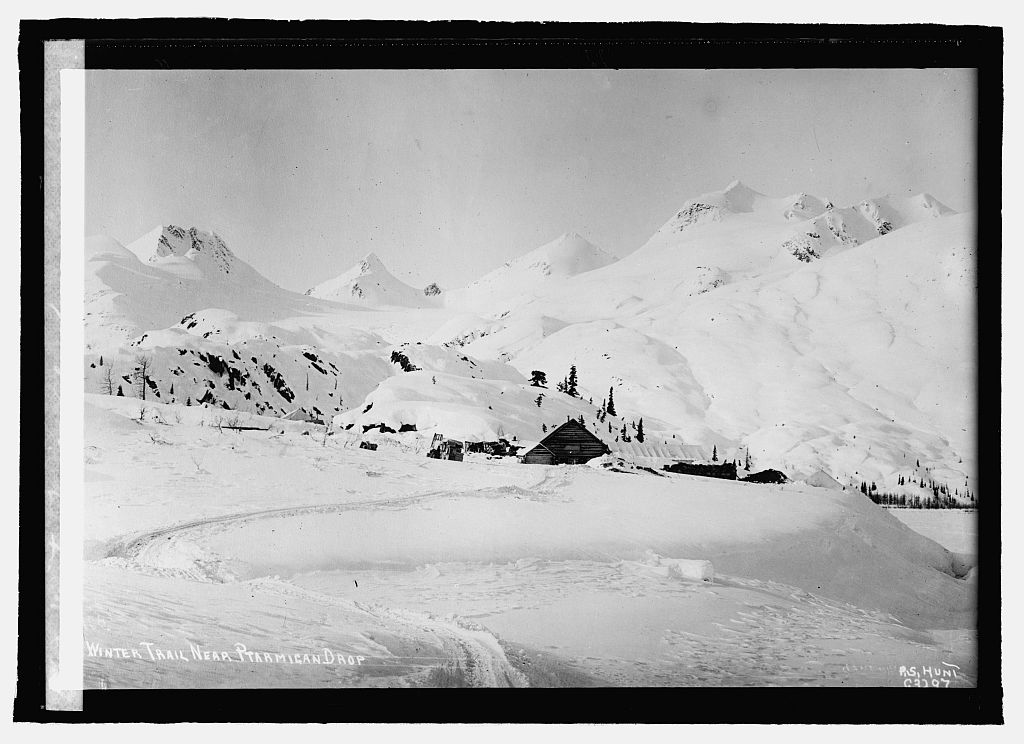
Jack London's "To Build a Fire" is often remembered as a survival story about a man who underestimates cold. That is true, but it is too broad. The sharper terror is that the man does know many things. He knows the trail, the schedule, the lunch stop, the temperature, the danger of wet feet, the need for fire, and the old-timer's warning from Sulphur Creek.[1] What he lacks is not information in general. He lacks the imaginative capacity to let information change his behavior before crisis forces the lesson.
London's plot is simple enough to sound like a moral fable: a nameless man travels alone through the Yukon at extreme cold, accompanied by a dog, and dies after water, snow, and numb hands make a second fire impossible.[1][2] Britannica's summary rightly places the 1908 version in the Klondike and notes its central pattern: the man ignores warnings and tries to travel too far in dangerous weather.[2] Yet the story's force does not come from surprise. Almost from the beginning, London tells us the man is exposed. The suspense lies in watching ordinary practical competence become inadequate by degrees.
The key phrase is short: he is "without imagination."[1] London does not mean he cannot picture lunch or camp. He can picture both too clearly. He imagines reaching the boys by six. He imagines biscuits thawed against his body. He imagines a fire as a solvable operation. What he cannot imagine is a chain of failure in which one mistake changes the meaning of every other fact. The cold is not just cold. It is a system that makes small delays compound.
The story counts, then withdraws comfort
London's prose keeps counting. The man thinks in miles, minutes, degrees, matches, fingers, and travel stages.[1] The effect is almost anti-romantic. Instead of giving the Yukon a sublime vocabulary, the story turns attention toward measurement. "Fifty degrees below zero" is not merely atmosphere; it is a boundary condition.[1] At that level, exposed skin, wet moccasins, and fumbling hands become plot mechanisms rather than descriptive details.
That numerical clarity is why the story feels colder than a more ornate wilderness tale. The man is not lost in mystical nature. He is inside a world whose rules are brutally specific. A creek may be hidden under snow. A fire under a spruce may draw down the snow packed in the branches above it. A match can be struck, but fingers may be too numb to separate one match from a bunch. A dog may understand through instinct what the man has to convert into thought.[1]
The close reading turns on sequence. First, the man treats cold as inconvenience. Then he treats it as a problem requiring technique. Only later does he recognize it as a condition that can disable technique itself. By the time he understands that distinction, he can no longer act on it. London's tragedy is therefore not ignorance followed by knowledge. It is knowledge arriving after the body has lost the instruments needed to use it.
The dog is not wiser in a sentimental way
The dog is one of London's best controls against melodrama. The animal is not ennobled into a moral witness. It does not love the man in a consoling domestic register, and London never turns it into a speechless saint. It is hungry, wary, and attuned to warmth. Its difference from the man is not ethical superiority but fit. The dog belongs to the conditions more directly because it does not need to argue itself into caution.[1]
That contrast matters because the man repeatedly converts danger into procedure. The dog's body registers wrongness before the man's mind admits it. Its instinctive unease makes the man's confidence look stranger, not because instinct is magically pure, but because the man has replaced situational feeling with a plan that cannot revise fast enough. Library of America lists "To Build a Fire" among London's major works, and the story's durability comes partly from this exact pressure: London makes a human consciousness look powerful and fragile at once.[5]
The dog's presence also prevents the story from becoming a simple duel between man and nature. Nature does not "hate" the traveler. The dog does not interpret the cold as an enemy. It responds to heat, distance, pain, and scent. The man's disaster comes from wanting his plan to remain sovereign after the environment has changed the terms. The dog survives because survival does not require the world to become meaningful. It only requires response.
Fire is a test of placement, not just will
The first fire works, and that is important. London lets the man succeed before he fails.[1] He builds heat, thaws himself, eats, and confirms his belief that practical skill can master the situation. A weaker story would make him obviously foolish from the start. London gives him enough competence to make the failure more exact. The man is not wrong that fire can save him. He is wrong about the margin around the act of making it.
The spruce-tree mistake is the story's cleanest piece of engineering. Building under the tree solves one immediate problem: shelter and fuel are close. It creates another: the snow above is unstable. When the snow falls and smothers the flame, the accident feels both sudden and prepared.[1] London has made the environment legible without making it merciful. A fact the man did not weigh becomes the fact that matters.
That is why the second fire is so painful to read. It is not simply that he lacks matches or does not know what to do. He knows too late. His hands have become clumsy objects. His body no longer obeys the command sequence his mind issues. London's "stark, unadorned prose," as Britannica calls it, matters here because the style refuses rescue by rhetoric.[2] The sentences keep action in view: strike, drop, gather, fail. No grand metaphor can warm the hands.
The old-timer is memory without authority
The old-timer from Sulphur Creek is easy to misread as a moral chorus. He warned the man not to travel alone below a certain temperature, so the story can look like a lesson about respecting elders.[1] That reading is not false, but it is thin. The old-timer matters because he represents knowledge that the man has heard but not inhabited. Advice remains external until imagination turns it into a felt constraint.
London's man can remember the warning while still treating it as excessive. That is a familiar and devastating human pattern. We often file other people's hard-won knowledge as cautionary color until circumstances convert it into law. The story's cruelty lies in the timing of that conversion. The old-timer becomes authoritative only when the man can no longer reach camp, handle fire, or reverse the body's decline.[1]
This is also why the ending is not merely punitive. The man does not die because the universe wants to teach him humility. He dies because the world does not care whether humility has finally been learned. Britannica's biography of London notes the writer's Klondike experience and describes "To Build a Fire" as a masterly depiction of humankind's inability to overcome nature.[3] The phrase is useful if "overcome" is read narrowly. The story is not saying humans should never enter cold places. It is saying that survival depends on respecting the difference between a plan and a system.
Why the story still feels modern
"To Build a Fire" still cuts because its error is not antiquated. The equipment has changed, but the mental pattern survives. The man confuses a successful previous model with a universally valid model. He treats a warning as information rather than design constraint. He recognizes risk but keeps it outside the plan until it becomes the plan. In technical language, he has no redundancy; in literary language, he has no imagination.
London's restraint keeps the story from becoming a slogan about arrogance. The man is not a cartoon of modern rationality. He is practical, observant, and physically capable. That is exactly why he is frightening. His failure begins close to ordinary competence. He can solve known problems. He cannot model cascading ones.
The fire, then, is more than a survival tool. It is the story's test of relationship to reality. The first fire proves that technique works inside a margin. The second proves that technique can be defeated when the margin has already been spent. Between those two fires, London places nearly the whole human predicament: we can count, plan, remember, and improvise, but none of those powers abolishes sequence. Some truths arrive while there is still time to use them. Some arrive as recognition only.
That final recognition gives the story its bleak dignity. The man eventually sees the old-timer was right. He even imagines himself with the boys finding his own body.[1] The perspective comes, but not as salvation. It comes as the last luxury of consciousness before the cold finishes its work. London's achievement is to make that lateness feel exact rather than cruelly decorative. Judgment arrives. The trail does not wait.
Sources
- Jack London, Lost Face, Project Gutenberg HTML text containing the 1908 version of "To Build a Fire," used for textual reference and short quoted phrases.
- Encyclopaedia Britannica, "To Build a Fire" - publication history, plot outline, and critical summary of London's prose and survival theme.
- Encyclopaedia Britannica, "Jack London" - biography, Klondike context, and placement of "To Build a Fire" within London's major work.
- Wikimedia Commons, "File:Winter Trail, Alaska LCCN2016821824.jpg" - source page for the Library of Congress archival winter-trail photograph used as the article image.
- Library of America, "Jack London" - author page listing "To Build a Fire" among London's major works and modern canon context.