Barchester Towers is often remembered through character surfaces first: Mrs. Proudie's bullying force, Mr. Slope's oily ambition, Signora Neroni's dangerous charm, Archdeacon Grantly's outrage, Eleanor Bold's hesitation.[1][2] Those surfaces are real, and Trollope enjoys them. What makes the novel work, though, is its structure. He does not stage church politics as one debate in one room and then let consequences follow. He breaks authority into appointments, calls, drawing-room receptions, recommendation letters, patronage conversations, and recurring interviews, then lets all those channels interfere with one another until Barchester feels like a town-sized pressure system.[1][2][5]
That is why the book still feels modern in its understanding of institutions. Formal office matters, but Trollope keeps showing that office is only the visible end of a longer chain. A bishop arrives through political appointment; a chaplain rises by speed and persistence; a hospital wardenship becomes a town obsession because prestige, income, doctrine, and personal resentment all pass through it at once; private letters try to harden passing preferences into durable outcomes.[1][2][4] The novel's comedy comes from personality, but its force comes from arrangement.
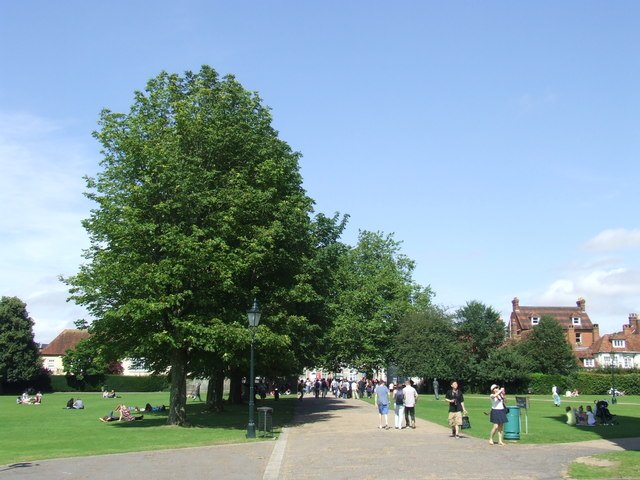
Image context: the cover uses a real cathedral-close photograph rather than a portrait, map, or later television still.[6] That choice keeps the piece close to the novel's working intelligence. The point here is not generic Victorian atmosphere. It is Trollope's procedural gift for making authority move through people, schedules, rooms, paths, and church-town space before it ever looks settled.
1) The opening vacancy creates a field of pressure rather than a simple duel
The structure announces itself almost immediately. The chapter list alone lays out a networked design: "Who Will Be the New Bishop?," "Hiram's Hospital According to Act of Parliament," "Dr. and Mrs. Proudie," "The Bishop's Chaplain," "A Morning Visit," and "War."[1] Instead of opening from one hero's interior or one clean institutional conflict, Trollope opens from vacancy. A bishop has died. A wardenship remains charged after Mr. Harding's earlier resignation. Old arrangements have not disappeared, and new ones have not yet stabilized.[1][2][4]
That matters because the novel's real subject is not only who wins. It is how uncertainty gets distributed. The new bishop's arrival would be enough to generate a clash between older High Church habits and the incoming evangelical party.[2] Trollope makes the field denser by attaching the bishop to Mrs. Proudie and to Mr. Slope from the start. Office never arrives alone. It comes with a household, a chaplain, a style of management, and a sequence of expectations about who will now be heard.[1][2]
One of the book's first decisive questions is also one of its funniest: Dr. Grantly keeps asking himself, "What were they to do with Mr. Slope?"[1] The line matters because Slope is not yet powerful in formal terms. He matters because he is already inside the system as an irritant, messenger, broker, and possible future claimant. Trollope identifies an institutional truth very early: disruption often enters before it is authorized. The person everyone hates may still control tempo if he can force others to keep reacting to him.
2) Visits and receptions do the work that constitutions cannot do by themselves
Once the field has been created, Trollope keeps redistributing force through movement. That is why so many chapters hinge on visits, calls, and managed social occasions rather than on synod-like scenes of declared principle.[1] "A Morning Visit" matters because the novel wants us to watch influence travel at conversational speed. The two chapters of "Mrs. Proudie's Reception" matter because Barchester's hierarchy has to be socially staged before it can be politically obeyed.[1]
This is also where Slope becomes structurally indispensable. Trollope says that he "was not a man who ever let much grass grow under his feet."[1] The line is not only a character jab. It is a rhythm note. Slope advances by velocity. He inquires, calls, presses, insinuates, and follows up. He understands that in a town like Barchester, inactivity is already a form of defeat.
The result is that private and public space never remain separate. A reception is not a break from politics. It is politics in a more binding form because rank, deference, flirtation, insult, and alliance all become visible at once.[1][5] The novel keeps sending characters into rooms where they think they are merely socializing and then shows that they have actually entered a negotiation chamber with teacups, sofas, and reputations in place of statutes.
3) Letters convert atmosphere into leverage
Trollope does not stop at face-to-face pressure. He adds a second structure on top of the first: correspondence. Early in the novel, the dispute over Hiram's Hospital and the bishopric immediately produces "elaborate letters," "eloquent appeals," and "indignant remonstrances."[1] That language is comic, but it also reveals the mechanism. Letters in Barchester Towers are not decorative Victorian accessories. They are the means by which a local feeling tries to become a portable fact.
This is why the wardenship matters so much formally. On paper it is an office tied to a charitable institution.[1][2] In the novel's actual life it becomes a relay point through which doctrine, patronage, pity, ambition, and public reputation all pass.[1][4] Once the question of who should fill it comes alive again, nobody can treat it as a narrow personnel matter. Each recommendation carries a theory of the Church, a claim about justice, and a personal wager on who ought to count.
The Quiverful chapters sharpen that method further. "Fourteen Arguments in Favour of Mr. Quiverful's Claims" is a comic title, but it is also a structural description.[1] Trollope loves showing how institutions are pushed not by one overwhelming principle but by accumulated appeals. Need, family size, propriety, precedent, sympathy, and faction all get entered into the ledger. By the time someone seems to be making a simple case, the case is already crowded with social residue.
4) The novel keeps moving the center so the town itself becomes the protagonist
What many people call looseness in Barchester Towers is actually one of its strongest formal choices. Trollope keeps shifting attention: from the bishopric to the hospital, from Eleanor to Slope, from Mrs. Proudie to Signora Neroni, from Grantly's indignation to Arabin's arrival, from drawing rooms to parsonages to Ullathorne.[1][5] He does this not because he lacks focus, but because the town's politics cannot be represented honestly from one fixed center.
Signora Neroni is the clearest proof. She is physically constrained and often spectacularly stationary, yet she becomes one of the book's most powerful redistributors of attention and desire.[1] Trollope is quietly stating a formal principle here: motion in a novel is not always bodily motion. One can alter a whole institutional field by becoming a point around which glances, vanity, rivalry, and speculation begin to circulate.
That same principle explains why chapter titles such as "Mrs. Proudie Wrestles and Gets a Fall" or "Mr. Slope Manages Matters Very Cleverly at Puddingdale" are so important.[1] They do more than advertise incidents. They keep reassigning initiative. Every time the reader thinks power has finally settled into one pair of hands, the structure cuts somewhere else and shows another channel opening. The bishop has office, Mrs. Proudie has domestic command, Slope has persistence, Grantly has local standing, Eleanor has marriageable consequence, Arabin has intellectual and moral weight, and Signora Neroni has magnetic social disturbance.[1][2][5] No one owns the whole machine for long.
5) Why the form still matters
Because Trollope builds the novel this way, Barchester Towers never reads like a narrow clerical squabble preserved for antiquarian amusement.[1][2] It reads like an anatomy of distributed power. Institutions do not function solely through charters or solely through personalities. They function through repeated contact, through visibility, through who gets invited, through who answers quickly, through who can turn private preference into written recommendation, and through who can survive one room long enough to control the next one.[1][4][5]
That is the lasting intelligence of the book. Trollope understands that an office is often less decisive than the routes leading into it. By making visits, letters, receptions, flirtations, and side-pressures structurally central, he gives church politics a lived texture that pure satire would not have achieved. Barchester is funny because everybody watches everybody else. It becomes convincing because everybody's watching actually changes outcomes.
Sources
- Anthony Trollope, Barchester Towers, Project Gutenberg HTML text.
- Encyclopaedia Britannica, "Barchester Towers."
- Encyclopaedia Britannica, "Anthony Trollope."
- Encyclopaedia Britannica, "Barsetshire novels."
- Victoria Glendinning, "Barchester Towers: An Introduction," The Victorian Web.
- Wikimedia Commons, "File:Salisbury Cathedral Close - geograph.org.uk - 3110915.jpg" (source page for the immersive cathedral-close lead image).