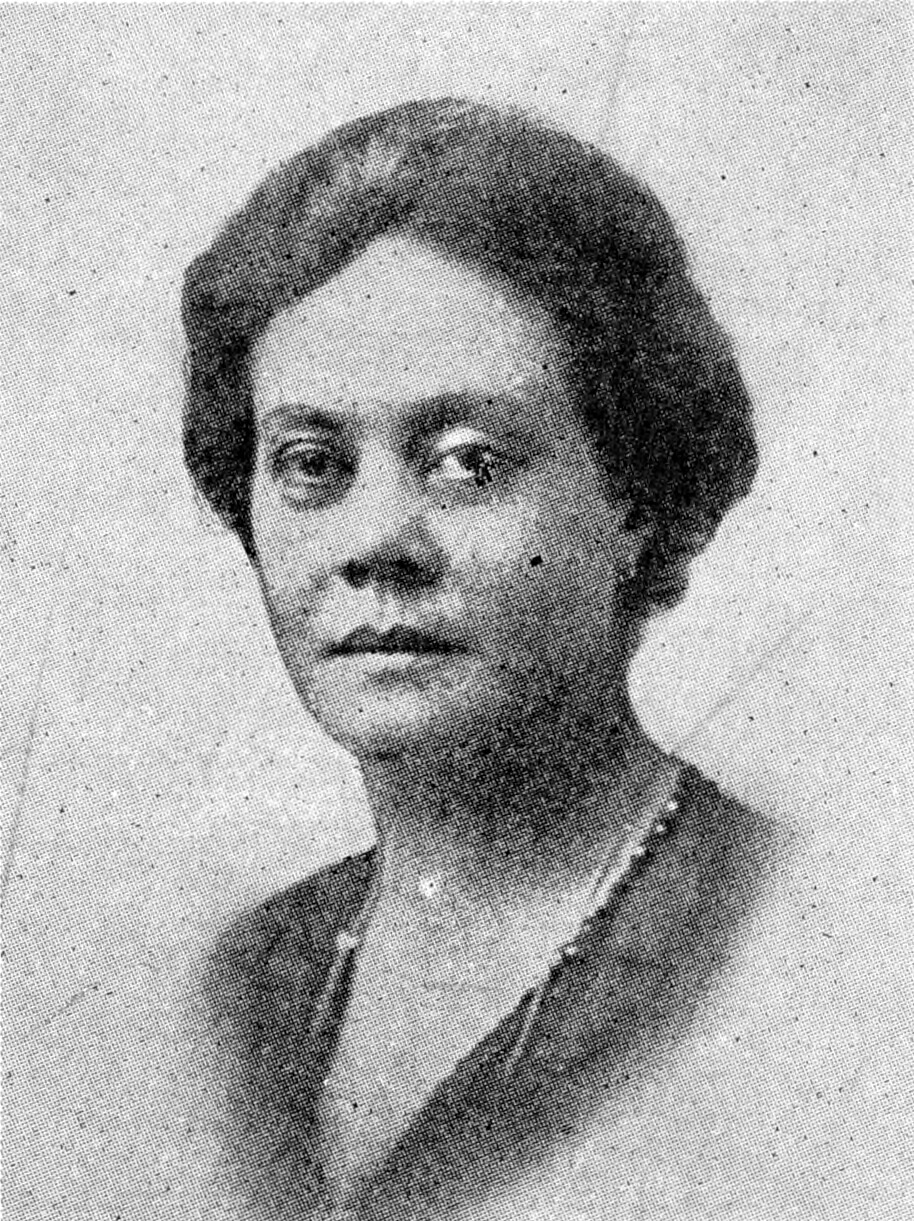
Alice Dunbar-Nelson is often introduced by a procession of occupations: fiction writer, poet, journalist, critic, editor, teacher, suffragist, organizer. The list is accurate, but it can make her literary life look like accumulated duties rather than a coherent body of work. Read the work instead of the résumé, and a pattern appears: as genre changes, so does the relation between speaker and audience.
In “Tony’s Wife,” a woman known throughout her neighborhood by a marital title loses home and livelihood when Tony dies without marrying her and his brother claims the shop. In “Sister Josepha,” a young novice’s fantasy of escape collapses around the realization that she has no secure public name. In “I Sit and Sew,” imagination crosses into a battlefield while the speaker’s body remains pinned to a domestic task. Then, in Masterpieces of Negro Eloquence, Dunbar-Nelson reverses the pressure: she constructs a large historical chamber in which Black public speech can accumulate rather than disappear.[2][3][4]
These works do not tell one simple story of a private writer becoming a public activist. Their dates and genres overlap too untidily for that. They reveal something more interesting: a body of writing in which the scale of address keeps changing. Shop, convent, sewing room, review column, classroom, anthology—each format establishes a different relation between speaker and listener. Who is audible here? What name does the audience accept? What formal device can carry a life beyond the position assigned to it?
The first book enters quietly—and watches the door
Dunbar-Nelson published Violets and Other Tales in 1895, when she was twenty. It is a deliberately mixed book: sketches, poems, stories, reveries, social observation. Its author’s introduction calls the collection a “maiden effort” and says that it seeks only to amuse or briefly lift a reader’s care.[1] That modest entrance is easy to mistake for an absence of ambition.
The surrounding publication history makes the modesty look less innocent. The University of Delaware and Rosenbach exhibition on Dunbar-Nelson notes that the collection received substantial attention, while contemporary reviewers often made her appearance part of the sales pitch. The young author entered public print, but the market kept trying to substitute the visible woman for the work she had made.[5]
What matters in the fiction is how often that problem returns in miniature. Characters acquire social identities before they acquire power over those identities. A neighborhood knows them intimately; an institution knows them by a category; the two kinds of knowledge collide. Dunbar-Nelson’s “local color” is therefore not merely a display of New Orleans speech, food, ritual, and street life. Locale becomes the machinery by which a person is recognized—and sometimes trapped.
“Tony’s Wife” turns a title into an eviction notice
The first sentence of “Tony’s Wife” finds its central woman rising from her knitting to sell candy to a child. From there, the story maps a whole neighborhood through the shop. Children ask for charcoal and receive a little extra fruit. Girls borrow crochet patterns. Women buy the lace produced by the worn hands behind the counter. Tony issues orders, insults, and threats; his wife performs the labor that makes the place socially useful.[2]
She never receives a personal name.
That omission is not a puzzle awaiting a hidden answer. It is the story’s method. “Tony’s wife” sounds like recognition, yet every repetition makes her identity more dependent on the man who abuses her. The neighborhood title appears to give her a place; when the property is claimed, it gives her nothing. As Tony is dying, she begs him to marry her while the priest is present. He refuses, points to his brother, and dies. The brother takes the shop and the money.
The final cruelty arrives in the narrator’s grammar: because she was “not his wife after all,” the community sends her into the world penniless.[2] The phrase after all makes dispossession sound like the correction of an earlier misunderstanding. Years of visible work, care, and neighborly exchange are overruled by Tony’s refusal and his brother’s claim. The title that organized her whole life becomes evidence that she never possessed a life legible in her own name.
Dunbar-Nelson keeps the story compressed. There is no rescue speech and no retrospective account from the expelled woman. Her worn fingers clutch a bundle as though they regret time away from knitting. The image returns her to the labor with which the story began, but the room around that labor has vanished. What looks like a domestic sketch has quietly become an argument about property, intimate violence, and the difference between being known and being protected.
“Sister Josepha” makes identity the price of exit
“Sister Josepha” tests a related enclosure through a different tone. The young novice is restless inside convent routine: lamps, sewing lessons, coarse food, gray clothing, repeated prayer. A glimpse of a sympathetic young soldier allows the outside city to bloom in her imagination. She plans to linger after Mass, slip away, and merge into the crowd on Canal Street.[2]
Then she overhears two sisters discussing her chances. In the world beyond the convent, they say, she would have “no name but Camille,” no friends, and a beauty that might expose her to danger. As Josepha reckons with their words, the narration adds that she knows no nationality and cannot say where she came from. She turns those deficits inward and asks, “Who am I? What am I?”[2]
The story does not prove that the convent is right to confine her. It shows how confinement manufactures its own practical defense. Josepha’s lack of money, friends, family history, and a socially recognized name makes escape frightening; the institution that narrows her life can then present itself as the only shelter from that fear. Her enclosure is material before it is spiritual.
The sewing refrain keeps dragging the imagination home
“I Sit and Sew” makes confinement audible rather than narrative. Each stanza begins with a speaker at needlework and expands toward war: marching men, wasted fields, mud, rain, the wounded and dead. The lines lengthen under the pressure of what the speaker can imagine. Then the refrain contracts the whole field of vision: “But—I must sit and sew.”[3]
The em dash is the hinge. But does not simply contrast two activities; it interrupts an imagined movement. The speaker’s sympathy can cross the distance to the battlefield, but the social organization of action cannot find a role for her beyond the “little useless seam.” Sewing is not inherently trivial, and the poem does not need it to be. Its felt uselessness comes from a mismatch between capacity and permission. The speaker believes she could answer suffering, while the available script defines usefulness in advance.
Repetition changes the line. The first “must” sounds like a resigned fact. The second sounds harsher because the poem has shown bodies “once men.” In the final stanza, assertion becomes appeal: “God, must I sit and sew?”[3] The room has not opened, but the sentence has. A question now seeks a respondent.
That movement helps explain Dunbar-Nelson’s control of scale. The poem does not acquire public force by abandoning the domestic scene. It makes the small scene unbearable enough to expose the larger allocation of action. One seated body becomes a critique of who is permitted to convert moral imagination into public work.
The editor turns “I” into an arranged “we”
If the short stories and poem reveal voices pressed into small rooms, Masterpieces of Negro Eloquence shows Dunbar-Nelson building a larger one. Published in 1914, the anthology gathers speeches by Black public figures across slavery, emancipation, education, law, religion, political representation, and racial violence. Its table of contents places orators from different generations into deliberate proximity; its dedication addresses Black children and asks the archive to enlarge their belief in their own possibilities.[4]
The preface defines the book’s time as a pause for “taking stock of past achievements, present conditions, future possibilities.”[4] Those three temporal directions explain the editorial form. The anthology is not only retrospective preservation. It turns prior speech into evidence available for present judgment and future action.
Editing here is authorship at the level of arrangement. Dunbar-Nelson does not claim the voices as her own. She selects, sequences, titles, frames, and hands them forward. The recurring question of audience changes accordingly. “Tony’s Wife” shows a neighborhood whose knowledge cannot protect one woman. “I Sit and Sew” gives an isolated speaker no earthly respondent. Masterpieces constructs a readership in advance: young people who can encounter Black eloquence as inheritance rather than exception.
This is not a neat progression from silence to speech. Dunbar-Nelson continued to write across genres, and the market continued to accept only portions of that work. The point is formal range. In the anthology, public voice emerges not only from speaking louder, but from designing the relation among many speakers and a named readership.
Reading was another public instrument
The archive complicates the familiar picture of Dunbar-Nelson as a gifted creative writer who happened also to be an activist. Her surviving reading journals document decades of sustained reading. The University of Delaware’s Alice Dunbar-Nelson Reads project also draws attention to her 1909 scholarship on Wordsworth’s use of Milton—work that places close literary study inside, not outside, her public-intellectual life.[6]
Her criticism could enlarge a book by refusing the label prepared for it. Writing about Jessie Fauset’s Plum Bun, for example, Dunbar-Nelson redirected attention from the novel’s obvious passing plot toward its account of loneliness and the fragile “casualness of human relations.”[6] The move is characteristic. She did not deny racial meaning; she resisted letting one marketable category exhaust a work’s human range.
The same resistance shaped her own reception. The exhibition records that publishers rejected two novellas and the novel This Lofty Oak, while the manuscripts and papers later became essential to rebuilding a career that the available print record had made look smaller than it was.[5] Recovery therefore does more than add missing titles to a bibliography. It changes the apparent proportions of the writer. The published short-story collections, poems, columns, criticism, speeches, editorial projects, and unpublished fiction begin to look like parts of one sustained investigation into literary access.
Genre is a way of redirecting the address
The right unit for reading Alice Dunbar-Nelson is not the occupation but the act of address. Her work never offers a fantasy of voice without constraint: Tony’s wife is expelled, Josepha remains enclosed, and the sewing speaker’s question is not answered inside the poem. Even an anthology depends on selection, print, distribution, and readers who may or may not carry its voices forward. A title can fail. A refrain can tighten. A table of contents can create a lineage.
Those differences of form matter. The short story can make one shop indict an order of property and recognition. The lyric can turn a seam into a boundary. The anthology can turn preservation into expectation, while criticism can rescue a book from the first category imposed on it. The long list of Dunbar-Nelson’s roles tells us how many genres she practiced; the work shows what each genre does to attention, authority, and audience.
Sources
- Alice Moore Dunbar-Nelson, Violets and Other Tales. Project Gutenberg HTML edition of the 1895 collection — author’s introduction and early mixture of fiction, poetry, and sketches.
- Alice Moore Dunbar-Nelson, The Goodness of St. Rocque and Other Stories. Project Gutenberg HTML edition of the 1899 collection — primary texts of “Tony’s Wife” and “Sister Josepha.”
- Alice Dunbar-Nelson, “I Sit and Sew,” in Countee Cullen, ed., Caroling Dusk (1927). Wikisource transcription — stanza and refrain used for the poem reading.
- Alice Moore Dunbar-Nelson, ed., Masterpieces of Negro Eloquence (1914). Project Gutenberg HTML edition — dedication, preface, contents, and anthology structure.
- University of Delaware Library, Museums and Press and the Rosenbach, “Writer and Poet,” I Am an American! The Authorship and Activism of Alice Dunbar-Nelson — publication reception, manuscript revisions, editorial work, and rejected fiction.
- University of Delaware, “Introduction,” Alice Dunbar-Nelson Reads — reading journals, literary scholarship, criticism, and recovery context.
- Wikimedia Commons, “File: Negro Poets and Their Poems-0167.jpg” — provenance page for the archival portrait reproduced in Robert T. Kerlin’s 1923 anthology.