Before Alice Adams has an audience, she rehearses. At her dressing table in chapter II of Booth Tarkington's novel, she tries out expressions in a three-part mirror: sauciness, weary amusement, tolerant disdain. When her mother enters, Alice abruptly returns to arranging her hair. The small interruption establishes a habit that will govern much of her life. She is preparing to be seen, and being caught preparing would spoil the effect.[1]
Published in 1921 and awarded the 1922 Pulitzer Prize for the Novel, Alice Adams follows a young woman whose social ambitions outrun her family's money.[2][3] Alice wants the ease enjoyed by wealthier girls and the affection of Arthur Russell, a newcomer moving in their circle. Her resources are beauty, invention and extraordinary energy. She tries to make those resources purchase the freedom that money appears to give other people.
The interesting question is what happens to that energy when the performance fails. Tarkington takes Alice seriously enough to let her be ridiculous, then gives her something harder than a triumphant entrance: the courage to enter a place she has despised.
This essay discusses the novel's ending.
The effort behind ease
The narrator calls Alice's public existence “a life of gestures.” Even her feet participate in the eloquence of her hands. The description is funny because the expenditure is excessive: a whole body works to produce an impression of spontaneous charm. Yet the surrounding passage also records her female acquaintances' pleasure in belittling her. Their judgments arrive inside the portrait of Alice, making the reader hear the social audience she is trying to manage.[1]
Her predicament becomes more uncomfortable when we notice that she has talent. Alice can animate a conversation, invent a mood and respond quickly to another person's expectations. The trouble is the purpose to which she puts these abilities. She wants every encounter to certify a version of herself that requires constant maintenance. Ordinary facts about her household become threats because she has made admiration depend on concealing them.
That makes her imagination both attractive and exhausting. She is capable of turning a modest occasion into a scene, but she has difficulty allowing the occasion to remain modest. Reading her as merely vain loses the labor in the vanity. Reading her as merely excluded loses her participation in the ranking of people. She wants relief from social judgment while continuing to believe in its hierarchy.
The dinner she cannot talk into success
The dinner for Russell brings that contradiction indoors. In chapter XIX, Alice's mother plans a succession of elaborate dishes, including Brussels sprouts because she has heard they are fashionable. Alice worries that the menu is excessive. She also spreads the roses among several vases, arranging the stems to make the small groups look larger. Even the flowers must perform abundance.[1]
By chapter XXII, the effort has become physically oppressive. There is hot soup in a hot room, wilting roses, the smell of the sprouts and her father's troublesome starched shirtfront. Alice keeps talking. Her mother's appreciative laughter helps support the conversation, but Russell contributes so little that Alice must continually supply its motion. The comedy has an almost muscular quality: we can feel how much work it takes to keep the evening upright.[1]
Then Tarkington lets her face rest. For a few seconds, when her mother leaves the room, Alice's animation disappears and her pallor shows beneath her rouge. Russell does not see it. The reader does. This brief difference in access matters: we witness the fatigue that her guest, and her own performance, have kept out of sight.[1]
On the porch, his repeated “Not at all” gives her almost nothing to answer. The woman who has embellished so much now presses for a plain account of what has changed. She considers whether gossip has damaged her, then revisits her own pretenses. The scene leaves several pressures in play: the disastrous hospitality, their unequal circumstances, her misleading stories and his evasiveness. Alice recognizes her part without receiving a complete explanation from him.[1]
That uncertainty keeps the episode from becoming a tidy lesson in which honesty would automatically secure the handsome man. Alice cannot talk him into candor any more than she can talk the dinner into elegance. For once, the limits of her gifts become unmistakable.
A staircase beyond the romance
In the final chapter, her mother still urges her to dress brightly so that other girls will know she is keeping up her spirits. Alice answers, “I've quit dressing at them.” The preposition carries the discovery. Her clothes have been aimed at other people, like arguments intended to compel a verdict. She has begun to question whether the verdict is hers to arrange.[1]
It would be easy to make this the instant when a false girl becomes authentic. Tarkington is more observant. When Alice encounters Russell in the street, she still performs composure and takes pride in his inability to detect her quickened breathing. But she leaves him and continues on her errand. The skill survives; it no longer has to secure his pursuit.
She is going to Frincke's Business College, whose staircase she has repeatedly imagined as the entrance to a dismal, unmarried future. Even now, approaching it, she briefly casts herself as a deserted heroine taking the veil in a French romance. She has not lost the habit of making a scene out of herself. What changes is her ability to put the scene aside and keep walking.[1]
The novel's later packaging makes the temptation to simplify her understandable. The 2014 Vintage Movie Classics edition invokes the George Stevens film starring Katharine Hepburn and presents Alice's recovery through the language of resilience.[3] That describes a real movement in the book. But the final page is more tentative than a success story: Alice has reached a place of instruction, not an established career. Her family must take in boarders, her mother remains dissatisfied, and her father fears the loss of his old role. Becoming useful does not instantly make their circumstances agreeable.[1]
The last climb offers something smaller and more persuasive. Alice has always pictured darkness swallowing anyone who ascends those stairs. Only by entering does she discover an open window above; the upper steps are “gay with sunshine.”[1] The light belongs to a place she could not properly see from the pavement. Her imagination has been busy rehearsing a life for spectators. Now she moves far enough into her own future to find something she had not rehearsed.
Sources
- Booth Tarkington, Alice Adams (1921), Project Gutenberg — primary text; especially chapters II, XIX, XXII and XXV.
- The Pulitzer Prizes, “Alice Adams, by Booth Tarkington (Doubleday)” — the 1922 winner in the Novel category.
- Penguin Books Australia, Alice Adams, Vintage Movie Classics edition (2014) — original publication year, film afterlife and the publisher's account of Alice's recovery.
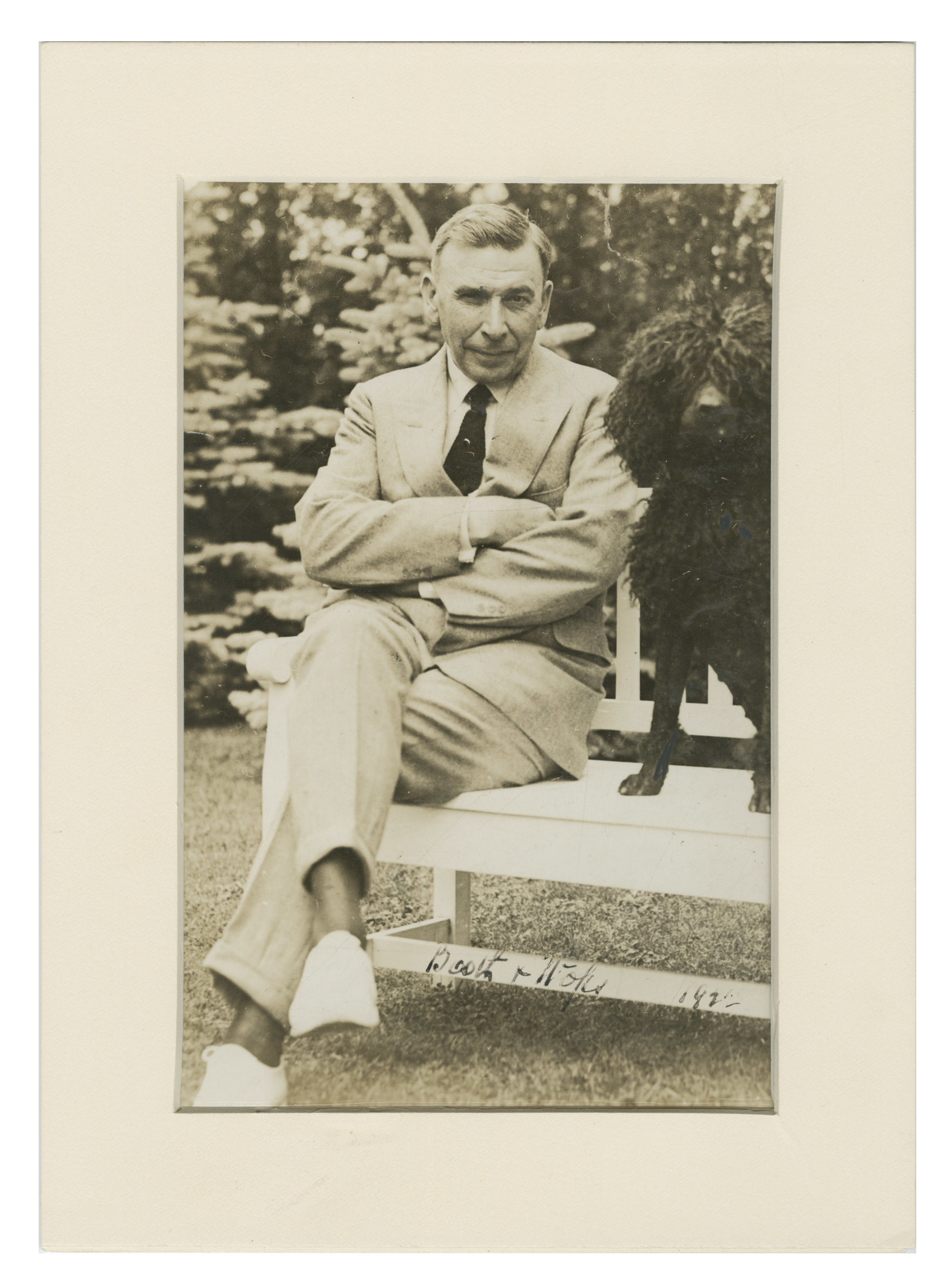
- Lilly Library, Indiana University, “Booth Tarkington” — catalog record for the 1922 photograph by an unknown photographer, Adams manuscripts, LMC 1005.