
Official Nobel interviews often compress writers into tasteful summary: childhood books, a few remarks about craft, one grateful nod to literature, then a polished exit. Abdulrazak Gurnah's official Nobel Prize interview from April 2022 does something more interesting.[1][2] Its surface is calm and modest, but the answers keep widening outward from personal anecdote toward a larger literary ethic. Reading begins as sheer pleasure in stories. Upbringing matters because a harbor city taught him that contact and danger live together. Diversity matters because no single language of the world is enough. Writing finally matters because it rescues people from the flattening pressure of simplified history.[1][2][3][4]
That wider scale is already latent in the Nobel citation. The prize motivation describes Gurnah's work as an uncompromising yet compassionate account of colonialism and refugee life in the gulf between cultures and continents.[4] That is accurate, but the interview helps explain how such work is built. Gurnah does not speak like a writer chasing abstraction from above. He speaks like someone who still trusts the old engine first: the child's appetite for stories, the sensory memory of a place, the ordinary labor of listening, and the refusal to let public narrative erase the tendernesses and humiliations that made actual lives what they were.[1][2][3]
The relation between interview and lecture matters here. In the Nobel lecture delivered on 7 December 2021, Gurnah says writing was first a pleasure, then later became a way to draw out regrets, grievances, partial histories, and the lives hidden by stereotype.[3] The interview lets you hear that same movement in miniature. It is less formal than the lecture, but the structure is the same: delight first, then memory, then the harder duty to write against simplification.[1][2][3]
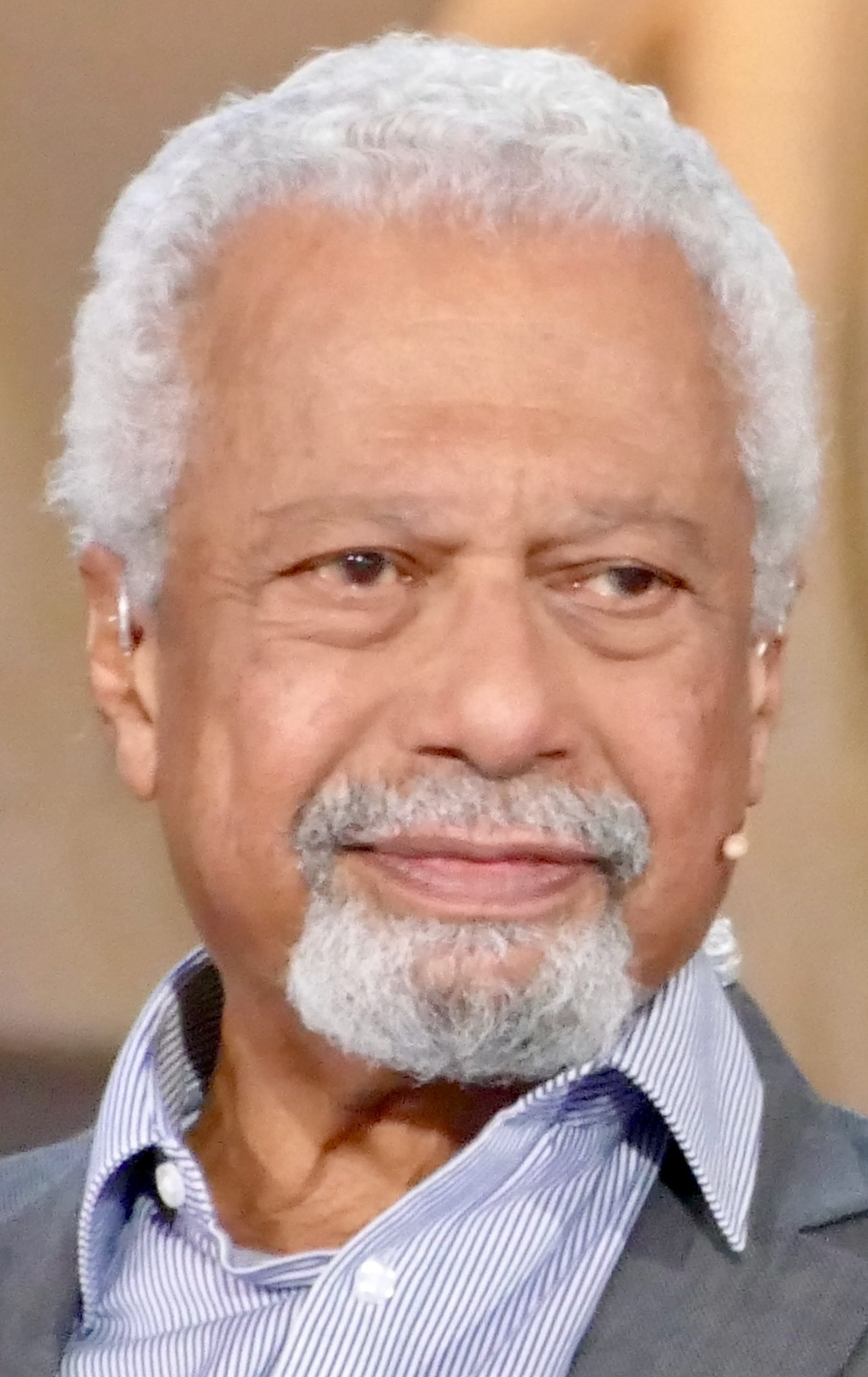
Image context: the cover uses a real 2022 Wikimedia Commons photograph of Gurnah taken during a Leipzig literary event. That choice fits this article because the interview it studies depends on presence rather than spectacle. The argument arrives through a speaking face and a measured cadence, not through stage choreography or archival montage.[5]
Around 0:03, Gurnah begins where many major writers stop pretending to begin: with the simple pleasure of stories
The opening answer is valuable precisely because it sounds ungrand.[1][2] Gurnah says he learned to take pleasure in reading because he loved stories. The childhood book singled out on the Nobel page is Aesop's Fables, which matters less as a canon marker than as a clue to narrative appetite itself.[2] He does not stage childhood reading as early evidence of genius. He stages it as delight, recurrence, and the desire to know what happens next. That modesty is clarifying. For Gurnah, literature does not begin in prestige or doctrine. It begins in narrative hospitality.
This opening matters because later commentary on his work often rushes straight toward weighty nouns: colonialism, migration, displacement, race, memory.[4] Those nouns belong there, but the interview reminds you that fiction can only carry them if it still knows how to tell. The lecture makes the same point from another angle. Gurnah recalls school writing as a pleasure before it became a task of witness or refusal, and he insists that some of that youthful pleasure remained even after the work grew historically burdened.[3] In other words, seriousness does not replace storytelling. It depends on it.
That is one reason the interview belongs inside a literature feed rather than beside generic author-content clips. Gurnah is not defending stories as ornament or escape. He is showing that a story's first duty is to remain readable enough to bear complexity without collapsing into thesis. If the work later speaks about exile, violence, or distorted histories, it does so by preserving the old power of narrative motion.[1][2][3]
Around 4:08, upbringing means Zanzibar as contact zone, not as postcard
The middle of the interview turns to upbringing, and this is where Gurnah's scale becomes especially legible.[1][2] He does not reduce origin to nostalgia. On the Nobel site, the accompanying April 2022 transcript expands what the shorter interview only gestures toward: a house near the harbor, warehouses in view, ships arriving with people from around the Indian Ocean, merchandise, smells, stories, menace, rumor, and movement.[2] It is one of the best official source bundles for understanding why Gurnah's fiction never treats cosmopolitan life as a simple liberal celebration.
What comes through is a harder picture of mixed life. The harbor is exciting, crowded, educative, and open to elsewhere; it is also shadowed by danger, class difference, racialized politics, and the knowledge that traffic between places never arrives in a pure form.[2][3] This is exactly the kind of doubleness the Nobel facts page tries to compress when it says his novels depict a culturally diversified East Africa while refusing simplification.[4] The interview gives that summary body and weather. Cosmopolitanism in Gurnah is not a slogan. It smells of sea traffic and anxiety. It expands the child's world while exposing the fragility of any home built within routes of empire and trade.
That is why the interview's calm tone should not mislead. Gurnah speaks softly, but the world he describes is structurally unsettled. One hears already how a writer formed in such a place would distrust any account of belonging that sounds too settled, too national, or too morally clean. The harbor remains inside the sentence because it taught him early that every local life is already entangled with arrivals from elsewhere.[1][2][4]
Around 11:09 and 12:04, diversity stops meaning decor and starts meaning resistance to provincial certainty
The richest sequence in the official interview comes when Gurnah is asked about diversity in literature and whether books help readers hear other voices and enter other cultures.[1] These can be dead questions in a ceremonial setting, easily answered with benevolent platitudes. Gurnah avoids that trap by speaking as if the issue were structural rather than fashionable. Literature matters because no one language of experience is enough. The world thickens when books allow readers to enter lives that their own routines would otherwise keep remote.[1][2]
What makes this sharper than standard festival rhetoric is the relation to his larger work. The Nobel lecture says he had to write against "self-assured summaries" and against the new, simpler histories that victors, commentators, and inattentive outsiders prefer.[3] Diversity in that context is not an institutional display of difference. It is a brake on simplification. If books fail to make room for other people's voices, then power's summary version of the world wins by default.[1][3][4]
This is also where Gurnah's fiction separates itself from ethnographic tourism. Hearing other voices is not the same as collecting exotic surfaces.[1][2] The April transcript's harbor memories are useful again: the crowd in front of the house brought stories and knowledge from elsewhere, but also danger and roughness, and he explicitly warns against romanticizing the scene.[2] The same discipline governs his answer about literature. Reading across difference is valuable because it makes summary harder, not because it turns alterity into a consumer pleasure.
Around 13:09 and after, ideas come from memory only once writing refuses the simpler history
When Gurnah is asked where ideas come from, the interview drifts toward the place where his work becomes most morally exacting.[1] Memory matters, but not as a private treasury of beautiful losses. On the Nobel page's longer transcript, he calls the place he grew up "the hinterland of my imagination" and describes how one trail of memory pulls another with it, including memories a person might prefer to forget.[2] The lecture then supplies the harder consequence: writing became necessary once he saw how quickly history could be reconstructed into something cleaner, more flattering, and less true than lived experience had been.[3]
Those two statements belong together. Memory alone is not enough; it can remain shapeless, repetitive, even tyrannical. Writing becomes literature when it resists both private overwhelm and public falsification. Gurnah says in the lecture that it became necessary to preserve what was there: buildings, achievements, tendernesses, persecutions, indignities, and the stories by which people understood themselves.[3] That sentence is the key to the whole interview. His fiction does not simply revisit pain. It restores texture where ideology wants blur.
The lecture's later claim is even more revealing. Writing, he says, has to show what can be otherwise and must allow apparently small people to emerge from simplification and stereotype.[3] That is why this interview keeps paying attention back. It lets you hear the ethical scale of Gurnah's novels before one even opens them. The work is not organized only around catastrophe. It is organized around the recovery of proportion: cruelty and kindness, injury and endurance, ugliness and virtue, all held in enough narrative clarity that a human being can reappear.
That is where the opening pleasure in stories finally lands.[1][2][3] Storytelling matters because it gives form to what history erases when it starts speaking too confidently. The child who loved stories grows into the writer who mistrusts the single official account. The harbor city becomes the training ground for complex belonging. Diversity becomes resistance to provincial certainty. Memory becomes usable only when writing keeps small lives from being crushed into slogan. The interview is worth revisiting because it makes all of that audible without ever raising its voice.
Sources
- Nobel Prize, "Abdulrazak Gurnah, Nobel Prize in Literature 2021: Official interview," YouTube video, published April 8, 2022.
- NobelPrize.org, "Abdulrazak Gurnah - Interview" (official interview hub with the April 2022 video and transcript links).
- NobelPrize.org, "Abdulrazak Gurnah - Nobel Prize lecture."
- NobelPrize.org, "Abdulrazak Gurnah - Facts" (prize motivation and work summary).
- Wikimedia Commons, "File:Abdulrazak Gurnah 2022 (cropped2).jpg" (source page for the lead photograph used in this article).