The first Venetian gondola scene in Thomas Mann's Death in Venice is one of those passages that looks, on first approach, like atmosphere doing its ordinary work.[1][2] A traveler arrives by sea, the city appears in ceremonious splendor, a black boat glides in, and the old Europe of ritual transport seems to gather around him. But Mann does something harder than local color here. He uses the ride to stage a miniature moral drama in which Gustav von Aschenbach does not simply get carried across Venice. He practices surrender.[1]
That distinction matters because the novella's later catastrophe is easy to summarize too crudely. Readers often describe Death in Venice as a story in which a disciplined artist falls under the spell of beauty and decays.[2][3] That is true in outline, but the gondola passage shows how Mann wants the decay to feel from inside. It does not begin with an overwhelming revelation. It begins with a series of soft permissions: fatigue, comfort, suspended resistance, and a strange willingness to let another will take over while telling oneself that the deviation is temporary.[1]
Placed in Mann's career, the scene is also a good reminder that the novella belongs to the period when he was turning bourgeois self-command into something more unstable and exposed. On the Nobel biographical page, Mann describes Death in Venice as one of the works considered his most valid achievements in the novella form, published in 1913 as he was conceiving The Magic Mountain.[3] The work's afterlife has only confirmed that judgment. Encyclopaedia Britannica still frames it as one of the defining modern novellas of erotic obsession and decay, and later criticism has kept returning to how much psychological and symbolic pressure Mann can compress into brief narrative spaces.[2][4]
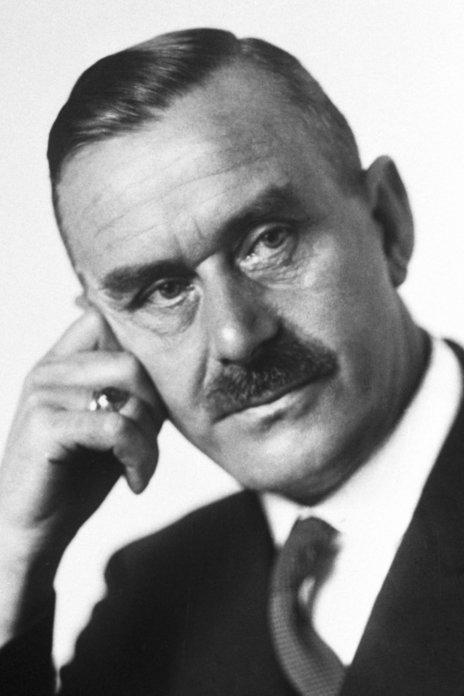
Image context: the cover uses a real 1929 portrait photograph of Thomas Mann from Wikimedia Commons rather than a film still or generic Venice image. That choice keeps the emphasis on authorial pressure and literary design. This article is about how a sentence-maker arranges drift, menace, and elegance inside one short crossing.[5]
The scene begins by making Venice feel ceremonially right and morally wrong
Mann first gives Aschenbach the arrival he thinks he wants. Venice appears from the water as the proper approach to "the most unreal of cities," and the sentence has enough grandeur to satisfy any old travel fantasy.[1] Mann lets the city announce itself as spectacle before he poisons that spectacle. Immediately afterward, the gondola enters not as a picturesque accessory but as a carrier of dread. Its "peculiar blackness," Mann writes, belongs elsewhere only to coffins.[1]
That is a very efficient turn. The gondola remains beautiful, but beauty has already been recoded as mortuary. Mann does not make the symbol subtle. He wants the reader to feel the pressure of overdetermination: the black lacquer, the funeral association, the softness of the seat, the lulling motion. The craft signifies death before it moves, yet it also offers the most luxurious physical ease in the scene.[1][2] That doubleness is crucial. If the boat were merely frightening, Aschenbach would resist it. If it were merely seductive, the scene would lose its moral edge. Mann fuses seduction and warning into one object.
The result is that Venice stops being a destination and starts behaving like a threshold. Aschenbach has not yet met Tadzio on the beach. He has not yet chosen secrecy over warning, or desire over judgment. But the novella has already taught him the bodily grammar of passivity. He sits down in what Mann calls the "softest, most luxuriant, most lulling seat in the world," and that softness is not incidental upholstery.[1] It is the medium through which intelligence loosens.
The gondolier matters because he refuses the ordinary contract of service
The scene's real violence lies in how little overt violence it needs. Aschenbach gives a destination. The gondolier refuses it. The exchange is simple, but the imbalance is immediate. The rower answers with blunt certainty, not deference: "You are going to the Lido."[1] Aschenbach objects, corrects, insists. The gondolier ignores the distinction between what the passenger asked for and what the passenger will receive.
That shift turns transport into fate. In an ordinary travel scene, payment buys conveyance. Here payment and command separate from each other. The passenger can still speak, but speech has lost executive force. Mann makes that loss stranger by refusing melodrama. There is no chase, no shouted alarm, no crowd gathering on shore. There is only water, fatigue, the repetitive sound of the oar, and a foreign traveler discovering that he is alone with a will more decisive than his own.[1]
The scene therefore offers a small but exact rehearsal for the novella's later structure. Aschenbach will keep imagining that he remains capable of correction. He will keep thinking that he can still turn back at the next stage, still leave, still recover proportion. In the gondola, that fantasy is already exposed. He knows he should resist. He even feels "a kind of recollection that one should prevent such things."[1] Yet recollection is all he has. Principle arrives as memory rather than force.
"You will pay" is the sentence that gives the whole novella away
The hardest-working line in the passage is not the coffin image. It is the gondolier's reply: "You will pay."[1] On one level, the sentence is only extortionate practicality. Of course the boatman means money. But Mann places the line so that it swells beyond its immediate use. It sounds contractual, prophetic, and almost mythic at once.
That is why Aschenbach's reaction matters more than the threat itself. He does not rise into outrage. He bargains weakly, then slides into a half-dreaming acquiescence. The narration records that "the poison of inertia seemed to be issuing from the seat."[1] Few phrases in the novella are more revealing. Mann does not describe passivity as chosen relaxation or as simple cowardice. He describes it as a narcotic. The self becomes less an agent than a site where impressions settle and resistance thins.
Aschenbach even entertains the possibility that he has fallen into criminal hands, but the thought drifts through him without producing action.[1] That is the moral key to the whole novella. Mann is not mainly interested in temptation as an external assault. He is interested in the point where cultivated intelligence begins collaborating with what harms it. The line "You will pay" becomes so powerful because Aschenbach, almost immediately, accepts its structure. He may dispute the route; he accepts the sentence.
By the time he thinks, with eerie calm, that even if the gondolier were to send him "down to Pluto" he would at least have rowed well, Mann has made the true scandal of the passage unmistakable.[1] Aschenbach is already aestheticizing danger. Competence and doom can coexist if the style is high enough. Beauty is becoming an anesthetic before it becomes an obsession.
Why this short crossing governs the book that follows
The gondola scene stays important because it condenses the novella's larger logic before the plot seems to need it. Later, when Venice's cholera threat, Tadzio's beauty, and Aschenbach's self-abandonment begin to tighten into one system, the reader has already been taught how that system feels.[1][2] It feels comfortable first. It feels ceremonious. It feels like being carried by something expertly handled while one's own judgment recedes into an increasingly decorative role.
This is also why the passage belongs in the category of micro-essay material rather than mere setup. Mann is not clearing his throat on the way to the "real" story. He is embedding the real story's method. The black gondola, the disobedient boatman, the narcotic seat, the line "You will pay": each element is concrete, but together they form a governing pattern.[1][2] Desire in Death in Venice will not arrive as simple appetite. It will arrive as polished drift toward an end the novel announces long before the protagonist will admit it.
Seen from that angle, the scene becomes one of Mann's cleanest demonstrations of how prose can make doom feel chosen without ever making it look fully voluntary.[1][3][4] Aschenbach is coerced, but he is also relieved. He is alarmed, but he is also comforted. The crossing matters because it makes that doubleness unforgettable. Long before he begins following beauty through Venice, he has already accepted passage in a vehicle that looks like a coffin and rows like a sentence.
Sources
- Thomas Mann, Death in Venice, trans. Kenneth Burke and E. W. Tigges, Project Gutenberg ebook text.
- Encyclopaedia Britannica, "Death in Venice" (work overview, themes, and publication context).
- Nobel Prize, "Thomas Mann – Biographical" (career timeline and the novella's place in Mann's body of work).
- T. J. Reed, "Impossible Conception," London Review of Books (critical framing of the novella's method and afterlife).
- Wikimedia Commons, "File:Thomas Mann 1929.jpg" (source page for the archival portrait used as the article image).