A federal salary could come with another bill attached. Under the nineteenth-century patronage system, government employees owed political work to the people who had helped secure their positions. Party campaign funds also claimed a portion of their pay through demands known as assessments. A job could make someone both a public employee and a source of private political income.[2]
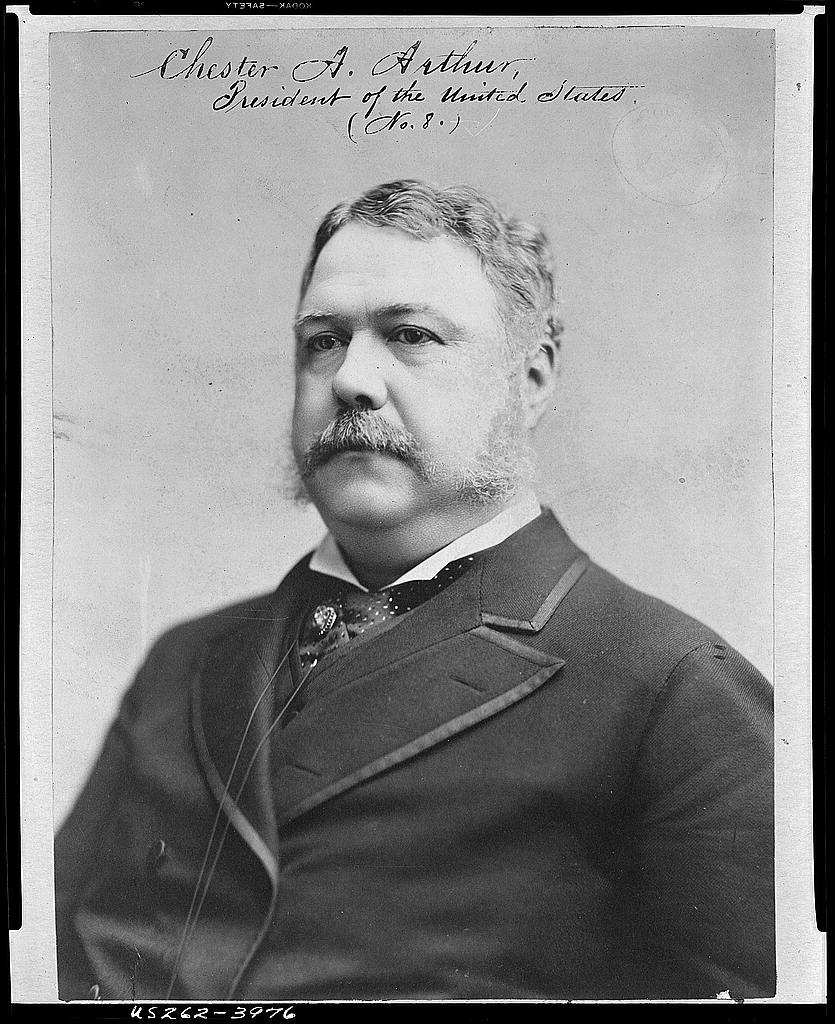
The Pendleton Act, signed by President Chester A. Arthur on January 16, 1883, addressed both relationships. Its competitive examinations offered a different route into government employment. Its restrictions on political collections addressed what could be demanded afterward. Read together, those provisions ask a sharp question: how much independence could a worker possess if keeping a salary depended on paying a political patron?[1]
A reform older than the assassination
Reformers had already tried to change federal appointments. Congressman Thomas Jenckes introduced an unsuccessful reform bill in 1865. Congress authorized a civil-service commission under Ulysses S. Grant in 1871, but congressional support proved inadequate to sustain the experiment. When Charles Guiteau shot James A. Garfield on July 2, 1881, a movement with proposals and institutional experience was already waiting. Garfield died on September 19; reform advocates connected the assassination to the dangers of office seeking.[2]
Arthur brought an awkward history to the presidency. As collector at New York, he had occupied a major post in Senator Roscoe Conkling's patronage network. The Senate Historical Office describes the customhouse as a source of jobs and political influence. The man who would sign the new law understood the system from inside it.[3]
That background makes the statute's detail more revealing than a simple conversion story. Congress was trying to change recurring transactions: the recommendation that opened a door, the examination that ranked an applicant, the demand for campaign money, and the threat that made refusal costly.
What an examination was supposed to establish
Section 2 of the act calls for open competition and examinations “practical in their character.” It immediately explains the standard: tests should assess applicants' capacity to perform the duties of the service they wanted to enter. Selection would come from those with the highest grades. A period of probation would precede a final appointment.[1]
The sequence matters. A useful test could establish relative fitness before hiring; probation could provide evidence afterward. Neither provision guaranteed that every examination would be well designed or every appointment fair. They specified how officials were supposed to justify selection, giving administrative judgment a structure that could be inspected.
Section 10 also narrowed what a congressional recommendation could do. A senator or representative could still speak to an applicant's “character or residence.” Beyond that, the recommendation was not to be considered in an examination or appointment under the act. Congress thus preserved a limited evidentiary role for its members while restricting their ability to substitute endorsement for assessed fitness.[1]
The law even anticipated corruption inside the replacement system. Section 5 penalized deliberately false marking and the disclosure of secret information to help or hurt a candidate. Examiners could become gatekeepers with favors to sell. Changing the entrance procedure required rules for the people who controlled it.[1]
The salary after the appointment
Section 2's fifth principle says public employment creates no obligation to contribute to a political fund or perform political service. Refusal must not bring removal or other prejudice. Its next principle denies officials the right to use their authority to coerce political action.[1]
Later sections turn that principle into specific prohibitions. Section 11 bars a wide range of federal officeholders and employees, including members of Congress, from soliciting or receiving political contributions from federal employees. Section 12 addresses collections inside buildings used for official duties, extending its language to navy yards, forts and arsenals. The workplace itself was part of the problem the legislators described.[1]
Section 13 reaches the threat behind the collection. It prohibits an official from changing another employee's rank or compensation, or promising or threatening such a change, because the employee gives or withholds a political contribution. Promotion appears alongside discharge and demotion. The law recognizes that dependence can be cultivated through hoped-for advancement as well as fear of dismissal.[1]
This is the connection between the examination and the collector. A person selected through competition could still face demands once employed. Conversely, protection against a demand for money would leave patronage appointments untouched. The act addressed both the allocation of jobs and the political obligations attached to them. That pairing is a reading of the statute's design; it is not evidence that every prohibited practice immediately disappeared.
The boundary around the promise
The examination system began within a restricted portion of the government. The Senate Historical Office puts its initial reach at about 14,000 jobs, roughly one-tenth of federal employment. Section 6 specified classification in larger customs districts and post offices, including a threshold of fifty employees, and provided for presidential direction of further extensions. Section 7 preserved existing veterans' preferences and excluded laborers from required classification.[1][3]
That limited reach needs careful wording. The familiar one-tenth figure concerns the initial classified hiring system. The political-assessment sections use broader descriptions of federal officials and employees. Treating the whole act as protection for only one-tenth of the workforce would erase a distinction visible in its text.[1]
Implementation also had a timetable. In a report dated March 18, 1912, the Civil Service Commission recalled that covered vacancies could still be filled under the old methods until July 16, 1883. The same report explained how later executive orders extended classification. Employees already in those positions could enter the classified service without having gained their original appointments through examinations.[4]
That retrospective prevents another easy mistake: counting classified positions as proof that every incumbent had passed a competitive test. The report records a transition in the rules governing employment, with different routes into the resulting workforce. Its figures describe coverage; they cannot alone establish the fairness of each appointment.
The law's strongest idea emerges at the scale of an ordinary working relationship. An applicant should be assessed for the duties of a job. Once employed, that person's salary should not create an enforceable debt to a political collector. Examinations, probation, records and prohibitions were separate ways of making those propositions usable. Their presence together on the page shows how closely reformers understood the question of competence to be tied to the freedom to refuse.[1]
Sources
- United States Congress, “An act to regulate and improve the civil service of the United States,” January 16, 1883 — full transcript and archival identification, especially sections 2, 5–7 and 10–15; National Archives.
- Alan Gephardt, “The Federal Civil Service and the Death of President James A. Garfield,” National Park Service, September 2012 — political assessments, earlier reform attempts, Arthur's background and the 1881 assassination.
- U.S. Senate Historical Office, “Chester Alan Arthur,” in Vice Presidents of the United States, 1789–1993, 1997, printed pages 251–255 — customhouse patronage and the limited initial coverage of the Pendleton hiring reforms.
- U.S. Civil Service Commission, Classified Civil Service, letter of March 18, 1912, Senate Document 442, pages 1–2 — the six-month implementation period, executive extensions and employees classified without examination.
- Library of Congress, “Presidential Communications: A Beginner's Guide,” February 2016 — reproduces Charles Milton Bell's 1882 photograph of Chester A. Arthur and identifies its Prints and Photographs Division source, cph.3a07409.