At the customs house in Helsingør, a shipmaster's journey became paperwork. The building on Strandgade had a waiting hall, a room for translating documents, and another for assessing the toll. Historian Erik Gøbel describes this arrangement in his study of the Sound Toll records: a waterfront building organized around the interruption of voyages.[1]
The ships did not have to be delivering goods to Denmark. They owed money for passing through the Sound, the strait between Denmark and Sweden. A toll introduced around 1429 had made this passage a durable source of royal income.[2] Ending it required an unusual transaction. In 1857, other governments agreed to pay Denmark to give up collecting. Free passage had a purchase price.[3]
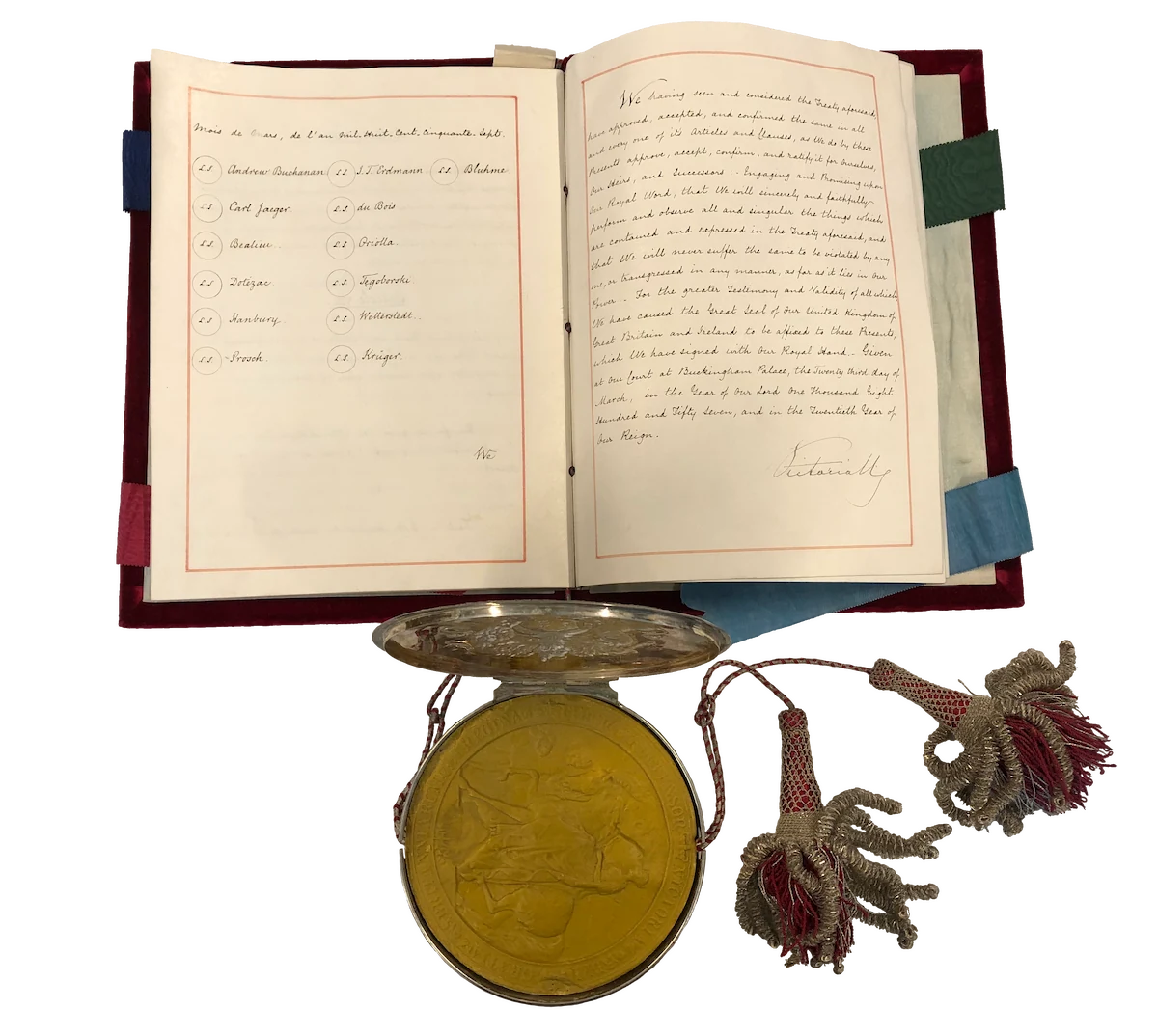
A charge on passing through
The toll's early history explains its durability. According to historian Stefan Pajung, the demand first documented in 1429 was one English gold noble per foreign ship. Fortifications on both shores and the Danish fleet backed collection. The system subsequently accumulated distinctions: exemptions for favored towns, charges related to cargo, a lighthouse levy, and dues tied to vessel size. A separate customs house was established in Helsingør in 1562.[2]
This was an institution with accounts and negotiated privileges. Its surviving records also reveal the limits of what officials knew. Gøbel's study distinguishes relatively dependable information about shipping from less reliable cargo declarations, which could conceal goods. The registers record a fiscal encounter, rather than offering an unfiltered inventory of everything at sea.[1]
That encounter took time. By the nineteenth century, the interruption was especially troublesome for steamships working to schedules. Gøbel's account of the abolition emphasizes both the delays and American pressure against continued payment. Denmark responded by seeking compensation for surrendering the revenue.[3]
The bill was larger than the toll
In the Commons debate of 5 June 1857, the Chancellor of the Exchequer drew on a parliamentary committee's evidence to separate the Danish receipt from the cost to British commerce. Witnesses accepted a figure of roughly £70,000 in annual dues but estimated the broader burden at £200,000–£300,000. Agents' commissions, translation, paperwork and other incidental charges helped account for the difference. Evidence also described the dangers of leaving ships at an exposed anchorage while their masters attended to customs business.[4]
These were estimates deployed in an argument for government expenditure. John Bramley-Moore challenged the price and warned against treating the larger commercial burden as money actually received by Denmark. He also questioned the trade assumptions behind the bargain. The debate supports a distinction between revenue and wider costs; it does not supply a settled measurement of the savings abolition would produce.[4]
That distinction made a buyout conceivable. A government collecting a toll need not receive all the value lost by those who pay it. Waiting, arranging documents and employing intermediaries consume resources too. If ending collection removes those costs, the travelers' potential gain can exceed the collector's lost income. There can be room for a bargain even when the collector insists on compensation.
A treaty still needed someone to vote the money
The agreement signed in Copenhagen on 14 March 1857 translated that possibility into national obligations. Explaining it to Parliament three days later, the Chancellor put Britain's contribution at £1,125,206. He also insisted that Parliament remained free to decide whether to provide the money. Negotiators could sign an agreement; they could not make the parliamentary decision disappear.[5]
The proposed opening date, 1 April, therefore required a bridge between diplomatic agreement and domestic approval. Denmark would take security for possible dues from passing vessels while the necessary sanctions remained outstanding. If the settlement failed to receive approval, payment could still be demanded. The transitional arrangement made the promised opening conditional in a practical, recoverable way.[5]
This is an easily missed part of the mechanism. A buyout must do more than name a price acceptable to both sides. It must coordinate the moment when collection stops with the moment when compensation becomes dependable. The security arrangement addressed that gap without pretending the vote had already happened.
The lights stayed on
The separate American convention, signed in Washington on 11 April 1857, shows what else had to survive abolition. Article I protected American vessels and cargoes against charges and detention in passage. Article II required Denmark to maintain the lights, buoys and pilot establishments, and to improve them as circumstances and growing trade required. Masters could hire Danish pilots at regulated reasonable rates or navigate without them.[6]
Article III set a single American payment of $393,011. The convention's heading records the exchange of ratifications on 12 January 1858: the American agreement had its own timetable. Its terms also distinguish free passage from free optional services. Removing a compulsory payment for transit did not mean that a master choosing a pilot would receive that service without charge.[6]
Denmark thus relinquished an income stream while retaining obligations to navigation. Gøbel records that the compensation was used chiefly to extinguish the state's foreign debt.[3] The settlement exchanged recurring receipts for capital and made continued upkeep part of the bargain.
The customs house's waiting hall supplies the human scale of that transaction. A shipmaster had once left the voyage to have documents translated and a charge assessed.[1] The settlement's practical ambition was to let that voyage continue. Governments paid for the change because a passage could become cheaper through the removal of an interruption as well as the cancellation of a bill.
Sources
- Erik Gøbel, “Øresundstolden og dens regnskaber 1497–1857,” Handels- og Søfartsmuseets Årbog 69 (2010), pp. 41–72, especially p. 44 and the English summary on p. 71 — customs-house rooms, registers and the reliability of cargo declarations.
- Stefan Pajung, “Øresundstolden, ca. 1429–1857,” Danmarkshistorien/Lex — origins, enforcement, exemptions and the development of the toll.
- Erik Gøbel, “Øresundstraktaten og afviklingen af Sundtolden fra 1. april 1857,” Danmarkshistorien/Lex — pressure for abolition, Denmark's compensation and its use; includes the treaty photograph credited to Asger Svane-Knudsen/Rigsarkivet.
- UK Parliament, “Sound Dues—Committee,” Hansard, 5 June 1857, vol. 145, cols. 1217–1248 — the government's cost argument, committee evidence and Bramley-Moore's objections.
- UK Parliament, “Papers Moved For,” Hansard, 17 March 1857, vol. 144, cols. 2400–2404 — Britain's contribution, parliamentary authority and provisional security for dues.
- United States and Denmark, “Convention … for the Discontinuance of the Sound Dues,” signed 11 April 1857, United States Statutes at Large, vol. 18, part 2, pp. 173–175 — Articles I–III and the ratification chronology.