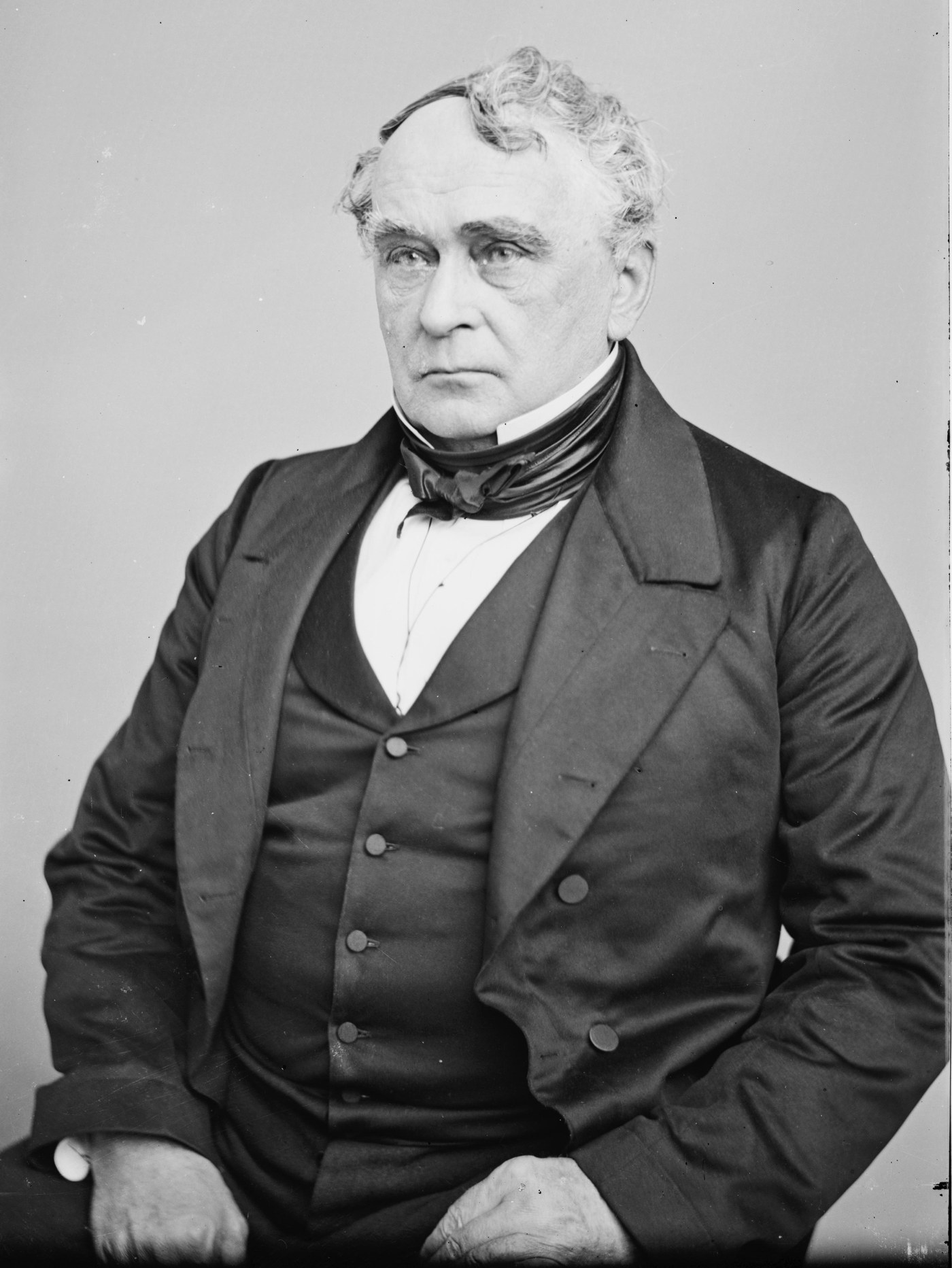
The Lieber Code is easy to praise too broadly. It did not make the American Civil War humane, and it did not invent restraint from nothing. What it did, more precisely, was force a hard question into official language: if the Union Army claimed necessity, what kinds of violence still had to remain outside the line?
Issued as General Orders No. 100 in 1863, formally titled Instructions for the Government of Armies of the United States in the Field, the code gave Union commanders 157 articles on occupation, prisoners, retaliation, spies, parole, armistice, rebellion, civilian property, and emancipation.[1][2][3] It was prepared by Francis Lieber and promulgated under Abraham Lincoln's administration during the war itself, not as a tidy postwar reflection.[3][4] That timing matters. The document was not a museum label for settled ethics. It was a working manual for an army fighting an expanding civil war.
Necessity Gets a Fence
The code's most important move is visible in Articles 14 through 16. Article 14 defines military necessity as measures indispensable to the war's ends and lawful under the modern usages of war.[1] That seems permissive at first. It gives commanders a vocabulary for destruction, seizure, and force. But the next step is the point. Article 16 says military necessity "does not admit of cruelty" and rejects torture, poison, revenge, perfidy, and wanton devastation.[1]
The structure is the argument. Lieber did not place humanity outside military reasoning as a sentimental afterthought. He placed it inside the definition of lawful necessity. The code therefore asks commanders to distinguish between violence that advances a military end and violence that merely satisfies anger, terror, or convenience. That distinction is not clean in battle, but it is still a distinction. The document's ambition is to make officers answerable to it.
This is why a close reading should resist turning the Lieber Code into a simple ancestor of modern humanitarian law. It contains rules that later law would reject or revise, including harsh allowances around starvation and retaliation.[3][5] Its value as a source is not that every article aged well. Its value is that it shows an army trying to speak simultaneously in two registers: the language of hard war and the language of legal boundary.
Occupation Is Treated as Administration
Article 1 begins not with battlefield glory but with occupation. A place held by an enemy army, the code says, comes under martial law whether or not a proclamation has announced it.[1] Articles 2 through 10 then explain what that means for civil authority, courts, revenue, property, local officials, diplomats, and obedience.[1]
That opening is revealing. The code assumes war is not only combat. It is also rule over people who did not vanish when armies arrived. The occupying power suspends and substitutes authority, but the text does not let that substitution remain vague. It names the legal and administrative functions that shift under military control.[1] In doing so, it makes occupation a governed condition rather than a temporary blur.
The Library of Congress catalog record for the 1898 government printing preserves the document under the plain subject headings of armies, regulations, and military law.[2] Those headings are dry, but they catch the document's character. The Lieber Code is not written as a declaration of ideals. It is written as a set of instructions. Its moral claims gain force because they are embedded in operational categories: who counts as a prisoner, who may be punished, what happens to property, when paroles work, and how armistices bind.
Prisoners Become a Legal Category
The prisoner articles make the same pattern visible. Article 49 defines a prisoner of war as a public enemy who has fallen into the captor's hands, whether by surrender, wound, battle, or capitulation.[1] Article 79 requires captured wounded enemies to receive medical treatment according to available medical capacity, and Article 80 rejects violence used to extract information from prisoners.[1]
Again, the code does not pretend captivity is gentle. It says prisoners are exposed to the inconveniences of confinement.[1] But it turns captivity into a status, and status matters. A captured enemy is not simply a body available to rage, reprisal, or interrogation. The prisoner has a nameable place in the manual. The code's discipline is bureaucratic as much as moral: once the category exists, conduct toward the person can be judged against it.
This was especially consequential in a civil war. The Library of Congress's legal-history account notes that Union commanders faced conflicts over whether Confederate soldiers should be treated as traitors or as prisoners of war, and over how to treat fugitive and freed enslaved people entering Union lines.[3] The code did not solve every contradiction of slavery, rebellion, and military power. But it gave commanders a common text at a moment when improvisation could become cruelty by another name.
The Emancipation Articles Are Legal Machinery
Articles 42 and 43 are among the code's most historically charged provisions. Article 42 states that slavery, as a claim of property in human beings, has no standing in the law of nature and nations. Article 43 then says a person enslaved under a hostile government becomes free by coming under the protection of the United States Army.[1]
Read beside the Emancipation Proclamation of January 1, 1863, these articles show how emancipation had to be converted from presidential war policy into military practice.[3][5] Soldiers needed rules for people arriving at lines, camps, and occupied towns. The code made that situation legible to the army: formerly enslaved people were not contraband objects to be shuffled by local whim, but persons whose status changed under Union protection.[1]
The article is not modern equality language. It is still embedded in nineteenth-century military authority. But within that frame, it matters that emancipation appears in a manual about the conduct of armies. Lieber's text treated slavery not as a side issue outside the laws of war, but as one of the legal problems the war made unavoidable.
Influence, With Caution
The afterlife of the Lieber Code was large. The Library of Congress describes it as an important model for later codifications, including European military manuals and the late nineteenth-century movement toward international rules of land warfare.[3] R. R. Baxter's 1963 study for the International Review of the Red Cross similarly treats General Orders No. 100 as a major precursor to later codified laws of war, while noting the drafting sequence and the gap between the order's April date and its actual promulgation in May.[4]
That influence should not flatten the document into triumph. The code's harshness is part of the evidence. It authorizes severe measures, gives retaliation a place, and speaks from the perspective of a state trying to win a war.[1][5] The historical achievement is narrower and more durable: it made an official army manual say that necessity was not a blank check.
That is why the phrase near the end of Article 16 still carries weight. Military necessity, the code says, does not include conduct that makes the "return to peace unnecessarily difficult."[1] The line is not naive. It knows war damages the future. But it also insists that some damage is chosen, and that choices can be governed before the peace arrives.
The Lieber Code's real lesson is not that law civilizes war by itself. It is that even in April and May 1863, while the Civil War was far from over and Union policy was hardening, someone thought commanders needed a written boundary between necessity and cruelty. That boundary was incomplete, contested, and often violated. But once printed as an order, it became harder to say that the battlefield had no rulebook at all.
Sources
- Yale Law School Avalon Project, "General Orders No. 100: The Lieber Code" - full text of the 157 articles as reprinted from the 1898 Government Printing Office edition.
- Library of Congress, Instructions for the government of armies of the United States in the field - catalog record and digitized Law Library copy, noting its origin as General Orders No. 100.
- Jenny Gesley, Library of Congress, "The 'Lieber Code' - the First Modern Codification of the Laws of War" - historical overview of Lieber, Lincoln's issuance, Civil War command problems, content, and later influence.
- R. R. Baxter, "The First Modern Codification of the Law of War: Francis Lieber and General Orders No. 100," International Review of the Red Cross, 1963 - scholarly account of drafting, promulgation, and influence.
- Burrus M. Carnahan, "Lincoln, Lieber and the Laws of War: The Origins and Limits of the Principle of Military Necessity," American Journal of International Law, 1998 - analysis of military necessity and legal limits in the code.
- Wikimedia Commons, "File:Francis Lieber - Brady-Handy.jpg" - metadata for the Brady-Handy portrait of Francis Lieber sourced from the Library of Congress Prints and Photographs Division.