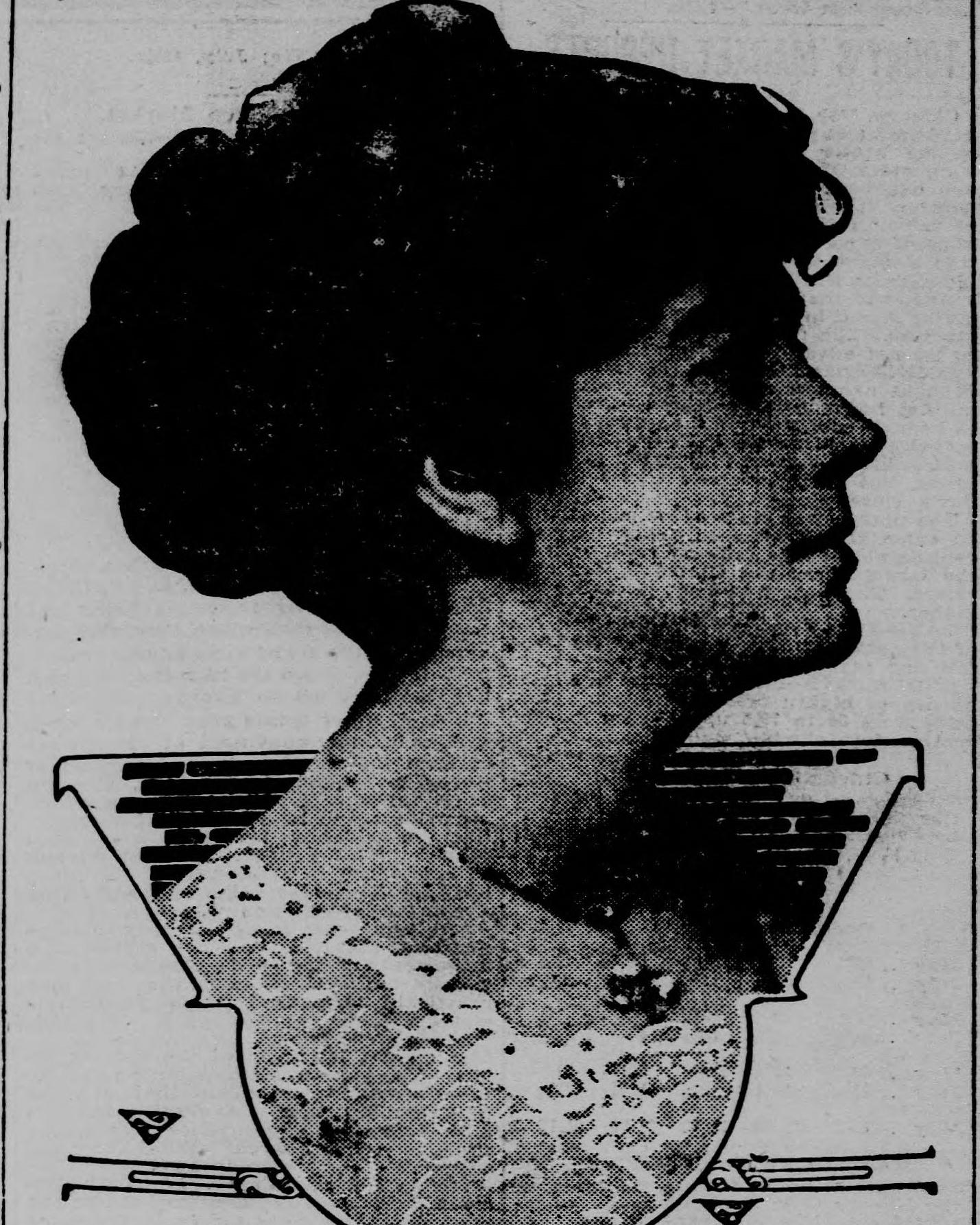
On January 22, 1913, Ethel C. Mackenzie asked San Francisco's election commissioners to register her as a voter. She had been born in California and had lived there all her life. Her husband, Gordon Mackenzie, was a British subject, but he too lived in California and intended to remain. The board refused her application. In its eyes, Ethel had ceased to be an American on August 14, 1909, the day she married him.[2]
Her expatriation under federal law had required no border crossing, foreign oath, or foreign naturalization. It had required a wedding.
That missing journey is what makes Mackenzie's case worth reading beside the Expatriation Act of March 2, 1907. The statute did not merely reflect the broader regime of married women's legal dependence. It created different expatriation triggers and proof rules for different citizens. One route asked what a citizen had done in relation to another country. The other asked whom an American woman had married.[1]
Section 2 required an act; Section 3 required a husband
Section 2 began with a rule for “any American citizen.” It named two acts that would count as expatriation: becoming naturalized in a foreign state or taking an oath of allegiance to one. It then created a separate presumption for naturalized citizens who lived abroad for specified periods, but allowed that presumption to be rebutted with satisfactory evidence before a diplomatic or consular officer.[1]
The section therefore connected loss of citizenship to conduct that looked outward: naturalization, an oath, or sustained foreign residence. It also distinguished a conclusive act from a rebuttable inference.
Section 3 changed both the subject and the threshold. Its first sentence was blunt: “Any American woman who marries a foreigner shall take the nationality of her husband.”[1]
The contrast is the document's sharpest feature. Section 2 asked what the citizen did toward a foreign state. Section 3 made marriage itself do that work for a woman. It required no proof that she meant to abandon the United States, had established a home elsewhere, had even left her birthplace, or had actually received another country's nationality. What the United States could do—and did—was stop treating her as American.
The rest of Section 3 confirms that this was an immediate loss of U.S. status, not merely a passport restriction for women abroad. Only “at the termination of the marital relation” could she resume American citizenship. If abroad, she could register with a U.S. consul within one year or return to reside in the United States. If already in the United States, she could resume citizenship by continuing to reside there.[1]
On April 19, 1907, the State Department translated those clauses into consular procedure. Its circular treated death or absolute divorce as the necessary termination. The model affidavit recorded a former citizen's birth, marriage, husband's nationality, and the marriage's end; documentary proof of termination was required, while proof of native birth could be waived unless the consul had doubts. Officers made the affidavit and certificate in duplicate, sent one copy to the department, and notified the embassy or legation.[3] The form made the statute's logic material. A woman born American could be required to prove her route back after widowhood or divorce because marriage had placed citizenship outside her control while it lasted.
“Foreigner” described status, not distance
Mackenzie's facts removed every geographic distraction from the rule. According to the Supreme Court's account, Gordon Mackenzie had lived in California before the marriage, still lived there, and intended to make the state his permanent home. Because he remained a British subject, Section 3 applied despite his permanent California residence.[2]
The statute's “foreigner” was therefore a legal category, not a measure of distance. Two people could share a California household indefinitely while federal law made the wife's U.S. citizenship turn on her husband's formal allegiance. The election board then made that federal status visible at the local level: because California's voter qualification required citizenship, the marriage rule kept Mackenzie off the register.[2]
Mackenzie's counsel answered with two linked claims. First, citizenship arising from birth in the United States was a constitutional status. Second, expatriation required voluntary conduct showing an intention to transfer allegiance. She had done nothing of that kind. She remained in California and was affirmatively asking to participate in its civic life.[2]
The Supreme Court recognized the starting point: a person born in the United States was a citizen. It then conceded for the argument that citizenship was “of tangible worth” and that a change could not be imposed arbitrarily without the citizen's concurrence. But Justice Joseph McKenna's opinion treated Mackenzie's consent to marriage as consent to lose citizenship under Section 3.[2]
What counted as a voluntary choice?
The strongest version of the Court's reasoning was a theory of one household in an international system. McKenna invoked the old legal identity of husband and wife, the possibility that divided nationality within marriage could create international complications, and Congress's broad authority over foreign relations. Because marriage was entered voluntarily and the statute supplied notice of its consequences, the Court held that Congress could make it “tantamount to expatriation.”[2]
On that theory, Section 3 did not seize citizenship at random. It attached a legally prescribed consequence to a chosen relationship and treated the wife's nationality as aligned with her husband's under U.S. law for diplomatic purposes.
Mackenzie's counterargument exposed what that theory compressed. Consent to marry a particular person was not necessarily consent to abandon one's country. The statute inferred the second choice from the first, but only for women. It did not ask whether a diplomatic conflict actually existed, whether the couple expected to live abroad, or whether the wife claimed protection from two governments. Her continuous residence and attempted voter registration pointed in the opposite direction.[2]
The disagreement was therefore not over whether her wedding was voluntary. It was over what that voluntary act could be made to signify. Mackenzie treated expatriation as a specific decision about allegiance. The Court allowed Congress to treat marriage as a proxy for that decision.
Within the Court's textual method, there was little room for a narrower result. Section 3 contained, as the opinion stressed, “no limitation of place.” Its second sentence carefully specified what happened after a marriage ended, making it harder to read a residence exception into the statute while the marriage continued.[2] A different merits judgment would have required either invalidating the rule or rejecting the premise that marital consent supplied the necessary concurrence. The Court did neither.
The 1922 repair was prospective and racially bounded
The Cable Act of September 22, 1922 reversed the basic rule prospectively but not completely. It repealed Section 3 rather than the whole 1907 Act and said that a woman citizen who married an alien eligible for naturalization would not cease to be a citizen by reason of the marriage unless she formally renounced her citizenship. It also ended the mirror rule under which an alien woman automatically acquired U.S. citizenship by marrying an American.[4]
Three boundaries remained. First, the Cable Act explicitly refused to restore citizenship already lost under the old rule. It offered a naturalization route to women whose pre-1922 loss came through marriage to an alien eligible for citizenship, while barring a woman from naturalizing during marriage to an ineligible husband.[4]
Second, the new protection depended on the husband being “eligible to citizenship.” That phrase imported the racial exclusions of naturalization law into married women's nationality. A woman who married a man barred from naturalization could still lose citizenship by reason of the marriage.[4][12] Congress removed that prospective marital-loss rule on March 3, 1931: thereafter marriage alone would not end a woman's citizenship unless she formally renounced it before a court.[6]
Third, the Cable Act retained a residence-based presumption for a married citizen living abroad. Two continuous years in her husband's country, or five years continuously outside the United States, subjected her to the same rebuttable presumption that the 1907 law applied to a naturalized citizen. Congress repealed those sentences on July 3, 1930, but expressly declined to restore citizenship previously lost under them.[4][5]
Backward-looking repair still came in stages. The 1931 amendment opened naturalization to women whose citizenship had been lost through marriage to an ineligible alien or through the Cable Act's former residence rule, provided they had not acquired another nationality by an affirmative act; it also protected citizen-at-birth applicants from racial bars to that route.[6] A 1936 law created an oath-only route for native-born women who had lost citizenship solely through a pre-Cable Act marriage, but only after the marriage ended.[7] On July 2, 1940, Congress extended that oath-only route to women still married if they had resided continuously in the United States since marriage.[8]
The Nationality Act of October 14, 1940, consolidated the patchwork. Its Section 317 provided streamlined naturalization for former citizens who had lost citizenship through a pre-1922 marriage—or through a later marriage to an ineligible alien—if they had not affirmatively acquired another nationality apart from marriage. It waived the usual declaration, arrival certificate, and residence periods. The act retained an oath-only route for citizen-at-birth women whose pre-1922 marriage had ended, repealed earlier enactments, and took effect ninety days after approval.[9]
These repairs did not make the original loss disappear. They turned former citizens into applicants who needed the right facts, the right papers, and an oath. That administrative afterlife survives in National Archives files: American birth certificates placed beside marriage records, divorce decrees, applications, and oaths from women documenting why they needed to become citizens of their birth country again.[10] The records reveal what Section 3's short sentence concealed. Automatic loss was simple on the statute page; recovery was biographical and bureaucratic.
From marital consent to actual relinquishment
Congress dismantled marital expatriation before the Supreme Court fundamentally changed its constitutional approach to citizenship loss. In Afroyim v. Rusk on May 29, 1967, the Court held that the government could not take Fourteenth Amendment citizenship from a citizen who had not voluntarily relinquished it.[11]
Afroyim did not restore Mackenzie's 1913 voter registration, and it arose from a different alleged expatriating act. Its value here is the changed question. Mackenzie had asked whether Congress could label a voluntary marriage as concurrence in expatriation. The later doctrine centered the citizen's voluntary relinquishment of citizenship itself. Read across that divide, consent to a relationship and intent to surrender national membership no longer look interchangeable.
Section 3 is often summarized as a law under which women lost citizenship by marrying foreigners. The asymmetry was more exact: Section 2 demanded foreign-facing conduct or permitted a rebuttable residence presumption; Section 3 let a husband's status answer for his wife.
Ethel Mackenzie made that asymmetry impossible to hide because she stayed home. The government did not discover that she had left the country. It declared that her marriage meant she had left citizenship—and then used that declaration to refuse her a place on the voter roll.
Sources
- U.S. Statutes at Large, Act of March 2, 1907, ch. 2534, 34 Stat. 1228–1229 — primary text of the Expatriation Act, especially Sections 2 and 3.
- U.S. Supreme Court, Mackenzie v. Hare, 239 U.S. 299 (1915), GovInfo — official report containing the case facts, competing arguments, and Justice McKenna's opinion.
- U.S. Department of State, circular of April 19, 1907, in Foreign Relations of the United States — consular procedure, documentary proof, and affidavit form for resuming citizenship after death or divorce.
- U.S. Statutes at Large, Act Relative to the Naturalization and Citizenship of Married Women (Cable Act), September 22, 1922, 42 Stat. 1021–1022 — primary text of the prospective rule, racial-eligibility exception, restoration route, and repeal clauses.
- U.S. Statutes at Large, Act of July 3, 1930, 46 Stat. 854 — primary text repealing the Cable Act's residence presumption without restoring citizenship already lost.
- U.S. Statutes at Large, Act of March 3, 1931, 46 Stat. 1511–1512 — primary text ending prospective citizenship loss through marriage to an alien ineligible for naturalization and providing a restoration route.
- U.S. Statutes at Large, Act of June 25, 1936, 49 Stat. 1917 — primary text creating an oath-only repatriation route for certain native-born women after termination of a pre-1922 marriage.
- U.S. Statutes at Large, Act of July 2, 1940, 54 Stat. 715 — primary text extending the 1936 repatriation route to certain women continuously resident in the United States since marriage.
- U.S. Statutes at Large, Nationality Act of 1940, October 14, 1940, 54 Stat. 1137–1174 — primary text of the consolidated restoration provisions, repeals, and delayed effective date.
- National Archives, “When Saying ‘I Do’ Meant Giving Up Your Citizenship” (2014) — Cable Act limits, repatriation laws of 1936 and 1940, and the surviving federal court records.
- U.S. Supreme Court, Afroyim v. Rusk, 387 U.S. 253 (1967), GovInfo — official report of the later constitutional rule against involuntary loss of Fourteenth Amendment citizenship.
- National Park Service, “Ethel C. Mackenzie” — biography, case chronology, and the public-domain newspaper portrait used as the article image.