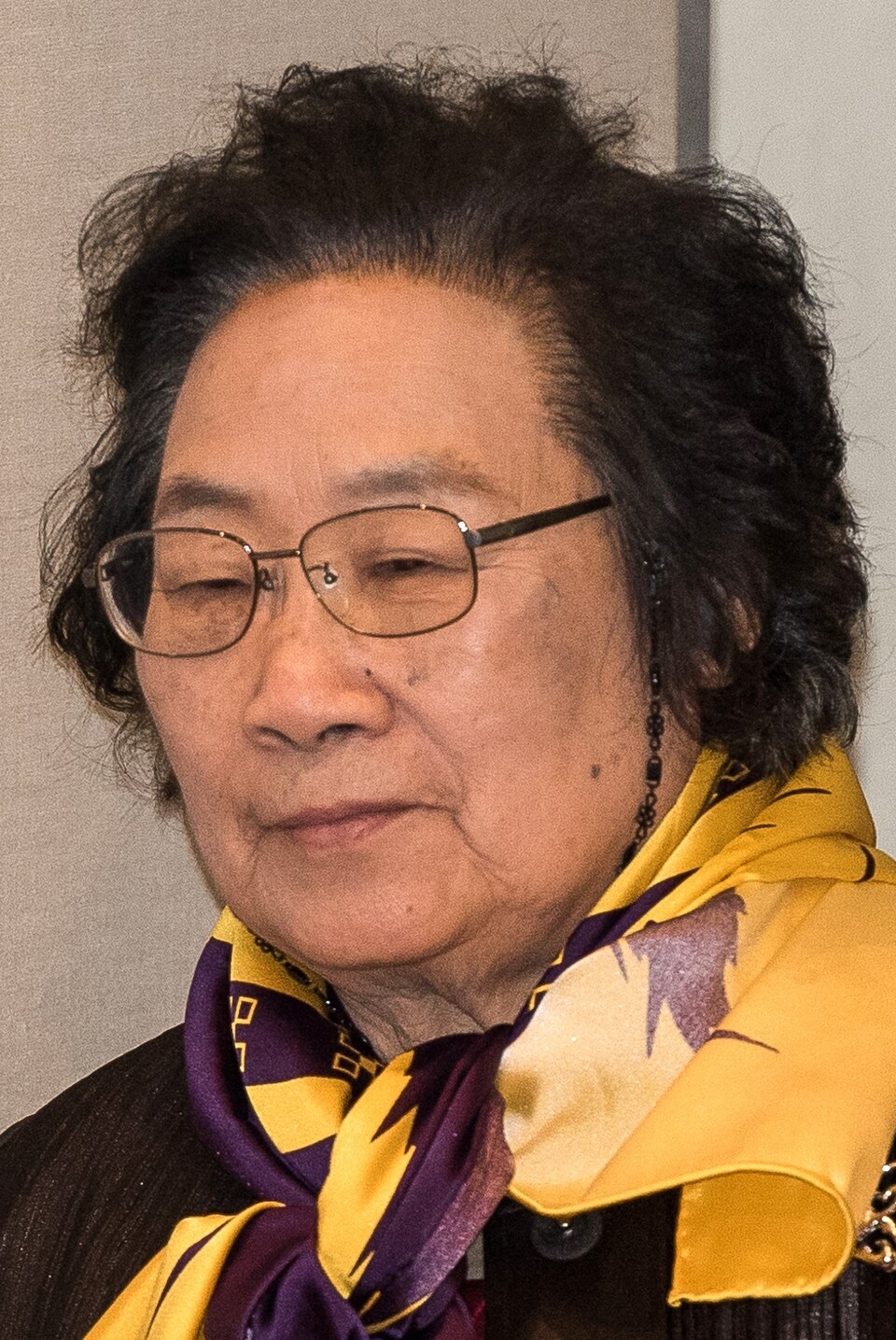
Tu Youyou's artemisinin story is often compressed into a charming formula: an ancient herb, a brilliant scientist, a Nobel Prize. The real microhistory is harder and more useful. It is a story about translation under pressure. Tu did not simply "rediscover" a folk cure, and she did not turn tradition into medicine by reverence alone. She had to make an old fever recipe answer modern questions: Which plant? Which part? Which season? Which solvent? Which temperature? Which animal model? Which patients? Which evidence would survive outside the secrecy of wartime research?
That is why artemisinin matters as health history. It shows that old medical texts can contain useful leads without being self-validating treatment manuals. It also shows that modern pharmacology can be too blunt if it ignores preparation details. The decisive step was not a mystical return to the past. It was a change in extraction logic: Tu read a classical instruction closely enough to suspect that heat was destroying the active ingredient, then used a low-temperature process to preserve activity and reduce toxicity.[2]
The timeline begins in a geopolitical emergency. Project 523 was launched on May 23, 1967, as a secret Chinese military program aimed at chloroquine-resistant malaria; the Vietnamese government had asked China for help during the war, and malaria was damaging both civilian and military populations.[2] In early 1969, Tu was appointed to lead the Project 523 research group at her institute.[2] The setting matters because it explains both the urgency and the later opacity. Much of the work remained unpublished or anonymously published for years, which later complicated credit and reconstruction.[2][5]
Tu brought an unusual combination to that problem. Nobel's biographical account places her at the China Academy of Traditional Chinese Medicine and notes that, after studying traditional herbal medicines in the 1970s, she focused on sweet wormwood, Artemisia annua, and extracted artemisinin, a substance that inhibits the malaria parasite.[1] The Lasker Foundation gives the more granular version: her team collected roughly 2,000 candidate recipes, narrowed the work to 380 extracts from 200 herbs by 1971, and tested those extracts against Plasmodia in infected mice.[2]
Those numbers are useful because they keep the story from becoming a legend about one lucky quotation. Tu's classical reading mattered, but it sat inside a screening program. One Qinghao extract looked promising and then failed reproducibility. That failure was the hinge. Instead of discarding the lead or accepting vague tradition, Tu returned to the literature and noticed a preparation instruction in Ge Hong's fourth-century Handbook of Prescriptions for Emergencies: the herb was to be soaked rather than boiled.[2] Lasker's account says she realized the standard boiling or high-temperature process could be destroying the active ingredient, then redesigned extraction around lower temperature and ether, removed an acidic portion that added harm without antimalarial value, traced useful material to the leaves, and refined harvest timing.[2]
This is the microhistory's central lesson. A medical lead is not the same thing as a medicine. Between the two sits method. The old recipe supplied a clue about temperature. Chemistry and pharmacology turned that clue into a testable extract. Animal work supplied an early activity signal. Toxicity reduction made a human trial thinkable. Tu's contribution was to keep those layers connected without confusing any one of them for proof.
The next dates show the turn from extract to drug. At a March 1972 Project 523 meeting, Tu reported that neutral extract number 191 cleared Plasmodia in mice and monkeys.[2] Later in 1972, according to the Lasker account, her team tested the substance in 21 people with malaria in Hainan Province; fever and blood parasites disappeared rapidly in both P. falciparum and P. vivax cases.[2] On November 8, 1972, the group obtained the pure substance they named qinghaosu, now widely known as artemisinin.[2] In 1973, Tu synthesized dihydroartemisinin, a derivative that became important in later antimalarial development.[4]
The evidence was still emerging, and the publication path was unusual. Lasker notes that subsequent clinical trials on 529 malaria cases supported the isolated crystal's antimalarial effect, and that by the time of the first English-language report in December 1979, the China-wide qinghaosu research group had administered the drug to more than 2,000 patients, including some with chloroquine-resistant P. falciparum malaria.[2] A later historical review in Molecules emphasizes why the Nobel award to one person became controversial: many scientists and institutes participated in Project 523, and the project itself had been little known outside China for years.[5]
That controversy should not be treated as an attempt to erase Tu. It is a reminder that discovery can be both individual and collective. Tu's low-temperature extraction insight, leadership of the institute team, early clinical pathway, and later public explanation were central.[2][3][4] At the same time, Project 523 was a multi-institute program, and later work on derivatives, formulations, production, combination use, and global deployment involved many hands.[2][5] The fairest history holds both facts together: Tu's key move changed the evidence trail, while the drug's public-health life depended on a larger system.
Artemisinin's mechanism also helps explain why the discovery was not just another plant extract. Nobel's advanced scientific background describes Tu as isolating the active component from Artemisia annua and states that artemisinin-based combination therapy profoundly reduced malaria incidence and mortality.[3] Lasker adds that the compound had a structure unlike known antimalarial drugs and that later studies identified the peroxide portion as essential for parasite killing.[2] The practical result was speed. Artemisinin derivatives became prized because they rapidly reduce parasite biomass, which is one reason they became the backbone of modern treatment for P. falciparum malaria.
But speed created a second public-health lesson: never leave the drug alone. Monotherapy can invite resistance. The modern standard is artemisinin-based combination therapy, pairing a fast artemisinin derivative with a longer-acting partner drug. Lasker's presentation notes that combination delivery was adopted to protect artemisinin as resistance mechanisms emerged and that artemisinin-based combinations came into widespread use after becoming available in the late 1990s.[2] CDC's current malaria drug-resistance page frames the present boundary more bluntly: partial artemisinin resistance has independently emerged in parts of Southeast Asia, South America, and East Africa, threatening the future of the combination therapies that remain the main class of antimalarials used worldwide.[7]
The latest WHO malaria reporting keeps that boundary visible. The 2025 World Malaria Report page says partial resistance to artemisinin derivatives has been confirmed or suspected in at least eight African countries, while global malaria remained severe in 2024, with an estimated 282 million cases and 610,000 deaths.[8] Those numbers do not diminish Tu's discovery. They define its continuing responsibility. A lifesaving drug can become fragile if surveillance, partner-drug efficacy, diagnostic access, manufacturing quality, and treatment adherence fail.
This is where the old "ancient wisdom meets modern science" slogan becomes too soft. The better lesson is stricter. Tu's work succeeded because neither side was allowed to remain vague. The classical source had to be read for an operational detail, not treated as a decorative origin story. The laboratory result had to survive repeated extraction, animal testing, purification, structural work, clinical observation, and later international scrutiny. The drug then had to be protected by combination policy because parasites evolve.
The 2015 Nobel Prize recognized Tu "for her discoveries concerning a novel therapy against Malaria."[1] The phrasing is precise. It does not say she solved malaria. It says she opened a new therapy. That opening has saved lives on a vast scale, but it remains embedded in systems that can succeed or fail: procurement, treatment guidelines, resistance monitoring, combination partners, and access in the places where malaria still kills children.
Tu Youyou's microhistory is therefore not a simple tale about old medicine being vindicated. It is a tale about how a clue becomes evidence. A fourth-century instruction about not boiling Qinghao did not cure malaria by itself. Tu's achievement was to notice that the instruction could be a pharmacological hypothesis, then push that hypothesis through enough chemistry, testing, and clinical pressure to make a modern drug visible. Artemisinin's afterlife adds the final caution: even a brilliant discovery must be governed after it is found.
Sources
- Nobel Prize Outreach, "Tu Youyou - Facts" - Nobel biography page with birth, affiliation, prize motivation, and summary of artemisinin work.
- Lasker Foundation, "Artemisinin therapy for malaria" - detailed award essay on Project 523, screening, low-temperature extraction, early clinical testing, and later combination therapy.
- Nobel Prize Outreach, "The Nobel Prize in Physiology or Medicine 2015 - Advanced information" - scientific background on artemisinin, parasitic disease burden, and combination therapy impact.
- Youyou Tu, "The discovery of artemisinin (qinghaosu) and gifts from Chinese medicine," Nature Medicine 17, 1217-1220 (2011) - PubMed record and DOI metadata for Tu's own discovery account.
- Xinzhuan Su and Louis H. Miller, "The discovery of artemisinin and Nobel Prize in Physiology or Medicine," Science China Life Sciences / PMC (2015) - historical review on Project 523, credit, and controversy.
- Wikimedia Commons, "File:D810 4987 Tu Youyou, medicine (22945001843) (cropped).jpg" - source page for the 6 December 2015 photograph by Bengt Nyman used as the article image.
- Centers for Disease Control and Prevention, "Drug Resistance in the Malaria-Endemic World" (April 3, 2024) - current public-health summary of chloroquine resistance, partial artemisinin resistance, and ACT risk.
- World Health Organization, "World malaria report 2025" - current WHO report page on malaria burden, artemisinin resistance, and 2024 global case/death estimates.