The patient reaches the ward after an ambulance ride, a barrage of questions, and the surrender of his clothes. A thermometer arrives before reassurance does. Then a medical student sits beside the bed. In Francis Weld Peabody's telling, this apparently junior encounter is where the hospital can begin to become intelligible to the person inside it.[1]
The scene appears in The Care of the Patient, published in 1927 and collected in Doctor and Patient in 1930. Peabody is remembered for the essay's final appeal to caring. Read from the beginning, however, it makes a precise demand: physicians must recover the knowledge of a person's life that admission to hospital can strip away. Personal attention belongs inside clinical investigation.[1]
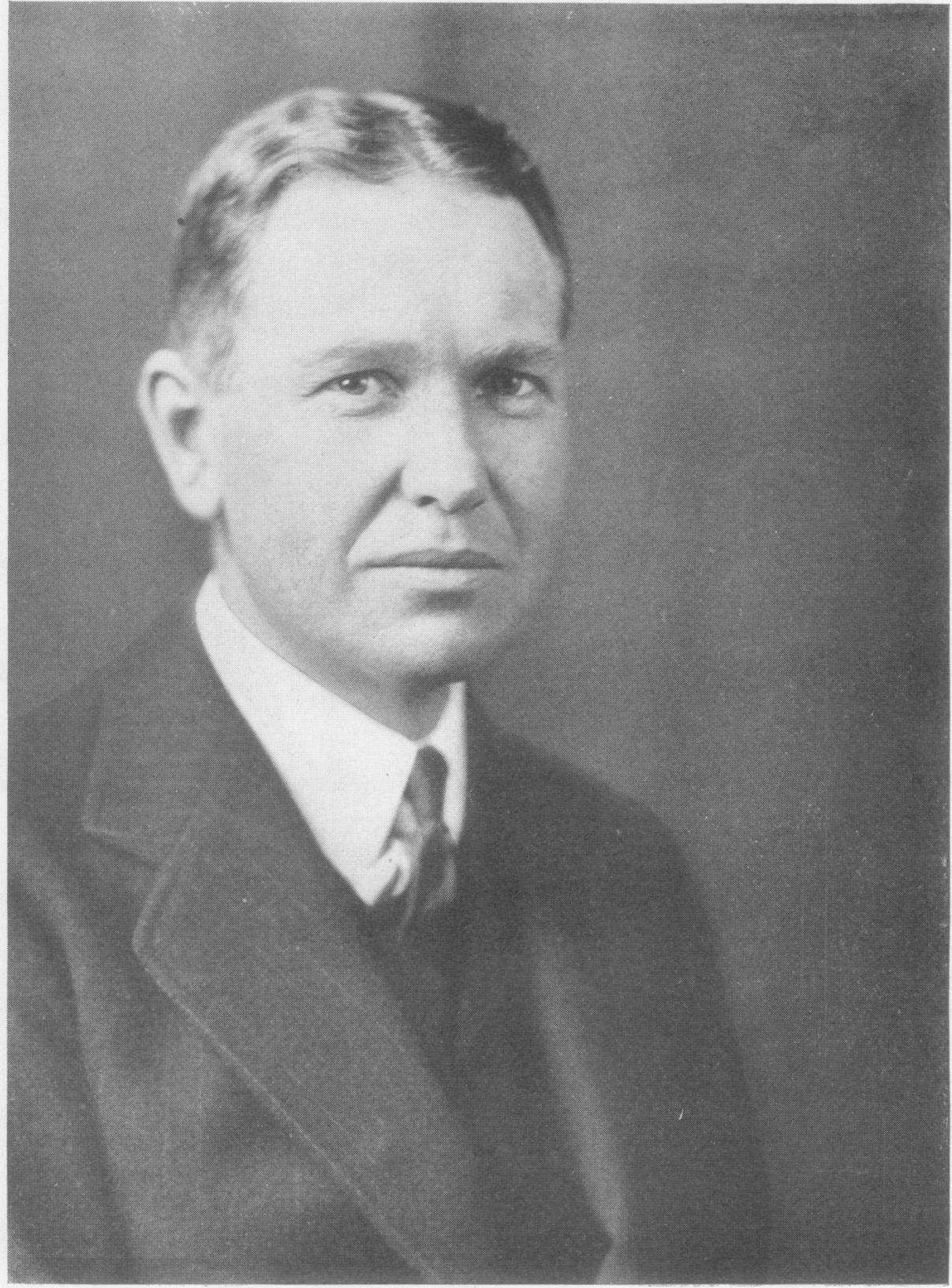
Peabody knew the institution he was criticizing. His December 1927 obituary in the Journal of Clinical Investigation describes laboratory work on respiration, infection, and anemia alongside ward teaching. He had joined the journal's editorial board at its foundation in 1924. This was an investigator examining what scientific medicine left out of its field of view.[2]
What disappears at admission
Early in the essay, Peabody turns the hospital's strength into a problem. Removing someone from home may provide necessary relief, supervision, and treatment. It also removes the surroundings through which a visiting physician might understand the illness. The household, the job, and the financial worry become harder to see precisely when the body becomes easier to examine.[1]
His example is Henry Jones, a patient with mitral stenosis, a narrowing of a heart valve. Around the ward, the diagnosis and bed location threaten to replace his name. Peabody's objection goes beyond manners. In the teaching vignette, Henry lies awake worrying about his family and future; the medical team sees a heart rate that remains troublesome despite medication. The label accurately identifies a disease while leaving the patient's predicament largely unexamined.[1]
Peabody brings a social-service worker into the response, helping Henry find suitable employment. The detail gives the passage its force. Caring entails finding out what is happening beyond the bed and arranging help that changes those circumstances. It requires practical work, including work performed by someone other than the doctor.[1]
The essay's visual metaphor is a microscope focused too narrowly. At high magnification, the center of the field can absorb all attention. The reader is being asked to change the scale of observation while keeping the close view available. Henry still has heart disease. His worry does not explain the valve lesion, and the lesion does not explain everything that matters to Henry.
The patient whom the tests leave behind
The argument becomes sharper with Mrs. Brown. After repeated dietary restrictions and unsuccessful treatments, she reaches hospital with persistent digestive symptoms. Investigations reveal no structural explanation. The case loses its educational attraction, and she is sent home with reassurance and another tonic. Her symptoms return.[1]
Peabody calls this a failure of inquiry. The staff has established that its tests did not demonstrate the suspected conditions. It then acts as though it has explained the complaint. The gap between those statements is the center of the essay: exclusion has been mistaken for understanding.
This is also where the text needs careful historical reading. Peabody moves much of this group into the period's broad category of psychoneuroses and offers emotional explanations with a confidence that a modern reader should examine, not inherit. His examples are teaching narratives; they do not establish the accuracy of those diagnoses or measure the effectiveness of his approach.[1]
Yet a later passage complicates any reading of him as simply assigning unexplained symptoms to anxiety. Before considering an emotional cause, he tells the student to consider disease too early or slight to recognize and acknowledges that observation over time may be necessary. He also explicitly allows functional disturbances and organic disease to coexist.[1]
That qualification matters. The essay supports continued attention to symptoms and uncertainty. It supplies no warrant for deciding that a reassuring investigation has proved a psychological cause. Its strongest lesson concerns the point at which clinicians stop asking questions.
The bedside relationship produces information
Peabody makes the student's assignment unusually concrete. Learn the person's work and relationships. Return after taking the history. Watch the clinical course. Ask a nurse to teach the practical tasks that make a patient comfortable. In his account, someone who remains guarded during formal questioning may begin to explain a difficulty while receiving ordinary help.[1]
The relationship therefore has a role in finding things out. Attention creates occasions for information to emerge; that information changes the physician's understanding of the problem. A pleasant manner by itself would leave the investigation unfinished.
His example of an ulcer treatment plan makes the same point from another direction. Within the treatment assumptions of his era, he imagines prescribing prolonged bed rest and a special diet. He then asks what that would mean for the patient's work, income, visitors, and home. These are historical treatment details, not present-day recommendations. Their function in the argument is to expose the distance between knowing a textbook regimen and making a workable plan for one person.[1]
There is a limitation here, too. Much depends on an attentive individual finding time inside a pressured institution. The essay describes that pressure clearly, but offers no staffing model or financing plan to relieve it. Its bedside instructions are more developed than its institutional remedy. That imbalance helps explain both its appeal and the work still required to act on it.
Reading past the tribute
When Peabody died on 13 October 1927, colleagues and admirers remembered his character. The following day's Harvard Crimson tribute emphasized patients' confidence, students' devotion, and his conduct during his own illness. The journal obituary likewise joined scientific accomplishment to personal warmth.[2][3] Those accounts help explain how easily the physician's exemplary personality can become the story.
The essay leaves something more teachable than a personality. It offers a sequence: establish contact, reconstruct circumstances, investigate the complaint, reconsider what remains unexplained, and adapt care to the life into which the patient will return. That sequence is my reading of its connected examples, rather than a formal protocol Peabody himself numbered.
A later vocabulary gave this enlarged field of inquiry a more explicit framework. George Engel's 1977 proposal for a biopsychosocial model, described by the University of Rochester, put biological, psychological, and social factors into a common account of health and illness. Rochester's teaching guidance still connects the clinical history to life circumstances and treats those dimensions as subjects for scientific inquiry.[4] The resemblance clarifies Peabody's concern without making the two texts interchangeable.
Return to the student sitting beside the newly admitted patient. The scene asks for sustained observation as well as kindness. The hospital has collected the clothes, recorded the symptoms, and made room for the body. Someone still has to learn about the life that came with it.
Sources
- Francis Weld Peabody, “The Care of the Patient” (1927), in Doctor and Patient (Macmillan, 1930), pp. 27–57. Public-domain text via Project Gutenberg; hospital admission, Henry Jones, Mrs. Brown, diagnostic uncertainty, and bedside teaching.
- “Francis Weld Peabody,” Journal of Clinical Investigation 5 (December 1927), pp. 1–6 and portrait plate. Contemporary obituary, research career, editorial service, death date, and photograph.
- “Francis Weld Peabody,” The Harvard Crimson, 14 October 1927. Contemporary editorial tribute documenting the emphasis on trust, character, and personal influence.
- University of Rochester Medical Center, Department of Psychiatry, “The Biopsychosocial Approach.” Institutional account of Engel and Romano's model, its clinical teaching principles, and Engel's 1977 publication.