The emergency Janet Vaughan anticipated began before a patient reached a hospital. In a lecture published on 6 May 1939, she explained that aerial bombardment would disrupt the communications needed to summon blood donors. Doctors would be occupied with casualties; donors could hardly be dispatched into the front line. A service that waited for someone to need blood would begin its work at the worst possible moment.[1]
Vaughan was a haematologist at Hammersmith Hospital, accustomed to studying blood in the laboratory and arranging its use at the bedside. Now she was helping plan for an entire city. Her question was practical and unsettling: how could London have blood available when the attack that created the need also made collecting it harder?[1][2]
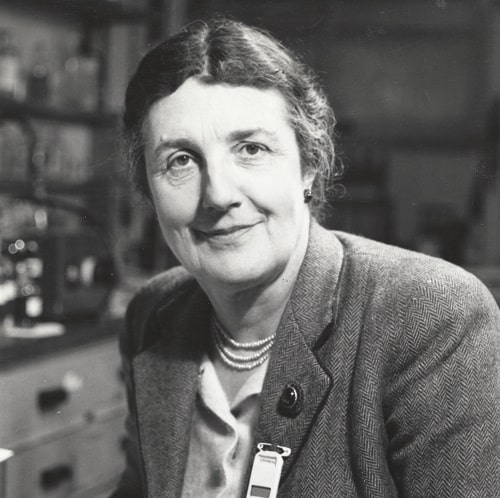
A laboratory habit becomes a public problem
Vaughan's route to the depot ran through years of close attention to sick people's blood. She published The Anaemias in 1934, bringing together research and clinical experience in a specialty still taking shape. At Hammersmith, her responsibilities included teaching, investigation and the routine blood services. Sir John Dacie's later biographical account remembers her insistence on keeping blood films with patients' laboratory records and on standardizing methods and controls.[2]
Those habits matter to this story. A stored bottle would have to remain useful after leaving the person who collected it. The work demanded procedures another team could understand, repeat and trust. Vaughan's laboratory discipline offered a way of thinking about that distance.
She also belonged to a political and medical network formed around the Spanish Civil War. Frederic Durán-Jordà's blood service in Barcelona provided experience of collecting and storing blood for wartime casualties. Helen Dodsworth's history of British transfusion describes his contact with Vaughan and the influence of that experience on her preparations in London.[3]
This was knowledge moving between countries through people who had reasons to act urgently. Vaughan's contribution grew from recognizing what an existing practice might make possible in a different emergency.
The plan on the table
In an interview recorded on 4 November 1987, Vaughan recalled London pathologists meeting in her Bloomsbury flat to plan a transfusion service. Her children complained about the bottles left behind. The group debated apparatus as well as organization, then sent a memorandum to the official overseeing emergency medical preparations.[4]
Her recollection preserves an uncomfortable step between having expertise and being permitted to use it. A senior colleague rebuked her for submitting the proposal. Subsequently, a request arrived for costs. She remembered obtaining advice from her dean and working through expenses such as cotton wool and rubber tubing. A scheme that had begun among colleagues at home was becoming something government could fund.[4]
Dodsworth dates a planning meeting at Vaughan's home to 5 April 1939 and official adoption to 20 April. Four depots followed, at Sutton, Maidstone, Slough and Luton, administered by the Medical Research Council for the Ministry of Health. Their locations balanced access to donors and hospitals against distance from central London.[3]
The geography was part of the treatment. Blood collected outside the expected concentration of destruction could be held for hospitals serving the casualties. The plan moved some of the necessary work into a different place and an earlier hour.
A bottle that had to travel
Vaughan's May lecture argued for equipped centres with trained staff, where collection and sterility could be managed more reliably. She also acknowledged that isolated units might need to arrange their own supplies. The proposed service had to accommodate an emergency in which central provision and local improvisation could both be necessary.[1]
By 2 December 1939, she was writing as director of the Slough depot. Her British Medical Journal article described the Medical Research Council transfusion outfit, including its conspicuously ordinary starting point: a modified pint milk bottle.[5]
The bottle narrowed slightly for a secure grip. An aluminium screw cap enclosed a rubber diaphragm, and a band and loop allowed it to hang upside down when blood was administered by gravity. These details joined collection, storage and use in one object. They made the journey from donor to patient visible in the shape of the equipment.[5]
Yet Vaughan's report also recorded shortages and revisions. Some elaborate components had been difficult to obtain quickly; additional equipment became available later. Hospitals had varying needs, so the apparatus was not completely uniform. Reading the paper reveals a service being adjusted while it operated, with instructions revised as experience accumulated.[5]
That is a useful corrective to the idea that emergency preparation ends when a plan is approved. Approval gave the depots a mandate. Making them work required continued attention to what staff could obtain and what hospitals could actually use.
Slough supplied more than rooms
Vaughan ran the north-west London depot from Slough. Somerville College's account places its refrigerators beside the social centre's bar and records the use of requisitioned ice-cream vans for distribution. The setting brought refrigeration and transport into a medical service without waiting for a purpose-built institution.[6]
In her interview, Vaughan remembered the social centre as a place where she could also find people: extra donors and, when necessary, volunteer drivers. The building's ordinary social life became a resource for the depot.[4]
The detail is memorable because the bar belongs to the same story as the laboratory. A supply of blood depended on people arriving, equipment being ready and someone taking responsibility for the next journey. Vaughan's work connected these activities closely enough that help could move when it was needed.
Her recollections deserve the care given to any account recorded decades later. They convey the texture of organizing the service, while contemporary publications establish what she publicly described at the time. Wellcome's catalogue identifies surviving committee minutes and supply arrangements from April–September 1939, alongside an incomplete retrospective manuscript. That catalogue points to further evidence; it does not by itself establish every remembered conversation.[7]
In 1945, Vaughan became principal of Somerville College, continuing scientific work alongside institutional responsibilities.[8] The depot years reveal why those roles could coexist. She was interested in the conditions that allowed skilled people to do useful work: the records, rooms, equipment and relationships around the experiment or the patient.
Her pre-war warning remains the clearest expression of the achievement. An air raid could make blood urgently necessary while making donors harder to reach. Vaughan helped arrange for their contribution to be waiting already.
Sources
- Janet M. Vaughan, “Blood Transfusion,” British Medical Journal, 6 May 1939, pp. 933–936 — especially the opening discussion of air raids, storage and collection centres.
- Sir John Dacie, “Dame Janet Maria Vaughan,” Royal College of Physicians, 1994 — haematology career, laboratory practices and archival photograph.
- Helen Dodsworth, “Blood Transfusion Services in the UK,” Journal of the Royal College of Physicians of London 30, 1996, pp. 457–464 — especially pp. 459–461 on Spain and the London depots.
- Janet Vaughan interviewed by Max Blythe, 4 November 1987, Medical Sciences Video Archive MSVA 027, Oxford Brookes University and Royal College of Physicians — written transcript, especially pp. 10–12.
- Janet M. Vaughan, “The Medical Research Council Blood Transfusion Outfit,” British Medical Journal, 2 December 1939, pp. 1084–1085 — bottle design, equipment shortages and revisions.
- Somerville College, “Remembering the Somerville Women of World War Two,” 2024 — Vaughan's Slough depot and its transport arrangements.
- Wellcome Collection, “Emergency Blood Transfusion Scheme for London and the Home Counties,” GC/186/1 — catalogue description of records dated April–September 1939 and an undated retrospective fragment.
- Somerville College, “Janet Vaughan” — her principalship from 1945 to 1967 and continuing scientific work.