The easiest way to misread Villa Aida in 2026 is to treat its vegetable-only turn as a late surrender to fashion. The official site does say that plainly enough: in a note dated July 13, 2025, Kanji Kobayashi announced that from July 16 the restaurant would move to a completely vegetable-based menu, explaining that visits to vegetable restaurants in New York, Vienna, Switzerland, Spain, Italy, Paris, and Shanghai had convinced him meat and fish were no longer necessary to the cooking he wanted to do.[1][3] The same site's March 16, 2026 award message then looks back and says the house "switched completely to a vegetable-only menu" last year.[1] As news, that sounds abrupt.
As history, it does not. Villa Aida's vegetable turn makes more sense when placed inside a much longer line: Kobayashi learned the basics in Osaka, went to Italy at 21, spent four years moving from three-star kitchens to trattorias, returned to Wakayama, opened Ristorante AiDA in 1998, and later renewed the project as villa AiDA.[2][6] The Best Chef profile adds the crucial conceptual bridge, naming the Italian idea of campanismo as foundational to his philosophy: cook from what belongs to your place, close enough to be heard within the sound of church bells.[6] Villa Aida's mature work is what happened when that Italian locality ethic was returned to a chef's own farming prefecture in Japan.
That is why the current house matters. Villa Aida is not best understood as an Italian restaurant that happened to become more vegetable-focused over time. It is better read as a long migration from imported category to local authorship, from Campania as inspiration to Wakayama flavor as identity.[2][4][5]
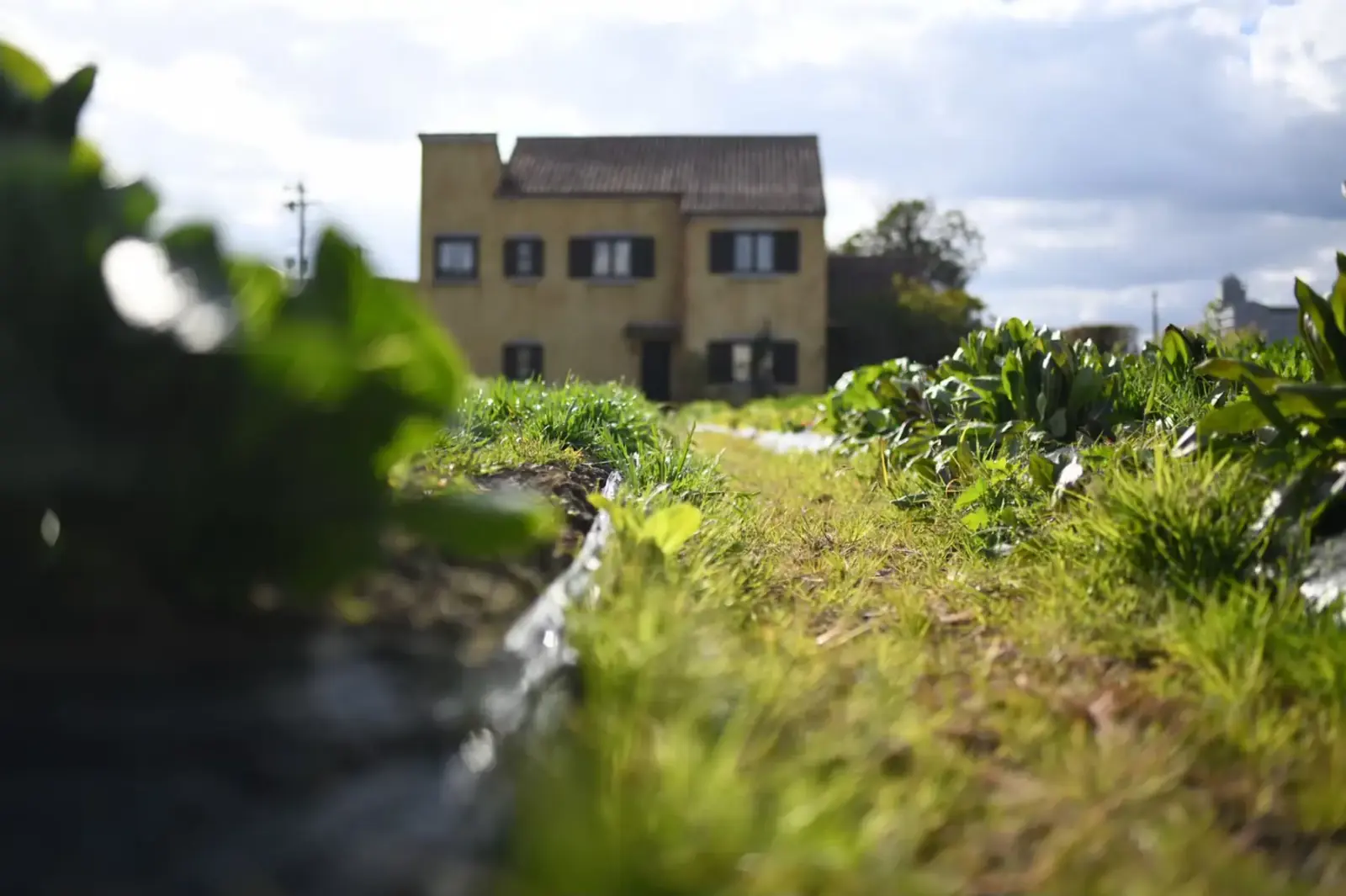
Image context: the lead image uses a recent Villa Aida garden-and-exterior photograph because the article is about sequence. The field comes first, the room comes second, and the plate only makes sense after both.[6]
1. Italy gave Kobayashi a method, not a costume
The Italian chapter is essential, but not in the usual prestige-biography way. 50 Best Discovery says Kobayashi traveled alone to Italy on a one-way ticket at 21, stayed four years, and came back with a vision shaped by Italian cooking rather than merely decorated by it.[4] The official profile page says much the same thing in rougher language: he learned Italian food culture and technique across the whole ladder, from three-star restaurants to trattorias.[2] That breadth matters.
What Villa Aida seems to have borrowed from Italy was not simply a set of dishes. It borrowed a rule about seriousness. Campanismo is powerful because it makes geography operational. You cook from what the place can truly support, and you let the place determine not only sourcing but rhythm, preservation, and appetite.[6] Once that principle was carried back to Wakayama, Kobayashi did not need to keep producing a legible "Italian restaurant" in the narrow sense. He could keep the discipline while changing the vocabulary.
That helps explain why Villa Aida has long looked different from urban luxury rooms chasing cosmopolitan abundance. 50 Best still describes it as "a little slice of Campania in the hills of Wakayama," but that phrase now reads best as origin story rather than current endpoint.[4] The deeper point is not that Wakayama became a branch of Italy. It is that Italy taught Kobayashi how to read Wakayama more strictly.
2. Wakayama stopped being backdrop and became the author
The official English page is blunt about the agricultural scale around the restaurant: more than 300 different types of vegetable are grown in the fields around the house, and the staff begins the day by gathering what will be used that morning.[1] The same page describes preserves, fruit wines, candied vegetables, pickles, dried produce, bottled tomatoes, and salted olives as part of everyday life rather than side projects.[1] That is already more than garden garnish. It is a system for sharing time with ingredients.
The Japan Times profile from 2022 shows how concrete that system had become even before the 2025 vegetable-only declaration. The article says guests who arrive early can tour the gardens, see the greenhouse of edible flowers and herbs, and sometimes catch Kobayashi harvesting with scissors in hand. "This," the writer concludes, "is where the meal begins."[5] Later in the piece, the meal itself is described as a set omakase whose most interesting quality is not generic luxury but locality pushed into unusual form: tea buds with house-made yuzu ponzu, butterbur with caramel, daikon seed pods rarely used outside the restaurant, and inobuta with flowering baby zucchini from the garden.[5]
Two things are worth noticing here. First, the meal was already being written from the field inward. Second, the field was not being treated as rustic theater. Villa Aida was using near-at-hand ingredients to produce combinations that could only exist there.[1][5] That is a very different ambition from simply buying excellent produce.
The current official Japanese homepage makes the dining-room side of that ambition even sharper. It now advertises one table with six seats for two to six guests, a long meal of eight plates and two desserts, and a price of 49,500 yen inclusive of service and tax.[3] The same page explains that Kobayashi imagines producers, local guests, and city guests sharing that single table and leaving with new connections formed through the meal.[3] In other words, the restaurant's locality is not only agricultural. It is social.
3. "Italian" gradually became too small a category
This is where Villa Aida's lineage gets interesting. The restaurant did begin under an explicitly Italian name and frame: after returning from Italy, Kobayashi opened Ristorante AiDA, then in 2005 created accommodation and renewed the project as villa AiDA.[2] But the farther the public record moves forward, the less stable the "Italian restaurant" label seems.
The Japan Times article catches the shift in unusually clear language. It says Villa Aida had advertised itself as Italian since opening, but year by year it fit that category less neatly; when pressed, Kobayashi described the food as "Wakayama flavor" or simply "my cooking."[5] That sentence matters because it names the exact transition this restaurant has spent decades making. Italian technique did not disappear. It lost its right to fully name the result.
The official pages reinforce the same move from another angle. They talk about protecting future generations, learning from grandparents' wisdom, understanding the laws of nature, and creating a place where diners can reconsider how they eat.[1] They also emphasize that the house wants to do something "that simply cannot be done in the city."[1] Those are not the slogans of a restaurant trying to remain inside a European category. They are the claims of a place trying to make terroir, seasonality, preservation, and hospitality answer to one exact patch of Wakayama.
Seen that way, the one-table model is not a charming service detail. It is part of the lineage. The room had to get smaller and more specific because the cooking had become more specific. A cuisine built on seed-to-harvest time, local producers, and daily gathering works better when the scale stays intimate enough for those meanings to register.[3][5]
4. Why the 2025 vegetable-only turn feels like culmination, not rupture
Once that history is in view, the 2025 announcement reads differently. Yes, the change is real. The official statement says meat and fish no longer felt necessary to the food Kobayashi wanted to cook, while noting that dairy, honey, and eggs would remain for the time being and be reduced gradually.[1][3] The March 2026 award message then links the turn directly to the house's new recognition, saying the all-vegetable shift helped lead to the Gault&Millau 2026 Chef of the Year award.[1]
But the turn does not come out of nowhere. The Best Chef profile says Kobayashi grew up in a farming family, built Villa AiDA around vegetables from the restaurant's own farm, and rooted his philosophy in preservation, non-waste, and respect for nature.[6] The official site has long framed the restaurant as a place where seasonal vegetables, grains, citrus, herbs, flowers, and local relationships shape the menu from the beginning.[1] The Japan Times piece had already described a menu whose center of gravity lay in vegetables and in a kind of terroir that city restaurants could not easily imitate.[5] The vegetable-only declaration therefore looks less like a new belief than a line finally drawn all the way through.
That is what makes Villa Aida worth reading as a history / lineage story rather than as a lifestyle headline about going plant-based. The real inheritance was never meat versus vegetables by itself. It was a chain of transmission: Italian locality ethics, a Wakayama farming childhood, preserving as everyday practice, a single-table hospitality model, and a growing insistence that the restaurant should be named by its place more than by any imported cuisine label.[1][2][3][5][6]
Villa Aida's vegetable-only turn was planted long before July 2025. It was planted when Kobayashi learned to take place seriously in Italy. It was planted again when he returned home and let Wakayama stop being scenery and become the source of authorship. By the time the official announcement arrived, the house had already spent years moving toward a cuisine that no longer needed "Italian" as its main explanation. The stronger name was already there: a table, a field, and a meal that tastes most clearly of where it is.[1][4][5][6]
Sources
- villa aida, English homepage - current official page covering the July 13, 2025 vegetable-only announcement, the March 16, 2026 Gault&Millau Chef of the Year note, the 28th anniversary message, the claim that 300+ vegetables grow around the restaurant, and the daily-harvest philosophy.
- villa aida, "profile" - official biography page covering Kobayashi's Osaka training, his four years in Italy from age 21, the 1998 opening of Ristorante AiDA, and the 2005 renewal as villa AiDA.
- villa aida, Japanese homepage - official page covering the six-seat one-table format, 49,500-yen current pricing, the July 2025 complete-vegetable declaration in Japanese, and the house's stated social role of connecting guests and producers around one table.
- 50 Best Discovery, "Villa Aida - Wakayama - Restaurant" - profile covering Kobayashi's one-way trip to Italy at 21, his four-year stay, the Campania framing, local sourcing, more than 100 vegetable varieties, and Asia's 50 Best 2024 placement.
- Sustainable Japan by The Japan Times, "Pushing boundaries with cuisine rooted in place" - feature covering the 2022 Destination Restaurant of the Year framing, the gardens as the beginning of the meal, the one-table six-seat room, the "Wakayama flavor" description, and the restaurant's increasingly terroir-driven identity.
- TheBestChef, "Kanji Kobayashi" - profile covering Kobayashi's farming-family background, the Italian idea of campanismo, the 1998 opening of Villa AiDA, the own-farm vegetable model, and the recent restaurant and garden photographs used to understand the house.