The lazy way to describe Smoked Room is to say that Dani Garcia built a dark little shrine to fire inside a Madrid hotel and let the aroma do the rest.[1][5] The official pages encourage part of that fantasy: the room is hidden within Leña Madrid, only 14 diners are served per service, and the whole place is sold through words like speakeasy, embers, smoke, and exclusivity.[1] Michelin's current listing adds to the drama with its talk of a clandestine feel, a Japanese-style bar facing the kitchen, and just two tables.[5] But the more interesting truth is technical. Smoked Room does not work because everything tastes smoked. It works because the kitchen treats smoke as a controlled seasoning, not as a fog machine.
That distinction is the whole craft. The current menus page presents two food tracks, Kõsei no Hi at 210 euro and Matsuri at 280 euro, then three pairing lanes: Hachi at 150 euro, Jū ni at 220 euro, and Hoshi at 500 euro.[2] The official history page says smoke is "more than just a technique" and describes a philosophy rooted in seasonality, precision, and Japanese techniques.[3] Michelin's feature on the restaurant sharpens the claim even further: smoke is the thread running through the meal, but it does not always sit on the main protein itself. Sometimes it appears in a herb butter or another supporting element instead.[6] That sentence explains why Smoked Room matters in 2026. The restaurant is not serving blunt-force grill luxury. It is building a fire omakase where embers, smoke, and timing are edited course by course until they feel exact.[2][3][5][6]
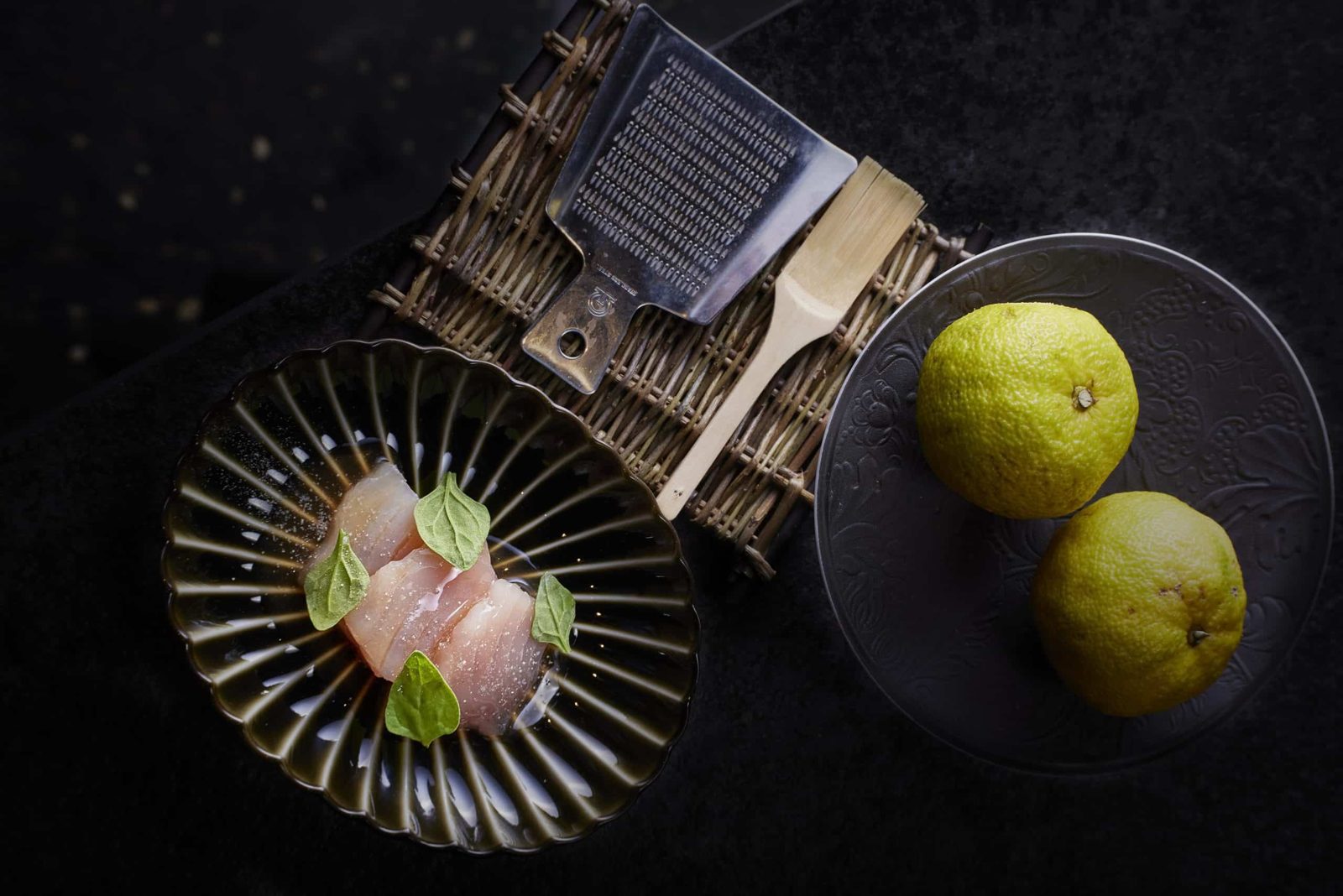
Image context: the lead image uses Smoked Room's official smoked-bonito photograph rather than a moody dining-room shot. That choice fits the article because the core argument is gustatory, not architectural. The fish, citrus, and grater make the restaurant's real move visible: smoke is only persuasive when acid, texture, and last-minute finishing keep it from turning heavy.[2]
1. Smoke is treated as an ingredient category, not a visual effect
The current menus page says it most cleanly: "Smoke, as a key seasoning, adds a unique touch that transforms every fish, vegetable, seafood, or meat into an unmatched experience."[2] That is a much narrower and more disciplined claim than many fire-first restaurants make. It does not say smoke is the whole taste. It says smoke is the seasoning. In other words, the kitchen is trying to place it where salt, acid, bitterness, sweetness, or fat would usually do structural work.
Michelin's current listing confirms that the approach stays subtle in practice. The inspectors describe a room that plays ingeniously with smoky flavors and aromas without ever overwhelming the palate, then explain that the menus are built from lightly smoked and charcoal-grilled dishes using the best seasonal produce, matured fish and meats, and seaweed.[5] That "without ever overwhelming" line is the important one. Smoke carries immediate seduction, but it also carries obvious risk. Too much and the palate goes flat. Too much and every course starts sounding like the same sentence. Smoked Room's strongest technical achievement is that it appears to understand smoke as something that must be held at the threshold of notice rather than allowed to dominate.
Michelin's Spanish feature makes that threshold even clearer by quoting Garcia on the many ways smoke can be used, including in components that are not the obvious centerpiece.[6] Once you read the restaurant through that lens, the concept stops looking like pyrotechnics. It starts looking like dosage.
2. Japanese technique gives the fire discipline
The restaurant's official history page says the house incorporates Japanese techniques to elevate textures and flavors, while the FAQs page states the specialty directly as Japanese cuisine in which smoke and embers play a key role.[3][4] Michelin's listing independently calls the format omakase-style and points to a striking Japanese-style bar facing the kitchen.[5] The World's 50 Best Discovery profile frames the result as a 15-course "Fire Omakase" where smoke becomes the seasoning and final touch for each piece of meat, fish, seafood, or vegetable leaving the open kitchen.[7]
That Japanese framing matters because it changes how the fire is read. In a looser grill restaurant, smoke can become an atmosphere: delicious, loud, and difficult to modulate. In an omakase structure, the kitchen has to think in sequence. Every bite is exposed by scale. Every progression is exposed by order. A 14-seat service with a counter-facing kitchen leaves very little room for muddiness.[1][5] If one course lands too thickly, the next one inherits the damage. Japanese technique here is useful not because Smoked Room is trying to cosplay Tokyo, but because the omakase discipline forces portion control, pacing, and finish control into the center of the experience.
This is why the room is so small. Capacity is not only a luxury signal. It is part of the method.[1][4] A concept built around fire and delicate smoke needs direct observation and short distance between grill, pass, and guest. The more intimate the room, the easier it becomes to keep temperature, aroma, and timing aligned.
3. The menu architecture shows where the smoke is allowed to go
The public menu names are revealing even without a dish-by-dish release. Kõsei no Hi and Matsuri sit as the two food experiences, while Hachi, Jū ni, and Hoshi create separate pairing scales above them.[2] The official page sells each track through sensory language rather than through ingredient flex: harmony, embers, depth, refinement, surprise.[2] That marketing vocabulary can sound generic until you connect it to Michelin's technical description. The listing says the menus move through seasonal produce, matured fish and meats, seaweed, and constant interaction between chefs, front-of-house staff, and guests.[5]
Those ingredients tell you what smoke is being asked to do. Matured fish and meats already have concentration. Seaweed already carries saline depth. Seasonal vegetables can carry sweetness, bitterness, sap, or mineral lift. Smoke therefore cannot merely add more volume. It has to shape the contour of flavors that already have their own force.[5] The lead bonito image is useful on this point. The fish is not drowning in soot-black spectacle; it sits beside citrus and a fine grater, which suggests a finishing logic built on lift and abrasion rather than brute density.[2]
That helps explain why the pairings are separated into distinct ladders instead of one all-purpose wine add-on.[2] A kitchen working this close to the edge of smoke needs different kinds of relief and reinforcement, and the drinks program becomes part of that calibration rather than a trophy shelf.
4. The service boundaries protect the craft
Smoked Room's FAQs read almost like a technical manual for maintaining concept integrity. Reservations open on the 15th of each month. Capacity stays at 14 diners. Menus change with the seasons and do not reveal every dish in advance. Vegetarian and vegan options are limited because the experience is focused on embers. Guests cannot bring their own wine. The current public hours are Tuesday to Saturday, with lunch from 13:00 to 16:00 and dinner from 20:30 to 01:00.[4] None of that is incidental.
These boundaries tell you the restaurant knows exactly where its fragility lies. A fire-driven omakase loses force if the room becomes too large, if the menu has to sprawl to satisfy every preference, or if the drinks structure is broken apart by outside bottles.[4] Constraint, in other words, is part of the taste.
So Smoked Room is worth reading as a technique / craft story rather than as a luxury-room curiosity. The deeper achievement is not that everything touches smoke. The deeper achievement is that the kitchen appears to know where to stop. Smoke is applied with the logic of seasoning, Japanese technique turns the sequence into a discipline, pairings absorb part of the balancing work, and the room stays small enough for all of that precision to remain audible.[1][2][3][4][5][6][7] In fine dining, that kind of restraint is harder than spectacle. It is also rarer.
Sources
- Smoked Room Madrid, official homepage - current page covering the hidden-within-Leña setup, 14-diner capacity, speakeasy positioning, opening times, and group-dining language inspired by traditional Japanese dining.
- Smoked Room Madrid, "Menus" - official page covering the current Kõsei no Hi and Matsuri food menus, Hachi / Jū ni / Hoshi pairings, current pricing, and the statement that smoke acts as a key seasoning across fish, vegetables, seafood, and meat.
- Smoked Room Madrid, "Our History" - official page covering the two-stars-at-once distinction, Chef Massimiliano Delle Vedove's kitchen leadership, the seasonality-and-precision philosophy, and the use of Japanese techniques.
- Smoked Room Madrid, "FAQs" - official page covering the 15th-of-the-month booking release, 14-diner limit, Japanese-cuisine specialty, current service hours, menu secrecy, limited vegetarian/vegan flexibility, and no-BYO-wine policy.
- MICHELIN Guide, "Smoked Room - Madrid - a MICHELIN Guide Restaurant" - current listing covering the clandestine feel, Japanese-style counter, two-table room, lightly smoked and charcoal-grilled cuisine, and the claim that smoky flavors never overwhelm the palate.
- MICHELIN Guide España, "Smoked Room, la fascinacion por el humo" - feature explaining smoke as the restaurant's running thread, including Dani Garcia's description of smoke being used not only on the main product but also in supporting elements such as herb butter.
- 50 Best Discovery, "Smoked Room - Madrid - Restaurant" - profile covering the 15-course Fire Omakase, 14-seat format, open kitchen, and the idea that smoke is the seasoning and finishing touch across the menu.