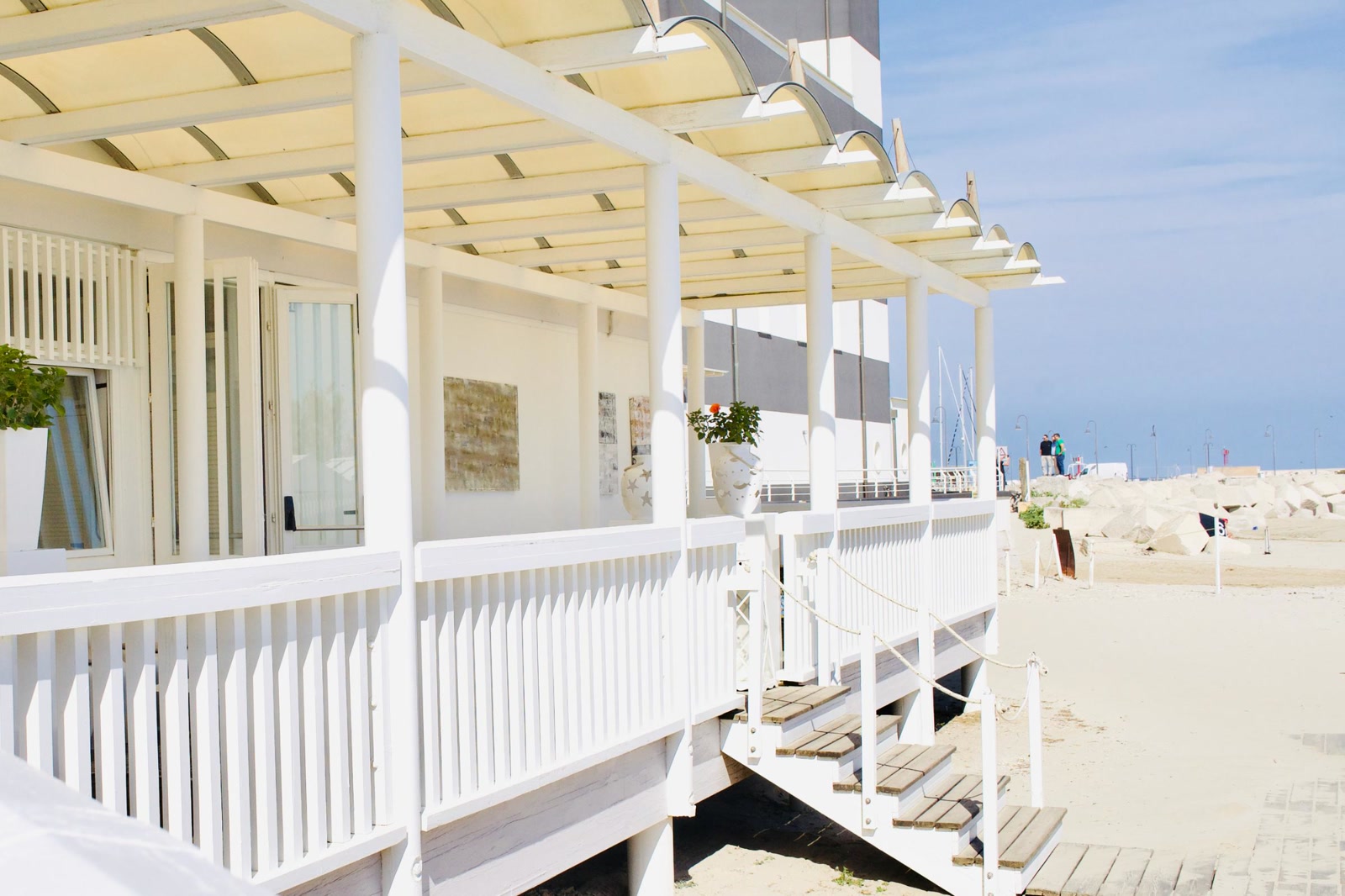
The easiest way to misread Uliassi is to treat it as one more Italian temple where the hard part is already done because the stars are on the door. That reading misses the more interesting achievement. Uliassi is persuasive in 2026 because it still feels like a house by the sea before it feels like an institution. The official homepage keeps insisting on that balance: elegant and unpretentious, cozy and classy, family-owned, set in Senigallia where the beach meets the channel, with a cuisine inspired by both sea and earth and aimed at recovering flavors, stories, and memory.[1]
As of April 8, 2026, the official menu makes the restaurant's internal structure unusually legible. Uliassi is publicly running The Classics, The Lab, and Wild Game tasting menus at EUR280, plus an Easy Classic at EUR260 chosen by Catia, and the house states that tasting menus are intended for the whole table because of their preparation complexity.[2] That combination is the real reason the place matters. Uliassi has spent decades learning how to keep warmth, memory, and family hospitality on the surface while building a menu system strong enough to absorb serious experimentation underneath.[1][2][3][4]
The 50 Best profile from July 29, 2022, which called Uliassi the world's No. 12 restaurant and a "most unusual" one, recognized exactly that contradiction: culinary excellence in a setting that still carries the spirit of a beach shack rather than a palace.[6] Seen now, that is not a contradiction at all. It is the house style.
1. The Adriatic location is not backdrop; it is the restaurant's first language
The official homepage is direct about what kind of cuisine Uliassi wants to make. The restaurant says it is deeply rooted in the traditions of the Adriatic Riviera, then adds that those roots are continually enriched by travel, encounters, and new suggestions.[1] That sentence explains more than the usual local-produce boilerplate. It tells you the house does not use locality as a purity test. It uses locality as a base note.
The history and Mauro pages make that base feel lived rather than invented. Mauro and Catia Uliassi say they were born and raised in Senigallia and opened the restaurant on May 27, 1990, when it was little more than a seaside shanty.[3][5] Mauro's own recollection pushes the image even further: a painted-and-stuccoed little waterfront shack, five people in the kitchen, three in the dining room, and the exhilaration of a pioneering phase that still feels vivid to him decades later.[5] The 50 Best story tracks the same origin from outside, describing an old beach hut on Italy's eastern coast overlooking the Adriatic Sea.[6]
That matters because Uliassi's food does not read like abstract luxury detached from place. Even on the current menus, the ingredient and flavor language keeps returning to marine life, citrus, herbs, smoke, and memory triggers that feel coastal rather than metropolitan for effect.[2] The sea here is not decor. It is the thing the restaurant keeps translating.
2. Family warmth is not branding; it is the operating system
Many restaurants describe themselves as family-run after the family has become mostly symbolic. Uliassi's current pages suggest something denser than that. Catia says she grew up in her parents' coffee shop, learned dedication and the art of connecting with people there, and now organizes the front of house so guests feel as welcome as if they were at home, "our home beside the sea."[4] The history page extends that picture forward: the restaurant now has a team of more than 35, with Filippo Uliassi and Elisa Cao overseeing service and the waitstaff, while Mauro Paolini runs the kitchen with a wider team of section leaders.[3]
That is the key to the room. Uliassi is no longer a sibling operation in the small, improvised sense it was in 1990, but it still wants to feel like one in the guest experience. The restaurant's own history page says they follow the same approach as thirty years ago, built around curiosity and enthusiasm, and that the house remains their home beside the sea where guests are cared for like family.[3] That sentence could sound sentimental in a weaker restaurant. Here it lands because the menu architecture, staffing continuity, and room tone all support it.
Catia's role is especially revealing. She is not presented as a ceremonial co-founder frozen in legacy amber. She still organizes the welcome, edits one of the menu paths through the Easy Classic, and brings her own aesthetic life into the room through paintings shown in the restaurant and beyond.[2][4] Uliassi's warmth is therefore not a soft coating added after the serious work. It is one of the house's serious disciplines.
3. The smartest thing on the menu is the relationship between the Classics and the Lab
The current menu page is the clearest proof that Uliassi has solved a problem many high-end restaurants never solve: how to keep innovation visible without making diners feel like they are paying to attend R&D. The house explains The Classics as its Hall of Fame, built from the most iconic dishes to come out of the creative laboratory, and explicitly recommends that path to first-time guests.[2] That is already an intelligent move. It turns legacy into an entry point rather than a museum.
Then the page gives you the counterweight. The Lab is framed as the latest creations from the kitchen laboratory, dishes generated through the research and experimentation the team immerses itself in before each new season.[2] The current Lab menu makes the point in plate form: red prawns with green curry, pepper and kaffir lime, razor clam sauce with peach blossoms and Siltimur oil, spaghetti with butter, anchovies, hops and blueberries, and mezzamaniche caciopepe and pear.[2] These dishes do not reject Adriatic memory; they pressure it from new angles.
By contrast, the current Classics sequence reads like a map of why the restaurant became beloved in the first place: red shrimp with orange peel, ginger, shrimp brain and cinnamon, sole, bergamot and lettuce, Rimini fest squid skewer and citronette in liquid nitrogen, and smoke spaghetti, clams and roasted cherry tomatoes.[2] The ingredients still sound coastal and recognizably Uliassi, but they also show how long the kitchen has been willing to push contrast, perfume, and temperature.
This is why the Easy Classic matters more than its lower price gap might suggest. A six-course version "chosen by Catia" is a humane editorial gesture.[2] It tells you Uliassi understands that not every diner needs the most complete statement in order to grasp the house. The restaurant is protecting readability, not just prestige.
4. Why Uliassi feels especially durable right now
What makes Uliassi rare in 2026 is not only that it remains a famous Italian restaurant by the sea. It is that the restaurant still knows how to distribute authority across place, family, and menu design instead of loading everything onto one heroic-chef myth.
Mauro's page helps here because it recalls a life that did not begin as a straight-line march into gastronomic priesthood: hospitality school, teaching, an unexpected discovery of cooking talent, then the opening of the waterfront restaurant with his sister.[5] The 50 Best story echoes that improvisational origin, but from the vantage point of global recognition.[6] The official history page then shows what the improvisation became: a stable multi-decade team, a room managed by family and trusted lieutenants, and a menu system that lets old dishes and new research keep talking to each other.[2][3]
That is why Uliassi still feels worth reading as a profile rather than a trophy case. Book it if you want a three-star meal that keeps the Adriatic in the room and lets hospitality stay visibly human. Book it if you like the idea of a restaurant where experimentation is annual, deliberate, and filtered through memory rather than novelty panic. Think twice only if what you want is choreographed distance or old-school luxury stiffness. Uliassi's achievement is subtler. It has become world-famous without ever fully abandoning the manners of a house by the sea.[1][2][3][6]
Sources
- Uliassi official homepage, covering the beach-and-channel location in Senigallia, the family-owned identity, the sea-and-earth philosophy, and the official seaside image used here.
- Uliassi official menu page, covering the current Classics, Easy Classic, Lab, and Wild Game menu structures, prices, whole-table tasting-menu rule, and current dish list.
- Uliassi official history page, covering the May 27, 1990 opening, the early seaside-shanty phase, the current 35-plus-person team, and the current family/service structure.
- Uliassi, "Catia Uliassi" - official page covering Catia's coffee-shop upbringing, her front-of-house role, the home's-beside-the-sea hospitality framing, and her ongoing place in the restaurant's identity.
- Uliassi, "Mauro Uliassi" - official page covering Mauro's path from hospitality school and teaching into cooking, and his recollection of the original waterfront shack opening with Catia.
- The World's 50 Best Restaurants, "Inside Uliassi: a most unusual 12th best restaurant in the world" (July 29, 2022) - feature on the restaurant's Highest New Entry moment, beach-shack beginnings, and unusual balance of global prestige with informal setting.