Testing, inspection, and certification companies are no longer being priced only as quiet professional-services compounders. The new signal is that strategic and private buyers are willing to pay for scarce assurance assets. The harder question is whether public investors should follow that scarcity logic, or wait for proof that organic growth and margin expansion can keep compounding without a bid premium.
The mechanism is simple but easy to understate. TIC groups sell trust infrastructure: product tests, factory audits, certification, industrial inspection, food safety, cyber assurance, sustainability verification, and specialist lab work. Demand rises when supply chains fragment, regulation becomes more technical, products carry more electronics and software, and customers need third-party proof rather than internal claims. That makes the sector defensive, but not risk-free. It still has wage inflation, lab utilization, contract timing, foreign exchange, acquisition integration, and end-market cycles.
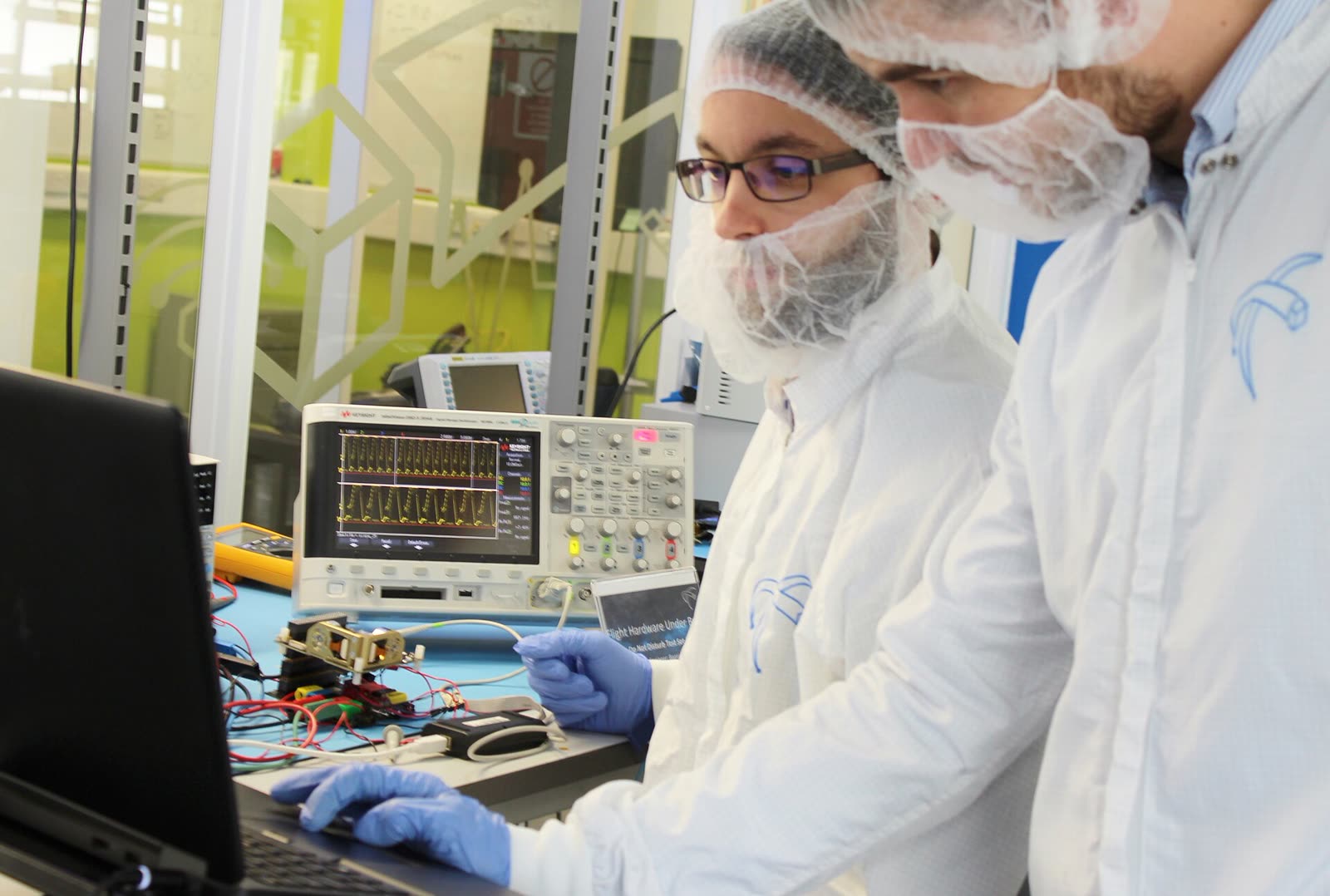
Image context: the cover uses a real Wikimedia Commons photograph of cleanroom engineers working with test equipment. It is not a chart or generated visual. It fits because the investment case is physical before it is financial: skilled people and calibrated instruments have to convert complexity into repeatable assurance work before margin can appear.[6]
What Is Priced
The priced part is quality. SGS says first-quarter 2026 sales reached CHF 1.747 billion, with 5.3% organic growth, while Testing & Inspection grew 5.0% organically and Business Assurance grew 7.4%.[1] Bureau Veritas reported first-quarter revenue of EUR 1.547 billion, up 4.5% organically, with faster growth in Marine & Offshore and Buildings & Infrastructure offsetting a more difficult Industry backdrop.[2] Intertek's April trading statement put first-quarter like-for-like revenue growth at 5.4% at constant currency, with Corporate Assurance up 10.8%.[3]
Those numbers justify the sector's premium reputation. A normal industrial service company needs volume. A strong TIC company can also get help from regulatory intensity, certification renewal, compliance outsourcing, and the client's need to make claims credible to buyers, regulators, insurers, lenders, or boards. In that sense, the sector sells an operating necessity that often survives a softer macro tape.
The Intertek approach turns that quality into a market price. On May 13, Intertek disclosed that EQT had made a final conditional proposal at GBP 60.00 per share in cash, with shareholders also potentially receiving the fiscal 2025 final dividend of up to 107.7 pence per share.[4] The UK Takeover Panel disclosure table showed Intertek still in an offer period, with EQT's Rule 2.6 deadline at 17:00 on June 11, 2026.[5] As of this article's creation on June 9, that makes the bid a live valuation marker, not a completed transaction.
What Is New
The new part is not that TIC is a good business. Investors already knew that. The new part is the narrowing of the burden of proof. Once a buyer is willing to pay cash for Intertek at a material premium, the public comps have to answer a sharper question: are they worth owning for their own growth and cash conversion, or are investors mostly hoping for scarcity value to leak across the group?
SGS is trying to answer with portfolio action. Its Q1 release points to Digital Trust, AI-related assurance, connectivity testing, cybersecurity, industrial inspection, and bolt-on acquisitions. It also confirmed a 2026 outlook of 5% to 7% organic sales growth, another 5% to 7% from acquisitions, and an adjusted operating income margin of at least 16%.[1] That is a clean public-market pitch: growth is not supposed to rely on one end-market, and acquisition scope is meant to tilt the portfolio toward higher-growth, higher-margin niches.
Bureau Veritas gives a more mixed but useful read. Organic growth was still positive, and the company continued to emphasize higher-growth and higher-margin portfolio moves, including mission-critical assets such as data centers and semiconductor fabs.[2] But it also updated 2026 guidance from mid-to-high single-digit organic revenue growth to mid-single-digit growth because geopolitics, macro uncertainty, Middle East disruption, and a Government Services review changed the near-term slope.[2] That is the counterpoint to a simple scarcity trade: even high-quality assurance demand can be interrupted by contracts, regions, and portfolio cleanup.
Intertek sits between those readings. Its own Q1 statement pointed to mid-single-digit like-for-like growth, margin progression, strong earnings growth, and free cash flow, but the strategic-review context and the EQT proposal show why outside buyers may see value trapped inside structure as well as operations.[3][4] The relevant issue for the sector is not only whether labs can grow. It is whether the market will reward that growth while listed companies carry complexity that private owners think they can simplify.
The Counterweight
The strongest pushback is that the bid may over-teach the lesson. One live takeover approach can make every comparable asset look scarce for a few weeks, even when the underlying businesses still need steady execution. TIC companies are people-and-process businesses with real fixed investment in labs, accreditations, and local networks. If wage inflation rises, lab utilization softens, acquired businesses miss integration targets, or clients delay discretionary assurance work, the multiple can look too generous quickly.
There is also a mix problem. "Assurance" sounds uniformly attractive, but the segments do not all behave the same way. Cybersecurity and AI governance can grow fast. Government services can be politically messy. Commodity testing can follow trade and resource cycles. Consumer product testing can feel the timing of retail inventories and regulation. Industrial inspection can be project-heavy. The sector deserves a premium only if management teams keep moving capital toward the better parts without letting the slower pieces dilute group returns.
The Falsifier
The bullish scarcity thesis is wrong if organic growth holds around the mid-single digits but margins stop improving. Concretely, if SGS delivers growth without sustaining its at-least-16% adjusted operating income margin target, Bureau Veritas keeps cutting growth expectations or fails to expand adjusted margin at constant exchange rates, and Intertek's takeover process ends without either a firm offer or a convincing standalone value case, then the rerate was mostly bid excitement rather than durable earnings power.[1][2][3][4][5]
The positive proof is the reverse: assurance-heavy categories keep outgrowing the group, bolt-on acquisitions add revenue without depressing margin, and the Intertek deadline resolves in a way that leaves investors with a clearer benchmark for what a scaled TIC platform is worth.
Watchlist
- June 11, 2026: EQT's Rule 2.6 deadline for Intertek is the cleanest near-term valuation event.[5]
- SGS half-year results on July 24, 2026: the key test is whether Digital Trust, Business Assurance, and acquisition scope support the 2026 margin and growth targets.[1]
- Bureau Veritas's next update: the important line is whether mid-single-digit growth remains only a temporary reset or becomes a weaker run rate.[2]
- Intertek's July 31, 2026 half-year result if no deal closes: investors will need proof that the strategic review can unlock value without a buyer setting the price.[3][4]
Testing labs deserve their scarcity premium only when the scarcity converts into numbers. The sector has the right long-term demand drivers: regulation, supply-chain verification, cyber and AI trust, food and health safety, and mission-critical industrial assets. The 2026 question is narrower. A cash bid can reveal value, but the rerate has to be earned by organic growth, mix upgrade, and margin discipline after the takeover headlines fade.
Sources
- SGS, "First Quarter 2026 Sales Update" (April 23, 2026) - Q1 sales, organic growth, division growth, Digital Trust, acquisition scope, and 2026 outlook.
- Bureau Veritas, "A steady organic revenue growth in the first quarter 2026" (April 22, 2026) - Q1 revenue, organic growth by business, portfolio comments, and updated 2026 outlook.
- Intertek, "Strategic Review Initiation and Trading Statement" (April 14, 2026) - Q1 like-for-like revenue growth, divisional momentum, strategic-review framing, and 2026 guidance.
- Intertek via Investegate, "Statement re final proposal from EQT" (May 13, 2026) - final conditional proposal of GBP 60.00 per share and FY25 dividend treatment.
- The Takeover Panel, "Disclosure Table" (accessed June 9, 2026) - live offer-period entry and Rule 2.6 deadline for Intertek/EQT.
- Wikimedia Commons, "File:Test Engineers in the cleanroom.jpg" - source page for the real laboratory photograph used as the article image.