Cold-storage REITs are already priced as if the worst of the food-inventory destocking cycle is easing. The new question is narrower: whether occupancy stabilization can actually become margin repair once power, labor, speculative capacity, and interest costs keep pressing on the same income statement.
That matters because this is not ordinary warehouse real estate with colder air. Temperature-controlled logistics turns a building into an operating system. The landlord is exposed to pallets, dwell time, blast-freezing demand, truck scheduling, labor productivity, refrigeration reliability, energy price, food-production cycles, and customer mix. A warmer demand narrative helps the stocks only if it converts into higher occupied pallets and better revenue per pallet faster than the cost base rises.
The sector's long-term story is still attractive. Grand View Research estimates the global cold-storage market at $185.75 billion in 2025 and projects 11.8% compound annual growth from 2026 to 2033, with food and beverages still the dominant application.[5] GCCA's 2026 ranking also shows the largest operators getting bigger: the global top 25 temperature-controlled providers operate 7.76 billion cubic feet of space, up 6.3% from 2025, and Lineage plus Americold account for 58.1% of that top-25 capacity.[3]
The stock question is not whether refrigerated logistics is important. It is whether that importance is scarce enough, and disciplined enough, to earn through a soft utilization period.
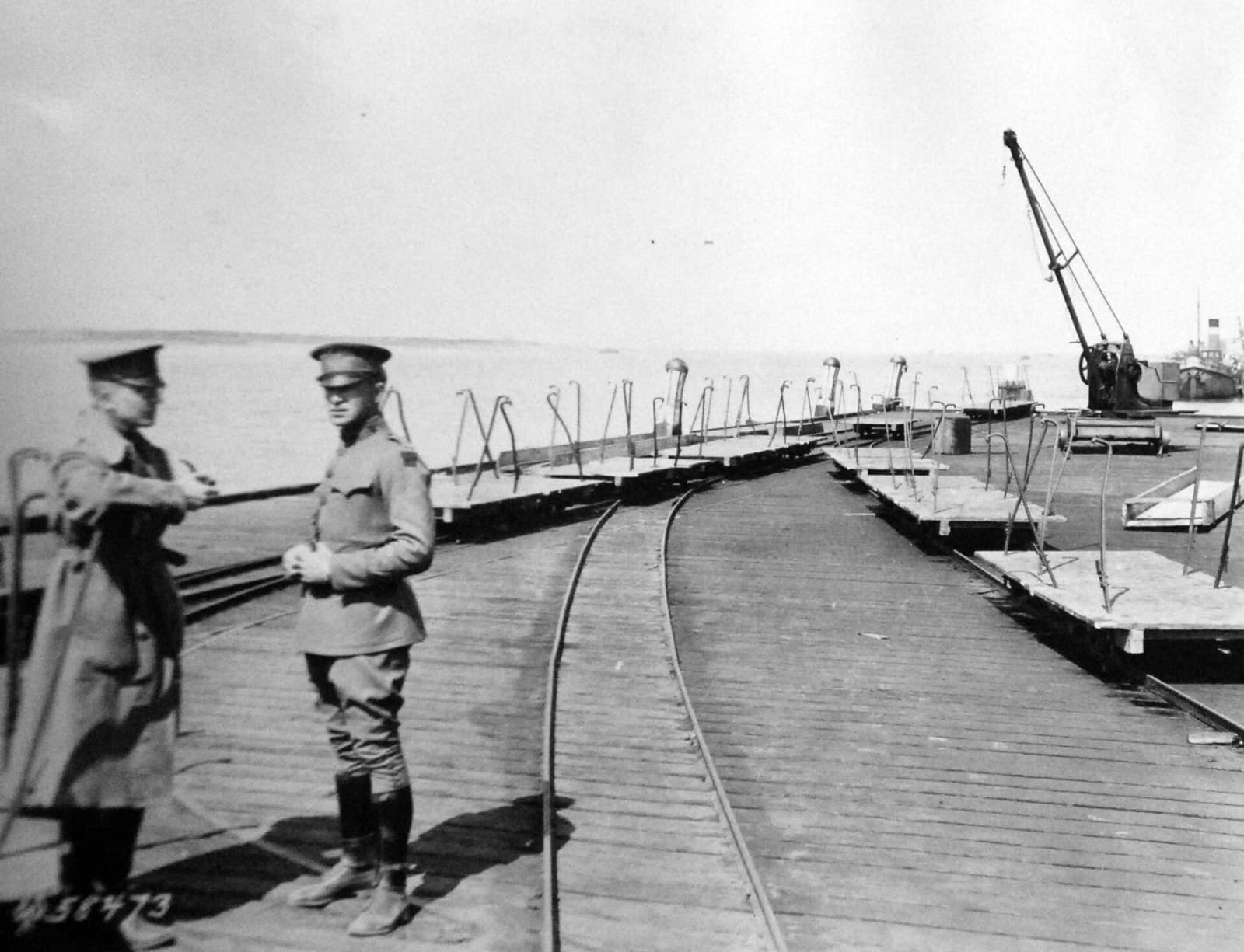
Image context: the cover uses a real U.S. Army Signal Corps archival photograph of refrigerated food cargo being unloaded in 1919 for transfer to cold storage. It fits the article because the finance problem is still physical: cold-chain value comes from capacity, handling, temperature control, and timing, not from a generic property label.[6]
Base Case: Stabilization, Not A Snapback
The cleanest base case is slow stabilization. Lineage's first-quarter 2026 supplemental shows total global warehousing segment revenue up 4.3% to $985 million, but global warehousing NOI rose only 1.1% to $364 million as labor increased 7.0% and power increased 10.2%.[2] That is the whole sector debate in one table: revenue can grow while operating leverage stays muted.
Lineage's same-warehouse pool looks more stable than dramatic. Same-warehouse revenue was flat at $908 million, same-warehouse NOI slipped 0.9%, economic occupancy was 82.0% versus 82.2% a year earlier, and storage revenue per economic occupied pallet rose 2.1%.[2] That is not collapse. It is also not a clean rent-growth cycle yet. The company is getting some price per occupied pallet, but not enough to make the margin line expand.
Americold tells a rougher version of the same story. First-quarter 2026 revenue was almost flat at $629.9 million, adjusted FFO per share fell to $0.29 from $0.34, and Core EBITDA margin declined to 21.7% from 23.5%.[1] Management said physical occupancy had largely stabilized, but the release also attributed lower warehouse volumes to a competitive environment, consumer conservatism, changed food production levels, and added capacity from speculative development.[1]
The base case therefore needs modesty. The thaw is real if pallet occupancy stops falling, if pricing adjustments keep holding, and if throughput volumes quit acting like a drag. But a REIT multiple should not pay upfront for a full-margin rebound until the quarter-by-quarter proof starts moving from "less bad" to "operating leverage."
Upside Case: Scarce Cold Space Gets Repriced
The bullish branch is that cold storage becomes scarce again before operators overbuild it. This is plausible because the category has hard barriers: refrigeration systems are expensive, food customers need reliability, labor scheduling is specialized, and old infrastructure is not easily converted into modern high-throughput capacity. Food Logistics cites industry concerns around aging U.S. cold-storage infrastructure, rising infrastructure costs, capacity constraints, and service variability.[4]
If that constraint starts to bite, the large platforms have a useful position. GCCA's ranking shows scale concentrating at the top, with Lineage leading the global list at over 3 billion cubic feet and Americold second at 1.4 billion cubic feet.[3] Scale does not guarantee pricing power, but it gives customers a reason to consolidate supply-chain relationships when reliability matters more than the lowest quoted storage rate.
In the upside branch, the same numbers that look mediocre today become the setup. Lineage's same-warehouse economic occupancy at 82.0% leaves room to absorb more pallets without proportionate new-site cost.[2] Americold's 224 operating facilities and roughly 1.4 billion refrigerated cubic feet give it an installed network that can benefit if food manufacturers normalize inventory and stop pushing volumes through a weaker production cycle.[1] If revenue per pallet continues rising while occupancy recovers, the incremental pallet should carry better margin than the average pallet did in Q1.
The stock market would not need heroic market-growth math in that scenario. It would need visible operating leverage: higher same-warehouse occupancy, stable service revenue, power cost contained as a percentage of revenue, and new developments ramping from drag to contribution.
Downside Case: Capacity And Costs Eat The Thaw
The downside branch is that cold storage remains strategically important but financially frustrating. This is a common trap in infrastructure investing: a service can be essential while the public equity earns only mediocre returns because too much capital chases the theme, customers keep bargaining hard, and costs reset faster than rents.
Americold's first-quarter explanation is the warning label. Lower warehouse volumes were tied not only to consumer conservatism and food production levels but also to increased capacity associated with speculative development.[1] That detail matters because the sector's long-term growth can encourage the exact supply response that weakens near-term pricing. More cubic feet are good for customers. They are less good for owners if they arrive before demand fully absorbs them.
Lineage's non-same warehouse table also shows the development math is not free. Non-same warehouse revenue more than doubled, but non-same warehouse margin was only 22.1% versus 27.8% a year earlier, with power and labor costs rising sharply in that pool.[2] Newer or recently added capacity can grow fast and still dilute margins during ramp.
The other risk is energy. Refrigerated warehouses cannot treat power as a rounding error. In Lineage's global warehousing segment, power cost rose 10.2% year over year in Q1, faster than warehousing revenue.[2] Americold similarly identified higher energy costs as a driver of lower warehouse NOI and margin.[1] If power inflation stays sticky, occupancy recovery has to be stronger just to preserve the same margin.
The Falsifier
The constructive thesis is wrong if occupancy stabilizes but margins do not. Concretely, if Lineage and Americold show two more quarters of flat-to-better occupied pallets while same-warehouse NOI, Core EBITDA margin, or AFFO per share keeps deteriorating, then the market should stop treating the group as a recovery trade. That would mean the cost stack and competitive capacity are absorbing the improvement before shareholders see it.
The cleaner positive proof is the reverse: same-warehouse occupancy moves up, storage revenue per pallet holds, power cost growth slows, and newer facilities narrow the margin gap. Without that sequence, the sector is still a good cold-chain story but not yet a clean equity story.
Watchlist
- Lineage same-warehouse occupancy: the Q1 baseline is 82.0% economic occupancy and 76.4% physical occupancy; the next reports need improvement without sacrificing revenue per pallet.[2]
- Americold AFFO and Core EBITDA margin: Q1 AFFO per share of $0.29 and Core EBITDA margin of 21.7% are the recovery floor to watch.[1]
- Power-cost inflation: refrigerated warehouses need power growth to stop outrunning revenue growth; otherwise occupancy recovery will not drop through.[1][2]
- Capacity discipline: GCCA's top-25 capacity growth and the Lineage-Americold concentration data should be read against development commentary, not as bullish scale by itself.[3]
Cold-storage REITs deserve attention because the assets sit inside the food system's hard plumbing. But in 2026 the investment case is not simply "people eat, so refrigerated warehouses win." The sharper case is conditional: own the thaw only if occupied pallets, pricing, and cost control begin moving together. The next good quarter has to be about margin, not just mood.
Sources
- Americold Realty Trust, "Americold Announces First Quarter 2026 Results" (May 7, 2026) - revenue, AFFO, Core EBITDA, margin, occupancy commentary, energy-cost pressure, and facility/cubic-foot footprint.
- Lineage, "First Quarter 2026 Earnings Presentation and Supplemental Information" (May 2026 PDF) - warehouse revenue, NOI, occupancy, revenue per pallet, labor cost, power cost, and same/non-same warehouse performance tables.
- Refrigerated & Frozen Foods, "GCCA Releases Cold Storage Rankings" (April 28, 2026) - 2026 top-25 capacity, capacity growth, Lineage and Americold rankings, and concentration data.
- Food Logistics, "Cold Storage's Crossroads: Operational Pressures and Emerging Models Reshaping the Frozen Food Sector" (2026) - industry discussion of aging infrastructure, capacity constraints, infrastructure costs, and service variability.
- Grand View Research, "Cold Storage Market Size & Share, 2026-2033" - market size, growth forecast, regional share, and application/category context.
- Wikimedia Commons, "File:Wm. H. Miller & Company dock where refrigerator transport brought food for the AEF, WWI (31981830084).jpg" - source page for the archival refrigerated-cargo photograph used as the article image.