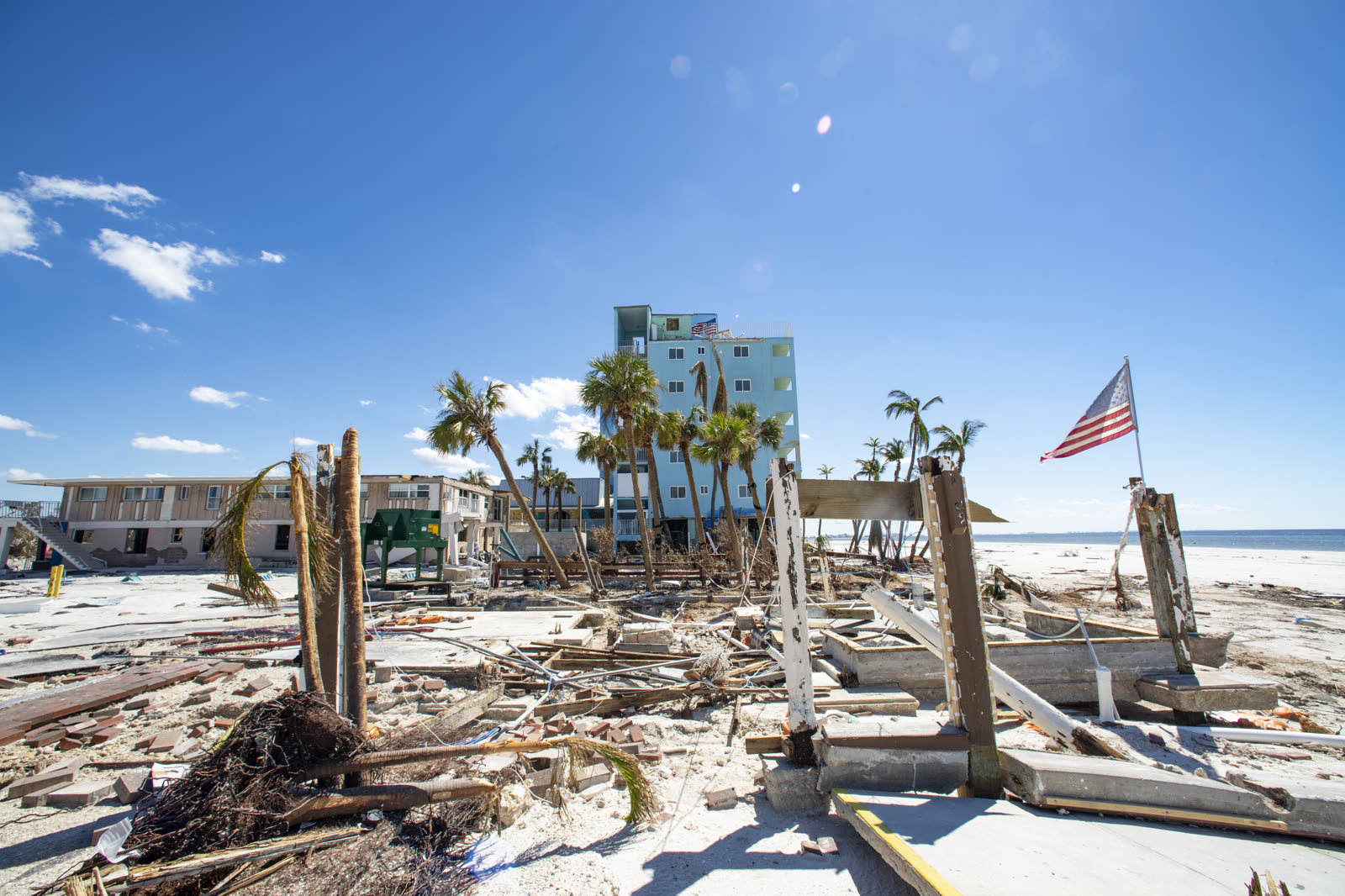
Catastrophe-bond funds no longer look like a hidden corner of fixed income. Priced is the basic pitch: floating-rate collateral, insurance-linked spreads, and low direct sensitivity to equity or corporate-credit cycles after three unusually strong return years. New is that the rerating has already happened. By early 2026, the cat-bond market had record issuance behind it, a record outstanding base, and enough fresh money competing for risk that the next decision is less "discover the asset class" than "decide whether the remaining carry still pays for peak-peril tail risk."[1][2][3]
The market's scale is now impossible to treat as niche. Artemis tracked $25.6 billion of full 144A and private cat-bond issuance in 2025, up 45% year over year, with the outstanding market ending 2025 at $61.3 billion.[1] Momentum did not stop at year-end: first-quarter 2026 issuance reached $6.7 billion across a record 35 transactions and 56 tranches, lifting outstanding risk capital to $63.9 billion by March 31.[1] Aon reaches a similar conclusion from the broker side, describing more than $24 billion of 2025 property-cat bond issuance across 74 sponsors and about $59 billion outstanding as the year closed.[3]
That matters because scale changes the investor question. A small, capacity-starved market can produce outsized premia after a shock. A larger, bid-heavy market can still be attractive, but it starts behaving more like a real allocation sleeve: entry price, peril mix, liquidity, manager selection, and loss modelling all matter more.
The carry is real, but less scarce
Cat bonds earned their post-2022 attention honestly. Hurricane Ian hurt the market in 2022, then 2023, 2024, and 2025 rewarded investors who were willing to accept modelled natural-catastrophe risk when spreads were wide and collateral yields were elevated. Swiss Re's February 2026 ILS review says $24.7 billion of ILS notional was issued in 2025, the highest annual volume in the market's history, while outstanding notional nearly crossed $60 billion at year-end.[2] The same review describes strong demand, benign market losses, and continued domination by U.S. wind exposure, with more activity in cyber, wildfire-only, severe-convective-storm-only, and other non-traditional risks.[2]
The bullish version is straightforward. Cat bonds still pay investors for a risk that is not the same as a recessionary default cycle. A hurricane, earthquake, wildfire, or severe convective-storm loss does not arrive because EBITDA margins rolled over. Coupons are usually built from a money-market collateral return plus an insurance spread, so the asset class can look useful when conventional bonds are stuck between rate uncertainty and tight corporate spreads.
The caution is equally straightforward. A trade can remain good and still be less good than it was. Aon says abundant third-party capital helped clients win meaningful pricing reductions into late 2025.[3] Swiss Re's ILS review points to capital inflows and high demand.[2] Artemis notes that the first quarter of 2026 grew the market by another 4% from the end of 2025.[1] Those are healthy market signals, but they also explain why investors should not mechanically extrapolate double-digit return years into the next cycle.
Why 2026 is a selection year
The central finance question is not whether cat bonds are "safe." They are explicitly designed to lose principal when defined catastrophe events breach attachment and trigger terms. The better question is whether the spread paid today is adequate for the layer, peril, geography, trigger, and season being bought.
That is especially important because the loss backdrop is not calm beneath the surface. Swiss Re Institute estimates $107 billion of insured natural-catastrophe losses in 2025 across 190 events, with secondary perils such as wildfire, severe convective storm, and flood contributing a record 92% of global insured nat-cat losses.[4] The absence of a major U.S. hurricane landfall helped the cat-bond tape, but it did not prove that climate- and exposure-driven insured loss pressure has eased. Swiss Re also models a 2026 peak-loss scenario as high as $320 billion of insured losses.[4]
That creates a useful tension. On one side, Colorado State University's April 2026 Atlantic forecast calls for a somewhat below-normal season: 13 named storms, 6 hurricanes, 2 major hurricanes, and accumulated cyclone energy of 90, below the 1991-2020 average of 123.[5] On the other side, seasonal counts do not map cleanly to insured loss. One landfall in the wrong place can matter more than a busy basin that stays offshore. Cat-bond funds therefore need to be read as priced portfolios of event exposure, not as generic bets on the number of storms.
The strongest counterweight
The constructive counterargument is that cat bonds may still be under-owned relative to their role in diversified portfolios. The market is larger, but it remains tiny beside global investment-grade credit, high yield, or Treasuries. If managers can diversify across sponsors, perils, maturities, and trigger types, the asset class can still offer carry that is not primarily compensation for corporate leverage. That is why fresh issuance is not automatically bearish. More deals can mean better portfolio construction, more liquidity, and less concentration in a handful of legacy names.
There is also a sponsor-side reason issuance can stay durable. Insurers and reinsurers are not using cat bonds only because they are fashionable. They use them because fully collateralized capital can lock in multi-year protection, diversify counterparty exposure, and sit beside traditional reinsurance at renewal. The Q2 maturity calendar is the stress test: Artemis says $7.3 billion of maturities were scheduled between April and the end of June 2026, which means the market needs a heavy issuance quarter merely to maintain size.[1] If that refinancing is absorbed cleanly, it supports the case that cat bonds have become recurring insurance-market infrastructure rather than a yield-tourist boom.
Falsifier
The thesis breaks if the market starts paying less spread while accepting worse structure. A clean falsifier would be a 2026 pattern in which new deals clear tighter, attachment points move lower, peak U.S. wind concentration rises, secondary-peril terms loosen, and one mid-sized loss event traps capital across more funds than investors expected. In that case, the asset class would still diversify corporate credit, but the entry price would no longer compensate enough for the physical and modelling risk embedded in the bonds.[1][2][4]
The opposite would strengthen the thesis: issuance remains broad, spreads stop compressing, managers keep discipline around perils and triggers, and loss events stay within modelled expectations without widespread surprise impairment.
Watchlist
- Q2 2026 issuance versus the $7.3 billion maturity wall: if supply only rolls maturities, market growth slows; if new money absorbs both maturities and fresh risk, the demand signal remains strong.[1]
- Atlantic season updates after June 1: the initial CSU forecast is below normal, but landfall location and intensity matter more to cat-bond losses than basin storm counts alone.[5]
- Secondary-peril structures: wildfire and severe-convective-storm risk are no longer background noise after 2025's loss mix.[2][4]
- Spread discipline: the key question is whether investors still get paid for event risk after 2023-2025 performance pulled more capital into the trade.[2][3]
The practical conclusion is balanced. Cat-bond funds can still earn a place in a portfolio because they are paid for insurance event risk rather than ordinary credit beta. But the easy argument has expired. After record issuance, record market size, and strong recent returns, 2026 is about selectivity: buy the carry only where the structure, attachment, peril mix, and manager discipline still justify the physical tail risk.
Sources
- Artemis, "Catastrophe bond momentum persists in Q1 2026 with $6.7bn of risk capital issued: Report" (April 1, 2026) - Q1 2026 issuance, transaction count, outstanding market size, 2025 issuance records, and Q2 maturity context.
- Swiss Re, "ILS market insights: February 2026" (February 23, 2026) - 2025 ILS issuance, outstanding notional, capital inflows, risk mix, demand backdrop, and market-performance context.
- Aon, Reinsurance Market Dynamics (January 2026) - 2025 alternative-capital growth, property-cat bond issuance, sponsor count, outstanding cat-bond volume, and reinsurance-pricing context.
- Swiss Re Institute, "Wildfires, storms, floods contribute to record 92% of global insured losses in 2025" (March 19, 2026) - insured natural-catastrophe losses, secondary-peril share, severe-convective-storm losses, and 2026 peak-loss scenario.
- Colorado State University Tropical Meteorology Project, "Seasonal Hurricane Forecasting" (initial 2026 forecast released April 9, 2026) - named-storm, hurricane, major-hurricane, and ACE forecast parameters.
- Wikimedia Commons, "File:American flag stands in the wake of Hurricane Ian at Fort Myers Beach, Florida.jpg" - source page for the lead U.S. Air National Guard photograph.