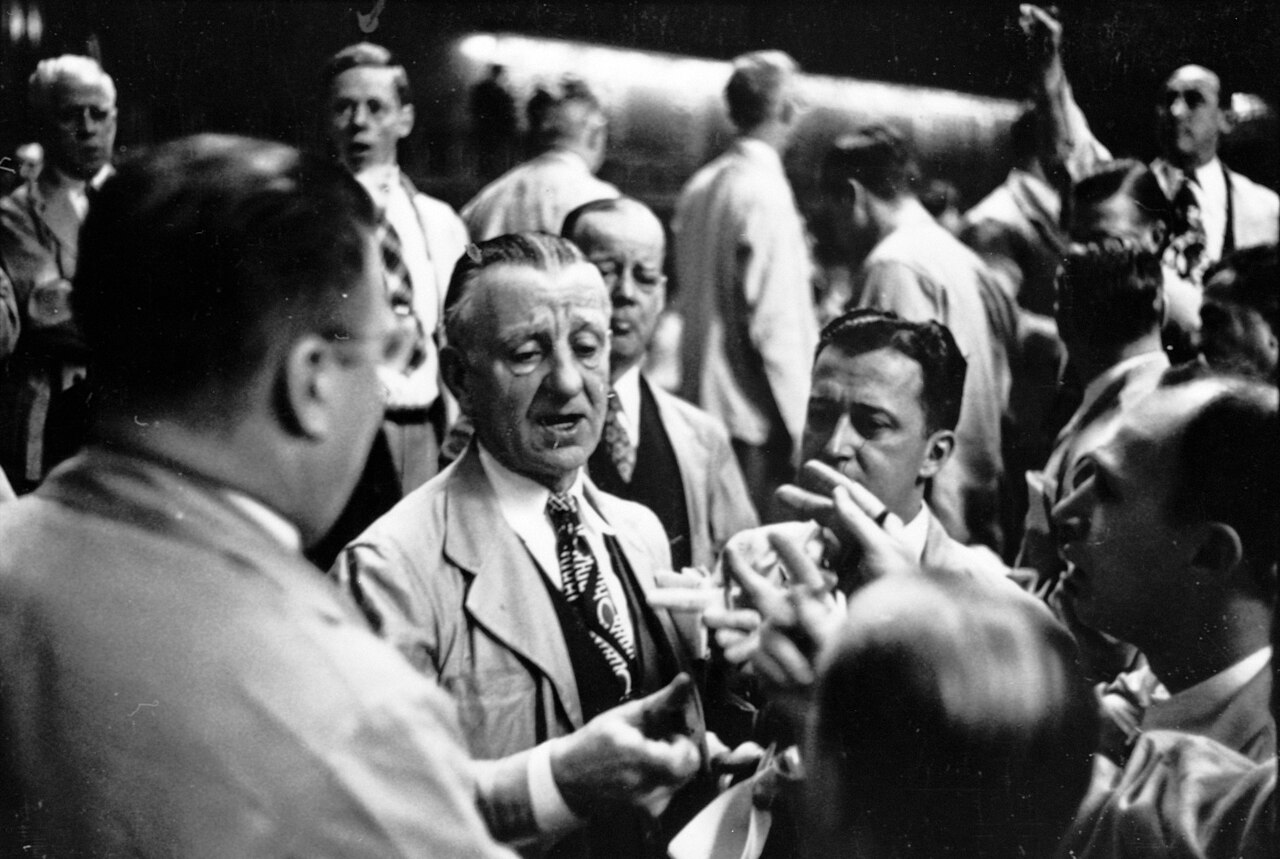
The easy 0DTE trade is the headline: same-day options are everywhere, so the market must be one bad afternoon from a self-reinforcing crash. That is too simple. Priced is that zero-days-to-expiry options have already become a core part of U.S. options volume. New is that the better 2026 question is not whether the product is large, but whether the flow becomes one-sided enough to turn intraday hedging from a liquidity service into a liquidity demand shock.[1][2][4]
Cboe's 2025 industry review shows the scale clearly. U.S. listed options posted a sixth consecutive record year, with average daily trading of 61 million contracts and 21 single days above 70 million contracts.[1] Inside that growth, SPX 0DTE options averaged 2.3 million contracts daily and made up 59% of SPX volume.[1] SIFMA's May 2026 market metrics put the broader same-day-expiry share at almost 30% of total options volume in March 2026, up from 18% in January 2023.[4]
That is a structural change, not a fad. But size alone does not settle direction. The investment problem is conditional: if 0DTE flow is balanced and mostly defined-risk, market makers can intermediate it without becoming forced sellers into every dip. If flow turns crowded, levered, and short gamma into a catalyst, the same product can turn a routine index move into a harsher liquidity test.
Base Case: Big, Fast, But Still Intermediated
The base case is that 0DTE remains a large intraday instrument rather than a standing crash machine. Cboe's own market-structure read argues that more than 95% of SPX 0DTE trades are done in limited-risk form, while only 4% are naked short options.[2] That does not make the product gentle for individual traders. It does mean the system-level danger is narrower than a simple "retail sells unlimited-risk options" story.
The flow evidence also matters. In Cboe's 2025 0DTE note, retail share dropped from 57% to 47% during an early-April volatility episode, then rebounded to about 60% after volatility abated.[2] That is procyclical participation, but not proof of permanent market fragility. Cboe also estimates net market-maker gamma hedging at no more than 0.2% of SPX daily liquidity in the window it studied.[2] If that remains the neighborhood, the market can absorb a very large options tape without making the cash index hostage to it.
Academic work points in the same direction, with the important caveat that models and samples age. Adams, Fontaine, and Ornthanalai find that market-maker intermediation of S&P 500 0DTE options lowered index volatility on average in their 2019-2023 sample, estimating a decrease of 60-90 annualized basis points on days with 0DTE trading.[5] The practical lesson is not "0DTE is stabilizing forever." It is that the sign of the effect depends on who holds gamma and what hedging direction follows.
Upside Scenario: More Precision, Less Overnight Risk
The constructive scenario is that 0DTE makes risk transfer more precise. Investors who once used weekly options to express a same-day macro, earnings, or rebalance view can now buy or sell a narrower slice of time. That can reduce wasted time premium, keep hedging closer to the actual event window, and deepen listed index-option liquidity around known catalysts.
OCC data show why this channel matters. February 2026 total options volume reached 1.317 billion contracts, while index options volume rose 33.9% year over year to 115.5 million contracts.[3] The market is not merely adding speculative wrappers; it is adding listed, cleared, transparent contracts at scale. SIFMA's breakdown shows same-day activity is not confined to index products either: equity ETF options accounted for roughly 60% of the 0DTE market, single-stock options about 20%, and index options about 15%.[4]
For portfolio managers, that breadth can be useful. A desk can hedge an ETF exposure for one payroll morning, protect a single-stock event day, or monetize rich intraday implied volatility without locking up a week of exposure. For exchanges and clearing infrastructure, it means more volume, more data, and more fee pools. For brokers, it means more suitability and risk-control burden.
Downside Scenario: The Close Becomes The Stress Point
The bearish scenario is not that every 0DTE trade is reckless. It is that the product compresses decision time. Near expiration, gamma is highest around the money, liquidity can become strike-specific, and bad exits have fewer hours to repair themselves. A position that looks defined-risk at 10:00 can still force disorderly behavior at 3:45 if the trader sized it around premium collected rather than maximum loss.
SIFMA's April 2026 note gives the right warning signal. From January 2023 through April 2026, SPX option volume rose on 80% of days when the SPX fell by more than 1%, compared with 60% of days when the index rose by more than 1%.[4] SIFMA is careful not to call that causation; it may be that volatility brings options volume rather than options volume causing volatility.[4] But for risk monitoring, the ambiguity is the point. If down days consistently pull in heavier same-day option flow, liquidity providers have to handle the busiest tape exactly when underlying-market risk appetite is thinner.
This is where the watch should sit: not on the existence of 0DTE volume, but on the coupling between 0DTE volume, futures depth, dealer gamma sign, and closing-hour liquidity. A market can handle fast products. It struggles when fast products, crowded positioning, and thin exits all demand the same balance sheet at once.
Strongest Counterweight
The strongest counterweight to the bearish view is that the best available evidence still looks less explosive than the rhetoric. Cboe's limited-risk mix and small estimated hedging footprint argue against a market currently dominated by naked short-gamma retail exposure.[2] SIFMA's review of the literature reaches a similarly cautious conclusion: existing evidence suggests broader hedging effects can dampen volatility, while the product's role remains an area for ongoing observation rather than a settled verdict.[4]
That should make investors slower to use 0DTE as a universal explanation for every intraday reversal. Many forces already move the index: macro data, systematic volatility funds, dealer positioning outside same-day options, ETF flows, buybacks, rates, and ordinary earnings risk. 0DTE is now one control surface among several, not a magic key.
Falsifier
The benign scenario breaks if three things show up together. First, SPX 0DTE share stays near the 60% zone while Cboe-style evidence on limited-risk and balanced flow deteriorates.[2][4] Second, down days keep showing heavier option-volume response, but futures and ETF liquidity depth no longer absorb the hedging demand.[4] Third, academic or exchange research starts finding persistent negative-gamma amplification rather than small or dampening effects.[5]
If those conditions arrive together, the right view changes. 0DTE would no longer be mainly a precision hedging and trading tool with sharp individual risk. It would become a market-structure volatility amplifier that deserves a higher equity-risk-premium charge around data releases, month-end rebalances, and closing-hour liquidity pockets.
Watchlist
- SPX 0DTE share: whether the March 2026 around-60% SPX share is a plateau or a new base.[4]
- Flow composition: whether defined-risk structures remain dominant and naked short exposure stays small.[2]
- Down-day volume response: whether large SPX declines keep pulling higher option volume, especially near the close.[4]
- Liquidity footprint: whether exchange and academic work continues to show market-maker hedging as small or dampening rather than destabilizing.[2][5]
The practical conclusion is balanced. 0DTE options are too large to dismiss and too fast to treat casually. They can damage undisciplined accounts quickly, and they deserve serious monitoring because they concentrate risk into a single session. But the investable signal is not "0DTE equals crash." It is "watch the gamma sign, flow balance, and liquidity handoff." The market structure is manageable while those stay healthy. It becomes a problem when they line up in the wrong direction at the same time.
Sources
- Cboe, "The State of the Options Industry: 2025" - U.S. listed-options volume, SPX option volume, and 0DTE share context.
- Cboe, "0DTEs Decoded: Positioning, Trends, and Market Impact" - retail share, limited-risk trade mix, naked-short share, and estimated market-maker hedging footprint.
- OCC, "February 2026 Monthly Volume" - total, equity, ETF, and index options contract-volume data.
- SIFMA Insights, Monthly Equities and Options Market Metrics and Trends: April 2026 - 0DTE market share, underlying-asset mix, March 2026 SPX 0DTE estimate, and volume behavior on large SPX move days.
- Greg Adams, Jean-Sebastien Fontaine, and Chayawat Ornthanalai, "The Market for 0DTE: The Role of Liquidity Providers in Volatility Attenuation" (SSRN, revised June 20, 2025) - academic evidence on market-maker intermediation and volatility effects.
- Wikimedia Commons, "File:Chicago Board of Trade cph.3d02372.jpg" - source page for the 1949 Library of Congress/LOOK Magazine trading-floor photograph.