ASML's first quarter did not break the AI-capex story. It reinforced it. The company reported €8.8 billion of Q1 2026 net sales, 53.0% gross margin, and €2.8 billion of net income, then raised full-year 2026 revenue guidance to €36 billion to €40 billion from the €34 billion to €39 billion range it gave in January.[1][3] That part was the clean beat.
The narrower question is what comes next. Priced is that ASML remains the bottleneck supplier in the advanced lithography chain and is still seeing AI-linked customers accelerate capacity plans. New is that the next proof has shifted from whether demand exists at all to whether the revenue mix can stay rich as China fades and more of the story depends on EUV intensity, installed-base upgrades, and non-China advanced logic and memory spending.[1][2][3][4]
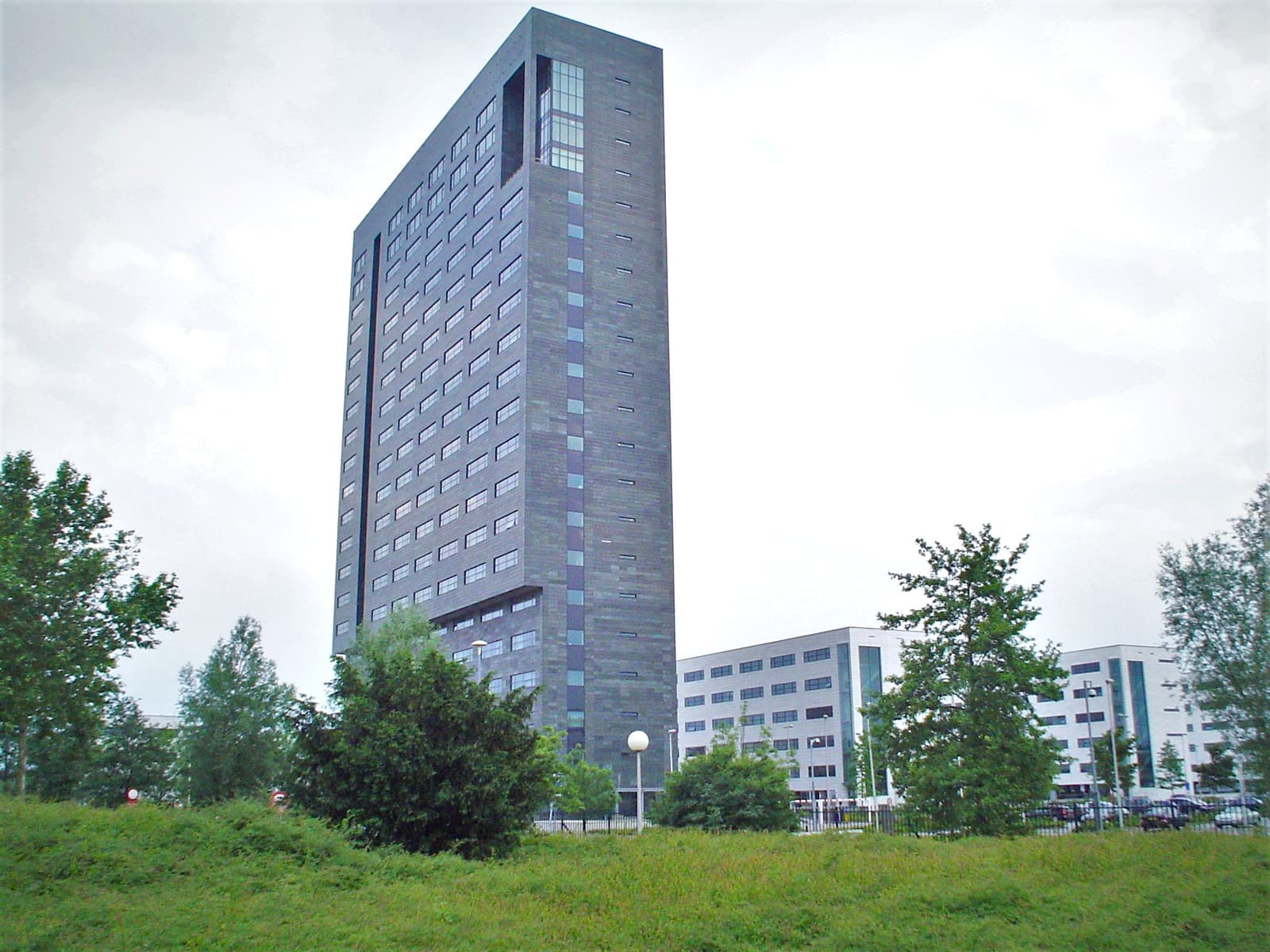
Image context: the cover uses a real photograph of ASML's Veldhoven headquarters because this is an operating-platform story. The earnings debate is not about generic "chip optimism"; it is about one company turning hard-to-build lithography systems, field upgrades, and service contracts into a high-margin revenue mix under tighter export boundaries.[7]
What the quarter actually proved
The most important line in the release was not just the headline beat. It was management's willingness to raise the full-year range only one quarter into the year. ASML now expects €36 billion to €40 billion of 2026 sales with 51% to 53% gross margin, versus the January outlook of €34 billion to €39 billion on the same margin range.[1][3] That is a material signal from a company that usually has little reason to over-promise on cycle timing.
The revenue mix also held up well. The Q1 presentation shows €6.3 billion of net system sales and €2.5 billion of Installed Base Management sales, with operating margin reaching 36.0% and net income margin 31.4%.[2] That matters because installed-base revenue is the stabilizer investors want when system shipments wobble quarter to quarter. New system units can move around with delivery timing, but service and field-option revenue tells you whether the installed fleet is being worked harder and upgraded more aggressively. In a semiconductor cycle where customers are stretching existing tools as well as buying new ones, that is a high-quality confirmation.
The other reason the quarter matters is that it was not driven by a single accounting surprise. Gross margin at 53.0% came in at the high end of guidance, while R&D spending still ran at roughly €1.2 billion for the quarter.[1][2] ASML is not showing a growth story built on under-investment. It is still spending into product roadmap, capacity, and service depth while keeping profitability in the low-50s on gross margin.
Why China mix matters more after the beat
This is where the debate tightens. ASML ended 2025 with €32.7 billion of annual sales, 52.8% gross margin, €9.6 billion of net income, and a year-end backlog of €38.8 billion.[3] That gives the company real coverage going into 2026. But backlog alone does not settle the mix question. A lithography order book can stay full while geographic restrictions still change which products ship, which service streams stay attached, and how much of revenue comes from the richest parts of the portfolio.
That is why management's export-control language matters even though the company still raised guidance. In the Q1 release, Christophe Fouquet said the 2026 guidance range is meant to accommodate potential outcomes from ongoing export-control discussions.[1] In plain English, ASML is telling investors two things at once: AI demand is stronger than expected, and policy risk is still live enough that the company wants a wide range around the year.
The key operating tension is straightforward. If China contributes less, the replacement has to come from places where lithography intensity and tool complexity stay high enough to preserve mix quality. The 2025 annual materials already pointed toward that direction: management expected a significant increase in EUV sales and growth in installed-base business in 2026, supported by stronger advanced logic and DRAM demand.[3][4] Q1 did not disprove that. It supported it. But the burden of proof is higher now precisely because guidance moved up. Once the market accepts that AI-related demand is real, it starts caring more about where that demand sits and how profitable it remains after policy friction.
Six numeric anchors
- Q1 headline: €8.8 billion of net sales, 53.0% gross margin, €2.8 billion of net income, and €7.15 of basic EPS.[1][2]
- Revenue mix: €6.3 billion of net system sales and €2.5 billion of Installed Base Management sales in Q1.[2]
- Operating quality: operating margin rose to 36.0% and net income margin to 31.4% in Q1.[2]
- Near-term guide: Q2 2026 sales are guided to €8.4 billion to €9.0 billion with gross margin of 51% to 52%.[1][2]
- Full-year reset: 2026 revenue guidance moved up to €36 billion to €40 billion, from €34 billion to €39 billion in January.[1][3]
- Coverage and cushion: 2025 year-end backlog stood at €38.8 billion, while 2025 Installed Base Management sales reached €8.2 billion on total 2025 sales of €32.7 billion.[3][4]
Those anchors describe a company that is still winning the main demand argument. The open question is no longer whether customers want tools. It is whether the best parts of the mix keep compounding under a more restrictive China backdrop.
Strongest counterweight
The strongest pushback to a cautious read is that ASML may not need much extra proof at all. The company raised guidance after one quarter, said customers had increased their short- and medium-term demand expectations, and kept its long-run 2030 revenue opportunity at €44 billion to €60 billion with 56% to 60% gross margin from the 2024 investor-day framing.[1][2] If advanced logic and memory customers are simultaneously stepping up EUV intensity, then a weaker China contribution can matter less than investors fear because the replacement revenue may simply be better revenue.
That counterweight is real. It is why this is not a "good quarter, sell the news" argument. The claim is narrower: the quarter proved demand, but the next rerating step depends on mix quality staying rich as geography shifts.
Falsifier
This recap is too cautious if the next quarter shows that China pressure is mostly optical while the business mix keeps improving anyway. Concretely, if Q2 lands near the upper end of the €8.4 billion to €9.0 billion sales range, gross margin stays near the top of the 51% to 52% band, Installed Base Management sales remain around the current €2.5 billion level, and management keeps or raises the €36 billion to €40 billion full-year outlook after the April policy noise and customer updates, then the current "watch the mix" framing would be understating how clean the substitution toward non-China demand really is.[1][2][5]
Watchlist
- April 22, 2026: ASML's annual general meeting is the next formal checkpoint for dividend, buyback authority, and shareholder questioning around export controls, capital return, and management confidence after the guidance raise.[5]
- April 30, 2026: Samsung Electronics' Q1 2026 earnings call is the next dated external read on memory and advanced-node capex appetite, which matters because ASML's 2026 upside case leans heavily on sustained advanced logic and DRAM intensity rather than on China volume alone.[6]
Takeaway
ASML's quarter did what a high-quality quarter is supposed to do: it improved the forward revenue range without sacrificing margin discipline.[1][2] That keeps the AI-capex thesis intact. But after the beat, investors are left with a more specific problem. The debate is no longer about whether ASML has demand. It is about whether installed-base revenue, EUV intensity, and non-China customer spending can keep the revenue mix rich enough that export-control drag stays a manageable geography issue instead of becoming a margin and volume problem.
Sources
- ASML, "ASML reports €8.8 billion total net sales and €2.8 billion net income in Q1 2026" (April 15, 2026).
- ASML, "Presentation Investor Relations Q1 2026" (April 15, 2026 PDF).
- ASML, "ASML reports €32.7 billion total net sales and €9.6 billion net income in 2025" (January 28, 2026).
- ASML, "2025 Annual Report."
- ASML, "AGM 2026 - Shareholder meetings" (Annual General Meeting on April 22, 2026).
- Samsung Electronics, "Investor Relations" page, including the Q1 2026 earnings call scheduled for April 30, 2026.
- Wikimedia Commons, "File:ASML headquarters Veldhoven.jpg."