The lazy way to read global card networks is to call them simple consumer-spending toll booths. The quality in that sentence is real, and a lot of it is already priced. The newer question is narrower. What still deserves premium economics in 2026 is not raw card count by itself, but the richer layers sitting on top of the rail: cross-border transactions, network processing density, and service revenue that travels with issuer and merchant relationships.[1][2]
That distinction matters because the same filings that show strong operating leverage also show the system's boundary. Visa's fiscal 2024 international transaction revenue reached $12.7 billion, while Mastercard's value-added services and solutions reached $10.832 billion.[1][2] Those are not "everyday swipe" numbers. They are mix numbers. At the same time, U.S. debit remains a regulated and litigated market where routing rules, network competition, and antitrust scrutiny still matter.[3][4] The payment-network premium is real, but it is not a frictionless toll road.
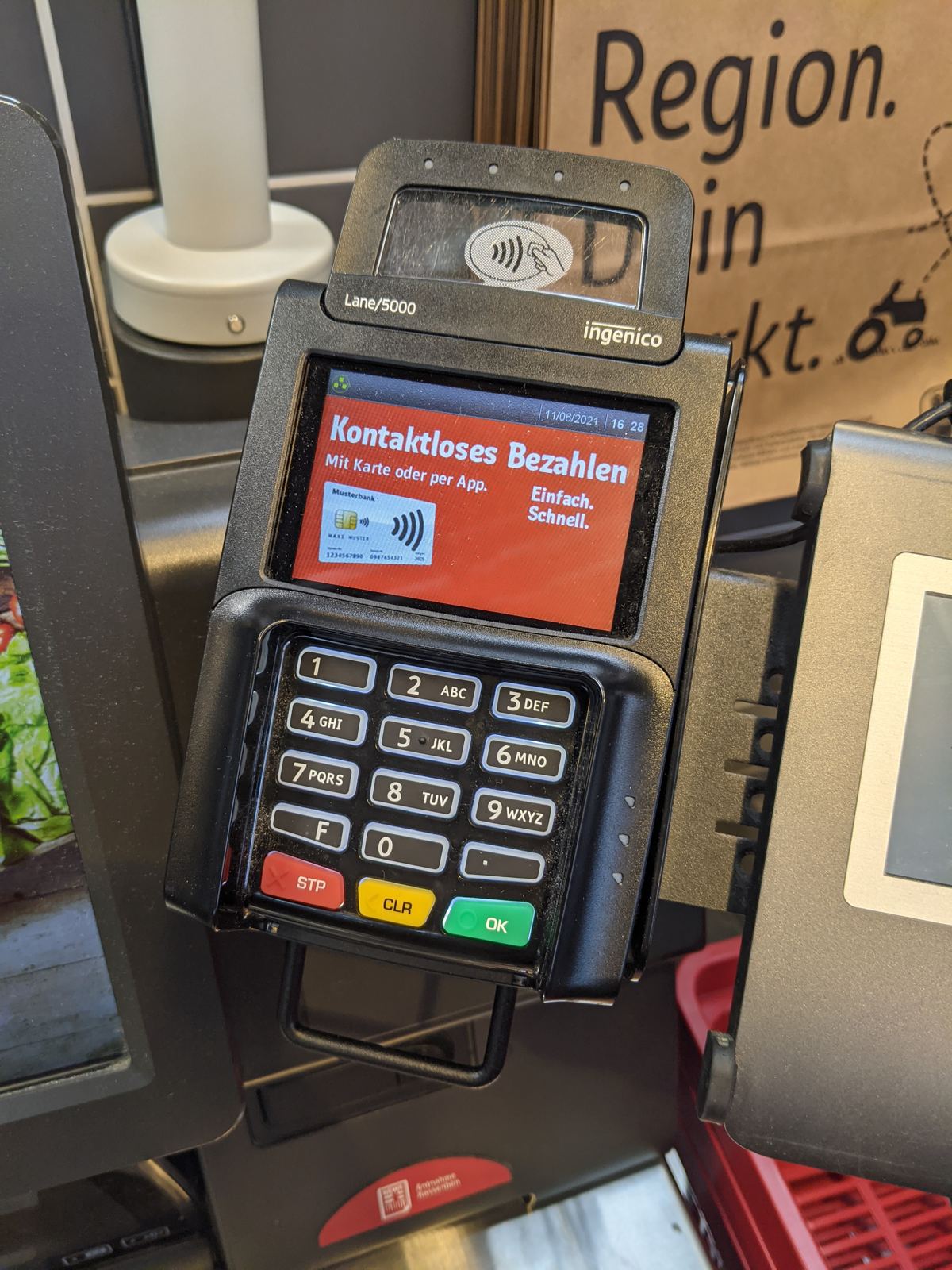
Image context: the cover uses a real supermarket payment-terminal photograph because the article is about monetizing everyday merchant checkout flow in a real commerce setting. A futuristic digital-payments collage would explain less than the actual machine where the network touches the transaction.[5]
Mechanism first: the richest parts of the rail are not the same as raw card count
Start with Visa. Its full-year 2024 results break net revenue into service revenue, data processing revenue, international transaction revenue, and other revenue, then subtract client incentives.[1] That split matters because it shows why "more cards" is an incomplete explanation. Service revenue follows prior-quarter payments volume. Data processing revenue follows current transaction flow. International transaction revenue follows cross-border activity. Client incentives are the price of keeping the ecosystem aligned.[1] In fiscal 2024, Visa produced $35.9 billion of net revenue after $13.8 billion of client incentives, with processed transactions up to 233.8 billion and cross-border volume excluding Europe up 15% for the year.[1]
Mastercard's filing makes the same point in a different language. The company splits revenue into payment network and value-added services and solutions.[2] That second bucket is the part investors sometimes under-describe. It includes security, consumer acquisition and engagement, business and market insights, digital and authentication solutions, processing and gateway, and account-to-account capabilities.[2] In 2024, Mastercard generated $17.335 billion from payment network revenue and $10.832 billion from value-added services and solutions, with the latter growing 17% year over year.[2] That is not the profile of a business surviving on card plastic nostalgia.
The common mechanism is mix. Cross-border transactions are economically richer than ordinary domestic volume because they carry higher yield for the network. Layered services matter because they make the franchise less dependent on one pure toll charge. That is why these companies can keep looking more durable than a basic consumer-spend proxy even when investors worry that "payments" has become too mature a theme.[1][2]
Six numeric anchors
- Visa's 2024 mix was richer than a plain-volume story: net revenue was $35.9 billion, international transaction revenue was $12.7 billion, and client incentives were $13.8 billion.[1]
- Visa still pushed real throughput growth: fiscal 2024 processed transactions reached 233.8 billion, and cross-border volume excluding Europe rose 15% for the year.[1]
- Mastercard's second engine is now large enough to matter on its own: 2024 payment network revenue was $17.335 billion, while value-added services and solutions revenue was $10.832 billion.[2]
- That service layer is still growing faster than a mature utility stereotype would imply: Mastercard's value-added services and solutions revenue grew 17% in 2024, versus 10% growth in payment network revenue.[2]
- The U.S. debit market remains huge and rule-bound: the Federal Reserve said payment card networks processed 100.7 billion debit and general-use prepaid card transactions worth $4.7 trillion in 2023, with dual-message networks handling 71.4% of volume.[3]
- Regulation and antitrust are not side issues: the DOJ's 2024 complaint says Visa handled more than 60% of U.S. debit transactions and collected more than $7 billion in annual debit-processing fees, which is exactly why the company is facing a live monopolization case.[4]
These anchors narrow the thesis. Payment networks deserve premium multiples when they keep shifting the revenue base toward richer transaction types and service layers. They stop looking like effortless toll roads when regulation and incentives start capping what the domestic debit rail can extract.
Strongest counterweight
The strongest pushback is that none of this is especially new. Visa and Mastercard have talked for years about cross-border, data processing, fraud tools, tokenization, and value-added services.[1][2] If the market already knows the rich part of the model sits above commodity card count, then today's thesis may simply restate what quality investors have owned all along.
That objection has force. The reason it does not fully close the file is that the boundary is getting easier to see. Visa's incentive line is already enormous, which means ecosystem economics are negotiated, not automatic.[1] U.S. debit also remains a supervised market rather than a blank private toll lane.[3][4] So the real question is not whether the networks are good businesses. It is where the premium still comes from, and where public-policy pressure limits it.
Falsifier
This framework is too generous if the next few quarters show cross-border growth settling back toward ordinary payment-volume growth, value-added services slowing toward the network base rate, and regulatory or litigation pressure cutting pricing power without a visible offset from services or processing mix.[1][2][4] In that branch, the sector would deserve to be read more like mature payments infrastructure and less like an expanding mix story.
Watchlist
- 2026-04-28 after market close: Visa's fiscal second-quarter 2026 results are the cleanest near-term test of whether cross-border and processed-transaction momentum still outrun the "mature rail" narrative.[1][6]
- 2026-04-30 at 9:00 a.m. ET: Mastercard's Q1 2026 earnings call is the next read on whether value-added services and solutions keeps widening the model beyond plain network volume.[2][7]
- Ongoing in 2026: additional rulings or substantive filings in U.S. v. Visa, Inc. matter because the case goes directly to the question of how durable U.S. debit economics are under antitrust scrutiny.[4]
Takeaway
Payment networks still earn their premium economics, but not for the lazy reason. The real spread sits in richer mix: cross-border flows, high-throughput processing, and service layers that travel with issuer and merchant relationships.[1][2] The real boundary sits in U.S. debit, where routing rules, antitrust pressure, and incentive economics stop the franchise from behaving like a limitless toll booth.[3][4] That is the split to watch in 2026.
Sources
- Visa Inc., "Visa Reports Fiscal Fourth Quarter and Full-Year 2024 Results" earnings release PDF (October 29, 2024).
- Mastercard Incorporated, 2024 Form 10-K PDF as filed with exhibits.
- Federal Reserve Board, "2023 Interchange Fee Revenue, Covered Issuer Costs, and Covered Issuer and Merchant Fraud Losses Related to Debit Card Transactions."
- U.S. Department of Justice Antitrust Division, "U.S. v. Visa, Inc. (2024)" case page.
- Wikimedia Commons, "File:Payment terminal at self-checkout.jpg."
- Visa Inc., "Visa to Announce Fiscal Second Quarter 2026 Financial Results on April 28, 2026" (April 9, 2026).
- Mastercard Incorporated, "Q1 2026 Mastercard Inc. Earnings Conference Call" event page.