Before anyone gets to preach in James Weldon Johnson’s God’s Trombones, somebody has to ask God to open a window. Heaven has battlements. God is up there somewhere. The people gathered below would like him to lean a good way out so he can hear. It is an unexpectedly considerate request to make of an all-hearing deity, and a good way to enter this book. The first person with a job to do on a Sunday morning is the listener. [1]
Viking published the book in 1927 with illustrations by Aaron Douglas. Its subtitle promises seven sermons in verse. Count the pieces in the table of contents and you’ll find eight. The extra one, “Listen, Lord—A Prayer,” gives us a few minutes among the people in the pews before we have to follow anybody into the pulpit. Read that prayer and the first sermon, “The Creation,” together. Between them they give a solitary reader quite a lot of company. [1][2]
Try the prayer on one breath
Say “O Lord—this morning—” aloud. The words will fit on one easy breath. Now try taking a little breath at each dash, letting the air come out audibly. This is Johnson’s own reading instruction, tucked into his preface. He recalls a particular sound Black preachers could make in a pause, a quick intake followed by a release. The dash is as close as print can come to asking the reader to make it. You can hear the difference even at kitchen-table volume. On the second reading there is time for somebody across the table to lift their head at “Lord” before they learn what you want. [1]
Follow the pronouns for a stanza or two. The speaker begins with a we whose knees are bent, then asks for help for him, the man about to preach. Consider the extraordinary preparations this man requires. His ear must be fastened to wisdom, his eye put to a telescope. The speaker even asks God to “turpentine his imagination,” as if imagination were something you could work on in the shed. By the time the preacher gets up to speak, somebody in the congregation has already delivered a performance he might reasonably dread having to follow. [1]
Wait for the second “lonely”
Johnson was also a songwriter. The Library of America gathers his sermons in the same volume as his song lyrics, and one pleasure of reading “The Creation” aloud is how soon you can join in. God smiles light into being, separates it from darkness and voices his approval. When the little verdict comes round again, after he has hurled the world into place, you know the tune. Soon God is surveying everything he has made. The lines keep beginning with the same few words as his eye travels from sun to moon to stars. A reader has ample time to get another “That’s good!” ready. [1][4]
What God says is “I’m lonely still.” The last word reaches all the way back to the dash in his first speech, the instant between his discovery that he is lonely and his decision to make a world. A whole planet now occupies that interval. Try reading the inventory again with the verdict in mind. Each thing God looks at is lovely enough to hold his gaze for a line. Each time, his eye moves on. [1]
At the riverbank the enormous hands that rolled the sun into shape take up a little clay. Here Johnson asks us to picture a mother bending over a baby. The person God is making has yet to draw breath, and if you are reading aloud you have to supply the air yourself to get him through that last passage. Then come two amens. Give the second to someone else if you have a reader handy. The book has been making room for that voice since the window opened. [1]
Sources
- James Weldon Johnson, God’s Trombones, 1927. Digitized edition including the preface, opening prayer and “The Creation.”
- Smithsonian Libraries and Archives, God’s Trombones. Publication, illustrations and contents of the 1927 volume.
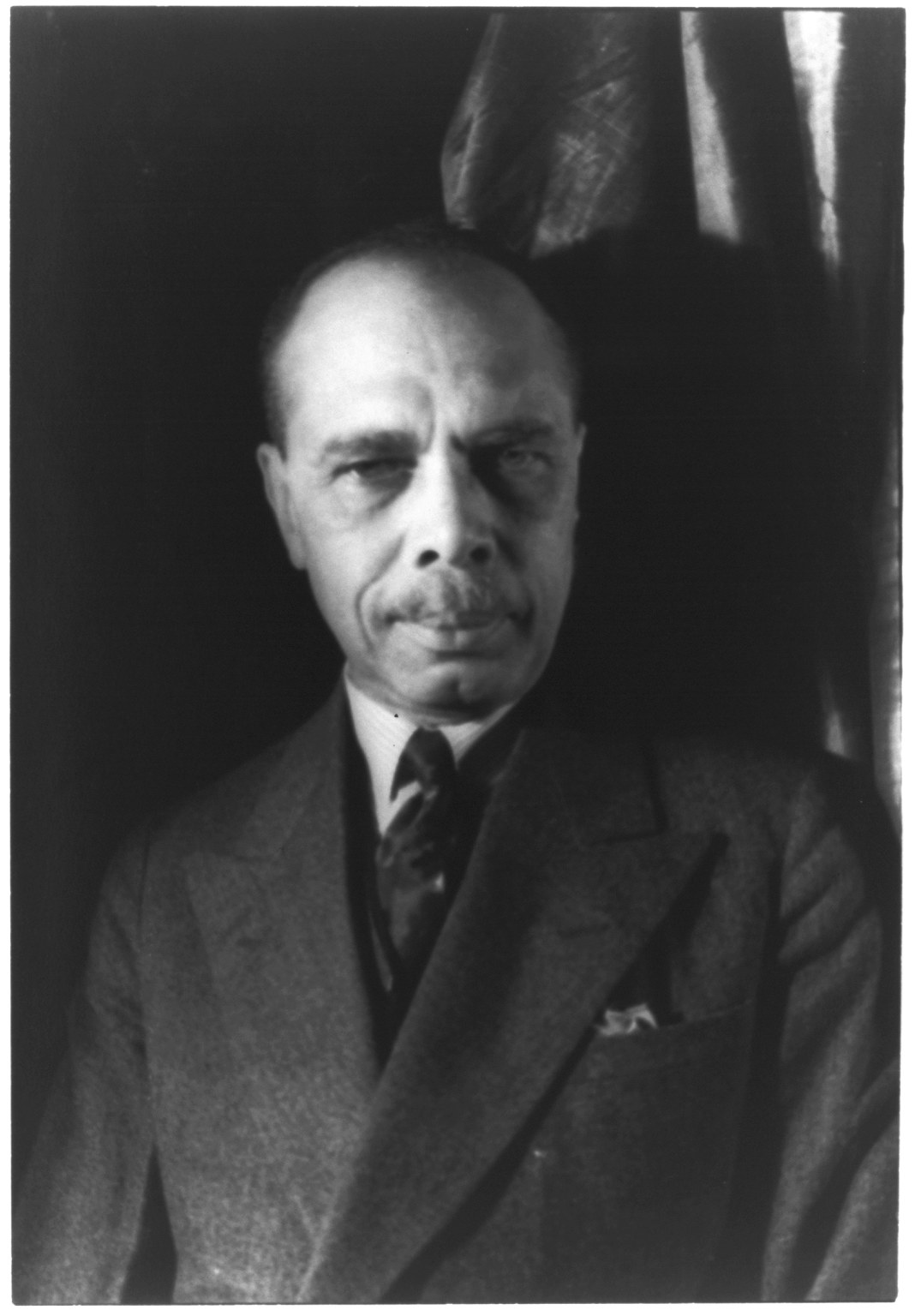
- Library of Congress, Carl Van Vechten’s portrait of James Weldon Johnson, December 3, 1932.
- Library of America, James Weldon Johnson: Writings. The collection brings together sermons, poetry and song lyrics.