
Mary Anning is easy to flatten into a corrective biography: brilliant woman, poor family, hostile scientific world, credit arriving too late. That story is true enough to matter, but it can also make her fossils feel like props in a morality tale. The better way to watch the Smithsonian Channel video below is to keep asking what each specimen did. Anning's importance was not only that she was excluded from elite institutions. It was that she repeatedly supplied, prepared, interpreted, and sold material that forced early nineteenth-century naturalists to argue from bones rather than from inherited categories.[1][2]
The setting matters. Anning worked at Lyme Regis on England's Jurassic Coast, where the Lower Jurassic marine rocks around the town expose fossil-rich strata through active coastal erosion.[4] Landslips and winter storms were dangerous, but they also opened fresh surfaces before the sea could destroy them. That made fossil collecting a race against weather, tide, and cliff failure. The coast did not simply provide a picturesque backdrop. It created a recurring field situation in which local skill could turn an eroding beach into a supply of scientifically consequential specimens.
Watch the specimens, not only the legend
The video rightly emphasizes Anning's improbable route into science: a working-class girl from Lyme Regis who became famous among fossil buyers and scientific men while formal recognition remained limited.[1] But the more useful viewing habit is to separate admiration from mechanism. What changed because Anning was there? The answer is not that she single-handedly invented paleontology. It is that she made certain arguments harder to avoid. When a collector repeatedly produced large, articulated marine reptiles from a known stretch of coast, naturalists had to explain a vanished animal world with increasingly physical evidence.
Start with the ichthyosaur story. The Natural History Museum account describes Joseph Anning finding a strange fossil skull in 1811, followed by Mary painstakingly uncovering the skeleton in 1812.[2] The animal was first interpreted through familiar possibilities, including crocodiles, because the conceptual shelf for extinct marine reptiles was still being built. Over time it became part of the ichthyosaur problem: a creature shaped for the sea, neither fish nor lizard in any simple sense, and evidence that extinction and deep time were not abstractions. A later Royal Society Open Science paper on the historically important "Proteo-saurus" skeleton shows how much these early specimens depended on circulation, description, casts, and institutional survival.[5] Even when an original fossil is lost, the evidentiary chain can persist through copies, drawings, papers, and collection records.
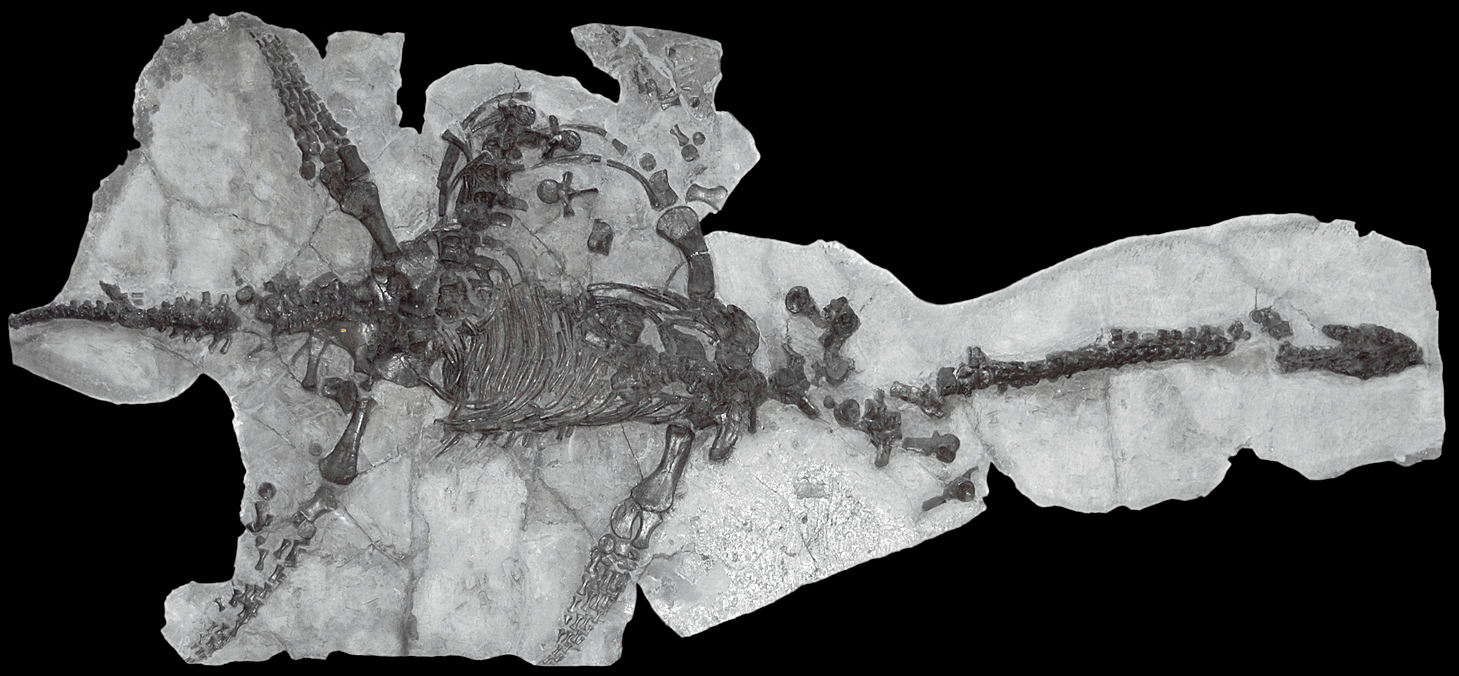
The plesiosaur makes that chain even clearer. Anning's 1823 Plesiosaurus dolichodeirus find looked anatomically strange: a compact body, paddle limbs, a small head, and a neck so long that it strained expectation.[2][3] That oddity is why the fossil mattered. A tidy specimen that merely confirmed familiar anatomy would have been easier to absorb. This one asked for a new arrangement of parts. Britannica's biography frames Anning as a prolific fossil hunter and amateur anatomist whose large Mesozoic reptile specimens assisted the early development of paleontology.[3] That phrasing is important. "Collector" is too small if it implies casual gathering. Anning's work included recognizing, extracting, preparing, comparing, and explaining fossils well enough that buyers and scholars sought her judgement.
That does not erase the asymmetry. Anning sold fossils because the family needed money; many of the people who described, named, displayed, or debated those fossils had institutional standing that she did not.[2][3] The result was not a simple story in which scientists stole everything and Anning alone understood the truth. It was a more durable and more uncomfortable system: local expertise, commercial necessity, museum acquisition, gentlemanly correspondence, and formal publication were all linked, but credit did not move through that system evenly. Watching the video with that structure in mind keeps the politics of recognition attached to the material practice of science.[1]
The Lyme Regis geology also keeps the biography from drifting into myth. The IUGS description of Jurassic Coast: Lyme Regis calls the area a near-continuous Mesozoic coastal succession and notes its prolific invertebrate and vertebrate fossil record, including material first collected by Anning and many type specimens.[4] That means Anning's achievement was partly a matter of place-specific literacy. She knew when to search, where freshly exposed material might appear, how fragile finds behaved in the cliffs, and what could be sold or studied. Modern paleontology still depends on that kind of situated labor, even when it is later translated into specimen numbers, formation names, and published descriptions.
The video format is useful because it restores motion to a story often locked inside display cases.[1] A museum label can make a plesiosaur seem inevitable, as if it always existed as a complete scientific object. An annotated viewing should do the opposite. Imagine the fossil before the case: bones in stone, tide approaching, a collector deciding what is worth the risk, a buyer deciding what is worth the price, an anatomist deciding what the parts mean, and an institution deciding whose name remains attached. The finished specimen is not less scientific because it passed through commerce and reputation. It is more historically legible once those passages are visible.
That is why Anning's delayed credit should not be treated as a decorative epilogue. Credit is part of the evidence system. It tells later readers how knowledge traveled, who handled the material, and which forms of expertise counted at the time. When Anning's fossils are described only as discoveries later interpreted by others, the chain becomes misleadingly clean. When they are described as products of skilled coastal work, anatomical judgement, and uneven access to publication, early paleontology looks more like an actual practice.
So the main reason to embed this Smithsonian video is not that it supplies the last word on Mary Anning.[1] It is that it offers a compact entrance into a better question: how did a dangerous beach, a fossil shop, a set of marine reptile skeletons, and an excluded but consulted expert help make extinction visible? The answer is in the specimens. Anning's legacy is strongest when it is read through the fossils themselves, because those bones still show what biography alone cannot: a coast becoming evidence.
Sources
- Smithsonian Channel, "Why You Should Know the Prolific Princess of Paleontology," YouTube video.
- Natural History Museum, "Mary Anning: The unsung hero of fossil discovery."
- Encyclopaedia Britannica, "Mary Anning | Biography, Accomplishments, Fossils, & Facts."
- International Union of Geological Sciences, "Jurassic Coast: Lyme Regis."
- Dean R. Lomax and Judy A. Massare, "Rediscovery of two casts of the historically important 'Proteo-saurus', the first complete ichthyosaur skeleton," Royal Society Open Science 9 (2022), PMC full text.
- Wikimedia Commons, "File:Plesiosaurus dolichodeirus NHM.jpg" - photographic source for the article image.