

The easiest way to flatten the late Pleistocene is to call every large shaggy proboscidean a mammoth and move on. Museums spend a great deal of time undoing that shortcut, because the distinction between mammoth and mastodon is not cosmetic. It runs through tooth architecture, feeding ecology, body build, habitat, locality, and even the stories attached to individual skeletons.[1][4][5][8] A mammoth is not simply a mastodon with a different coat, and a mastodon is not just a rough draft of a mammoth. The two names point to different branches inside a much larger elephant-relative history.[4][5]
That is why this collection works best as a sequence rather than as a single clip. The Florida Museum short begins with the public problem: two imposing skeletons greet visitors, both from the same Florida river deposits, and the museum has to teach why they should not be mentally merged.[1][8] The Natural History Museum's mastodon film then pushes from anatomy into specimen biography, showing how a nineteenth-century showman built a monstrous composite from fossil bones and how later museum work had to recover a more disciplined animal from that spectacle.[2][6] The Cleveland Museum of Natural History video adds a third layer, where one mastodon is no longer only a body type or a famous mount but a local Ohio death assemblage shadowed by Paleoindian tools and end-Ice-Age chronology.[3]
Watched together, the videos argue for a stricter habit of seeing. If the first task is to separate mammoth from mastodon by dentition and diet, the second is to separate an actual fossil from the myths, reconstructions, and public theater built around it. The third is to pull the animal back into lived landscape, where a mastodon can stand near specific humans, specific tools, and a specific late-glacial environment instead of drifting in a generic "Ice Age" haze.[2][3][4][5]
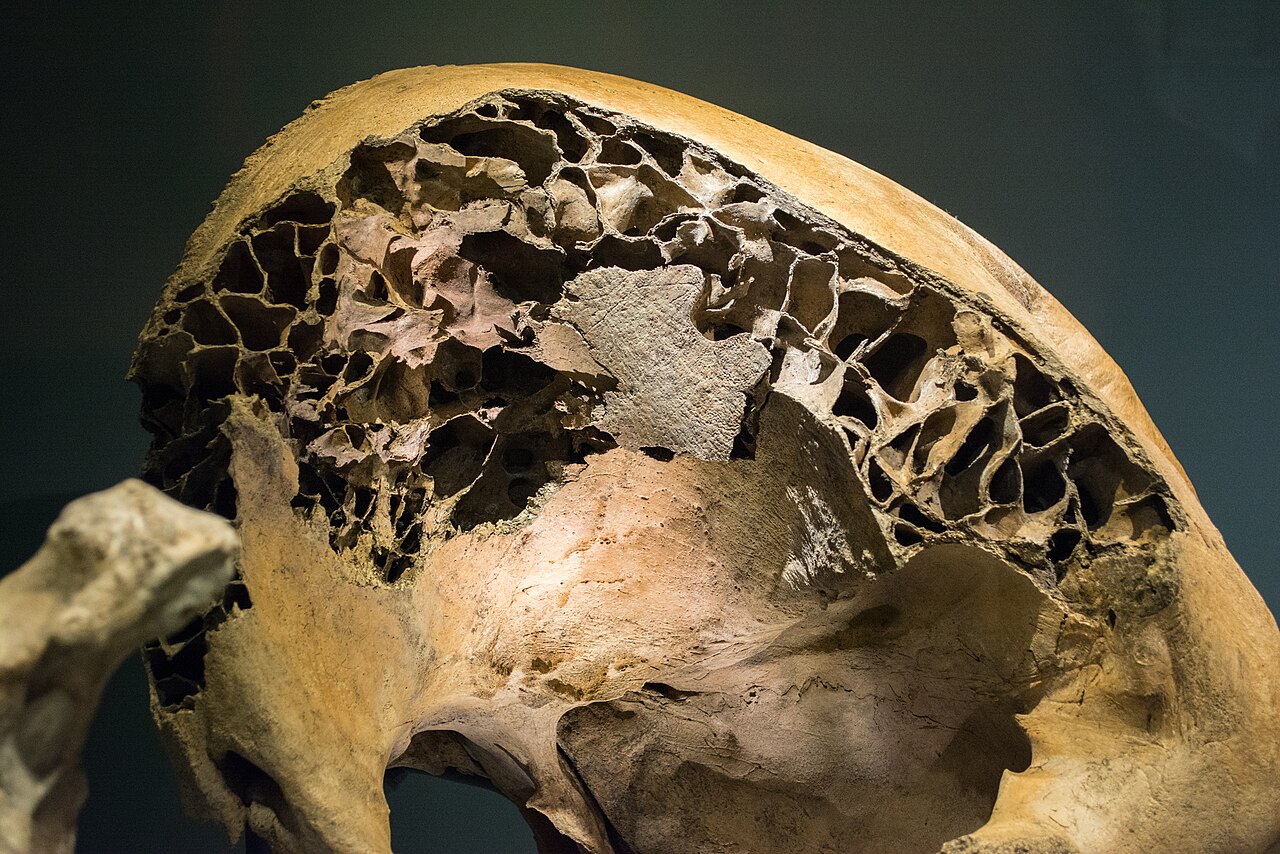
Image context: the cover uses a real Wikimedia Commons photograph of the Hartley mastodon skull at the Cleveland Museum of Natural History. That is the right lead image because this article is not about vague megafauna atmosphere. It is about the moment a familiar prehistoric silhouette narrows into one named specimen with a locality, a museum setting, and a sharper evidence chain.[7]
Video 1: the first correction is dental, because teeth keep mammoth and mastodon from collapsing into one animal
Florida Museum's short clip is brief, but it performs the first necessary act of discipline. Visitors are shown a 14-foot-tall Columbian mammoth and an American mastodon from the same Aucilla River deposits, and the museum uses their coexistence to sharpen difference rather than blur it.[1][8] That is the right curatorial choice. If two giant proboscideans can stand side by side and still require explanation, then the problem is not scale or spectacle. The problem is classification through function.
The cleanest line runs through the molars. Illinois State Museum's comparison explains it in the plainest possible terms: mastodon molars carry high ridges and rounded cusps suited to browsing woody vegetation, while mammoth molars are built as plate-like grinding surfaces for grass-rich diets.[4] Yukon Beringia pushes the same distinction further by comparing a mammoth to cattle and a mastodon to moose, which is helpful because it turns anatomy into ecology without diluting the science.[5] Once that difference is in place, body form and habitat stop looking like incidental museum labels. They become consequences. Mammoths align with open, grassier settings and a more elephant-like grinding apparatus; mastodons align with wooded browse, shorter straighter tusks, and a stockier build.[4][5][8]
The Florida Museum video matters because it lets those distinctions start in front of actual mounted skeletons rather than in a textbook table.[1] Both animals came from the same broad Florida context, yet they are not interchangeable occupants of that world.[1][8] One of the strongest things a museum can do is make superficial similarity feel unstable. The clip does exactly that. By the time it ends, "big Ice Age elephant" has become too weak a category to carry the evidence.
Video 2: the second correction is historical, because a specimen can be famous before it becomes trustworthy
The Natural History Museum's film on the Missouri Leviathan asks a different question: what happens when the fossil itself reaches the public first as a spectacular misreading?[2][6] Professor Adrian Lister uses the mastodon in Hintze Hall to tell a story that begins with Albert Koch in 1840, when a graveyard of mastodon bones was turned into a monstrous composite creature and sent on tour.[6] This is a useful warning for paleontology far beyond mastodons. A specimen can be visually powerful long before it is anatomically honest.
That history matters because mastodons are especially vulnerable to being read through grandeur first. Their tusks, their heavy skulls, and their place in the old nineteenth-century imagination of antediluvian giants make them ideal raw material for exaggeration.[6] The NHM video and companion article are valuable because they turn museum display back into a provenance problem. What exactly was found? What was rearranged? Which parts belonged to the animal, and which parts belonged to a showman's need for scale?[2][6] Those are paleontological questions as much as curatorial ones.
Placed after the Florida Museum clip, the mastodon film does something subtle. The first video teaches you to sort two proboscideans by function. The second teaches you to distrust the apparent unity of any mounted prehistoric body until you know its assembly history.[1][2][6] In other words, anatomy is not enough. A correct tooth is still embedded in a specimen biography that may include reconstruction, transport, trade, and display. The public often imagines museums as the final stage where ambiguity ends. This film suggests the opposite: a good museum keeps the path from fossil discovery to gallery mount visible enough that the visitor can still feel the difference between original evidence and inherited spectacle.[2][6]
Video 3: the third correction is archaeological, because one mastodon can suddenly stand close to humans
The Cleveland Museum of Natural History video shifts the scale once more. Hartley Mastodon Mystery Clues is not mainly about taxonomic difference and not mainly about museum reconstruction. It is about proximity: a mastodon from northeastern Ohio, a cluster of Paleoindian tools near where it was found, and the possibility that the animal's story sits near a human hunting landscape at the end of the last Ice Age.[3]
The video's own framing is careful. It does not claim to have solved the animal's death in one dramatic leap. It presents the five tools, notes their Clovis-age character, and asks how closely that archaeological signal can be connected to the mastodon.[3] That caution is part of what makes the video useful. Paleontology gets weaker when every suggestive association is inflated into a cinematic kill scene. Here the museum does the more responsible thing. It keeps the human edge visible without pretending that visibility is identical to certainty.[3]
This is also where the earlier distinction between mammoth and mastodon becomes newly important. Once mastodon molars are understood as browsing tools and mastodon bodies are understood as inhabitants of more wooded settings, the Ohio specimen no longer lives in an abstract megafaunal cloud.[4][5] It lives in a habitat, at a date, with a particular set of nearby artifacts. The Cleveland video therefore completes the collection's larger movement. The animal begins as a commonly confused Ice Age giant, becomes a distinct browser with its own anatomical identity, then becomes a single late-glacial mastodon whose remains can be discussed beside human material culture rather than outside it.[3][4][5]
What the collection reveals when watched together
These three videos are strong because they do not repeat one another. They divide the work of understanding. Florida Museum handles the first and most public confusion by showing that tooth design and diet split mammoth from mastodon cleanly enough to reorganize how the whole body is seen.[1][4][5][8] The Natural History Museum then reminds us that even a correctly identified animal can be historically distorted by the way fossil bones are assembled, marketed, and exhibited.[2][6] Cleveland adds the last and most local layer, where a mastodon is framed in relation to tools, chronology, and the possibility of human encounter.[3]
Taken together, the collection argues for a better sentence about Ice Age proboscideans. The important thing is not merely that mammoths and mastodons were different. The important thing is that museums make those differences legible through several kinds of evidence at once: anatomy, specimen history, and archaeological context. Teeth explain feeding. Provenance explains whether the body in front of you has been theatrically enlarged or carefully reconstructed. Nearby artifacts explain why the animal belongs not only to deep time but also to a human frontier at the end of the Pleistocene.[2][3][4][5][6]
That is the point at which mammoth and mastodon stop being museum synonyms. They become different problems, and therefore different animals.
Sources
- Florida Museum, "Iconic Skeletons: Mammoths vs. Mastodons," YouTube video.
- Natural History Museum, "The making of an American mastodon | Surprising Science," YouTube video.
- Cleveland Museum of Natural History, "Hartley Mastodon Mystery Clues," YouTube video.
- Illinois State Museum, "Mammoth Versus Mastodon."
- Yukon Beringia Interpretive Centre, "American Mastodon."
- Natural History Museum, "Missouri Leviathan: The making of an American mastodon."
- Wikimedia Commons, "File:Hartley mastodon skull - Cleveland Museum of Natural History (34800565265).jpg" (lead image source page).
- Florida Museum, "Columbian Mammoth Exhibit."
Editor’s Pick Review
This piece wins today because it does three hard things at once without losing reading rhythm. First, it converts a common taxonomy blur into a precise evidence ladder, moving from dentition and diet to specimen provenance and then to archaeological proximity, so the argument tightens instead of looping. Second, it keeps source discipline high across museum video, institutional interpretation, and reference material, with clean citation mapping from body claims to source list. Third, it handles visual policy exactly the way current standards require: the lead image is a topic-grounded documentary museum photograph tied to a named specimen, while analytical visuals are avoided and the explanatory burden stays in prose plus sourced references. The Chinese companion also tracks the same structure and technical boundary cleanly, which keeps cross-language editorial quality aligned.