
The Burgess Shale has been famous long enough that its animals can arrive pre-flattened in the reader's mind. Opabinia becomes the five-eyed oddity, Hallucigenia the one that had to be turned right-side up, Anomalocaris the Cambrian apex predator with a science-fiction mouth.[4][6][7][8] That is memorable, and it is also a weak way to learn the site. What makes the Burgess fossils scientifically durable is not strangeness alone. It is the way quarry context, unusual preservation, and later anatomical interpretation lock together.[4][6]
That is why a video collection is the right format here. One video can make the place vivid. Another can make soft-body preservation stop feeling like a miracle and start looking like a geological condition. A third can show how ecological arguments are built from those preserved bodies rather than pasted onto them afterward.[1][2][3] Watched together, the clips turn Cambrian animals from isolated icons into evidence with a chain of custody.
The Royal Ontario Museum's Burgess Shale materials provide the basic frame. The site sits in the Canadian Rockies and preserves a Middle Cambrian marine community celebrated precisely because soft-bodied animals survived there in extraordinary detail.[4][5] Smithsonian Ocean puts the larger point clearly: the deposit matters because it records an early burst of animal diversity in a way that includes body plans that would normally have vanished from the fossil record.[6] The question, then, is not simply why the fauna looks weird. It is how that weirdness became legible science.
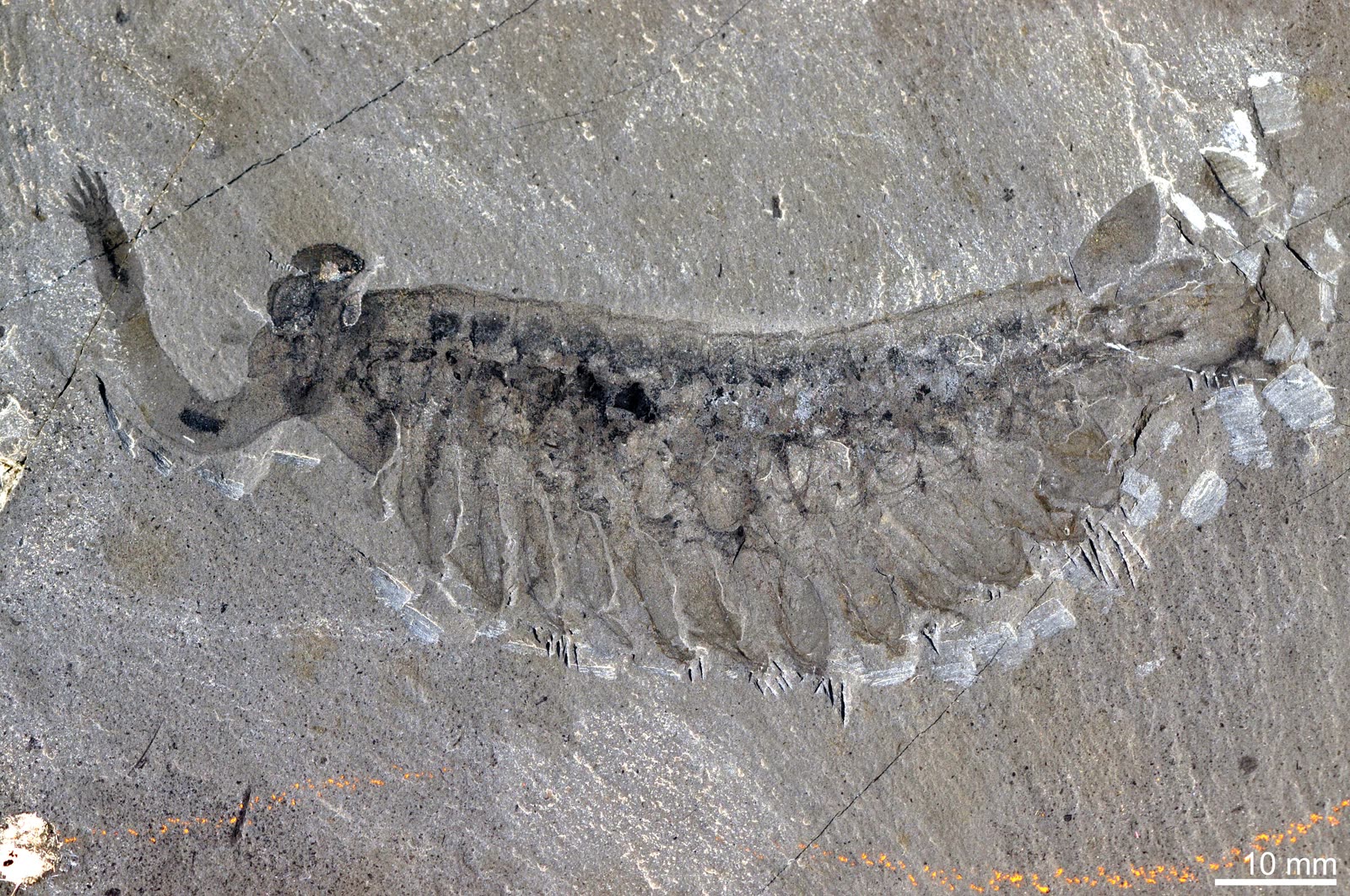
Image context: the cover uses a real fossil photograph of Opabinia regalis from the Smithsonian collection rather than an illustration. That choice matters because the article is about reading slab evidence carefully. The flattened body, the dark carbon film, and the specimen-scale view keep attention on preservation and interpretation rather than on a polished life reconstruction.[9]
Video 1: quarry context keeps the Burgess Shale from becoming a cabinet of disconnected wonders
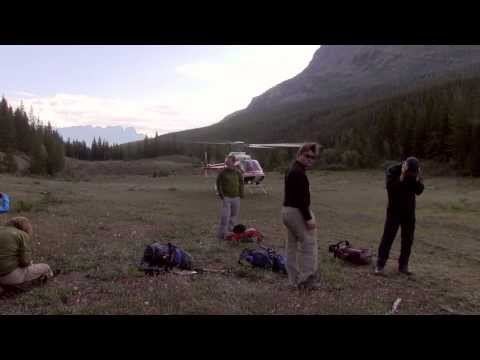
The ROM's "Burgess Shale Expedition" clip is the right opening because it restores the first discipline a famous fossil site can lose: locality.[1] The animals did not appear as free-floating curiosities. They came from a specific mountain setting, specific quarry surfaces, and a field program that has to plan access, extraction, and transport carefully.[1][5] The Museum's expedition overview reinforces that this is not scenic backdrop. The geology of the site, the logistics of working in the national parks, and the physical act of splitting shale all shape what can later be claimed about the fossils.[5]
The most useful effect of this first video is that it slows the reader down before any creature-by-creature fascination begins. The Burgess Shale is a Lagerstatte, but that label can become too magical too quickly. The expedition footage keeps the deposit physical: steep terrain, layered rock, quarry surfaces, and specimens that have to be found, stabilized, and carried out.[1][4][5] In paleontology, that matters because field position is part of the evidence, not an administrative detail after the real science is over.
This is also where the site starts to recover its community scale. ROM's introduction page does not present the Burgess fauna as a parade of single celebrity taxa; it presents a marine ecosystem with arthropods, worms, sponges, chordate-adjacent forms, and predators preserved in one archive.[4] The expedition video makes that framing believable. Fossils come out of a quarry and a bedding plane before they enter taxonomy, museum drawers, or public myth. The scientific strength of the Burgess Shale begins there.
Video 2: soft-body preservation is the condition that turned "impossible-looking" animals into anatomical evidence
Oxford University Museum of Natural History's "Extraordinary soft-bodied fossils highlight the Cambrian explosion" is the best middle piece because it attacks the most important misconception directly.[2] Burgess Shale animals look alien in part because they preserve structures that most fossil sites erase. Limbs, guts, delicate outlines, head appendages, and surface anatomy survive there with a fidelity that ordinary shelly records cannot match.[2][4][6]
That is the point at which Burgess oddity stops being a novelty and becomes a preservational lesson. Smithsonian Ocean describes the deposit as one of the world's most important windows into early animal life because soft tissues were preserved alongside hard parts.[6] Once that is held in mind, famous correction stories such as Hallucigenia's reinterpretation read differently. The ROM specimen page for Hallucigenia sparsa is valuable not because it repeats that the animal was once reconstructed upside down, but because it shows how additional preserved detail, comparative work, and better anatomical reading gradually stabilized the body plan.[7] The animal did not become less strange. It became more precisely understood.
The Oxford clip helps because it does not treat preservation as mere luck. It shows why a site with soft-body fidelity changes the kinds of questions paleontologists can ask.[2] A shelly fossil can establish presence. A Burgess-style fossil can reopen feeding, locomotion, segmentation, appendage layout, and phylogenetic placement. That is why the Cambrian explosion is so often narrated through this site. The Burgess Shale did not simply preserve more animals. It preserved more anatomy, and therefore more argument.
Video 3: predator stories become credible only after site context and anatomy have done their work
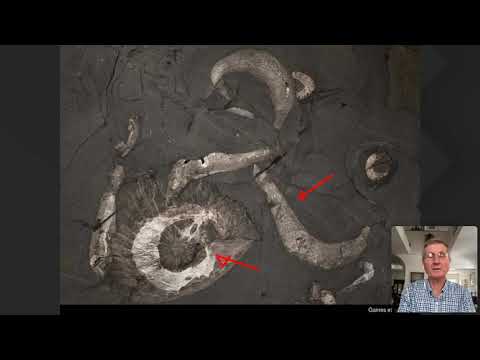
The ROM's "Burgess Shale: Early Life Predators" is a strong closer because it shows the temptation and the discipline of Cambrian storytelling at the same time.[3] Predator videos are easy to oversell. Once Anomalocaris appears, everything can collapse into a monster reel. What keeps this clip useful is that it ties predation back to preserved anatomy: frontal appendages, mouthparts, body design, and the wider fauna those structures operated within.[3][6][8]
This is where the earlier videos pay off. Without quarry context, predators become detached icons. Without soft-body preservation, they become vague reconstructions with too much freedom. With those layers in place, the predator argument tightens. ROM's Anomalocaris canadensis page keeps the emphasis on preserved body structure and on the animal's place within a broader Cambrian marine world rather than on cinematic exaggeration.[8] That is the better habit. Predation is not inferred from mood. It is inferred from anatomy preserved well enough to support bounded ecological claims.
The video also clarifies why the Burgess Shale is not just a fossil site for "first versions" of later animals. Its ecology already had pressure, specialization, and interaction.[3][6][8] Predators matter here because they show the deposit as a functioning community rather than a shelf of disconnected body plans. The strange forms stop reading like sketches for future evolution and start reading like finished Cambrian lives with their own constraints.
What the three videos reveal together
Watched in sequence, these clips correct three bad habits at once. The first resists celebrity fossils detached from place.[1][4][5] The second resists the idea that bizarre anatomy floated into view without a preservational mechanism.[2][6][7] The third resists the habit of turning ecological interpretation into creature hype before anatomical evidence is secure.[3][8] Put together, they make the Burgess Shale readable again.
That is the real value of this collection in 2026. The Burgess fauna is familiar enough to be trivialized and strange enough to be sensationalized. These videos recover the middle ground where paleontology actually works: field context first, preservation second, ecological reading third.[1][2][3] Once those layers are aligned, the Cambrian animals do not become ordinary. They become accountable. That is better than wonder by itself, and it is why the Burgess Shale remains one of the strongest places on Earth for learning how fossils become evidence.
Sources
- Royal Ontario Museum, "Burgess Shale Expedition," YouTube video.
- Oxford University Museum of Natural History, "Extraordinary soft-bodied fossils highlight the Cambrian explosion," YouTube video.
- Royal Ontario Museum, "Burgess Shale: Early Life Predators," YouTube video.
- Royal Ontario Museum, "Introduction - The Burgess Shale."
- Royal Ontario Museum, "Burgess Shale Expedition Overview."
- Smithsonian Ocean, "The Burgess Shale."
- Royal Ontario Museum, "Hallucigenia sparsa."
- Royal Ontario Museum, "Anomalocaris canadensis."
- Wikimedia Commons file page for the lead image, "USNM PAL 57683 Opabinia regalis Image 3.jpg."