Most container debates still begin in the wrong place. Teams compare command syntax, desktop polish, or headline compatibility with Docker. Podman matters for a different reason. Its strongest idea is that containers should feel like an ordinary part of the host, not a separate daemon-centric world with its own control ritual. In 2026, the project is most useful when read through that lens: daemonless execution, rootless operation, and a systemd-native service model through Quadlet.[1][2][3]
That reading also makes the boundaries clearer. Podman is not a magic replacement for every container workflow. The official docs are explicit that macOS and Windows still require a virtual machine because containers depend on the Linux kernel, and podman machine is the tool that manages that VM surface.[4] So the best question is no longer "Is Podman Docker-compatible enough?" The better question is "Do we want containers to behave like first-class Linux host services, and are we willing to accept the Linux-shaped assumptions that come with that?"[2][3][4]
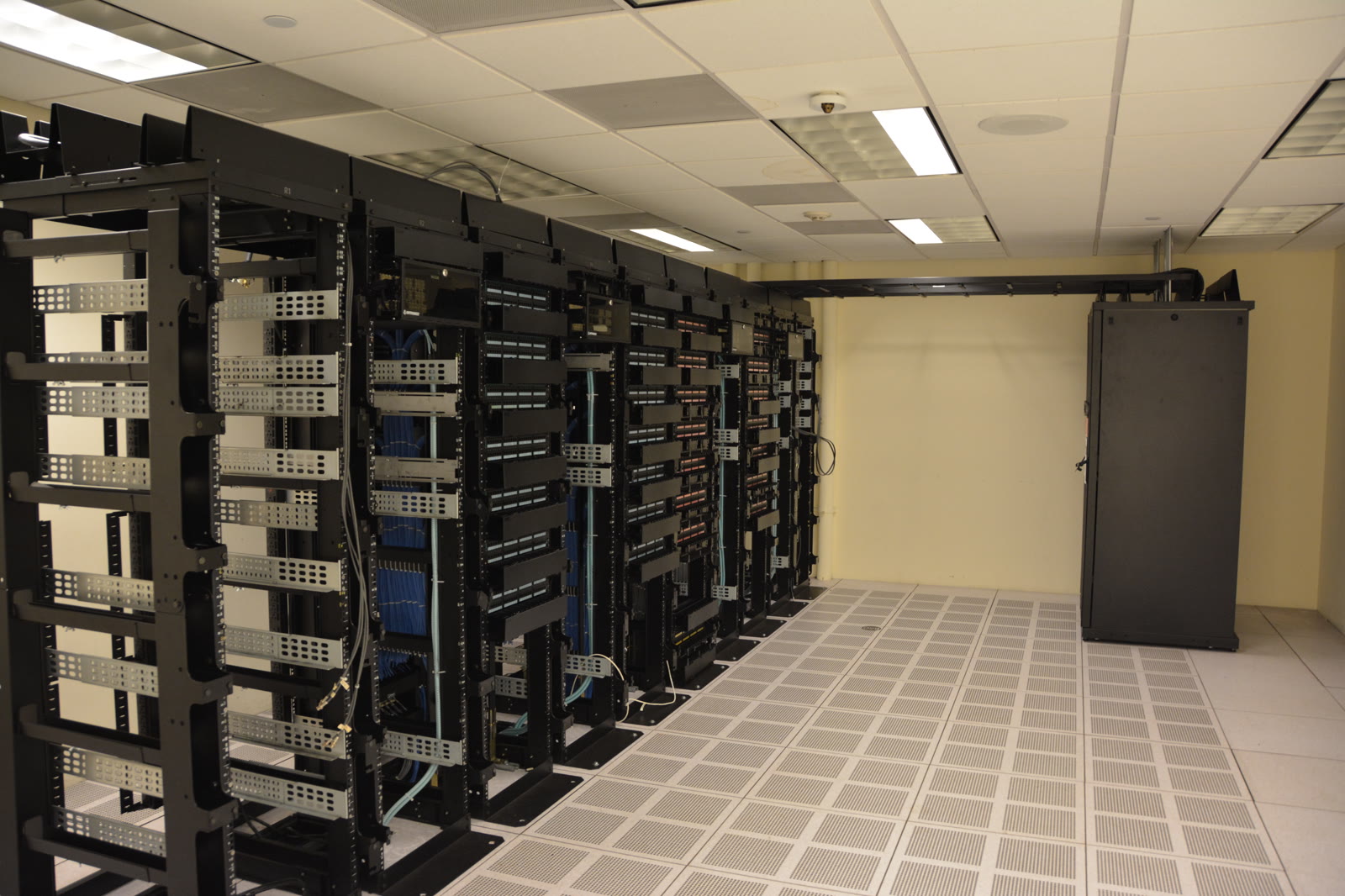
Image context: the cover uses a real Wikimedia Commons datacenter photograph rather than a synthetic architecture graphic. That is the right visual here because the article is about host operations and service boundaries, not about abstract container branding.[7]
What this project actually is
The Podman docs present the project as a container engine and management tool, but the more useful operational reading comes from the supporting files and command surfaces around it.[1][2] The podman manual does not stop at run, build, and pull. It immediately points operators toward shared configuration layers such as containers.conf, registries.conf, policy.json, and storage.conf, each with system and per-user override paths.[2]
That detail matters because it reveals the project's center of gravity. Podman is not only a CLI wrapped around OCI containers. It is a host-integrated container stack whose defaults can be shaped at the distribution level, the administrator level, and the user level.[2] Inference from the docs: the project is trying to make container behavior legible inside normal Linux administration, not to create an isolated appliance mentality.
This is also why Podman feels different from teams' first impression of "Docker without the daemon." The daemonless part matters, but it is not the whole story. The larger move is that storage, registry policy, mount behavior, image trust, and per-user runtime expectations can all be described in the same host-native vocabulary.[2]
Why it matters more in 2026: Quadlet turned the service model from side feature into the real argument
Podman has had rootless and systemd-adjacent stories for a long time. What feels different in 2026 is that Quadlet has become too substantial to treat as a niche add-on. The current podman-systemd.unit manual describes a broad family of Quadlet unit types: .container, .volume, .network, .build, .pod, .kube, .image, and .artifact files, each turned by the generator into corresponding systemd services.[3] That is not a decorative feature. It is a declaration that container lifecycle should be expressible in the same language as other host services.[3]
The recent release line keeps reinforcing that point. The latest release, v5.8.1, was published on March 11, 2026, and the release stream around it keeps shipping Quadlet work: API endpoints for Quadlet file management, improved install flows for multiple Quadlet definitions, new .container keys such as AppArmor, and repeated bug fixes around Quadlet naming, mounts, and migration behavior.[5] That is a strong maintenance signal. The project is not merely preserving a legacy feature. It is continuing to invest in the host-service abstraction.
For teams evaluating container tooling now, that changes the project-introduction pitch. Podman is compelling when your desired end state is not "a different container daemon," but "containers that start, stop, restart, and compose with the same operating discipline as the rest of the machine."[3][5]
Three mechanics that make Podman operationally useful
1. Rootless is a real operating model, not a marketing adjective
The podman manual says that when Podman runs rootless, it automatically creates a user namespace defined in /etc/subuid and /etc/subgid, and it requires multiple UIDs and GIDs to be assigned for the user.[2] Containers created by a non-root user are not visible to other users and are not managed by root's Podman instance.[2]
This is the first practical reason Podman matters. Rootless mode changes the trust boundary. Instead of every container operation silently collapsing back into one privileged daemon, the runtime can stay attached to the user's own namespace and configuration surface.[2] That does not eliminate operational risk, but it narrows the blast radius in a way many Linux teams prefer.
The important caveat is that rootless is not automatic magic. It depends on the host being prepared correctly, and the docs are direct about that preparation.[2] Podman becomes attractive precisely because it makes the requirement visible instead of hiding it behind daemon privilege.
2. Quadlet lets containers inherit systemd's boring strengths
Quadlet is where the project's philosophy becomes easiest to feel. The docs say the generator reads Quadlet unit files and creates similarly named .service units, with default systemd Type values chosen according to the object being managed: notify for .container and .kube, forking for .pod, and oneshot for .volume, .network, .build, .image, and .artifact files.[3]
That means a containerized workload can participate in the same boot order, dependency graph, restart policy, and unit-file layout as everything else on the host.[3] It also means operators can stop treating containers as a separate island that always needs another orchestration layer just to become durable.
The limits are equally instructive. Quadlet requires cgroup v2, and the manual warns that rootless Quadlets are not created by simply adding User= or related systemd options inside a unit. If you want a rootless Quadlet, you create the user and place the file in the rootless search path.[3] This is classic Podman design: more host-native, but also more explicit about the host contract.
3. The non-Linux story is intentionally narrower
The podman-machine manual is blunt: on macOS and Windows, Podman requires a virtual machine because containers depend on Linux kernel functionality.[4] It also says all podman machine commands are rootless only.[4] That is a useful corrective to vague cross-platform marketing.
Inference from the machine docs and the overall docs surface: Podman is still best understood as a Linux-first project that offers a remote or VM-managed path for non-Linux development, not as a tool that erases operating-system differences.[1][4] That is not a weakness if your production world is Linux anyway. It becomes a mismatch only when a team expects one seamless desktop abstraction to matter more than host fidelity.
Maintenance signal: this is a live project with enough scale to matter
As of 2026-03-29T08:05:30Z UTC, the GitHub API reports 31,152 stars, 3,037 forks, 1,080 open issues, and a most recent push timestamp of 2026-03-27T10:40:40Z for containers/podman.[6] Those numbers do not prove a team should adopt it, but they do matter for a project introduction. Podman is not a static utility sitting on past reputation. It is an actively maintained part of a larger containers ecosystem.
The release feed points the same way. The current stable release was published less than three weeks before this article's creation date, and recent notes show active work on machine providers, Quadlet behavior, API coverage, Windows path handling, and migration reliability.[5] For operators, the practical implication is simple: this is a living project whose main abstractions are still being sharpened.
Best-fit boundary and mismatch boundary
Podman is a strong fit when your team is Linux-first, values rootless or per-user runtime boundaries, and wants long-running containerized services to sit comfortably inside systemd rather than behind a central daemon or a larger orchestration platform.[2][3] It is especially good for single-host or small-fleet service patterns where "ordinary host operations" is the goal.
It is less attractive when your real need is not host-native clarity but a broader platform surface: multi-host scheduling, high-level deployment UX, or uniform desktop convenience across non-Linux systems.[4] In those cases Podman can still be part of the stack, but it stops being the whole answer.
That is the useful way to keep the project honest. Podman is not best because it wins every comparison sheet. It is best where its core wager matches the environment: Linux hosts, explicit service contracts, and operators who prefer visible boundaries over hidden daemons.
A practical first month
If you are evaluating Podman now, the highest-signal rollout is small:
- Start on Linux if production is Linux, so the project is judged in its native environment rather than through VM indirection.[4]
- Prepare rootless prerequisites early by checking
/etc/subuidand/etc/subgid, then test per-user storage and registry configuration deliberately.[2] - Put one durable service behind a Quadlet
.containerunit before you decide whether the systemd model actually helps your team.[3] - Treat
containers.conf,registries.conf, andstorage.confas first-class configuration, not as afterthoughts hidden behind CLI habits.[2] - Use the current release notes as an operational changelog, especially if your rollout depends on Quadlet or
podman machinebehavior.[5]
That sequence keeps the evaluation aligned with the project's real strengths.
Bottom line
Podman in 2026 deserves a more precise introduction than "another container engine." Its value is not only daemonless execution, and not only CLI familiarity. The real attraction is a Linux-native operating model: rootless namespaces, host-level configuration surfaces, and Quadlet units that let containers behave like ordinary services.[2][3]
If that is the shape your team wants, Podman is one of the clearest OSS projects in the space. If your main goal is to abstract away the host until it barely matters, the project will feel narrower for exactly the same reason.
Sources
- Podman documentation overview and getting-started surface.
- Podman manual: configuration files, rootless mode, and user-namespace requirements.
- Podman Quadlet manual: systemd unit generation, unit types, search paths, and cgroup v2 requirement.
- Podman machine manual: VM requirement on macOS and Windows, and rootless-only machine commands.
- Podman GitHub releases: current release stream and recent Quadlet and machine changes.
- GitHub API snapshot for
containers/podmanrepository metadata. - Wikimedia Commons, "Datacenter Server Racks (22370909788)."