OpenProject is easiest to sell as the open-source Jira alternative. That framing is useful but incomplete. The stronger adoption case is narrower: OpenProject is for teams whose work tracking has become important enough that the board, the permissions model, the audit trail, the project hierarchy, and the self-hosted operating path all need to be designed together.[1][6][7]
If a team only needs a fast personal kanban board, OpenProject will feel heavy. If a team needs to coordinate projects, products, bugs, tasks, risks, user stories, documentation, meetings, roadmaps, time tracking, and cross-project reporting while keeping the option to self-host, the weight starts to make sense.[1][6][10] The migration question is not "can it replace a board?" It is "which parts of our work should become governed records?"
As of 2026-06-24T10:31:25Z UTC, the public opf/openproject repository reported 15,395 stars, 3,327 forks, 218 open issues, a dev default branch, and push activity at 2026-06-24T10:25:09Z.[2] The latest GitHub release was OpenProject 17.5.1, published on 2026-06-15.[3] Those numbers are not a recommendation by themselves. They are maintenance signals for a project that should be evaluated as infrastructure, not as a weekend productivity app.
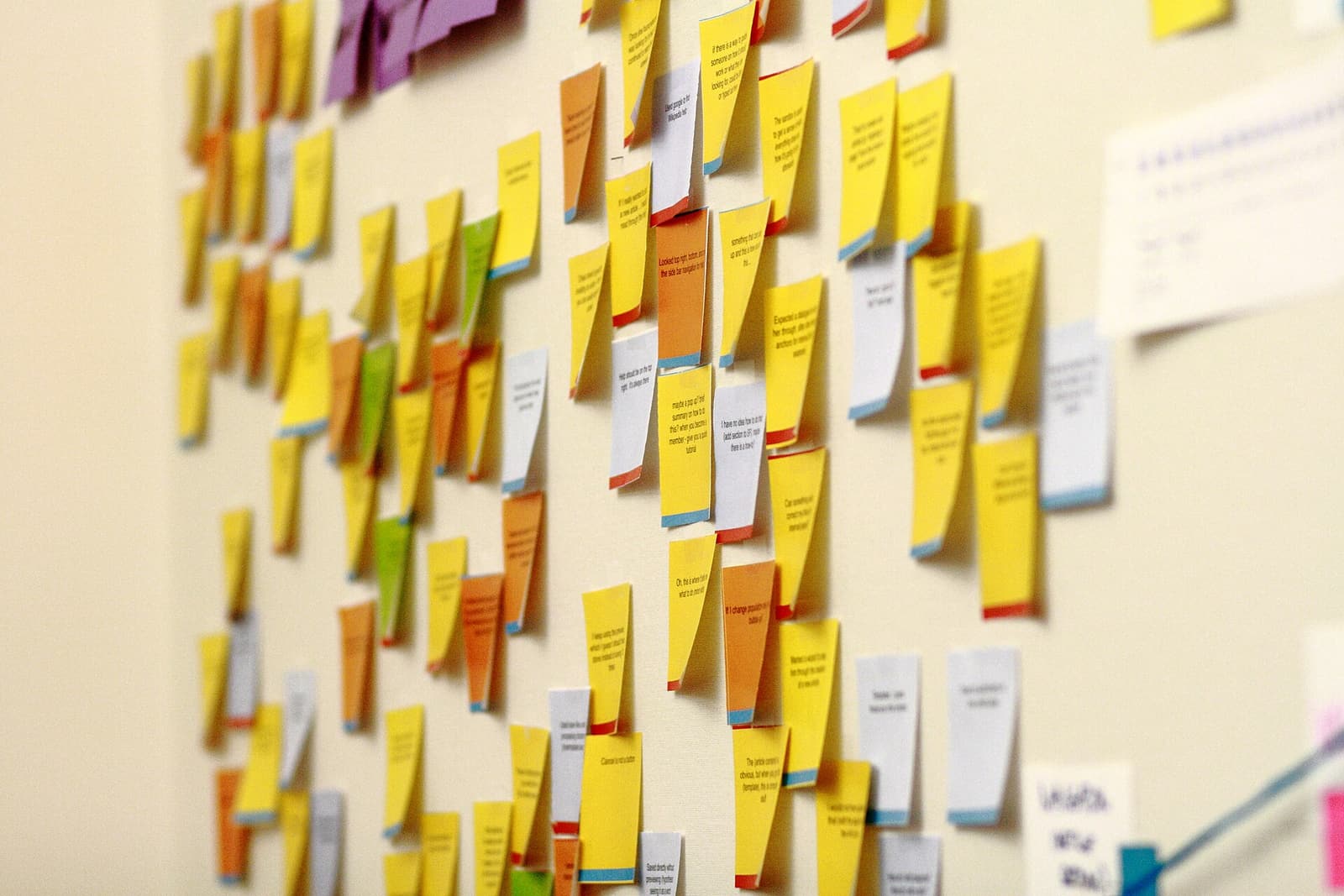
Image context: the cover uses a real photograph of sticky notes in the Wikimedia Foundation office rather than a product screenshot or a generated workflow diagram. The choice is deliberate. OpenProject's value starts from a familiar physical habit, making work visible, but the article is about what happens when that wall of notes becomes a permissioned, searchable, API-addressable system of record.[11]
Start with the work package, not the board
The basic OpenProject object is the work package. The user guide defines work packages as project items such as tasks, features, risks, user stories, bugs, and change requests; each one has a type, ID, subject, and attributes such as status, assignee, priority, and due date.[6] That sounds ordinary until you compare it with the way many teams actually run work: a spreadsheet row here, a ticket there, a meeting note somewhere else, and a Slack thread that secretly contains the decision.
The adoption move is to decide which work deserves a work package before importing everything. A bug may need reproduction steps, severity, assignee, release target, and close reason. A procurement task may need vendor, budget, reviewer, and due date. A regulatory risk may need owner, status, evidence, and review cadence. OpenProject can represent all of those as work packages, but the types and fields should not be copied blindly from the previous tool.[6][8]
That matters because OpenProject 17.5 puts even more weight on identifiers and references. The 17.5 release blog says organizations can choose between instance-wide numerical work package IDs and project-based semantic identifiers, currently in beta, with existing numerical references continuing to resolve.[5] The feature is framed partly around Jira migration, where preserving issue identifiers can reduce friction when teams move established references into OpenProject.[5] The practical lesson is larger than Jira. Once work items become durable references in documents, notifications, APIs, and audits, naming becomes part of operations.
So the first migration gate is not the importer. It is the vocabulary. Decide which work package types survive, which custom fields are truly required, which identifiers people will recognize six months later, and which historical references must remain valid.[5][6][8]
Permissions are the real adoption boundary
The OpenProject permissions concept is explicit: the application uses role-based access control to grant users permissions to projects or individual resources.[7] The API projects documentation says projects structure information such as work packages and wikis into smaller sets, and that projects limit permissions by assigning members roles with certain permission sets.[9] That is the center of the product for larger teams.
Many migrations underweight this. They treat access as an administrative chore after the board is rebuilt. In OpenProject, access should be part of the model. Who can see a project? Who can create work packages? Who can change status? Who can edit estimates, costs, due dates, or custom fields? Who can share work packages outside the project membership boundary? These are not cosmetic settings. They determine whether OpenProject becomes a shared operating record or another place where people keep side spreadsheets because the official tool is either too open or too locked down.[7][9]
The better pilot is to pick one real project with three roles: people who plan, people who execute, and people who need visibility without edit power. Build only the permissions needed for that project, then watch where users ask for exceptions. If every exception is legitimate, the role design is too coarse. If every exception is a shortcut around process, the workflow design is probably too bureaucratic.
This is also where OpenProject differs from lighter issue boards. Its advantage is not only that it can show cards. It is that projects, roles, workflows, custom fields, and APIs can become one permissioned system.[6][7][8][9] That power is useful only if someone owns the governance.
Self-hosting shifts the cost, not the responsibility
The repository describes OpenProject as a self-hostable, enterprise-ready alternative to Jira, MS Project, Monday, Asana, YouTrack, and similar tools, aimed at organizations that want control over their data and infrastructure.[1] The Community Edition page similarly emphasizes on-premises installation, DEB/RPM packages, Docker, Kubernetes, and Helm options.[4] LinuxLinks' independent review frames it as a mature web-based project-management system for location-independent collaboration, with development dating back to 2012.[10]
That is a strong open-source story, but it should not be mistaken for zero operations. The Docker documentation says the recommended Docker approach is one container per process, orchestrated with Compose, because that makes service choice, scaling, and monitoring easier.[4] The installation FAQ lists several supported routes, including package-based installation, Docker, providers, and manual installation paths.[4] In other words, OpenProject gives teams deployment choices. It does not remove the need for backups, upgrades, mail configuration, storage, identity integration, monitoring, restore drills, and release planning.
This is the most common migration trap. A team leaves a hosted SaaS tool because it wants data control, then treats the self-hosted replacement as though the vendor still owns the operational layer. If OpenProject becomes the canonical place where delivery status, audit evidence, release scope, roadmap dependencies, and customer commitments live, then the instance needs the same care as any other internal platform.
The latest release cadence reinforces that point. OpenProject's release notes page lists several 17.x releases in 2026, including 17.5.1 on June 15 and 17.5.0 on June 10.[3][12] Regular releases are good. They also imply a patch process. Someone must read release notes, test upgrades, decide downtime windows, and understand when security fixes matter enough to accelerate the schedule.
The API should be treated as a contract
OpenProject's work packages API is not just a convenience for integrations. The API documentation notes that work package schemas include built-in properties and can include properties added by plug-ins and custom fields, with clients able to consult schema information for linked work packages.[8] That is the correct design for a customizable project system, but it has an important consequence: integrations depend on the shape you create.
If a team adds custom fields freely, changes type forms every week, renames statuses without deprecation, or overloads one field with several meanings, the API becomes harder to trust. Downstream scripts, dashboards, migration tools, and reporting jobs will still run, but their semantics will drift. The problem will look like an integration bug even though it began as schema governance.
The clean approach is to write down a small contract before building automations: which work package types are stable, which fields are required, which statuses count as done, which fields external systems may write, and which identifiers external systems may store. OpenProject 17.5's project-based identifier work makes that last point sharper because issue references may be part of a Jira migration path or cross-project communication pattern.[5]
This is where OpenProject can be very strong. A project-management tool becomes more valuable when it is not the only tool. Roadmap status can feed reports. Work packages can be referenced from documentation. Project IDs can align with portfolio views. Time and cost data can be exported. But the integration surface should follow the governance model, not bypass it.[8][9]
Where OpenProject fits
OpenProject is a strong fit when a team has outgrown lightweight boards but does not want project governance trapped inside a proprietary cloud tenant. It fits organizations with cross-functional projects, regulated work, client delivery, public-sector constraints, research administration, product portfolios, or infrastructure teams that need work to remain visible across roles and time.[1][4][10]
It is weaker for teams that want a minimal developer issue tracker, a pure kanban surface, or a tool that disappears behind chat. It is also a bad fit when nobody is willing to own field design, permissions, workflow transitions, backup policy, and release management. OpenProject can support complex work. It cannot make complex work simple by refusing to model it.
The adoption plan should therefore be small but serious. Pick one project where the current tool is already failing: references are unclear, permissions are informal, reporting is manual, or work items are scattered across too many places. Define work package types. Build roles. Configure statuses. Import only the history that has future value. Connect one integration through the API. Run a restore test. Then decide whether the shape is worth scaling.
That is the real OpenProject decision. Not whether it has enough features to mimic Jira, Monday, Trello, or spreadsheets. It has plenty. The question is whether your team is ready to turn project management into governed infrastructure.[1][6][7]
Sources
- GitHub,
opf/openprojectrepository - project positioning as self-hostable open-source project-management software and alternative to proprietary tools. - GitHub API,
opf/openprojectrepository metadata sampled on 2026-06-24 - stars, forks, open issues, default branch, update time, and push timestamp. - GitHub API,
opf/openprojectlatest release metadata sampled on 2026-06-24 - latest release tag, release name, publication date, and URL. - OpenProject documentation, "Installation and operations" Docker and release-note pages - self-hosting routes, Docker Compose recommendation, and 2026 release cadence.
- OpenProject blog, "OpenProject 17.5 is released" - project-based work package identifiers, Jira migration support, and Backlogs improvements.
- OpenProject user guide, "Work packages" - work package definition, ID behavior, types, status, assignee, priority, and due-date attributes.
- OpenProject development concept, "Permissions" - RBAC framing for users, projects, and individual resources.
- OpenProject API documentation, "Work Packages" - work package schema behavior, built-in properties, plug-ins, and custom-field extensibility.
- OpenProject API documentation, "Projects" - projects as workspaces and permission-limiting containers with member roles.
- Steve Emms, "OpenProject - online project management software," LinuxLinks, 2023 - independent overview of OpenProject as mature open-source web project-management software.
- Wikimedia Commons, "File:Sticky notes on the wall of the Wikimedia Foundation office, 2010-10-26.jpg" - real archival photograph used as the article image.
- OpenProject documentation, "Release Notes" - current release-note index listing 17.x releases and dates.