Buck2 is easy to flatten into "Meta rewrote Buck in Rust and made it faster." That is true enough to be memorable, but it hides the architecture. The useful way to read Buck2 is as a build system that moves work into a long-lived daemon, evaluates a language-agnostic Starlark rule layer, and tries to make the build graph precise enough that local iteration, remote execution, and multi-language monorepo work can all share the same contract.[1][2][4]
That distinction matters for adoption. A team does not get Buck2's value merely by replacing one command name with another. It has to accept the model: BUCK files create package boundaries, targets form an acyclic graph, rules declare actions and providers, and the daemon keeps enough project state alive between commands that repeated work becomes cheaper.[3][4][5] Buck2 is therefore not a drop-in speed trick. It is an architecture bet on graph shape, rule clarity, and execution reuse.
As of 2026-06-24T21:34:20Z UTC, the GitHub API reported 4,364 stars, 366 forks, 380 open issues, and a most recent push timestamp of 2026-06-24T20:09:35Z for facebook/buck2; the release feed showed date-stamped releases including 2026-06-15, 2026-06-01, 2026-05-18, and 2026-05-01, while the special latest tag remains tied to a rolling binary channel rather than a conventional stable release.[7][8] Meta's 2023 launch post supplied the scale claim behind the rewrite: thousands of internal developers, millions of builds per day, and observed internal builds completing twice as fast as Buck1.[11] Those numbers do not prove that Buck2 is right for a given organization. They do show an active project whose public surface still asks users to understand its maturity boundary.
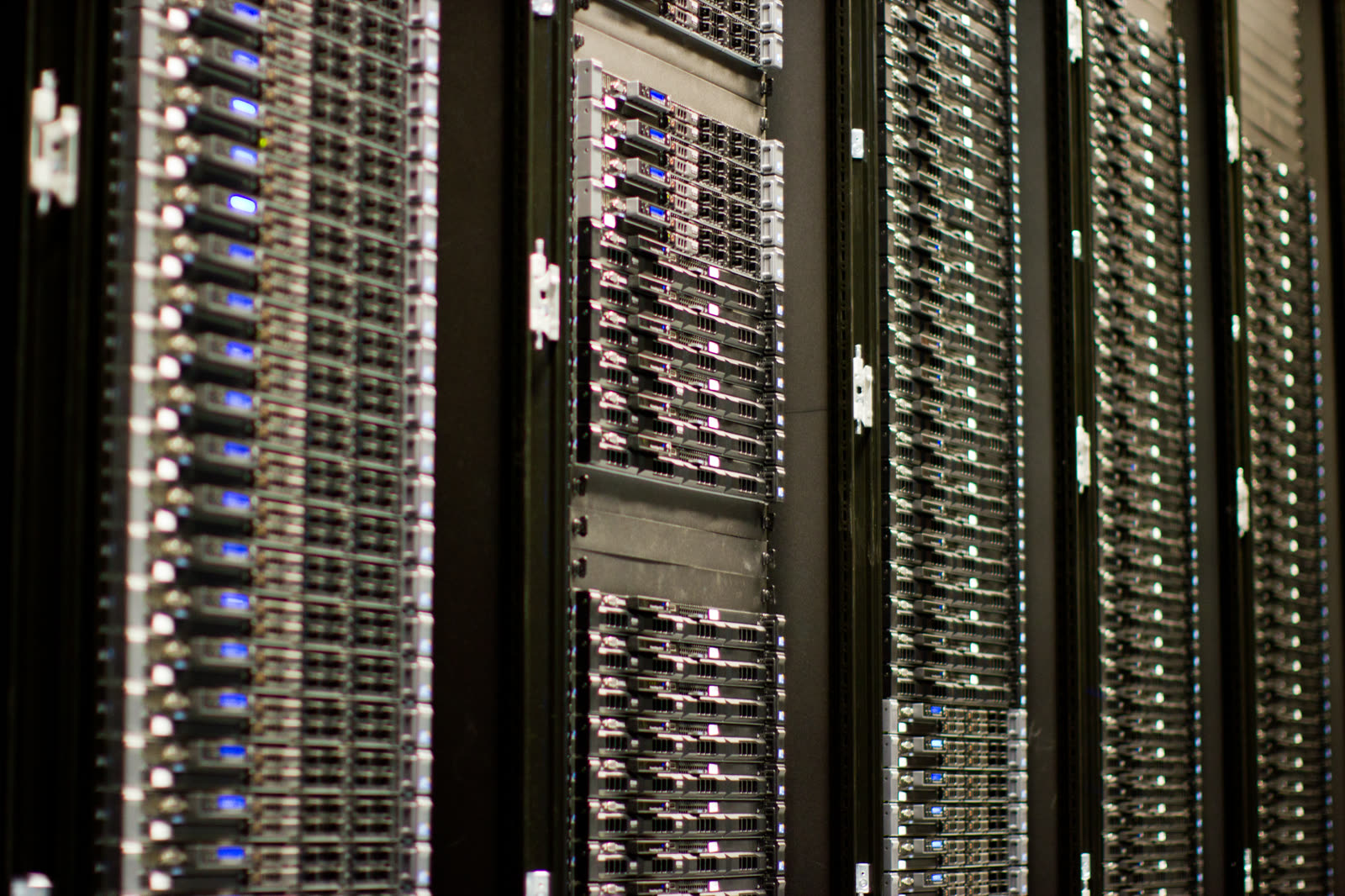
Image context: the lead image is not a logo, chart, or generated build diagram. It is a real server-room photograph, used because Buck2's most interesting claims become visible only when build work is treated as infrastructure: daemon state, action digests, content-addressed artifacts, and remote execution all depend on machines agreeing about what a build action means.[4][6][9]
The Daemon Is The First Boundary
Buck2's daemon, buckd, starts the first time a Buck2 command runs for a project. Later commands check for the running daemon and use it to execute work, which lets Buck2 share cached state across invocations.[5] By default there is one daemon per project root, with isolation directories available when a project needs more than one daemon lane.[5] That is the first thing to understand: Buck2 is not only a command-line program that parses the repository from scratch every time. It is a client talking to a project-scoped service.
The architecture page makes that client/server shape explicit. The Buck2 CLI runs in a client process and sends commands to the daemon over gRPC; the daemon then moves through evaluation, configuration, analysis, execution, and materialization, with testing as an extra stage for buck2 test.[4] The same page also cautions that these phases are not always strictly sequential, because Buck2 is built around a larger dependency graph where incrementality matters.[4]
This changes the operational reading of a build failure. In a make-style mental model, the main questions are usually "which command ran?" and "what file changed?" In Buck2, the questions become sharper: did the daemon observe the relevant filesystem change, did evaluation produce the intended unconfigured target graph, did configuration select the right platform, did analysis declare the correct actions and providers, and did execution reuse or run the right action? The failure surface is more structured. That structure is the point.
There is a cost. A daemon means lifecycle behavior matters. Buck2 documents buck2 status, buck2 clean, and buck2 kill as normal tools for inspecting or resetting daemon state.[5] Teams adopting Buck2 should include those commands in support muscle memory instead of treating the daemon as invisible. When the build state is long-lived, reset and inspection paths are part of the product.
Packages, Cells, And Projects Keep The Monorepo From Becoming A Blob
Buck2's key concepts page gives the build model its vocabulary. A build rule describes how to produce output from inputs. A build target is a unique string identifying a rule. A build file, typically named BUCK, defines one or more rules.[3] Packages are created by BUCK files: a package includes the build-file directory and subdirectories until another BUCK file creates a new package boundary.[3] That non-overlap is more than naming discipline. It keeps ownership and graph discovery from becoming an unbounded directory walk.
Cells add the repository-scale layer. A cell is a directory tree containing one or more Buck2 packages and configured through .buckconfig; a project is the entry point for a build and names the cells involved.[3] The docs note that cells often, but not necessarily, correspond to repositories.[3] That caveat matters. Buck2 was designed for monorepos, but the abstraction is not simply "one repo equals one world." It lets a project define the build universe deliberately.
The target graph then ties those boundaries together. Buck2 requires the dependency graph to be acyclic; transitive dependencies are built before the target that needs them, and the docs explicitly point out that this bottom-up structure helps Buck2 identify independent subgraphs and minimal rebuild sets.[3] This is the core adoption requirement: teams have to encode enough dependency truth for the graph to be useful. If package boundaries are sloppy and dependencies are hidden behind scripts, Buck2 inherits the confusion rather than curing it.
The payoff appears when a monorepo has many languages and many deliverables. Meta's "Why Buck2?" page frames the original problem as a very large monorepo spanning C++, Python, Rust, Kotlin, Swift, Objective-C, Haskell, OCaml, and more.[2] Traditional build scripts can coordinate some of that for a while. They struggle when a single change needs to answer impact, test selection, remote execution, and cross-language dependency questions at once. Buck2's package/cell/project vocabulary is the scaffold for asking those questions without turning the whole repository into one undifferentiated build target.
Starlark Rules Move Language Knowledge Out Of The Core
The most important Buck2 design choice may be negative: the core binary is language-agnostic. The README says Buck2's core executable does not know language-specific rules, and the "Why Buck2?" page says all rules are written in Starlark, unlike Buck1's Java-core rule model.[1][2] The architecture page says macros and rules are both written in Starlark, while the Rust core handles CLI execution, graph generation and updates, dependency-graph computation, and artifact materialization.[4]
This split is why Buck2 should not be evaluated as a pile of built-in language support alone. Its design asks rule authors to make language behavior explicit at the Starlark layer. The rule-authoring docs describe the flow plainly: a rule uses attributes to declare actions, actions produce artifacts, and providers are the only way a rule exposes information to dependent rules.[6] Every rule must return at least DefaultInfo; executable rules may return RunInfo; richer language integrations define custom providers to carry information across the graph.[6]
That provider boundary is a real architecture boundary. If a Python rule depends on a Rust library, or an OCaml target needs generated C artifacts, the handoff cannot be a side effect hidden in a shell script. The rule has to decide what information flows outward. Done well, that makes the build graph queryable and reusable. Done poorly, it creates a more sophisticated wrapper around the same hidden state.
Buck2's advanced rule features show why Meta rebuilt rather than merely polished Buck1. The "Why Buck2?" page calls out dep files, incremental actions, dynamic dependencies, anonymous targets, transitive sets wired into the dependency graph, and the absence of a hard target-graph/action-graph phase split.[2] Those are not beginner features. They exist because large builds need to express subtler realities: generated dependency discovery, shared work across otherwise unrelated outputs, deep transitive closures, and action reuse that simple static graphs cannot model cleanly.
The adoption warning follows directly. A team should not start by writing clever Starlark. It should start by modeling a small, painful slice of the build where rule boundaries are already clear: one language target, one generated-code path, one test target, or one cross-language dependency. Buck2's flexibility is valuable only after the ordinary graph is trustworthy.
Remote Execution Is A Contract, Not A Button
Buck2 is explicitly remote-execution-oriented. The README says Buck2 can use distributed compilation through the same Remote Execution API supported by Bazel, and names BuildBarn, BuildBuddy, EngFlow, and NativeLink as compatible solutions.[1] The remote-execution docs say Buck2 can use services that expose Bazel's remote execution API, and they document configuration keys for engine address, action-cache address, CAS address, TLS material, headers, instance name, and digest algorithms.[10]
The architecture page gives the concrete mechanics. During execution, Buck2 creates a digest from an action's command and all its inputs, checks remote execution for a cached result, and either reuses the result or runs the action locally or remotely. Remote execution stores outputs in a content-addressable store; materialization can happen immediately or be deferred until needed.[4] This is where the graph becomes infrastructure. A cache hit is only safe if the action digest honestly captures the command and inputs that determine the output.
That is also why Buck2's hermeticity language must be read carefully. The README says Buck2 becomes hermetic when using remote execution, because build rules must correctly declare their inputs; it also notes that local-only build steps were not yet sandboxed in the same way.[1] The practical implication is not "remote execution is optional acceleration." It is closer to "remote execution is where the stricter correctness contract appears." Local-only pilots can teach the rule model and developer ergonomics, but the full architecture is pointed toward remote-compatible actions.
For organizations already operating Bazel-style remote execution, Buck2's compatibility story reduces one category of infrastructure risk. It does not remove migration work. You still need execution platforms, toolchain packaging, authentication, action-cache and CAS sizing, network behavior, and policy for which actions may run remotely.[10] If those pieces are vague, Buck2 will expose the vagueness quickly.
Where Buck2 Fits
Buck2 is strongest when three conditions are true. First, the repository is large enough that repeated local discovery and broad rebuilds are costly. Second, the language mix is complex enough that one-off scripts make dependency truth hard to see. Third, the organization is willing to own build infrastructure: daemon lifecycle, Starlark rule maintenance, toolchain packaging, remote execution, and graph debugging.[1][2][4][10]
It is weaker when a repository is small, single-language, and already served by the language's native build tool. In that environment, Buck2's package/cell/project model, daemon state, Starlark rule layer, and remote-execution path may be extra machinery. The README is candid that Buck2 still has rough edges for outside consumers, has no conventional stable release tag, and that Meta uses the latest committed HEAD internally.[1] A cautious external team should treat that as an adoption boundary, not as a footnote.
The healthiest pilot is narrow and measurable. Pick one build path where the current system wastes developer time or hides dependency truth. Model the target and its dependencies in BUCK files. Keep rule authoring minimal. Run locally first to understand daemon behavior and graph output. Then test remote execution only after actions declare inputs and outputs honestly. The goal is not to prove that Buck2 is faster in a demo. The goal is to prove that the build can become more inspectable, more reusable, and less dependent on individual workstation state.
Buck2 earns its place when the daemon, graph, rule boundary, and remote-execution contract reinforce one another. If a team only wants a faster command, it will probably be disappointed. If it needs a build system that can make a large multi-language repository behave like a queryable, cacheable, distributed computation, Buck2 is worth serious evaluation.
Sources
- Meta,
facebook/buck2README - project positioning, fast/hermetic/multi-language claims, remote-execution compatibility, maturity warning, rollinglatesttag behavior, and licensing. - Buck2 documentation, "Why Buck2" - Meta monorepo context, rewrite rationale, Rust core, Starlark rule layer, dynamic graph, remote-execution-first design, and open-source caveats.
- Buck2 documentation, "Key Concepts" - rules, targets, build files, packages, cells, projects, and acyclic dependency-graph behavior.
- Buck2 documentation, "Architectural Model" - client/daemon flow, evaluation/configuration/analysis/execution/materialization stages, action digests, remote cache, CAS, hybrid execution, and deferred materialization.
- Buck2 documentation, "Daemon (buckd)" - project-scoped daemon behavior, shared cache between invocations, filesystem monitoring, isolation dirs, status, clean, and kill commands.
- Buck2 documentation, "Writing Rules" - Starlark rule-author workflow, attributes, actions, artifacts, providers,
DefaultInfo,RunInfo, and provider design. - GitHub REST API,
repos/facebook/buck2- repository activity snapshot sampled at article creation for stars, forks, open issues, default branch, license, and latest push timestamp. - GitHub REST API,
repos/facebook/buck2/releases?per_page=5- recent release feed showing the rollinglatesttag and date-stamped releases sampled at article creation. - Wikimedia Commons, "File:Wikimedia Foundation Servers-8055 35.jpg" - real server-room photograph used as the article image source.
- Buck2 documentation, "Remote Execution" - Bazel remote-execution API compatibility, tested providers,
.buckconfigkeys, digest algorithm options, execution-platform setup, and remote/local execution flags. - Meta Engineering, "Build faster with Buck2: Our open source build system" (April 6, 2023) - launch context, internal build-volume claims, design principles, single incremental dependency graph, and remote/virtual filesystem integration.