MicroK8s is easy to underrate if it is described as "Kubernetes, but smaller." That phrase is true only in the least useful sense. The more useful read is that MicroK8s draws a packaging and operations boundary around Kubernetes: install it as a snap, join nodes with microk8s add-node and microk8s join, turn platform features on through add-ons, and let a dqlite-backed control plane carry high availability once the cluster has enough nodes.[1][2][3]
That makes MicroK8s less interesting as a toy cluster and more interesting as an architectural compromise. It keeps the Kubernetes API close enough for real manifests and controllers, but it moves a large part of the bootstrap problem into Canonical's packaging lane. An independent comparison by Plural frames the same practical niche: MicroK8s is aimed at local development, edge and IoT deployments, CI-style ephemeral clusters, and small workloads where the full operational surface of a hand-assembled Kubernetes environment would be excessive.[6]
The trade is not "simple Kubernetes with no platform work." The trade is "accept an opinionated package boundary so a small team can spend its limited attention on cluster purpose, update policy, add-on selection, storage, and recovery." That sentence is less marketable, but it is closer to how MicroK8s succeeds or fails in production-ish use.
The Snap Is Part Of The Architecture
MicroK8s starts with a distribution decision. The cluster arrives as a snap package, not as a loose collection of binaries, systemd units, certificates, manifests, and bootstrap scripts that each operator wires by hand. Snap channels carry risk levels such as stable, candidate, beta, and edge, with stable as the default risk level for installed snaps.[4] MicroK8s documentation also shows channel-pinned installation and refresh commands in its high-availability setup examples.[2]
That packaging detail has architectural consequences. A team choosing MicroK8s is choosing to make the snap channel part of its change-management system. The channel answers questions that a self-built cluster otherwise pushes into automation: which Kubernetes line is installed, where upgrades arrive from, and how far a node can drift before it must be refreshed. The answer may be convenient, but it is still an answer that needs ownership.
This is why MicroK8s fits labs, appliances, edge boxes, and small internal platforms better than sprawling shared infrastructure. In those settings, repeatable installation and a clear update lane can matter more than the freedom to swap every control-plane component. A field system or lab machine does not usually need a bespoke bootstrap stack. It needs a cluster that can be rebuilt, upgraded, inspected, and explained by a small number of people.
The failure mode follows the same boundary. If the organization cannot accept snapd, cannot govern automatic refresh behavior, or needs every control-plane binary sourced through an internal packaging pipeline, MicroK8s may be the wrong abstraction. The snap is not just a delivery format. It is the operating contract.
High Availability Is A Small-Cluster Contract
MicroK8s can run as a single-node cluster, but its architecture becomes more interesting at three nodes. Canonical's HA documentation states that high availability is automatically enabled for clusters with three or more nodes, and the clustering guide says that, from the 1.19 release, a three-node-or-larger cluster replicates the datastore and can keep workloads running through a single node failure.[1][2] That is a concrete threshold, not a vague resilience promise.
The mechanism is dqlite. In MicroK8s HA mode, all nodes run the control plane, while at least three nodes maintain a copy of the Kubernetes dqlite database. The HA documentation distinguishes voter nodes, standby nodes, and spare nodes: voters replicate the database and participate in leader election; standby nodes replicate without voting; spare nodes do neither.[2]
That model is well matched to small clusters because it avoids making etcd operations the first thing a team must learn. It does not remove distributed-systems behavior. It narrows where that behavior lives. dqlite uses Raft to replicate SQLite write transactions, sends writes through the current leader, commits after quorum persistence, and relies on retry behavior when leadership changes or a commit result is uncertain.[5] MicroK8s hides much of that from the day-to-day administrator, but the quorum reality still exists.
The practical consequence is that MicroK8s HA should be treated as a local cluster resilience pattern, not a blanket enterprise platform story. Three nodes can protect against a single node loss. They do not protect against careless shared power, a bad switch, shared storage mistakes, clock skew, weak backup discipline, or an upgrade policy that refreshes too much of the cluster at once. The architecture gives a small team a better starting point. It does not suspend the usual rules.
Add-ons Are A Platform Menu, Not Free Features
The other MicroK8s boundary is the add-on system. Canonical splits add-ons into a Core repository maintained and officially supported by the MicroK8s team and a Community repository that can be enabled separately.[3] The core list includes familiar platform pieces: DNS, dashboard, HA, Helm, hostpath storage, ingress, metrics, MetalLB, registry, and others, each carrying version and compatibility signals.[3]
This is the feature that makes MicroK8s feel productive quickly. A developer can enable DNS, ingress, a registry, or a local storage class without first assembling a platform team's worth of installation recipes. For teaching, local integration testing, a small appliance, or a controlled edge site, that speed is real value.
But add-ons also make ownership visible. Enabling ingress means deciding how traffic reaches the cluster. Enabling MetalLB means deciding how addresses are allocated on the local network. Enabling the registry means deciding how images are built, retained, secured, and garbage-collected. Enabling observability means deciding who reads it and what alerts matter. MicroK8s makes those switches easier to flip, but it does not turn the resulting services into someone else's problem.
Storage is the clearest warning. The clustering guide notes that the hostpath storage add-on is available only on the nodes where it has been enabled and that clustered storage should use an alternative such as NFS. The add-ons reference is even sharper: hostpath-storage allocates from a host directory and is not suitable for production environments or clusters.[1][3] That is exactly the kind of boundary condition that should appear in an adoption review. If a team enables local storage because it is convenient and later treats it as clustered storage, the failure is not MicroK8s being misleading. The documentation gives the warning.
Node Roles Matter At The Edge
MicroK8s' clustering commands are deliberately modest. The existing node runs microk8s add-node; the joining machine runs the generated microk8s join command. A joining node can also use --worker, which lets it host workloads without running the Kubernetes control plane.[1] That is a small detail with a large edge implication.
Edge sites rarely have symmetrical hardware. A cabinet may include one stronger industrial PC, a couple of modest machines, and several low-end devices closer to sensors or displays. Worker joins let the weaker machines participate without carrying control-plane work. The HA documentation's voter, standby, and spare roles then make the datastore shape explicit once the cluster grows.[2]
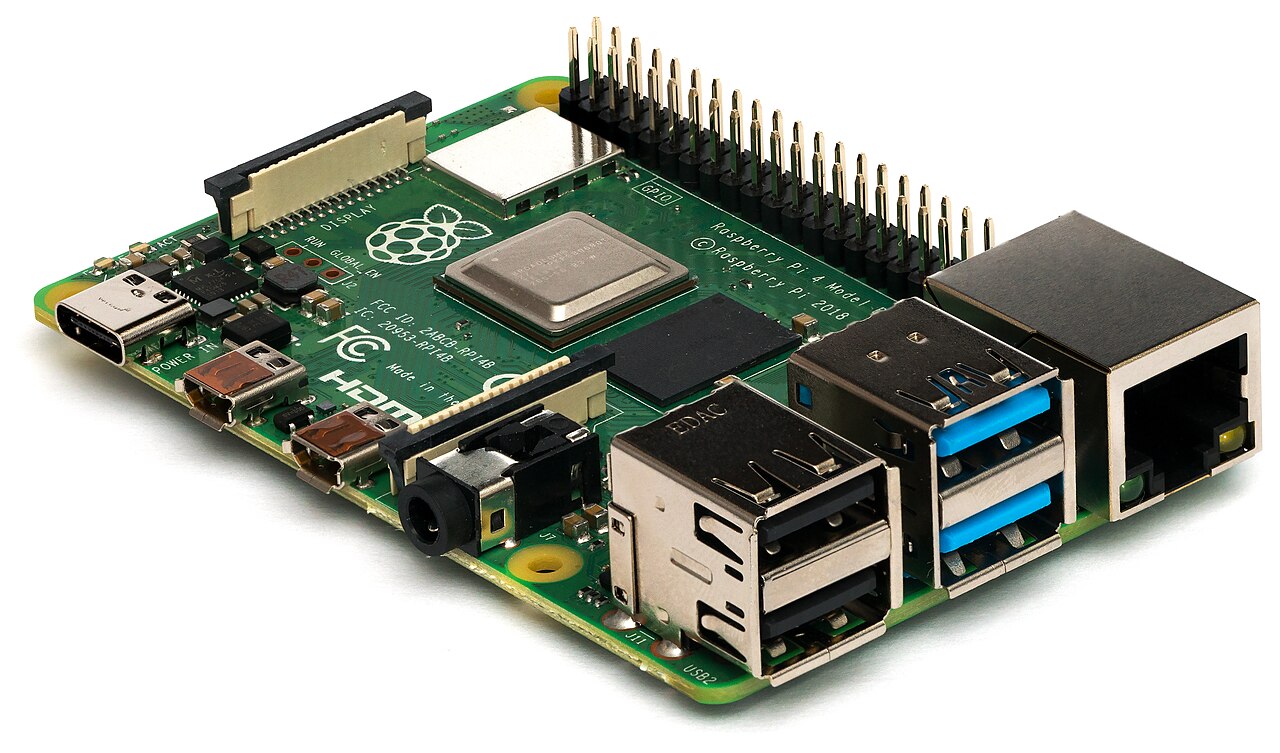
That is why a Raspberry Pi image is not decorative filler here. Small-board computers and compact edge hosts make the tradeoffs visible: limited RAM, SD-card or local-disk durability, heat, power, network cabling, and physical access all shape what "Kubernetes" means at the site.[7] MicroK8s is compelling in this world because it can bring a familiar API to hardware that would not justify a full platform buildout. It is risky in the same world because those physical limits make sloppy defaults expensive.
The right pilot is therefore not "run a demo pod." It is one site-shaped workload with the actual storage choice, ingress path, update channel, backup procedure, and node-loss test. If the workload cannot survive the failure the architecture claims to handle, the cluster is not ready, even if kubectl get nodes looks clean.
Where MicroK8s Is The Right Shape
MicroK8s is a strong fit when the organization wants real Kubernetes semantics but does not want to make Kubernetes distribution engineering its first project. That includes developer machines that need close-to-production manifests, CI jobs that need disposable clusters, classroom and lab environments, edge appliances, branch-office systems, and small internal services that benefit from Kubernetes primitives without justifying a large shared platform.[6]
It is also useful as a boundary object between application teams and platform teams. Application teams can test manifests, controllers, ingress rules, and Helm charts against a conformant API surface. Platform teams can use it to prototype add-on combinations, storage expectations, and operational runbooks before moving the same workload pattern into a managed or larger Kubernetes environment.
The fit weakens when the cluster is expected to become a multi-team enterprise substrate. If the problem is policy federation, heavy multi-tenancy, regulated audit boundaries, complex CNI or CSI choices, large fleet consistency, or a strict internal supply-chain process, MicroK8s' strengths can become constraints. The Plural comparison makes a similar distinction: lightweight operation helps in constrained or small environments, while standard Kubernetes wins when requirements demand scale, organizational isolation, extensive policy control, and broad extensibility.[6]
A good adoption rule is to ask what you are buying down. If the answer is bootstrap friction, local reproducibility, and small-site operations, MicroK8s is worth a serious look. If the answer is "we do not want to learn Kubernetes operations at all," it will disappoint. MicroK8s reduces the surface area of the distribution. It does not remove cluster ownership.
The Useful Mental Model
The best mental model for MicroK8s is packaged Kubernetes with a visible edge boundary. The snap decides much of the install and update path. dqlite makes small-cluster HA approachable without making quorum irrelevant. Add-ons turn common platform features into explicit choices. Worker joins and node roles let mixed hardware participate in a controlled way. The result is not a miniature cloud provider. It is a compact operating unit.
That compactness is powerful when the cluster has a clear job. A MicroK8s cluster that runs one appliance workload, one lab platform, one test environment, or one branch-site service can be boring in the right way. The same cluster asked to become a general-purpose platform for many teams may grow sharp edges quickly.
Adopt it, then, when the boundary is the point. Choose the snap channel intentionally. Pick add-ons as owned services. Treat hostpath storage as local-only. Prove the three-node HA story with a real node failure. Write down how the cluster is backed up and refreshed. If those tasks fit the team, MicroK8s offers a pragmatic route to Kubernetes where a full platform would be too much machinery.
Sources
- Canonical MicroK8s, "Create a MicroK8s cluster" documentation, covering
microk8s add-node,microk8s join, worker joins, the hostpath-storage cluster caveat, and HA behavior. - Canonical MicroK8s, "High Availability (HA)" documentation, covering the three-node HA threshold, dqlite datastore roles, voter/standby/spare nodes, and failure domains.
- Canonical MicroK8s, "Addons" reference, covering core and community add-ons, DNS, HA, hostpath-storage, ingress, registry, MetalLB, and compatibility tags.
- Snapcraft documentation, "Channels", covering snap channel risk levels such as stable, candidate, beta, and edge.
- Canonical dqlite documentation, "Replication", explaining Raft-based SQLite transaction replication, leader/gateway behavior, custom VFS, quorum commit, and retry behavior.
- Plural, "MicroK8s vs. Kubernetes: Which Should You Use?", an independent comparison framing MicroK8s around local development, edge/IoT, small workloads, and the limits of lightweight Kubernetes.
- Wikimedia Commons, "Raspberry Pi 4 Model B - Side" photograph, used as the article image source.